The essentials of Parque Natural de la Sierra de Montsant

  • • Over 500 equipped climbing routes on conglomerate walls with excellent friction
  • • Serra ridge traverse: 22 km to Tossal de la Baltasana (1,163 m)
  • • Falconera and Cogulla viewpoints overlooking the Siurana reservoir
  • • Bonelli's eagle and reintroduced Spanish ibex on the park walls
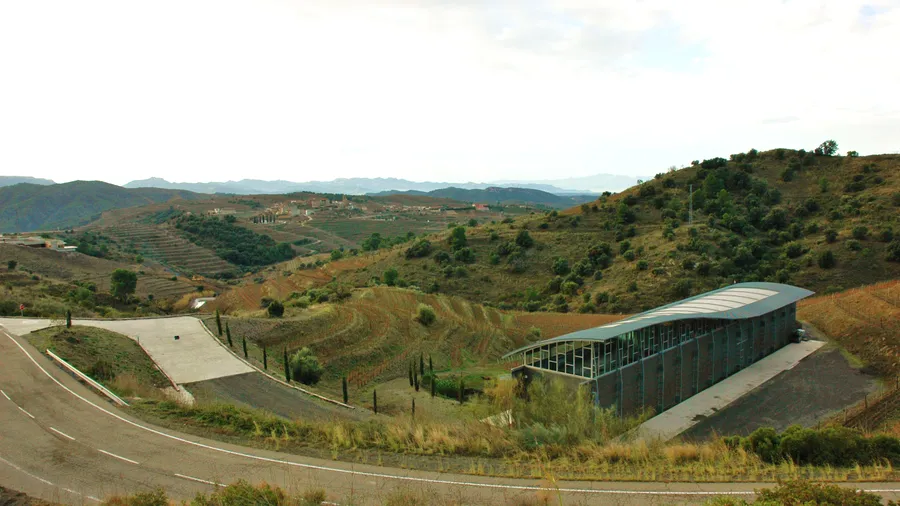
  • • Priorat slate vineyard landscape at the foot of the cliffs

Description

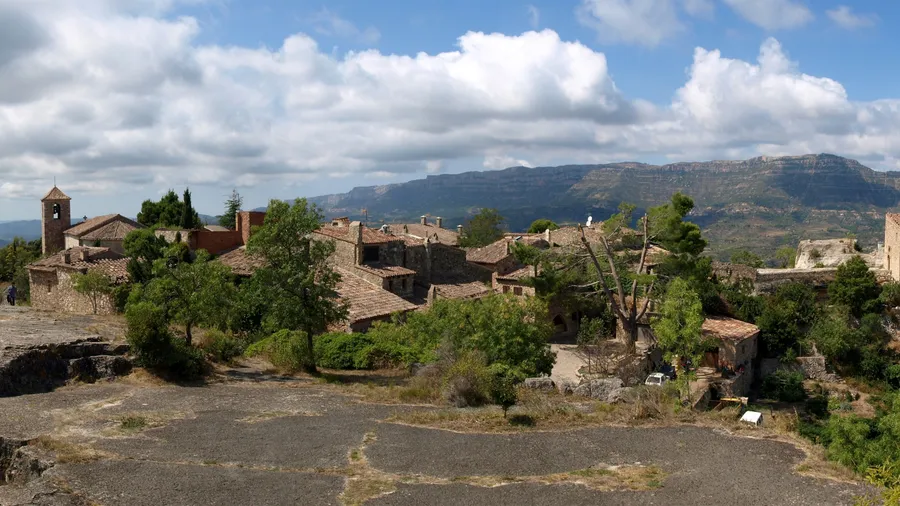
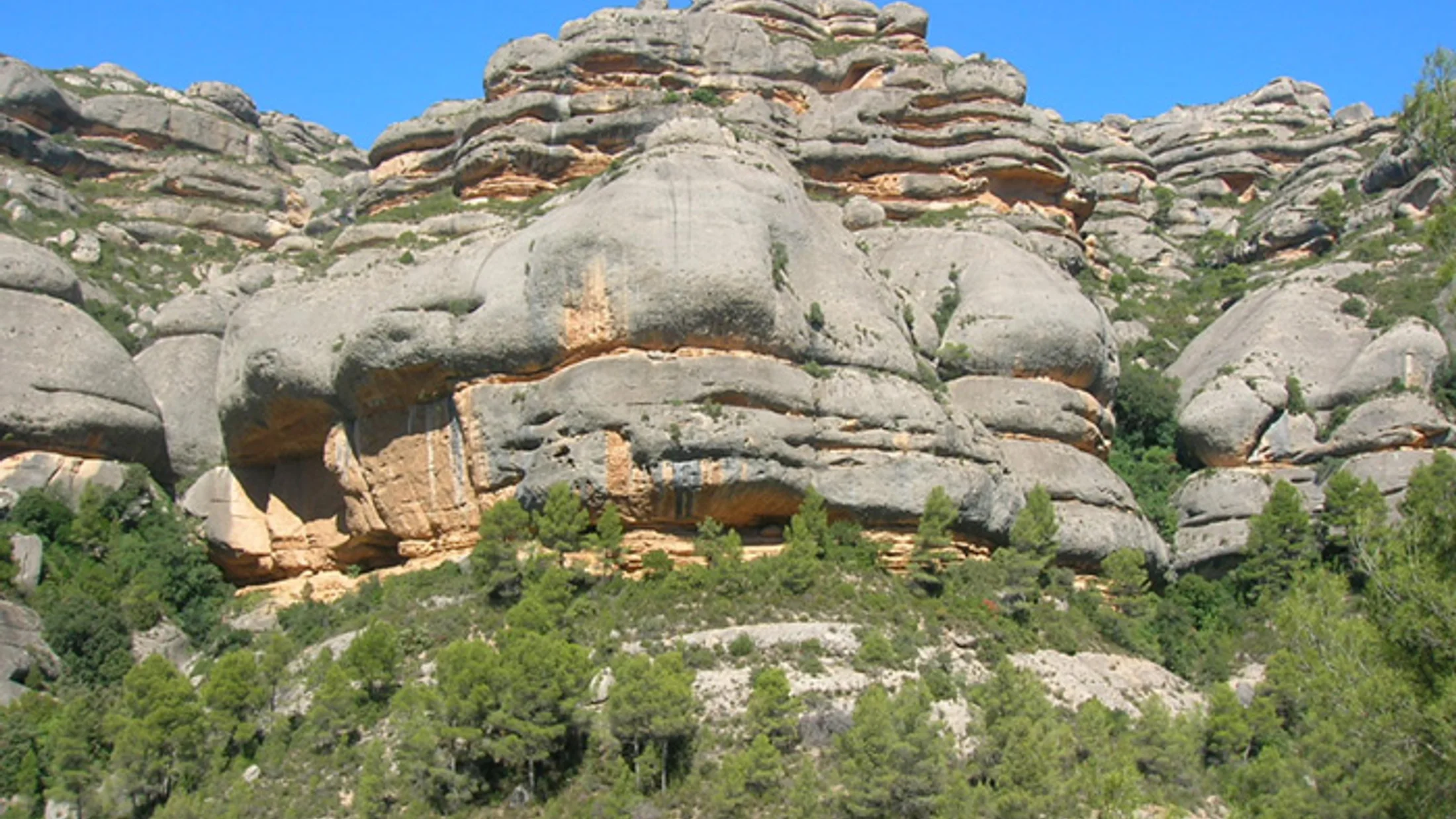
Sierra de Montsant is a wall of red conglomerates and sandstone that closes off the Priorat to the north and west, separating this wine-growing comarca from the Camp de Tarragona. Its vertical faces, up to 400 metres high in some sections, are the landscape's most immediate feature: from the bottom of the Siurana valley they rise in horizontal strata that hikers and climbers have made the sierra's defining element. The natural park protects around 9,165 hectares between elevations of 250 and 1,163 metres — the summit of Tossal de la Baltasana — encompassing holm oak woodland, red and black pine forest, cliff-face plant communities found only on the sierra, and vineyards ascending the slate terraces to 700 metres.

Montsant is one of Catalonia's benchmark sport-climbing destinations, with more than 500 equipped routes on the walls of la Falconera, les Roques de Prades and the Ermita sector. Routes span all grades from beginner to multi-pitch lines at 7b and above, and the rock quality — porous conglomerate with excellent friction — draws climbers from across Europe. The north face of la Falconera, permanently shaded in summer, becomes a cool refuge for climbers when temperatures in the valley exceed 30°C.

Hiking inside the park follows three main natural corridors: the Serra path traversing the main ridge from west to east for about 22 kilometres to Tossal de la Baltasana; the track skirting the base of the walls heading south; and the routes connecting Priorat villages — Cornudella de Montsant, La Morera de Montsant, Scala Dei — to viewpoints and springs. The most frequented starting point is Cornudella, from where the Camí de la Serreta reaches the ridgeline in about five kilometres with 600 metres of ascent. The viewpoints at Creu de la Falconera and la Cogulla offer views over the Siurana reservoir, Priorat vineyards and, on clear days, the Camp de Tarragona coast.

Montsant's flora combines Mediterranean communities on lower slopes — kermes oak (Quercus coccifera), lentisk (Pistacia lentiscus), dwarf fan palm (Chamaerops humilis) — with cliff-face plant communities exclusive to the walls: several endemic Saxifraga species, pellitory-of-the-wall (Parietaria officinalis) and rusty-back fern (Asplenium ceterach). Wildlife includes Spanish ibex (Capra pyrenaica), now well established after reintroduction; Bonelli's eagle (Aquila fasciata), which nests in the conglomerate walls; and otter (Lutra lutra) in the Siurana river. The park is also a migratory raptor corridor in spring and autumn, with records of black kites, bee-eaters and various falconids using the thermal currents generated by the limestone walls to gain altitude towards the inland valleys. The combination of habitats — from low-elevation Mediterranean scrub to summit grasslands — produces high faunal diversity within a geographically compact area.
Practical information

Everything you need to know for your visit to Parque Natural de la Sierra de Montsant

How to get there
From Reus, 35 km along the T-310 to Cornudella de Montsant. From Barcelona, 130 km via the AP-2 and T-310. No direct public transport; a car or bicycle from Cornudella are the best options.
Area Information
Cornudella de Montsant and La Morera de Montsant are the main access points with rural accommodation and restaurants. The Priorat comarca is a wine tourism destination; cellars such as Cellers de Scala Dei offer visits year-round.
Geography
Mountain wall of conglomerates and sandstone bordering the Priorat to the north and west. Elevations from 250 to 1,163 m (Tossal de la Baltasana). Vertical faces up to 400 m. The Siurana river runs to the south of the massif. Area: 9,165 ha.
Flora & Fauna
Holm oak (Quercus ilex), kermes oak, lentisk, dwarf fan palm. Cliff flora: endemic saxifrages, Asplenium ceterach. Wildlife: Spanish ibex, Bonelli's eagle, otter, wallcreeper (Tichodroma muraria), peregrine falcon.

Things to do

Find the best plans and things to do in Parque Natural de la Sierra de Montsant

20

Accommodations

Best accommodation options in Parque Natural de la Sierra de Montsant

Loading accommodation options...

Frequently Asked Questions

Get answers about Parque Natural de la Sierra de Montsant

It depends on the sector. Montsant has equipped routes for all levels, including beginner sectors suitable for climbers at French grade 4-5. However, most sectors are aimed at experienced sport climbers at grade 6 and above. Beginners are advised to go with a certified mountain guide and to consult up-to-date route topos, as some routes have seasonal restrictions due to Bonelli's eagle nesting.
The Serra ridge traverse from Cornudella de Montsant to Tossal de la Baltasana (1,163 m) is the most complete route, covering about 22 km return with around 900 m of accumulated elevation gain. The route offers views over the Priorat, the Siurana reservoir and, on clear days, the Ebro delta. Start before 8am in summer and carry at least two litres of water per person.
Yes. Bonelli's eagle nests in the Montsant walls and the park imposes temporary closures on certain climbing sectors between February and July to protect active nests. The affected sectors vary each year according to nesting locations. Before each visit it is essential to check the park website or contact the management office to find out which sectors are closed during that period.
Yes, and it is a common combination. Cellars such as Cellers de Scala Dei, located at the foot of the Montsant walls, offer guided visits with tastings year-round, generally with advance booking. Access on foot from the village of Scala Dei into the park is possible via forest tracks. The area includes prestigious wine appellations such as DOQ Priorat and DO Montsant, with tastings available at many wineries in the comarca.
Spanish ibex (Capra pyrenaica) was reintroduced in Montsant and its population is now established in the rocky walls and cliff areas. Sightings are most frequent during the cooler hours — at dawn and dusk — in areas such as the Falconera walls and the eastern ridge sections. Never approach or feed the animals.