The essentials of Parque Natural de Chera-Sot de Chera

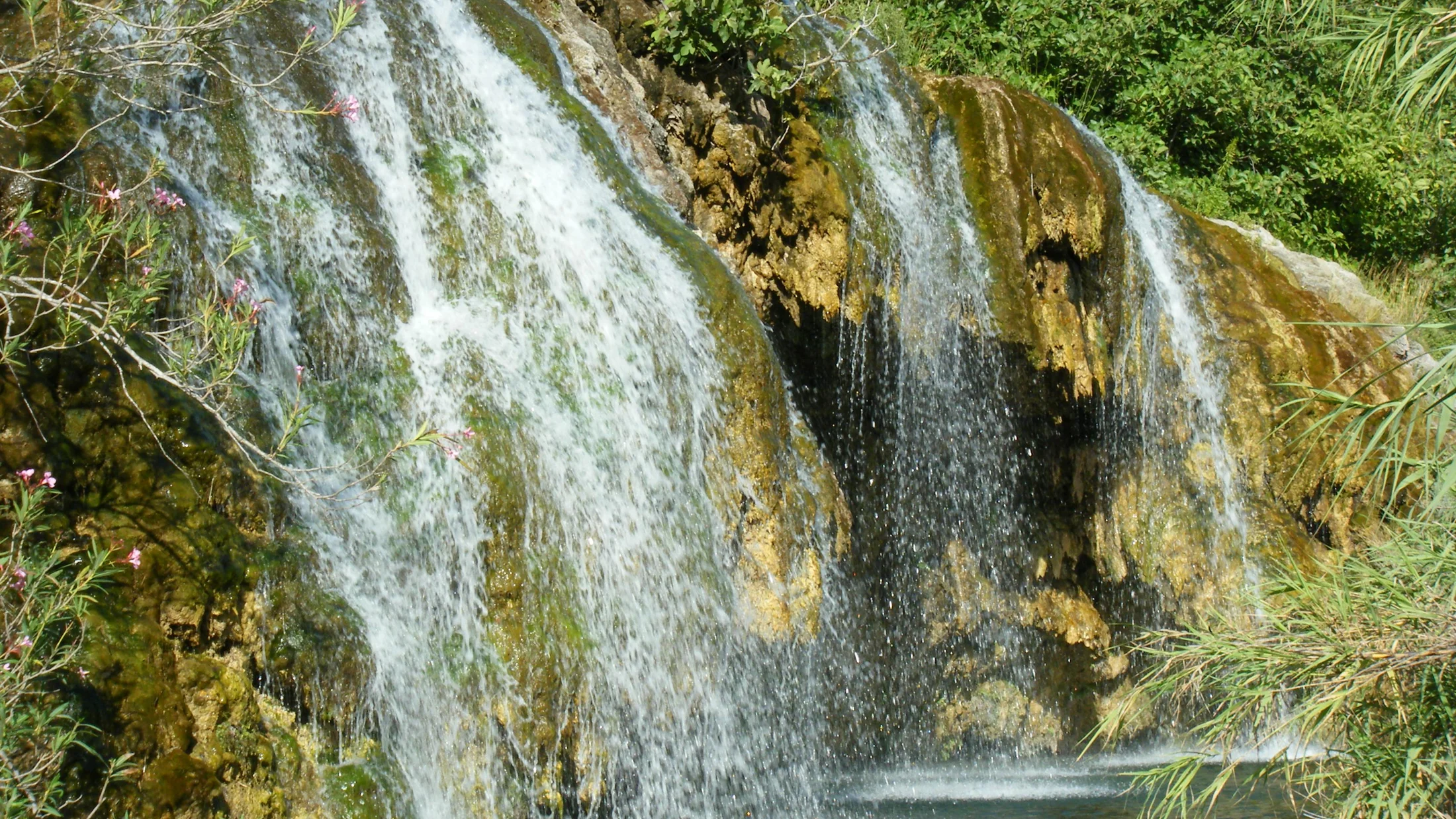
  • • Cueva del Turche with a 12-metre interior waterfall accessible on foot
  • • Reatillo river canyons with limestone walls reaching 80 metres high
  • • Buseo and Chera reservoirs with turquoise bathing areas in summer
  • • Bonelli's eagle breeding territory on the park's cliff faces
  • • Sport climbing routes at Charco Azul on up to 40 metres of limestone wall

Description

The Chera-Sot de Chera Natural Park covers 6,451 hectares in the mountainous interior of Valencia province, between the Requena-Utiel and Hoya de Buñol districts. Its terrain is shaped by two reservoirs—Buseo and Chera—whose turquoise water contrasts with the limestone walls of the surrounding canyons. Over millions of years the Río Reatillo has carved gorges up to 80 metres deep into Cretaceous limestone and dolomite, creating a karst landscape rich in caves, sinkholes and springs. The Cueva del Turche, with its 12-metre interior waterfall, is one of the park's most visited formations.

Vegetation is arranged in clear altitudinal bands between 400 and 1,100 metres. Ravine floors host riparian woodland of poplars, ash, elm and willow forming shaded galleries where the temperature drops noticeably compared to sun-facing slopes. North-facing hillsides support holm-oak forest (Quercus ilex rotundifolia) and Portuguese-oak groves that turn gold in autumn. The coolest, shadiest areas above 800 metres contain stands of maritime pine (Pinus pinaster) and black pine (Pinus nigra) whose resin scents the air on summer afternoons. Cliff faces harbour rupicoline plants endemic to eastern Iberia, adapted to calcareous crevices with minimal moisture.

The park's fauna reflects the transition between dry Mediterranean lowlands and Valencia's interior ranges. Bonelli's eagle, one of Europe's most threatened raptors, holds several breeding territories on the cliffs overlooking the reservoirs. The Eurasian eagle-owl occupies crevices in the rock faces and can be heard at dusk, its deep hooting echoing off canyon walls. Barbel and carp inhabit the Buseo reservoir, while the upper Reatillo still supports the madrilla, an Iberian-endemic cyprinid. Mammals such as Iberian ibex, wild boar, badger and common genet round out a diverse fauna. In spring, temporary pools host common frogs and midwife toads, whose nocturnal calls set the rhythm of warm evenings.

The villages of Chera and Sot de Chera, with a combined population of fewer than 700, preserve a layout of narrow streets and limestone houses with wrought-iron balconies. Chera sits on a hill at 800 metres, commanding the valley, while Sot de Chera occupies a more sheltered position beside the river. Agriculture endures on terraced hillsides planted with centuries-old almond and olive trees that trace geometric patterns against the pale rock. The August patron-saint festivals bring residents and emigrants together around traditional bull-running events, open-air dances and communal meals that strengthen ties in a community shaped by geographic isolation.

The park's hiking network totals over 60 waymarked kilometres. The Rambla de Alborache path follows the main canyon for 8 kilometres between vertical walls colonised by ivy and wild fig trees. The Buseo Reservoir circular route (12 km) offers natural viewpoints over the water and access to swimming spots in summer. For those seeking vertical terrain, the equipped climbing routes on the Charco Azul cliffs reach 40 metres of compact limestone, with grades ranging from 5a to 7c.
Practical information

Everything you need to know for your visit to Parque Natural de Chera-Sot de Chera

How to get there
From Valencia city (75 km), take the A-3 towards Madrid, exit at Buñol and continue on the CV-395 to Sot de Chera. From Requena (30 km), use the N-330 and turn off on the CV-390. Free parking in both villages. No direct public transport; a private vehicle is recommended.
Area Information
Natural Park Interpretation Centre in Sot de Chera. Rural accommodation and restaurants in Chera and Sot de Chera. Picnic areas beside the reservoirs. Over 60 km of waymarked trails. Equipped climbing zones at Charco Azul.
Geography
Karst relief on Cretaceous limestone and dolomite. Elevations from 400 to 1,100 m. Reatillo river canyons up to 80 m deep. Two reservoirs (Buseo and Chera). Caves and springs including the Cueva del Turche.
Flora & Fauna
Holm-oak forest (Quercus ilex), Portuguese-oak groves, maritime and black pine stands. Endemic rupicoline plants on limestone crags. Fauna: Bonelli's eagle, Eurasian eagle-owl, Iberian ibex, wild boar, genet, madrilla (Iberian-endemic cyprinid).

Things to do

Find the best plans and things to do in Parque Natural de Chera-Sot de Chera

20

Accommodations

Best accommodation options in Parque Natural de Chera-Sot de Chera

Loading accommodation options...

Frequently Asked Questions

Get answers about Parque Natural de Chera-Sot de Chera

Yes, swimming is allowed in designated areas of the Buseo reservoir during the summer months. The water is clean and calm, with access from waymarked paths. There is no lifeguard service, so caution is advised. The Chera reservoir has more restricted access and no official bathing zones.
The Cueva del Turche is reached by a waymarked trail of about 2.5 kilometres from Sot de Chera, with a gentle 150-metre elevation gain. The path follows the Rambla de Alborache and takes around 45 minutes on foot. The cave is accessible without special equipment, though the ground can be slippery near the interior waterfall. A torch and grippy footwear are recommended.
Yes, the Charco Azul area has equipped sport-climbing routes on compact limestone walls up to 40 metres high. Grades range from 5a to 7c, making them suitable for both beginners and experienced climbers. You need to bring your own climbing gear, as there are no hire shops in the area. It is best to prepare everything before arriving.
Both Chera and Sot de Chera have restaurants and bars serving traditional inland Valencian cuisine, including gazpachos manchegos, home-made cured meats and oven-baked rice. Options are limited and some establishments only open at weekends and on public holidays outside peak season. It is advisable to phone ahead, especially between November and March.
Yes, several routes are family-friendly. The path to the Cueva del Turche (2.5 km, easy difficulty) is the most popular choice with children. Picnic areas beside the Buseo reservoir offer tables and shade. In summer the reservoir bathing spots are ideal for families with children who can swim. Canyon routes require more caution with younger visitors due to lateral drops.