The essentials of Sierra Calderona

  • • Ascent of Garbí (601 m) with views of the Albufera, Valencia port and Columbretes Islands
  • • Portaceli Charterhouse, the oldest inhabited charterhouse in Spain, founded in 1272
  • • Cork oak forests on siliceous soil, one of the last stands in the Comunitat Valenciana
  • • Over 30 marked hiking trails and the GR-10 crossing the sierra for 60 km
  • • Ravines with oleander and poplars contrasting with red sandstone ridges

Description

Sierra Calderona stretches across 18,019 hectares between the provinces of Valencia and Castellón, forming a natural barrier between the Palancia and Turia rivers north of metropolitan Valencia. Peaking at Montemayor (1,012 m), the range was declared a natural park in 2002 and preserves one of the last cork oak forests in the Comunitat Valenciana on siliceous soil, surrounded by Mediterranean pine woodland, rosemary-and-thyme scrub and deep ravines where white and pink oleander blooms in spring. Just 30 km from Valencia city centre, it is the most accessible sierra from the capital and a biodiversity haven for the city.

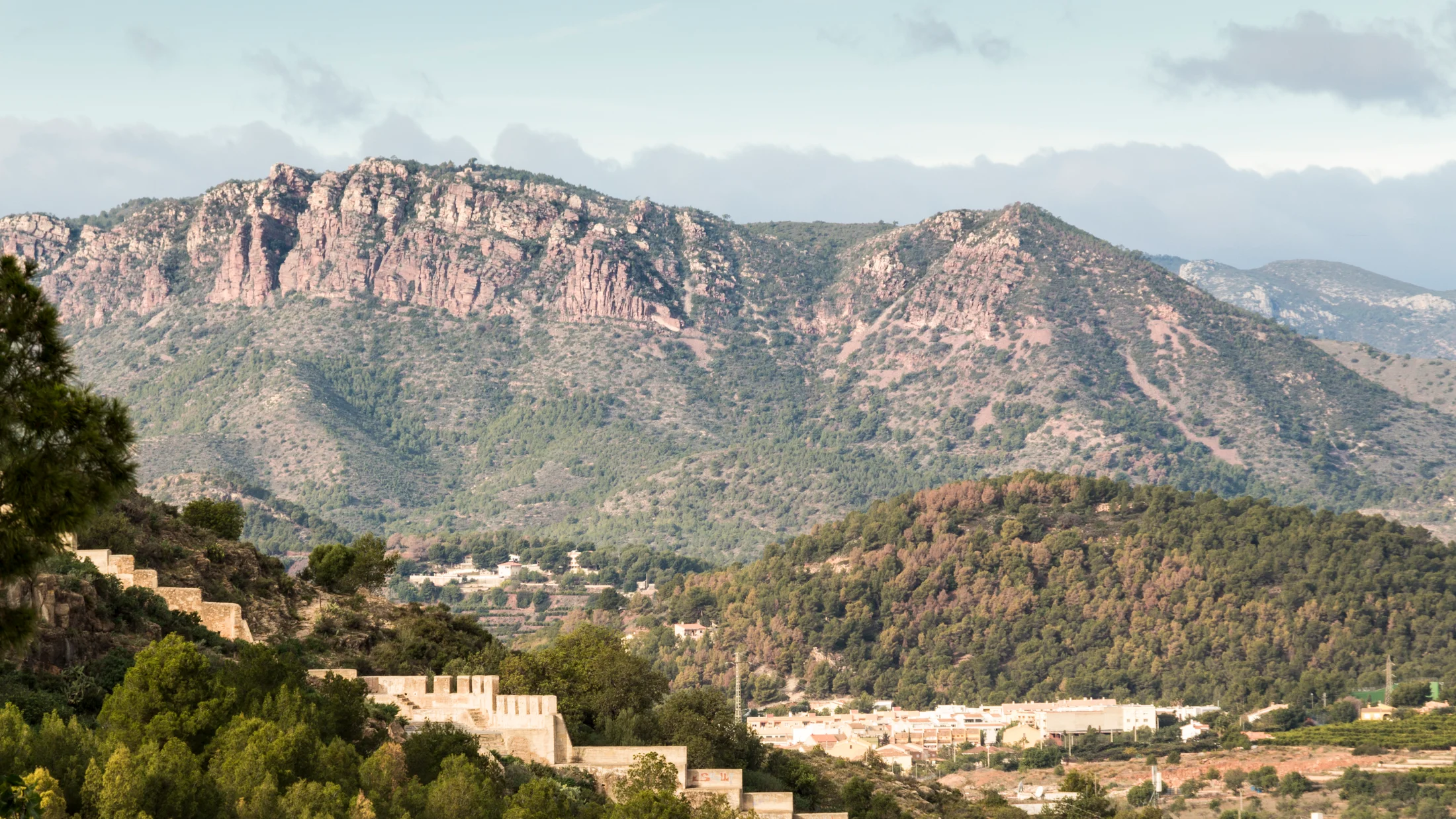
The terrain alternates ridges of rodeno — the distinctive red siliceous sandstone of the area, coloured by the iron oxide cementing quartz grains — with valleys of Aleppo pine and cork oak. The Garbí, Olocau and Calderona ravines create moist corridors where poplars, willows and oleander contrast with the dryness of sun-facing slopes. Garbí peak (601 m), at the sierra's eastern end, serves as a natural viewpoint: from its summit you can see the Albufera lagoon, Valencia port, the Columbretes Islands on clear days and, in extreme visibility, the outline of Ibiza on the horizon. The 4 km trail from the Portaceli charterhouse, with 350 m of elevation gain through pine forest and rodeno outcrops, is one of the park's most popular routes.

Monastic heritage defines the cultural identity of the territory. The Portaceli Charterhouse, founded in 1272, is the oldest inhabited charterhouse in Spain; its outer cloister and church are open to visitors during set hours. The Vall de Crist Charterhouse in Altura preserves 14th-century ruins with ongoing archaeological excavations gradually revealing the original layout. The 15th-century Sant Esperit Convent in Gilet offers lodging in its guesthouse for those seeking retreat and silence. These three monasteries, linked by marked trails, form the Ruta de los Monasterios de la Sierra Calderona, a two-to-three-day itinerary combining heritage and hiking.

The natural park's trail network includes over 30 routes at various levels. The GR-10 crosses the sierra east to west over 60 km. For day hikers, circular routes from Olocau (32.3 km of paths within the municipality), Serra and Náquera offer 2-to-5-hour walks through pine forest and ravines. Mountain biking finds forest tracks and singletracks with 300-600 m elevation changes. Wildlife includes over 140 bird species — among them Bonelli's eagle, eagle owl and peregrine falcon — plus genet, badger, wildcat and horseshoe bats in the rodeno cavities. Average annual temperature is 17 °C, with irregular rainfall of 350-600 mm giving the landscape an alternation between dry slopes of aromatic scrub and cool hollows where greenery and the scent of resin persist throughout the year.
Practical information

Everything you need to know for your visit to Sierra Calderona

How to get there
From Valencia via the CV-35 to Llíria or Serra (30 km, 30 min). From Castellón via the A-7, exit at Sagunto, then CV-25 to Segorbe (50 km, 40 min). MetroValencia bus line 145 to Serra. Parking at main park entrances in Olocau, Serra and Náquera.
Area Information
Natural park office in Serra with information and maps. Three visitable monasteries: Portaceli (1272), Vall de Crist (14th c.) and Sant Esperit in Gilet (15th c.). Rural lodgings in Serra, Olocau, Náquera and Segorbe. Restaurants serving Valencian cuisine (rice dishes, sierra cured meats).
Geography
Range between the Palancia and Turia rivers, running NW-SE, with 18,019 ha of natural park. Highest point at Montemayor (1,012 m). Dual substrate: rodeno (red siliceous sandstone) and limestone. Deep ravines acting as moist corridors between the ridges.
Flora & Fauna
Cork oak forests on siliceous soil with understory of strawberry trees, myrtle, heather and sarsaparilla. Aleppo pine on limestone. Oleander and poplars in ravines. Fauna: Bonelli's eagle, eagle owl, peregrine falcon, wildcat, genet, badger and horseshoe bats in cavities. Over 140 bird species recorded.

Things to do

Find the best plans and things to do in Sierra Calderona

20

Accommodations

Best accommodation options in Sierra Calderona

Loading accommodation options...

Frequently Asked Questions

Get answers about Sierra Calderona

Yes. MetroValencia bus line 145 connects Valencia with Serra, the main gateway to the natural park. The journey takes about 45 minutes. Several marked hiking trails start from Serra. Reaching other entry points such as Olocau or Náquera is easier with a private vehicle, as bus connections are less frequent.
The ascent of Garbí from the Portaceli charterhouse is the most representative: 4 km one way with 350 m of elevation gain on a marked trail. From the summit (601 m) you can see the Albufera, Valencia port and the Columbretes Islands. It takes 2-3 hours return and suits hikers with average fitness.
The Portaceli Charterhouse, founded in 1272, is still home to Carthusian monks and interior access is restricted. However, the outer cloister and church can be visited during set hours. The monastery grounds, with their gardens and paths, are freely accessible and serve as the usual starting point for several park hiking trails.
Yes. The park has forest tracks and singletracks with 300 to 600 metres of elevation change. The most popular routes start from Olocau, Serra and Náquera. There are no bike parks, so self-sufficiency is required. Avoid narrow pedestrian trails out of respect for walkers and check the natural park regulations on cycling.
Rodeno is a red sandstone formed by the cementation of quartz grains with iron oxide, which gives it its distinctive tone. In Sierra Calderona it outcrops along the ridges and eastern slopes, creating a visual contrast with the grey limestone zones. Cork oaks grow on rodeno because its siliceous nature produces acidic soil favourable to the species.