The essentials of Laguna de la Ratosa

  • • Greater flamingo as a regular visitor from neighbouring Fuente de Piedra lagoon 20 km away
  • • White-headed duck, one of Europe's most endangered waterfowl, recorded at the lagoon
  • • Triple Natura 2000 protection: SCI, ZEC and SPA under code ES6170001
  • • Endorheic brackish lagoon with a 145-hectare buffer zone around the water body
  • • Low-angle dawn light reflecting pink tones on the water surface for photography

Description

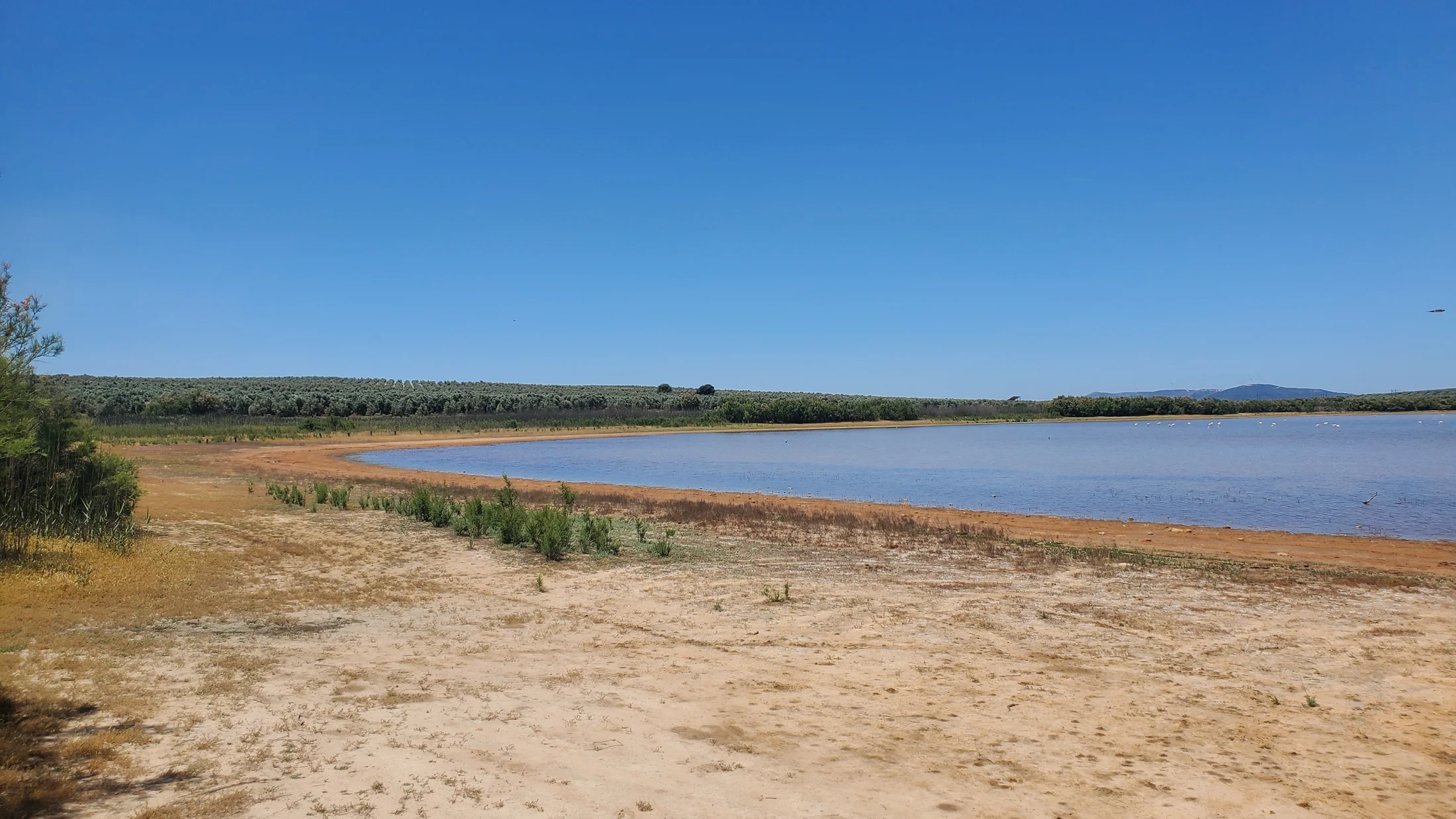
Laguna de la Ratosa is a 22.7-hectare endorheic wetland straddling the municipalities of Alameda and Humilladero in Málaga province. Declared a Natural Reserve in 1989, it holds triple Natura 2000 status: Site of Community Importance (SCI), Special Conservation Zone (ZEC) and Special Protection Area for Birds (SPA), under code ES6170001. The lagoon is also listed in Andalusia's Wetland Inventory and has a 145-hectare buffer zone around the water body that restricts farming and grazing in its immediate surroundings.

The lagoon contains brackish, shallow water of a seasonal nature, meaning its water level fluctuates markedly throughout the year: it peaks in winter and spring after rains and may dry out partially or completely in summer. Far from reducing its ecological value, this seasonal character creates a specialist habitat that filters the species able to use it. Salinity and seasonal flooding are incompatible with fish, which benefits the aquatic invertebrates — especially crustaceans — that in turn form the food base for the birds that frequent the lagoon.

Birds are the main draw at Laguna de la Ratosa, with communities linked to the nearby Laguna de Fuente de Piedra, just 20 kilometres away. Greater flamingo uses the lagoon as a supplementary feeding area when water levels at Fuente de Piedra drop. Alongside flamingo, regularly recorded species include great crested grebe, black-necked grebe, grey heron, black-winged stilt, avocet, mallard, northern shoveler, red-crested pochard, marsh harrier and white-headed duck — one of Europe's most endangered waterfowl. Spring and autumn migration periods concentrate the highest species diversity, and winter brings wintering contingents taking advantage of the area's mild climate, with an annual average temperature of 16.8 °C.

The lagoon sits at roughly 450 metres above sea level, surrounded by gentle hills and cereal and olive farmland that define an open agricultural landscape. There are no tall trees on the shore, making long-range observation easy but also leaving visitors exposed to wind and direct sun. The low-angle light of early morning, when the lagoon's surface reflects the sky in pink tones and flamingos form lines across the water, is the condition most sought by visiting nature photographers. Access is free but regulated: approaching the water outside the designated paths is prohibited, and binoculars or a spotting scope are recommended to avoid disturbing the birdlife. Combining La Ratosa with nearby Fuente de Piedra on a single birding day is the most complete option for visitors to Málaga's inland wetlands.
Practical information

Everything you need to know for your visit to Laguna de la Ratosa

How to get there
From Málaga, the A-92 reaches Alameda in roughly one hour (85 km). From Antequera, about 30 minutes via the A-92 and local roads. No direct public transport to the lagoon; access is by car from Alameda or Humilladero.
Area Information
The lagoon lies between Alameda and Humilladero, 20 km from Laguna de Fuente de Piedra and 30 km from Antequera. No dedicated visitor centre. Antequera tourist office provides information on the district's wetlands.
Geography
A 22.7-hectare endorheic lagoon at 450 m altitude, between the municipalities of Alameda and Humilladero (Málaga). Brackish seasonal water, surrounded by gentle hills and cereal and olive farmland.
Flora & Fauna
Greater flamingo, white-headed duck, marsh harrier, black-winged stilt, avocet and grey heron among the key birds. Aquatic crustaceans as the food base. Halophytic vegetation on the lagoon's shores.

Things to do

Find the best plans and things to do in Laguna de la Ratosa

20

Accommodations

Best accommodation options in Laguna de la Ratosa

Loading accommodation options...

Frequently Asked Questions

Get answers about Laguna de la Ratosa

Yes. Greater flamingo uses the lagoon as a supplementary feeding area, especially when water levels drop at neighbouring Laguna de Fuente de Piedra. They are most likely between autumn and spring. However, their presence is not constant and depends on water conditions at both lagoons at any given time.
Early morning between 7:00 and 10:00 offers the best light and peak waterbird activity. Late afternoon also brings good activity, with low-angle light that favours photography. Bring at least 8x42 binoculars or a spotting scope, as approaching the water body is not permitted.
Laguna de la Ratosa is seasonal, meaning its water level fluctuates with rainfall. In particularly dry summers it may dry out partially or completely. The highest levels occur between December and May. Before visiting in summer, check water status with the Antequera tourist office.
Fuente de Piedra is far larger (1,364 hectares versus 22.7) and hosts the second-largest flamingo breeding colony in the western Mediterranean. La Ratosa is smaller and more intimate, with fewer visitors and a quieter birdwatching experience. Both share bird communities and complement each other on a single birding day.
Yes. They are about 20 kilometres apart by road (25 minutes). A day combining both lagoons is the most complete birdwatching option in the area. Fuente de Piedra has a visitor centre with information, while La Ratosa offers a more solitary, direct experience with the landscape.