Stands out for

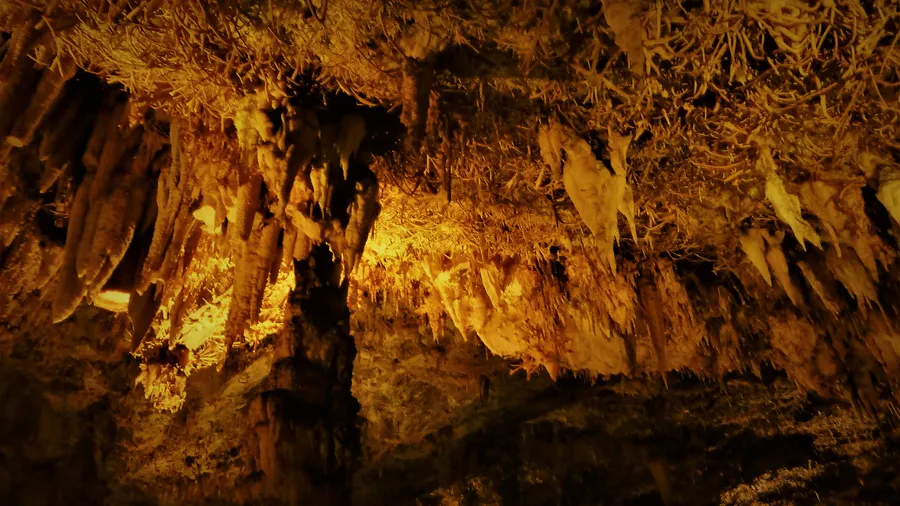
  • • World’s highest concentration of eccentric stalactites
  • • 125-meter tour with columns and a dried lake
  • • Interior overlook with panoramic views of the cavern
  • • ‘Pozalagua Flashback’ experience exploring the cave in darkness with headlamps
  • • Natural amphitheater hosting up to 2,000 people for cultural events

Description

Context Pozalagua Cave, located in the Karrantza Valley within the Armañón Natural Park, is a subterranean site stretching 125 meters and home to the world's largest concentration of eccentric stalactites—mineral formations that grow in all directions, defying gravity. Situated beneath the Ranero rock mass, the cave offers an accessible, protected route where a constant 13°C temperature maintains a cool, humid atmosphere.

The Experience The guided visit begins with a welcome and an overview of the cave and its rules. Guests then proceed through the interior, observing columns, flowstone deposits, and a dried-up lake as the guide explains the geological processes. The tour concludes at an interior overlook offering panoramic views of the cavern, where silence and moisture envelop visitors. On Saturdays, visitors may opt for the optional 'Pozalagua Flashback' experience, exploring the cave in darkness using front-mounted headlamps to recreate the original discovery.

For Whom This activity is suitable for families with children aged 6 and older, individuals with limited mobility due to its adapted access, and geology enthusiasts interested in rare natural formations. Not recommended for those with severe claustrophobia or those unable to tolerate cool, damp environments.

Local Context The cave’s natural surroundings feature pine forests and a protected landscape, with a natural amphitheater located just outside the entrance that hosts cultural events. This space integrates the region’s rich geology with the community life of the Karrantza Valley.

Key Info

Difficulty

Easy

Setting

Outdoors

Best season

All year round

Recommended Age Range

Ages 6+

Kid-friendly Booking required

Nearby Destinations

Practical Guide

Everything you need to know about Guided Tour of Pozalagua Cave in Ranero

This is general information about this type of experience. Check the offers for specific details

Location
Expert Recommendations

Bring appropriate warm clothing for the constant 13°C environment and wear comfortable walking shoes. The cave is accessible to wheelchairs. The best time to visit is year-round, with extended hours in summer. Reserve in advance for large groups or peak season visits. Consider the 'Pozalagua Flashback' experience for a more immersive visit.

Physical Requirements

low physical activity, suitable for children from 6 years old, wheelchair accessible

About the Area

Pozalagua Cave lies in the Karrantza Valley, within the Armañón Natural Park, a region of pine forests and protected rock formations. Nearby attractions include the Dolomites Museum and other caves such as Santimamiñe and Baltzola. The natural amphitheater in front of the cave hosts cultural events, and the area offers hiking trails and picnic spaces.

Offers

Best available offers for Guided Tour of Pozalagua Cave in Ranero

Visita guiada Cuevas Pozalagua y comida bizkaina

From
€85

Cueva de Pozalagua, alubiada y Balmaseda

From
€95

Nearby Accommodations

Find where to stay near Guided Tour of Pozalagua Cave in Ranero

Loading accommodation options...

Frequently Asked Questions

Get answers about Guided Tour of Pozalagua Cave in Ranero

Yes, booking is recommended, especially for large groups and during peak season, to secure a spot on the guided visit.
Wear warm clothing due to the constant 13°C temperature and the cool, humid environment inside the cave.
Yes, the cave has adapted access for wheelchairs, enabling visitors with limited mobility to enjoy the experience.
The guided visit lasts approximately 45 to 50 minutes, including the tour and the guide’s explanation.
It is a special visit held on Saturdays at 11:30 a.m., where visitors explore the cave in darkness using front-mounted headlamps to recreate the original discovery.