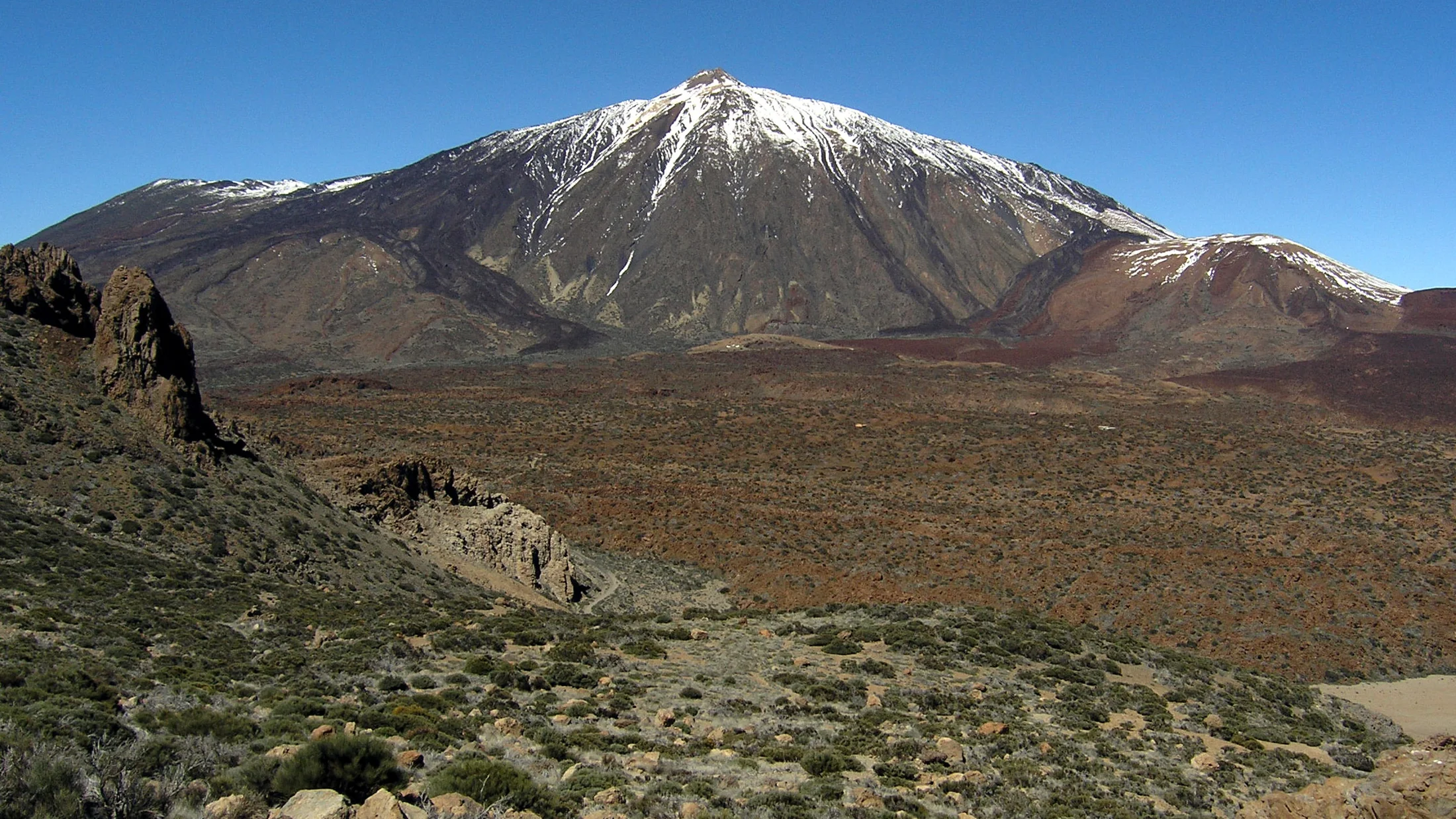
El Teide rises 3,718 metres above sea level in the centre of Tenerife, crowning the island as a volcano that is both Spain's highest point and the world's third-tallest volcano when measured from its oceanic base. Teide National Park, declared in 1954 and a UNESCO World Heritage Site since 2007, protects 18,990 hectares of extraordinary volcanic landscape that receives over four million visitors annually, making it Europe's most visited national park.
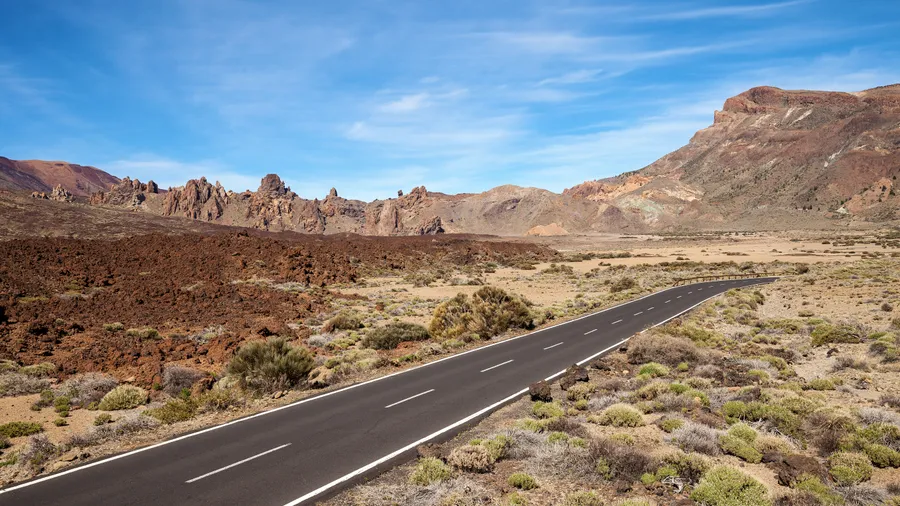
The Las Cañadas caldera, an elliptical depression 16 kilometres in diameter and 45 in circumference, forms the stage upon which the stratovolcano rises. Walking across the floor of Las Cañadas at sunset, when the low-angled light paints the solidified lava flows in orange and violet, is to enter a landscape that seems more Martian than terrestrial. The rock formations of Los Roques de García, with the iconic Roque Cinchado in the foreground and the Teide cone behind, compose one of Spain's most photographed natural scenes.
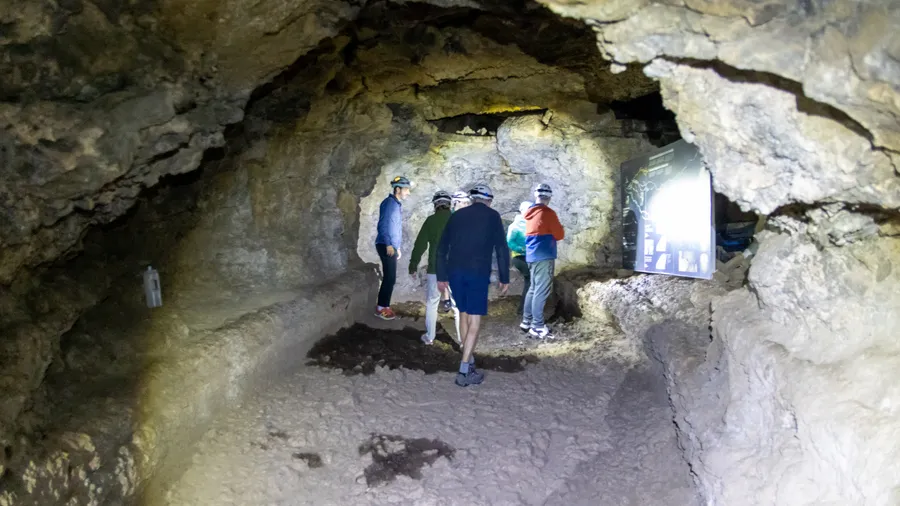
The geology of El Teide tells a story spanning 170,000 years of volcanic activity. The last eruption of the Teide-Pico Viejo complex occurred in 1798 (the Narices del Teide), and the volcano is classified as active and permanently monitored by Spain's National Geographic Institute. Lava flows, pumice fields, crater fumaroles and exposed volcanic dykes form an open-air geological museum that volcanologists consider a world reference.
The flora of El Teide defies the extreme conditions of altitude, solar radiation and thermal oscillations that can exceed 30 °C between day and night. The red tajinaste (Echium wildpretii), endemic to Tenerife, blooms between May and June, raising floral towers up to 3 metres tall that paint the park's slopes red. The Teide violet (Viola cheiranthifolia), the highest-altitude flowering plant in Spain (up to 3,600 m), inhabits the crater surroundings where almost no other species survives. Teide broom (Cytisus supranubius) scrub dominates the shrub vegetation, blooming in white and pink during spring.
El Teide is one of the world's premier locations for astronomical observation. Low light pollution, atmospheric stability and altitude have made Las Cañadas home to the Teide Observatory, operated by the Institute of Astrophysics of the Canary Islands (IAC), which houses internationally renowned solar telescopes. The Canary Islands Sky Law (2018) protects sky quality, and the park holds Starlight certification accrediting it as an astronomical tourism destination.
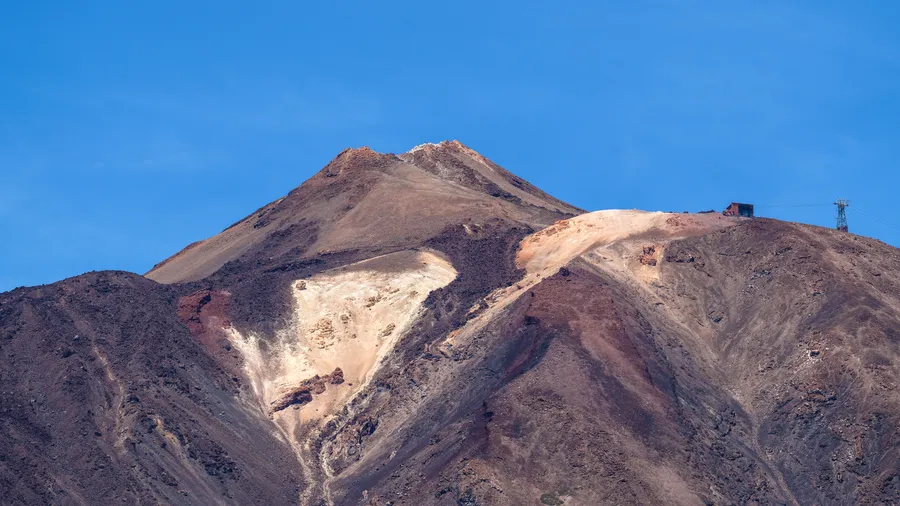
The ascent to the summit can be made by combining the cable car with a final trail. The cable car climbs from the base station (2,356 m) to La Rambleta (3,555 m) in 8 minutes. From there, the trail to the Peak of Teide (3,718 m) requires a free permit that must be requested in advance through the National Park website, as access is limited to 200 people per day to preserve the crater environment. The full ascent on foot via the Montaña Blanca trail is a demanding route of about 5-6 hours gaining 1,300 metres of elevation, offering the most immersive volcano experience.
The Altavista Refuge, at 3,260 metres, allows an overnight stay for a dawn summit, a moment when the triangular shadow of El Teide is projected across the cloud sea and the Atlantic like a perfect triangle. This shadow, visible only in the minutes after sunrise, is one of the Canary Islands' most singular natural phenomena.
Las Cañadas offers a trail network for exploring the park without ascending to the crater. The Roques de García route (trail 3), at 3.5 km, circles these spectacular volcanic formations. The Siete Cañadas trail (trail 4) crosses the caldera floor along 8 km, traversing broom fields and lava flows from different eruptions. The Paisaje Lunar route, departing from the village of Vilaflor, leads to formations of eroded white tuff evoking a lunar surface.