The Cabo de Gata-Níjar Natural Park occupies the southeastern tip of the Iberian Peninsula, where a volcanic sierra plunges into the Mediterranean to create a coastline of cliffs, hidden coves and seabeds of a clarity more reminiscent of the Aegean than of Andalusia. With 49,512 terrestrial hectares and 12,012 protected marine hectares, it is the largest protected area on Spain's Mediterranean coast and Andalusia's first maritime-terrestrial park, declared in 1987.
What makes Cabo de Gata unique is its volcanic origin. Eruptions that shook this coast between fourteen and seven million years ago left a legacy of domes, calderas and lava flows that erosion has since shaped into landscapes of austere, mineral beauty. Playa de los Muertos, at the park's northern end, displays white pebbles against a turquoise sea; Cala de San Pedro, accessible only on foot or by boat, hosts an alternative community beside a freshwater spring that wells up among the rocks; and the Arrecife de Las Sirenas, in front of the Cape lighthouse, is a cluster of eroded volcanic chimneys rising from the water like natural sculptures.
Beneath the surface, the marine reserve protects Posidonia oceanica meadows, red gorgonians and a biodiversity that includes over one thousand marine invertebrate species. Snorkelling is possible in nearly every cove, and dive centres in San José and La Isleta del Moro offer guided dives to thirty metres, where submarine volcanic walls are covered in sponges and anemones.
On land, the scenery is as striking as it is underwater. Cabo de Gata receives barely 200 millimetres of rain a year, making it the most arid point in continental Europe. This extreme dryness has produced a steppe ecosystem where the European fan palm — the continent's only native palm — grows alongside esparto grasslands, jujube bushes and the agave plants that line the path edges. In spring, after the sparse rains, the desert briefly blooms and the hillsides flush yellow and violet.
The Cabo de Gata salt flats, at the park's southern tip, are one of the western Mediterranean's most important wetlands for migratory birds. Between October and March, hundreds of greater flamingos feed in the shallow lagoons alongside avocets, black-winged stilts and dunlins. The flats still produce salt by traditional methods, a trade dating back to Phoenician times.
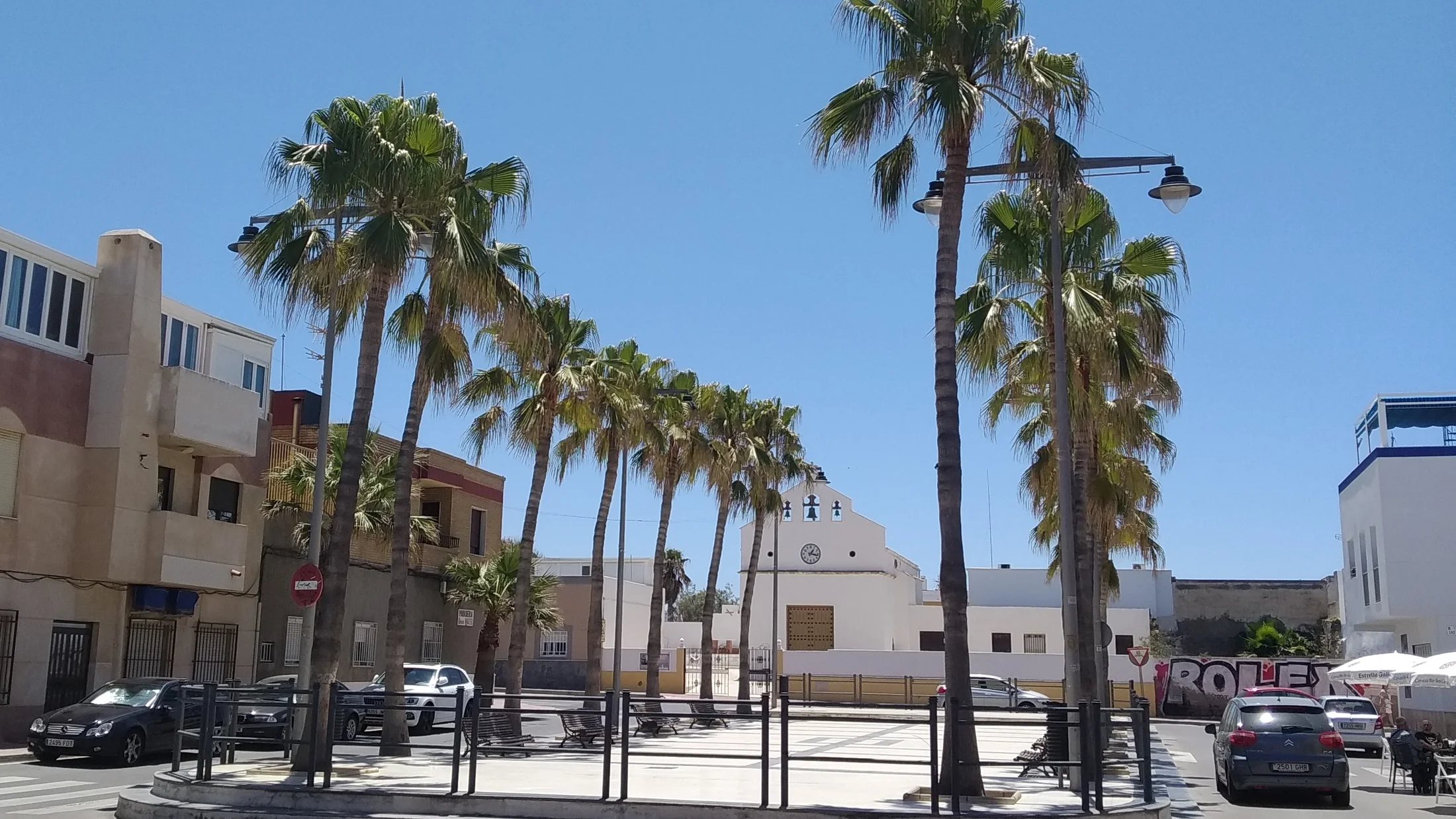
The park's villages preserve an architecture and pace of life that the urban development sprawling along Spain's coast has not entirely managed to change. San José serves as a logistical base with restaurants, accommodation and kayak rental. La Isleta del Moro retains its fishing-village character with just a few dozen whitewashed houses. Agua Amarga offers a more refined atmosphere without losing its human scale. And Las Negras, at the foot of a black volcanic hill, combines beach bars with access to the most remote coves.
Exploring the coast by kayak is one of the best ways to grasp the park's scale. From San José to Los Escullos, the shoreline unfolds in a sequence of golden cliffs, sea caves and roadless beaches. The interior can also be explored by mountain bike along forest tracks that cross dry riverbeds and abandoned farmsteads, or on waymarked trails linking villages to coves.
Cabo de Gata proves that aridity is not synonymous with emptiness. On the contrary: in extreme dryness, every drop of water, every clump of esparto, every cove sheltered from the wind acquires a value that greener landscapes sometimes conceal. It is a place where the Mediterranean reveals itself at its most bare — and, for that very reason, its most honest.