When most people think of Burgos, the image of its magnificent Gothic cathedral, a UNESCO World Heritage site, immediately springs to mind. While the cathedral is undoubtedly a masterpiece, the true soul of the province is found scattered across its countryside, hidden within some of Spain's most enchanting villages. To truly experience this region is to venture beyond the city walls and discover a landscape where time seems to have paused. Here, medieval fortresses loom over dramatic river gorges, and ancient monasteries whisper tales from centuries past.
This guide is your definitive resource for exploring the most captivating pueblos de burgos bonitos. We move beyond a simple list to offer a comprehensive travel plan for eight remarkable destinations, including Covarrubias, Frías, and Puentedey. For each village, you will find practical, actionable insights designed to help you craft the perfect getaway. We will detail must-see heritage sites, suggest unique Picuco experiences to connect you with local culture, and provide tailored itineraries for both quick day trips and immersive multi-day stays.
Whether you are seeking a romantic escape, a family adventure, or a solo journey into the heart of Castilla y León, this article provides the tools you need. We'll cover everything from the best times to visit and accessibility notes to practical tips on parking and accommodation. Prepare to uncover the architectural wonders, serene landscapes, and authentic spirit that make the villages of Burgos an unforgettable destination for any discerning traveller.
1. Covarrubias: The Cradle of Castile
Known as the "Cradle of Castile" (Cuna de Castilla), Covarrubias is undoubtedly one of the most enchanting and historically significant pueblos de burgos bonitos. Nestled in the Arlanza Valley, this village is a masterclass in medieval preservation. Walking through its streets feels like stepping back into the 10th century, with its traditional half-timbered houses, arcaded plazas, and the formidable Torreón de Fernán González standing as proud testaments to its storied past.
The village's architecture is a captivating blend of Castilian popular style and Germanic influences, a legacy of the Norwegian Princess Kristina who married a Spanish prince and is buried here. This unique heritage, combined with its perfectly maintained historical centre, makes Covarrubias a living museum and a truly unforgettable destination.
Highlights and Must-See Sights
- Torreón de Fernán González: This 10th-century defensive tower is one of the oldest surviving examples of Mozarabic military architecture in Spain. Its imposing structure offers panoramic views of the village and surrounding valley.
- Collegiate Church of San Cosme y San Damián: A stunning example of late Gothic architecture, this church houses the tomb of Princess Kristina of Norway and a magnificent 17th-century organ, one of the oldest in Castile.
- Plaza Mayor: The heart of the village, this arcaded square is lined with traditional houses featuring wooden-beamed porches. It’s the perfect spot to enjoy a coffee and soak in the medieval atmosphere.
- Archivo del Adelantamiento de Castilla: A beautiful Renaissance building that once housed one of the most important archives in the kingdom.
Practical Information and Itinerary Ideas
Best Time to Visit: Spring and autumn offer pleasant weather for exploring, vibrant colours in the Arlanza Valley, and fewer tourists than the summer peak.
Accessibility: Covarrubias is largely pedestrian-friendly, but the cobbled streets can be uneven. Families with pushchairs should be prepared for some bumpy sections. The main sights are concentrated in the compact historical centre. Pets are welcome in the outdoor areas and plazas.
Suggested Itinerary (Day Trip):
Start your morning at the Torreón de Fernán González before exploring the winding streets. Visit the Collegiate Church, then enjoy a traditional Castilian lunch at a local restaurant like Casa Galin. In the afternoon, relax in the Plaza Mayor or take a short drive to the nearby ruins of the Monastery of San Pedro de Arlanza.
Local Tip: Park your vehicle in the designated car parks just outside the old town walls. This helps preserve the village's unique atmosphere and makes exploring on foot much more enjoyable.
2. Frías: The Medieval Hilltop Fortress
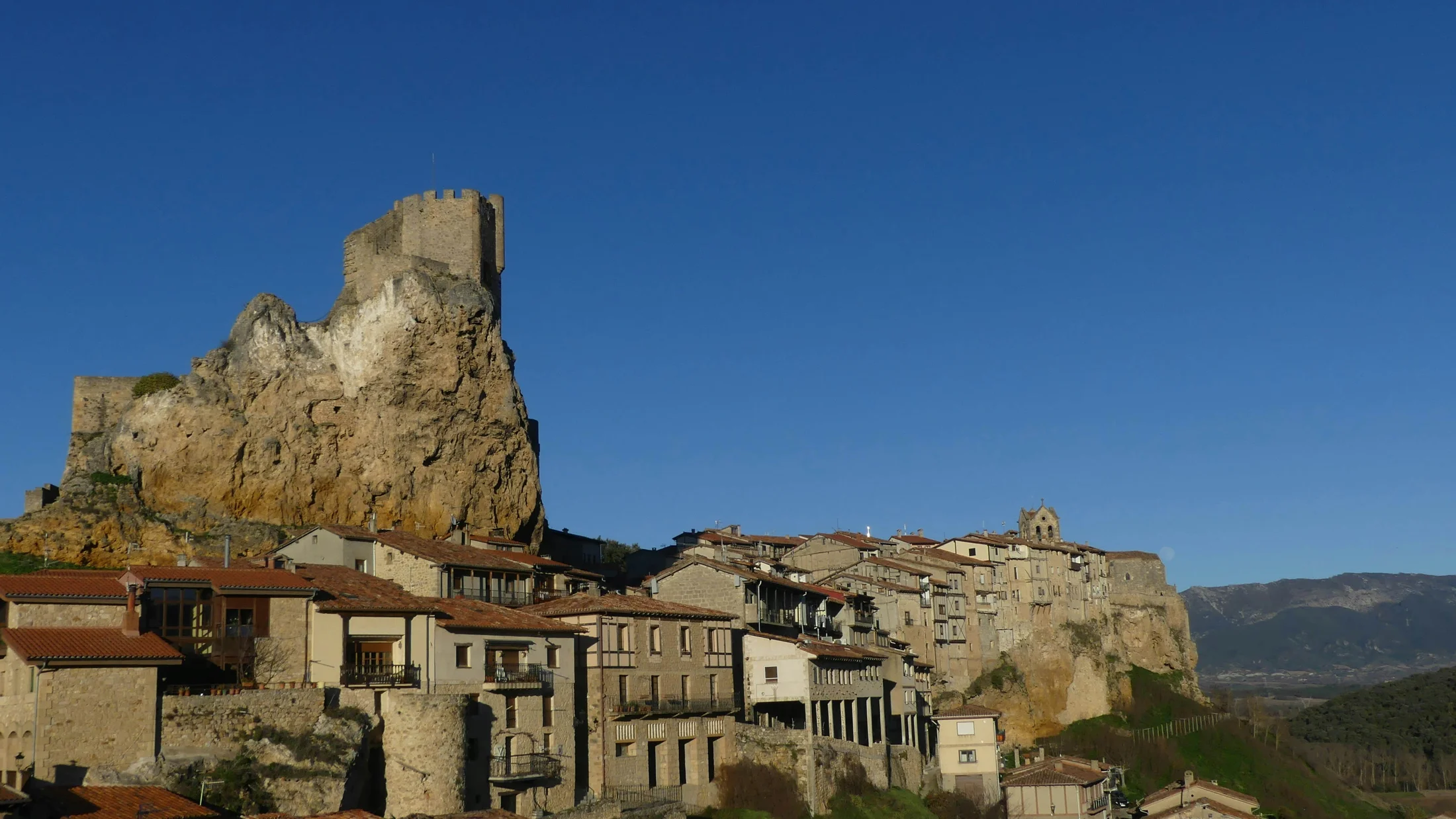
Dramatically perched on a craggy hill overlooking the Ebro River, Frías holds the unique title of being the smallest city in Spain. Its fairytale appearance, dominated by a formidable castle and iconic medieval bridge, makes it a standout among the pueblos de burgos bonitos. This village is a breathtaking example of medieval strategic positioning, where every stone tells a story of defence, trade, and resilience.
Walking up its steep, narrow streets is a journey through time, leading to the imposing Castillo de los Velasco. The town's layout, with its "hanging houses" (casas colgadas) clinging to the cliff edge, showcases a remarkable adaptation to the challenging terrain. Frías is not just a village; it's a living monument to medieval military architecture, offering some of the most spectacular panoramic views in the entire province.

Highlights and Must-See Sights
- Castillo de los Velasco: This 12th-century castle is the crown jewel of Frías. Climbing its keep offers unparalleled 360-degree views of the Ebro valley, the Montes Obarenes, and the village below. Its rock-hewn foundations are a sight to behold.
- Puente Medieval: The magnificent Romanesque bridge over the Ebro River is a symbol of the town. Its distinctive central defensive tower was added in the 14th century to control passage and collect tolls.
- Casas Colgadas: Wander through the upper parts of the town to see these incredible houses built right into the cliffside. Their wooden and tuff-stone structures seem to defy gravity.
- Church of San Vicente Mártir: Located at the highest point of the old town, next to the castle, this church combines Romanesque and Gothic elements and provides another excellent vantage point.
Practical Information and Itinerary Ideas
Best Time to Visit: Late spring and early autumn are ideal, with comfortable temperatures for exploring the steep streets and clear skies for the best views. The summer months can be popular, so an early start is recommended.
Accessibility: Frías is built on a steep hill with many cobbled streets and steps, making it challenging for pushchairs and those with mobility issues. Good, comfortable footwear is essential. Pets are welcome in the village's open areas, but access to indoor sights may be restricted.
Suggested Itinerary (Day Trip):
Begin by parking at the base of the town and walking across the medieval bridge. Ascend through the village to the Castillo de los Velasco to enjoy the morning views. Afterwards, explore the Casas Colgadas and the Church of San Vicente. Enjoy lunch at a restaurant with views over the valley. For a truly unforgettable perspective, consider complementing your visit with a hot air balloon flight over the Merindades region to see Frías from the sky.
Local Tip: Plan your meals in advance. Frías has a limited number of restaurants, and they can get very busy, especially on weekends. It's a good idea to book a table or arrive early to secure a spot.
3. Puentedey: The Village Built on a Natural Bridge
Declared one of "Spain's Most Beautiful Villages," Puentedey is a testament to the seamless fusion of nature's artistry and human ingenuity. Its name, derived from the Latin "Pons Dei" or "Bridge of God," perfectly captures its essence. The entire village is dramatically perched atop a colossal natural limestone arch, carved over millennia by the relentless flow of the Nela River. This remarkable geological formation isn't just a backdrop; it's the very foundation of the community, making Puentedey one of the most unique and picturesque pueblos de burgos bonitos.
The sight of the Romanesque church of San Pelayo and the cluster of traditional stone houses seemingly suspended over the river is truly breathtaking. Puentedey offers a profound connection to the raw power of nature, showcasing a landscape where human settlement has adapted to, rather than conquered, its extraordinary environment. It is a must-visit destination within the stunning Las Merindades region.

Highlights and Must-See Sights
- The Natural Arch (Puente de Dios): This is the undisputed star attraction. Walk beneath its massive span to appreciate its scale, and then view it from the riverbanks to see the village precariously balanced on top.
- Church of San Pelayo: A simple yet charming Romanesque church situated at the highest point of the village. Its solid stone construction and strategic location are characteristic of the region's medieval architecture.
- Palace of the Brizuela: A fortified 15th-century house that stands guard at the entrance to the bridge, featuring two defensive towers that speak to the area's historical importance.
- River Nela Walk: Follow the gentle walking paths along the river to discover different perspectives of the bridge and enjoy the tranquil natural surroundings.
Practical Information and Itinerary Ideas
Best Time to Visit: Spring is ideal, as the Nela River flows with more volume, creating a more dramatic scene. Autumn also offers beautiful foliage in the surrounding valley.
Accessibility: The village itself is small and walkable, but accessing the lower river path involves some stairs and uneven terrain. Families with pushchairs can navigate the main village street easily. The area is very pet-friendly, with plenty of open space for dogs to explore along the river.
Suggested Itinerary (Day Trip):
Arrive in the morning to capture the best light for photographing the bridge. Explore the village, visiting the church and palace. For lunch, enjoy a picnic by the river or visit a local eatery in a nearby town like Villarcayo. In the afternoon, take a hike along the Nela or discover more of the area's natural wonders; explore the stunning landscape of Las Merindades for a full experience.
Local Tip: While Puentedey has limited services, it's a perfect spot for a picnic. Stock up on local cheeses, bread, and wine in a larger town like Medina de Pomar or Villarcayo before you arrive for an unforgettable riverside meal.
4. Quintanilla de las Viñas: A Visigothic Treasure
While many of the pueblos de burgos bonitos are famed for their medieval town centres, Quintanilla de las Viñas offers a journey even further back in time. This unassuming hamlet is home to an architectural and historical jewel of incalculable value: the Church of Santa María de Lara. This 7th-century Visigothic church stands as one of the most significant and best-preserved examples of pre-Romanesque art in all of Spain.
The village itself is modest, serving as a quiet guardian to this extraordinary monument. Visiting Quintanilla de las Viñas is less about wandering through a bustling medieval town and more about making a pilgrimage to a sacred site that has withstood over 1,300 years of history. Its intricate, symbolic carvings and ancient aura provide a profound connection to the Visigothic Kingdom and the very origins of Spanish religious architecture.
Highlights and Must-See Sights
- Church of Santa María de Lara: The undisputed star. This Visigothic hermitage is a masterpiece, famous for its exterior friezes decorated with solar motifs, birds, and grapevines. Its horseshoe arches are a clear precursor to later Mozarabic and Mudéjar styles.
- Intricate Stone Carvings: Pay close attention to the reliefs on the exterior apse and the triumphal arch inside. The carvings, depicting angels, the sun, and the moon, are rich in symbolism and offer a rare glimpse into the cosmology of the Visigothic people.
- The Surrounding Landscape: The church is set in a serene landscape of holm oaks and farmland in the Arlanza Valley, providing a peaceful and contemplative atmosphere that perfectly complements the ancient stones.
- Vernacular Architecture: Although the village is small, take a moment to observe the traditional Castilian stone houses. For a deeper understanding of these building styles, you can learn more about vernacular architecture in the region.
Practical Information and Itinerary Ideas
Best Time to Visit: Spring and autumn are ideal, offering mild weather and beautiful light for appreciating the stone carvings. Visiting on a weekday outside of peak tourist season can grant you a near-private experience.
Accessibility: The area around the church is relatively flat and accessible. The village is very small and easily walkable. As it's a tiny hamlet, amenities are limited, so plan accordingly. Pets are welcome in the surrounding area but not inside the church.
Suggested Itinerary (Half-Day):
Quintanilla de las Viñas is best combined with other nearby sites. Dedicate the morning to a guided tour of the Church of Santa María de Lara for a full appreciation of its history. Afterwards, travel to nearby Covarrubias or Lerma for lunch and to explore a larger medieval town in the afternoon.
Local Tip: Access to the interior of the church is often managed by a custodian in the village. It is highly recommended to call in advance or check with the local tourist office in a nearby town to confirm opening times and arrange a visit.
5. Lerma: The Grandeur of a Baroque Dream
Lerma stands as a monumental testament to the power and ambition of 17th-century Spain, earning its place among the most impressive pueblos de burgos bonitos. Conceived as a courtly town by the Duke of Lerma, the powerful favourite of King Philip III, this village is a masterpiece of Herrerian-baroque urban planning. Its vast, harmonious Plaza Mayor and perfectly aligned streets were designed to impress and function as a stage for the royal court.
Unlike the winding medieval layouts of other villages, Lerma’s structured elegance and architectural unity offer a unique experience. The town feels like an open-air museum dedicated to Spain's Golden Age, where every palace, convent, and archway tells a story of immense wealth and influence. Its grandeur remains palpable, inviting visitors to imagine the lavish festivals and political dramas that once unfolded here.

Highlights and Must-See Sights
- Plaza Mayor: One of Spain's largest and most magnificent baroque squares, the Ducal Plaza is the heart of Lerma. Originally a bullring, it is now flanked by the impressive Ducal Palace (now a Parador hotel) and is a breathtaking sight.
- Ducal Palace (Parador de Lerma): Dominating the plaza, this former palace offers a glimpse into the opulent lifestyle of the Duke. Even if you aren't staying, its exterior and courtyards are a must-see.
- Collegiate Church of San Pedro: This grand church connected to the palace via a raised walkway contains beautiful altarpieces, a magnificent organ, and the striking bronze praying statue of Archbishop Cristóbal de Rojas y Sandoval, the Duke's uncle.
- Pasadizo Ducal (Ducal Walkway): This elevated, covered passage allowed the Duke and his court to move between the palace and the church without setting foot on the public street.
Practical Information and Itinerary Ideas
Best Time to Visit: Late spring and early autumn provide ideal weather for strolling through the expansive plaza and streets. The town's Baroque Music Festival in summer is also a major draw.
Accessibility: The Plaza Mayor and main streets are wide, flat, and paved, making them highly accessible for families with pushchairs and visitors with mobility challenges. Many of the key sights are concentrated around this central area. Pets are welcome in the plaza and outdoor café areas.
Suggested Itinerary (Day Trip):
Begin your visit at the Plaza Mayor, taking time to admire the Ducal Palace. Explore the Collegiate Church of San Pedro and then walk the historic streets to see the various convents. Enjoy a traditional Castilian lunch at a restaurant with views of the plaza. For a complete cultural experience, consider pairing your visit with a trip to the nearby Ribera del Duero wine region and discover an organic wine experience.
Local Tip: Stay until sunset. The golden hour light washing over the Ducal Palace and the vast Plaza Mayor creates a magical and unforgettable atmosphere, perfect for photography.
6. Sasamón: A Templar Stronghold on the Roman Road
Sasamón stands as a formidable testament to Burgos's layered history, where Roman foundations meet medieval might. This walled town, once a crucial episcopal see and a strategic point on ancient pilgrimage routes, exudes an air of solemn grandeur. Its impressive fortifications and streets echo with tales of Roman legions, Visigothic bishops, and the mysterious Knights Templar, making it a truly compelling stop for anyone exploring the most historic pueblos de burgos bonitos.
The town’s most striking feature is its colossal church, whose scale seems to defy the size of the village it serves. This, combined with its well-preserved medieval layout and palpable sense of history, offers a journey through centuries of power, faith, and conflict. Walking through its ancient stone archways feels like entering a different era, where every corner reveals a piece of its rich and complex past.
Highlights and Must-See Sights
- Collegiate Church of Santa María la Real: An immense and stunning example of Gothic architecture, often compared to the Cathedral of Burgos in its ambition. Its monumental south portal, the Puerta de San Miguel, is a masterpiece of 13th-century sculpture.
- The Town Walls: Sasamón’s medieval walls (murallas) are remarkably intact in sections, offering a glimpse into its defensive past. The Arco de San Miguel is one of the original gateways providing a dramatic entrance to the old town.
- Plaza Mayor: This charming main square is the heart of local life, framed by traditional Castilian houses and the imposing church. It’s an ideal spot to pause and absorb the town's tranquil atmosphere.
- Cruz del Humilladero: A beautiful, covered stone cross from the 16th century, located just outside the old town, that once marked the entrance for pilgrims.
Practical Information and Itinerary Ideas
Best Time to Visit: Late spring or early autumn provides comfortable temperatures for walking the town's streets and exploring its historical sights without the summer crowds.
Accessibility: The historic centre is mostly flat and walkable, though some streets are cobbled. The main attractions like the church and plaza are easily accessible. Pets are welcome in the town’s open spaces but may not be permitted inside the church.
Suggested Itinerary (Day Trip):
Begin your visit at the Collegiate Church of Santa María la Real, taking time to admire its intricate facade and vast interior. Afterward, stroll along the remaining sections of the town walls. Enjoy a traditional lunch at a restaurant near the Plaza Mayor, then spend the afternoon exploring the quieter side streets. For a longer historical tour, consider combining your visit with the nearby medieval marvel of Frías.
Local Tip: Before you visit, read up on the local legends connecting Sasamón to the Knights Templar. Knowing the history will enrich your experience as you look for symbols and architectural clues hidden within the church and town layout.
7. Silos: A Symphony of Stone and Spirit
Silos is a village where silence speaks volumes, a place defined by the spiritual and artistic grandeur of its world-renowned Benedictine monastery. This small but immensely significant pueblo is a jewel among the pueblos de burgos bonitos, offering a journey into the heart of Romanesque art and contemplative peace. The village itself, with its traditional stone houses and quiet streets, serves as a serene backdrop to the magnificent Abbey of Santo Domingo de Silos.
The true essence of Silos lies within the monastery walls, particularly in its celebrated cloister, which is considered a masterpiece of European Romanesque sculpture. The international fame of the monks' Gregorian chants has turned this tranquil corner of Burgos into a global beacon of spiritual and cultural heritage, attracting visitors who seek both artistic wonder and profound tranquility.
Highlights and Must-See Sights
- Monastery of Santo Domingo de Silos: The main attraction and the soul of the village. Its two-storey Romanesque cloister is breathtaking, with intricately carved capitals depicting biblical scenes, mythical beasts, and floral motifs. The monastery also houses a historic pharmacy and a rich museum.
- Gregorian Chants: Attending a service to hear the monks' ethereal chants is an unforgettable experience. The abbey's acoustics and the spiritual atmosphere combine to create a deeply moving performance.
- Iglesia de San Pedro: A charming Romanesque church in the village centre that offers a quieter, more intimate counterpoint to the grandeur of the monastery.
- La Yecla Gorge: Just a short drive away, this dramatic, narrow canyon carved by the Mataviejas River offers a stunning natural spectacle. A series of walkways and bridges allows you to walk through the gorge itself.
Practical Information and Itinerary Ideas
Best Time to Visit: Spring and autumn provide mild weather perfect for exploring the village and the nearby La Yecla Gorge. The solemnity of the monastery also makes it a powerful destination during the quieter winter months.
Accessibility: The village of Silos is relatively flat and easy to navigate. The monastery is largely accessible, though some older sections may have steps. Families with pushchairs can manage the main areas, and pets are welcome in the village's outdoor spaces.
Suggested Itinerary (Day Trip):
Begin your day by visiting the Monastery of Santo Domingo de Silos, making sure to time your visit to attend one of the Gregorian chant services (check schedules in advance). Afterwards, explore the intricate carvings of the cloister and the museum. Enjoy a hearty Castilian lunch in the village, then take a short drive to experience the dramatic La Yecla Gorge walk in the afternoon.
Local Tip: Purchase one of the monks' world-famous Gregorian chant recordings from the monastery shop. It’s the perfect souvenir to bring the serene and spiritual atmosphere of Silos home with you. For more details on visiting the site, discover other remarkable monasteries and convents.
8. Espinosa de los Monteros: Sentinel of the Merindades
Tucked away in the green, mountainous landscape of Las Merindades, Espinosa de los Monteros stands as a proud guardian of Castilian nobility and tradition. Known as the birthplace of the legendary Monteros de Espinosa, the royal bodyguard corps established in the 11th century, this village is steeped in a history of loyalty and honour. This heritage is etched into the very stones of its ancestral homes, towers, and palaces, making it one of the most distinguished pueblos de burgos bonitos.
The village’s unique character is defined by its impressive collection of Renaissance and Baroque architecture, a testament to the wealth and influence of the noble families who resided here. A walk through its streets reveals a captivating open-air museum of coats of arms, formidable towers, and elegant palaces, all set against the dramatic backdrop of the Cantabrian Mountains.
Highlights and Must-See Sights
- Palacio de los Marqueses de Chiloeches: A magnificent example of Renaissance architecture from the 17th century, this palace is one of the most emblematic buildings in the village, showcasing an impressive façade and an elegant interior courtyard.
- Torre de los Velasco: This imposing 14th-century defensive tower is a powerful symbol of the village's medieval past. Its solid stone structure dominates the skyline and speaks to the strategic importance of the area.
- Iglesia de San Pelayo: A beautiful church that blends Gothic and Renaissance elements, housing significant artistic treasures and serving as a spiritual centre for the community.
- Plaza Sancho García: The main square is the heart of local life, surrounded by arcaded buildings and historic houses. It’s the perfect place to absorb the village's noble atmosphere.
Practical Information and Itinerary Ideas
Best Time to Visit: Summer offers the most pleasant weather for exploring the village and the surrounding mountain trails. Autumn provides a stunning display of colour in the nearby forests.
Accessibility: The main village streets are relatively flat and accessible, though some older sections have uneven surfaces. It’s generally family-friendly, and pets will enjoy the open spaces and nearby nature trails along the Trueba River.
Suggested Itinerary (Day Trip):
Begin your day exploring the palaces and towers of the historic centre, starting with the Palacio de los Marqueses de Chiloeches. Afterwards, enjoy a hearty lunch featuring local products like sobaos or quesada. In the afternoon, take a scenic drive or hike to the nearby natural monument of Ojo Guareña, a vast complex of karstic caves.
Local Tip: Don't miss the weekly market held in the Plaza Sancho García. It’s an excellent opportunity to purchase local artisanal products, including delicious cheeses and cured meats from the Merindades region.
Comparison of 8 Charming Burgos Villages
| Destination | Visit complexity 🔄 | Resources & accessibility ⚡ | Expected experience 📊 | Ideal use cases 💡 | Key advantages ⭐ |
|---|---|---|---|---|---|
| Covarrubias | 🔄 Low — compact medieval streets, easy to explore | ⚡ Moderate — best by car; limited lodgings off-season | 📊 Cultural + scenic; 3–4 hour visit for key sights | 💡 Photography, short cultural stop, spring/autumn visits | ⭐ Exceptionally well‑preserved medieval character |
| Frías | 🔄 Moderate — steep, hilltop terrain and climbs | ⚡ Limited — few services, parking/access tight; car recommended | 📊 Dramatic vistas; castle and fortified bridge highlights | 💡 Hikers, photographers, fortress exploration | ⭐ Striking hilltop castle and fortified bridge panorama |
| Puentedey | 🔄 Low — short walks to main attraction (bridge) | ⚡ Low — remote; car strongly recommended | 📊 Geological + architectural interest; peaceful valley setting | 💡 Bridge photography, river walks, day trips | ⭐ Unique natural stone arch bridge integrated with village |
| Quintanilla de las Viñas | 🔄 Moderate — very small, isolated; needs planning | ⚡ Low — no on‑site hotels/restaurants; stay nearby | 📊 High historical value focused on Visigothic church | 💡 History/architecture enthusiasts; guided visits | ⭐ Rare 7th‑century Visigothic pre‑Romanesque church |
| Lerma | 🔄 Low — walkable planned town and plaza | ⚡ Moderate — better amenities and more lodging options | 📊 Baroque urbanism and convent collections; leisurely visit | 💡 Extended cultural stay, museum visits, sunset viewings | ⭐ Cohesive Renaissance/Baroque urban planning and palaces |
| Sasamón | 🔄 Moderate — walled town with uneven medieval streets | ⚡ Limited — few services; some restoration needed | 📊 Multi‑layered history (Roman, Templar, medieval) | 💡 Historical research, wall walks, combined tours | ⭐ Impressive fortifications and Templar heritage |
| Silos | 🔄 Low — small village but monastery has strict hours | ⚡ Limited — minimal accommodation; respect monastic schedule | 📊 Spiritual & artistic: Romanesque cloister, Gregorian chant | 💡 Monastic visits, chant services, art study | ⭐ World‑class Romanesque carvings and musical tradition |
| Espinosa de los Monteros | 🔄 Moderate — mountain access; seasonal weather impacts | ⚡ Moderate — gateway to hikes; limited commercial services | 📊 Mountain culture, noble homes, outdoor activities | 💡 Hiking base, cultural immersion, summer visits | ⭐ Authentic mountain traditions and scenic surroundings |
Your Burgos Adventure Awaits: Plan Your Perfect Rural Escape
Our journey through the heart of Castilla y León has revealed a province brimming with history, natural splendour, and architectural wonders. From the clifftop marvel of Frías to the serene monastic air of Silos, we have explored just a handful of the many pueblos de burgos bonitos that await your discovery. Each village, whether it's the ducal elegance of Lerma or the dramatic natural arch of Puentedey, offers a distinct narrative and a unique set of experiences.
This guide was designed not just to showcase these beautiful destinations but to empower you with the practical tools needed to plan an unforgettable escape. We have moved beyond simple descriptions, providing you with actionable insights for every location: specific hiking trails, ideal seasons for visiting, family-friendly considerations, and logistical tips on everything from parking to accommodation. The goal is to transform your curiosity into a well-crafted itinerary, ensuring your time in Burgos is as seamless as it is memorable.
Key Takeaways for Your Burgos Trip
As you start piecing together your adventure, remember these core principles that emerged from our exploration of Covarrubias, Frías, Puentedey, and their neighbours:
- Embrace Thematic Itineraries: Don't just hop between villages randomly. Group your visits thematically to deepen your experience. For instance, combine Silos and Quintanilla de las Viñas for a "Journey into Visigothic and Romanesque Art," or link Frías and Puentedey for a "Wonders of Las Merindades" tour focused on nature and medieval history.
- Look Beyond the Obvious: While the main monuments are unmissable, the true charm often lies in the details. Follow the narrow side streets in Sasamón, seek out the local artisan shops in Covarrubias, or ask a resident in Espinosa de los Monteros for their favourite local pincho. These small discoveries create the most lasting memories.
- Balance and Pacing Are Crucial: The temptation to see everything can lead to exhaustion. Acknowledge that a village like Lerma requires more time to appreciate its grand scale, while a smaller hamlet might be perfectly explored in a few hours. A well-paced trip, combining a major village with a smaller, quieter one in a single day, often yields the most rewarding experience.
- Leverage Local Gastronomy: Your exploration of Burgos is incomplete without savouring its culinary heritage. Make a point to try the cordero asado (roast lamb) near Lerma, sample the fresh cheeses of Las Merindades, or enjoy a glass of Arlanza wine in Covarrubias. Food is an integral part of the local culture and a gateway to understanding the region's soul.
Turning Inspiration into Action
The true value of this guide lies in its application. Use the detailed itineraries, activity suggestions, and practical tips as building blocks for your personalised journey. Whether you are planning a romantic weekend, a family holiday, or a solo adventure into the Spanish countryside, the diverse offerings of Burgos can cater to your desires. The province is a testament to the enduring beauty of rural Spain, a place where history is etched into every stone and the landscape tells a story of its own.
By thoughtfully planning your route, you can unlock a deeper connection to these places, moving from a mere tourist to an engaged explorer. The real adventure begins now, as you take this inspiration and craft a trip that is uniquely yours. The enchanting pueblos de burgos bonitos are not just dots on a map; they are living, breathing communities ready to share their stories with you.
Ready to bring your Burgos itinerary to life? Picuco is your dedicated platform for discovering and booking unique, authentic experiences curated by local experts in these very villages. Find everything from guided historical walks and nature excursions to gastronomic tours, all in one place, and start building your perfect rural escape today at Picuco.