Picture this: you’re wandering through Spain’s rolling hills, and right there beside you is your loyal, four-legged best friend. That’s the magic of a casa rural con mascotas—a countryside home that doesn't just tolerate pets but truly welcomes them. Think of it less as accommodation and more as your private basecamp for adventures you can share.
Your Adventure in a Pet-Friendly Spanish Escape Starts Here
A trip into rural Spain is a golden opportunity to unplug from the daily grind and get back in touch with nature. But for those of us with pets, the thought of leaving a furry family member behind can put a real damper on any holiday. This is where finding a proper casa rural con mascotas completely changes the game, elevating a good trip into a truly great one.
Forget the stress of kennels or finding a reliable pet-sitter. Instead, imagine starting your day with a walk through ancient olive groves or winding down together by a rustic fireplace. These aren't just "pet-tolerant" places; they are designed from the ground up to welcome animals as part of the family, offering the space and freedom that both you and your pet have been dreaming of.
Why Choose a Casa Rural for Your Pet?
The perks go way beyond just keeping your companion with you. A rural house offers a setting that’s often safer, more stimulating, and far more enjoyable than a cramped hotel room.
- Freedom to Roam: So many of these properties come with enclosed gardens or private patios. This means your dog can explore off-leash in a secure space while you kick back and relax.
- Nature on Your Doorstep: Literally. Step outside, and you’re immediately on a scenic trail perfect for long walks, morning runs, and all the sniffing adventures a dog could wish for.
- Less Stress, More Fun: Your pet gets to stay with their family, avoiding the anxiety that comes with separation. And let's be honest—when they're happy, you're more relaxed, too.
This isn't a niche market anymore. The demand for travel that includes our pets has prompted a huge shift in Spain's rural tourism. In fact, as of 2025, an estimated 45% of rural houses in Spain now officially welcome pets. You can read the full research about this pet-friendly trend to see just how much things have changed.
Choosing a pet-friendly rural house isn’t just about convenience. It’s about recognising that the best memories are the ones we make with all our family members—especially the furry ones.
Before we dive in, let's look at a quick summary of why a casa rural is such a fantastic choice for you and your pet.
Key Benefits of Choosing a Pet-Friendly Casa Rural
| Benefit | Description for You and Your Pet |
|---|---|
| Authentic Experience | You both get to experience the real Spanish countryside, away from tourist crowds. |
| More Space | No more tripping over the water bowl. Enjoy spacious living areas, gardens, and patios. |
| Cost-Effective | Avoid expensive kennel fees and spend that money on extra holiday treats instead. |
| Peace of Mind | Knowing your pet is safe, happy, and with you allows you to fully relax and enjoy your break. |
This guide is your complete roadmap to making that perfect rural escape happen. We'll cover everything from finding properties that genuinely love pets to navigating local rules and etiquette. For more ideas, you might want to check out our other guides on rural escapes.
So, get ready to pack the lead, the treats, and your spirit of adventure. You’re about to embark on a journey you’ll both cherish.
How to Find the Perfect Pet-Friendly Rural House
Hunting for the ideal casa rural that welcomes your pet can feel like looking for a needle in a haystack. But it doesn't have to be. With the right approach, it can actually be an exciting part of planning your trip. The secret is to think beyond a simple "pets allowed" tick box and drill down into the details that make a stay great for both of you.
This isn't just about booking a place; it's about matching the property's features to your pet's personality and needs. You wouldn't take a cat who loves snoozing in sunbeams on a mountain-climbing expedition, right? It's the same principle. Finding a rural house with the right setup means your furry friend will be safe and comfortable, which ultimately means you can properly relax.
Mastering Your Search on Booking Platforms
Modern booking sites are fantastic tools, but you need to know how to use them to your advantage. Start with the obvious, then get ready to do a little detective work to unearth the information that really counts.
Hit the 'Pets Allowed' Filter: This is your first, non-negotiable step. It instantly clears out all the unsuitable properties, saving you a ton of time and stopping you from getting your heart set on a place that's a no-go.
Scrutinise Photos and Descriptions: Once you've got your shortlist, put on your investigator hat. Comb through the photos for clues. Can you spot a fence around the garden? Does the outdoor area look genuinely secure, or are there gaps? Read the descriptions carefully, looking for phrases like "fenced garden," "enclosed patio," or "direct access to trails."
Analyse Guest Reviews: This is where you find the real gold. Use the search bar within the reviews and type in words like "dog," "pet," or the Spanish "mascota." Fellow pet owners often leave incredibly honest feedback about their experiences, flagging things an owner might not think to mention.
Following these simple steps helps you build a mental picture of your holiday before you even click "book." The infographic below neatly sums up this journey from daydream to reality.
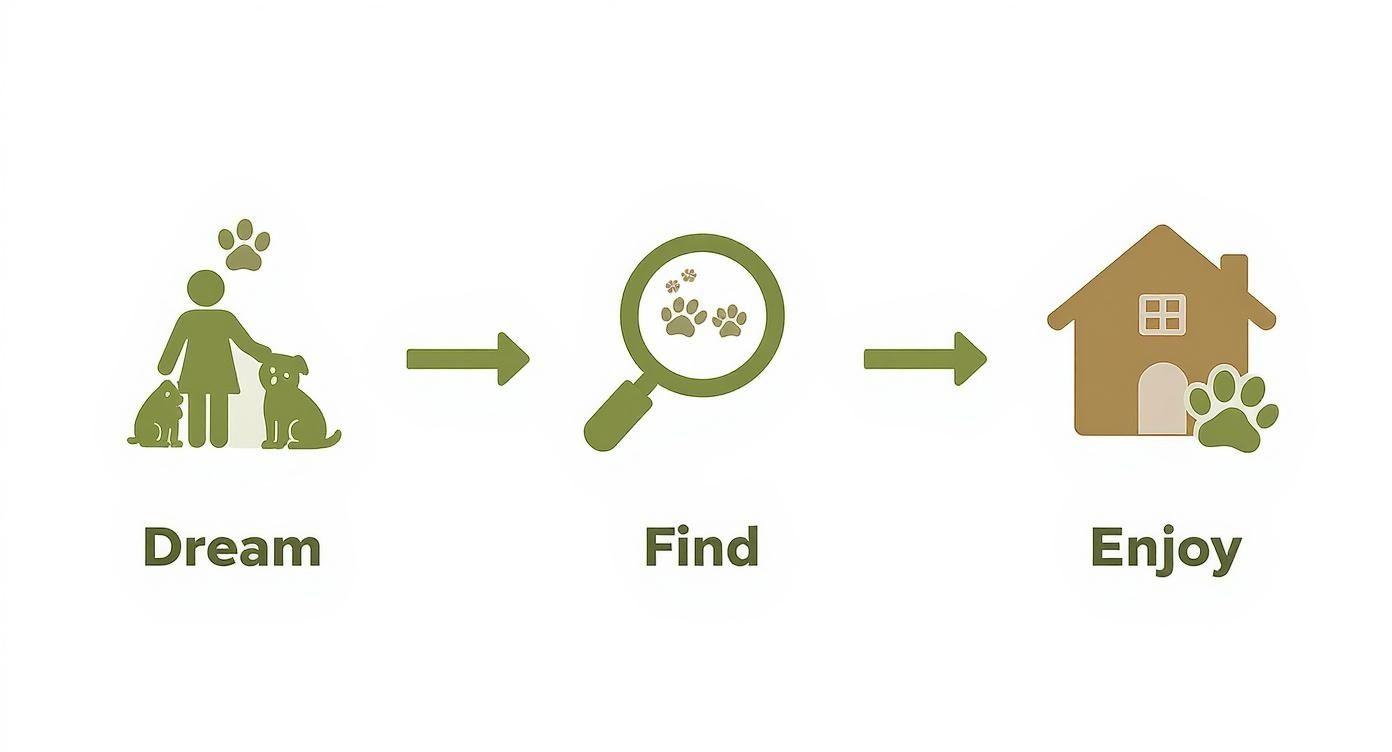
As you can see, the whole process is a smooth flow—from dreaming up the trip with your companion, to actively finding the perfect spot, and finally, kicking back and enjoying that well-deserved break together.
Beyond the Basics: What Really Matters
A truly pet-friendly casa rural offers more than just permission to bring your animal along. Certain features can make or break a trip, ensuring it’s relaxing and safe for everyone. And the demand for these details is skyrocketing. In fact, in 2025, Spain saw a huge jump in pet-friendly travel searches, with over 7.5 million queries for rural accommodation that allows pets. This isn't a niche market anymore; it's a clear signal that people want better travel experiences with their animals. You can discover more insights about pet-friendly tourism on tourinews.es.
So, what are these game-changing features? Here’s what to look for:
- A Securely Fenced Garden: For most dog owners, this is the holy grail. It means your dog can run and play off-leash in a safe space, giving them freedom while you sip your coffee without a worry in the world.
- Pet-Friendly Flooring: Tiled or wooden floors are a godsend. They're a breeze to clean after muddy paws or the occasional accident, making life much simpler for both you and your host.
- Proximity to Walking Trails: Imagine stepping out your front door and straight onto a countryside path. A property with direct access to trails means your morning walks can start instantly, with no faffing around with the car.
- Clear House Rules: Look for hosts who are upfront about their pet policy. Do they have size or breed restrictions? Do they provide handy extras like water bowls or a dog bed? Clarity from the start prevents any awkward misunderstandings later.
Think of your search as a happiness checklist for your pet. A secure garden is their private playground, nearby trails are their adventure park, and clear rules ensure a warm welcome for everyone.
By focusing on these practical elements, you're not just finding a place that tolerates your pet—you're finding a destination where they are genuinely wanted. For more tips on putting your whole trip together, you might find our complete step-by-step guide to planning a rural getaway really useful.
Understanding Pet Policies and Spanish Law
A truly relaxing getaway starts when you know all the rules. Finding a casa rural that welcomes pets is a great first step, but the real key to a stress-free holiday is making sure the property's specific policies and local Spanish laws line up with your plans. Think of it as checking the map before you start the hike—it just makes for a much smoother journey for you, your pet, and your host.
You'll quickly find that "pet-friendly" doesn't mean the same thing to every host. For one owner, it might mean they're happy to have a small, quiet lapdog curl up by the fire. For another, it could mean their finca is a paradise built for two giant, boisterous Labradors. Because of this, talking directly with the host before you book is non-negotiable. Never assume—always ask.
What to Expect from the Host's Pet Policy
Before you click that 'book' button, you need to get the full picture of the house rules. These policies aren't there to make your life difficult; they're in place to protect the property and make sure every guest, two-legged or four, has a great experience.
Here are a few common rules and fees you’ll likely come across:
- Extra Cleaning Fees: It’s pretty standard for hosts to charge a one-off fee to cover the deeper clean needed after a pet stay. This could be a small nightly add-on or a single flat rate for your whole trip.
- Size or Breed Rules: Some properties have limits, like "pets under 15 kg only," or might not be able to accept certain breeds. This is often down to the property's layout or even insurance policies.
- Number of Pets: Most listings will state how many pets are allowed. If you're bringing the whole pack, you absolutely need to confirm it's okay first.
- No-Go Zones: It's very common for hosts to ask that pets stay off the furniture, especially beds and sofas. They might also have rules about pets in the pool area or certain rooms.
Getting a handle on these rules isn't just about following them; it's about showing respect for someone else's home. For a closer look at the legal side of things, the general terms of service on Picuco.com covers the basic agreement between hosts and guests.
Getting to Grips with Spanish and Regional Rules
Once you've sorted the house rules, you also need to think about the wider laws in Spain concerning pets. This is especially important when you’re out exploring the local towns, trails, and beaches. The rules can change quite a bit as you travel from one autonomous community to the next.
Spain is really a mosaic of different regions, each with its own local culture and, you guessed it, its own set of rules. A laid-back beach in Cantabria where dogs can run free might be a world away from a national park in Andalusia with strict on-leash laws and hefty fines. As a responsible owner, it's up to you to know what's what.
Here’s a quick rundown of what can vary:
- Leash Laws: In cities and towns, you can bet your dog will need to be on a leash. But in the countryside, parks, or on the coast, the rules can be different. Always keep an eye out for local signs.
- Public Transport: Whether your pet can join you on a bus or local train is a mixed bag. Some regions are fantastic about it, while others might only allow small pets in a carrier.
- Breed-Specific Legislation (PPP): Spain has laws for Perros Potencialmente Peligrosos (Potentially Dangerous Dogs). If your dog's breed is on this list, you'll have to follow extra rules, like using a muzzle in public and carrying your license and insurance.
When you're a well-informed and respectful visitor, you do a great service for the whole pet-owning community. It helps ensure hosts and local communities keep their doors wide open for the next lot of travellers and their furry friends.
Discovering Spain's Most Pet-Friendly Regions
So, you know what to look for and what to ask a host. The next big question is: where to? Spain’s landscapes are incredibly varied, offering a perfect backdrop for almost any kind of rural escape. But when you’ve got a pet in tow, some regions are just head and shoulders above the rest.
We're not just talking about places that tolerate pets. We’re looking for the spots that roll out the welcome mat, with endless trails, dog-friendly beaches, and a genuine understanding that pets are part of the family.
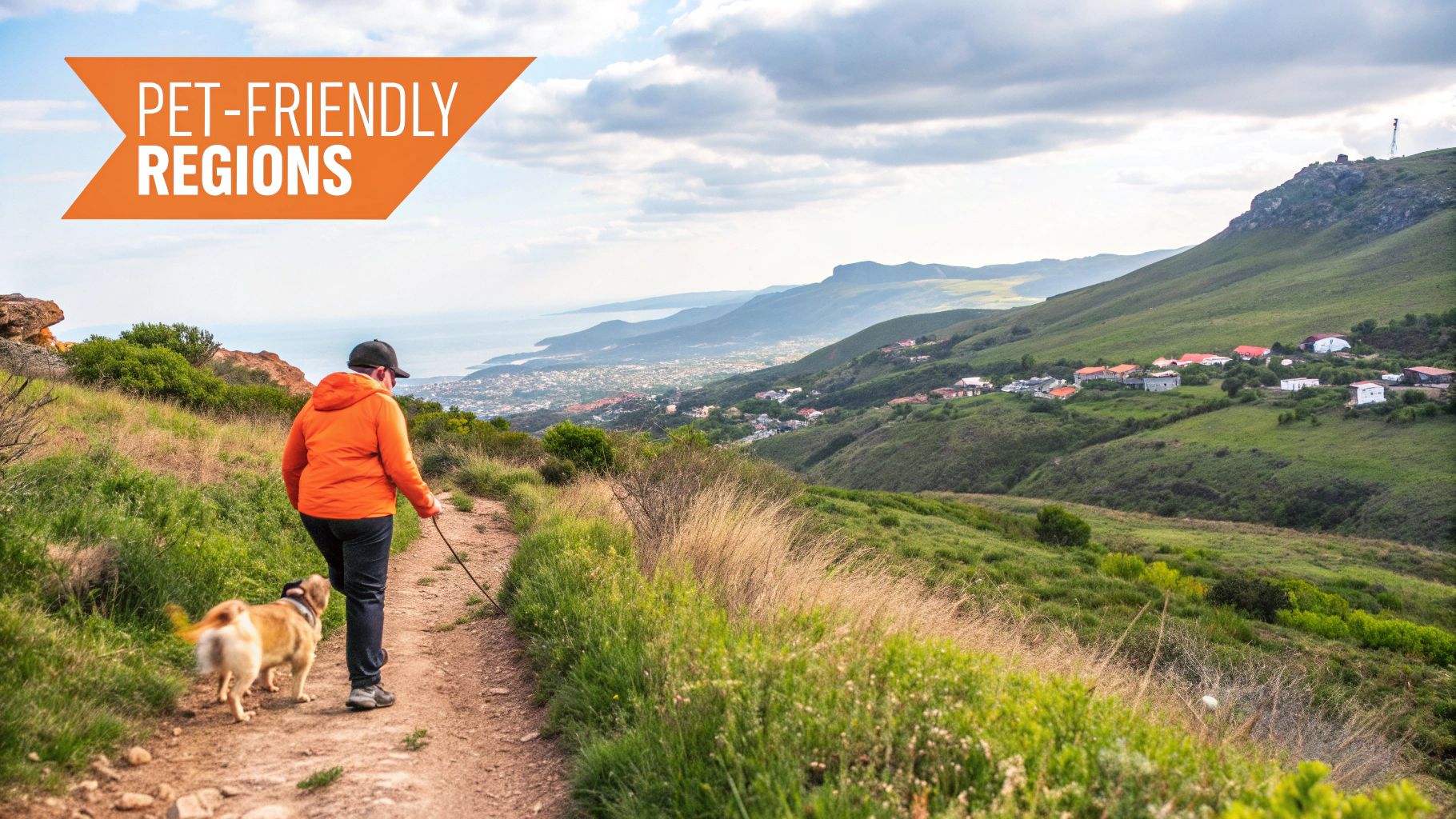
The trick is to match the destination to your pet's personality and energy levels. A bounding, high-energy dog will have the time of its life in the rugged mountains of the north. An older, more sedate companion, on the other hand, might prefer the gentle, sun-drenched paths of the south.
Let's break down the best spots for a memorable casa rural con mascotas holiday.
Northern Spain: A Green Paradise for Paws
When you think of pet-friendly rural tourism in Spain, Northern Spain is in a league of its own. Known affectionately as España Verde (Green Spain), regions like Asturias, Cantabria, and Galicia are a lush, temperate paradise that dogs, in particular, absolutely love.
The cooler climate means you can enjoy comfortable walks even in the middle of summer. Better still, the landscape is a natural playground of mountains, deep forests, and stunning coastlines. The sheer number of pet-friendly rural houses here tells the story—you'll find a high concentration of properties that don't just accept pets but are actually designed with them in mind, often with fenced gardens and direct access to trails.
Here’s a closer look at what makes these regions so special:
- Asturias: This is a hiker's dream. Home to the Picos de Europa National Park, Asturias offers some of the most breathtaking mountain scenery in the country. Picture yourself trekking through spectacular gorges with your dog, then unwinding at a local sidrería (cider house) on a dog-friendly terrace. For more ideas, check out our guide to the charming villages of Asturias.
- Cantabria: The perfect blend of sea and mountain. You could spend the morning hiking a coastal path with ocean views and the afternoon exploring ancient, mossy forests. Many beaches here have designated dog-friendly zones, especially outside the peak tourist season of July and August.
- Galicia: With its wild, rugged coastline, mystical forests, and deep Celtic roots, Galicia has a unique atmosphere. The final stretches of the Camino de Santiago that run through here are famously welcoming to walkers with four-legged companions.
Northern Spain is basically the ultimate adventure park for active dogs. The combination of cool weather, varied terrain, and an abundance of truly welcoming rural homes makes it the top choice for an energetic and unforgettable escape.
To help you choose, here's a quick comparison of Spain's top pet-friendly regions.
Top Pet-Friendly Regions in Spain and Their Key Features
| Region | Best For | Typical Pet-Friendly Activities |
|---|---|---|
| Asturias | Mountain lovers and serious hikers. | Trekking in Picos de Europa, visiting traditional cider houses, exploring river trails. |
| Cantabria | Those who want both beach and mountain adventures. | Coastal path walks, forest explorations, relaxing on designated dog-friendly beaches. |
| Galicia | Exploring unique landscapes and culture. | Hiking coastal trails like the Camiño dos Faros, walking sections of the Camino de Santiago. |
| Catalonia | Variety seekers who enjoy culture and food. | Hiking in the Pyrenees, visiting vineyards, relaxing on Costa Brava's pet-friendly beaches. |
| Andalusia | Sun-seekers and lovers of open spaces. | Strolling through olive groves, hiking in pueblos blancos, walking the vías verdes. |
Each region offers something unique, making it easy to find the perfect fit for your holiday style and your pet's needs.
Sun-Kissed Adventures in the South and East
While the north is a haven for active dogs, other parts of Spain offer equally wonderful—but distinctly different—experiences. Regions like Andalusia and Catalonia serve up sunnier, drier climates and a more relaxed pace of life, which can be perfect for pets who prefer leisurely strolls and long naps on a warm terrace.
A rural getaway here is all about enjoying vast open spaces, from the endless olive groves of Andalusia to the rolling vineyards of Catalonia. These regions are absolutely ideal for a spring or autumn trip when the weather is warm and pleasant without being too intense for your furry friend.
Catalonia: A Blend of Countryside and Coast
Catalonia packs incredible variety into one region. You could find a secluded masia (a traditional Catalan farmhouse) tucked away in the Pyrenean foothills, or book a rural cottage just a short drive from the dog-friendly beaches of the Costa Brava. This diversity makes it a fantastic choice if you want a little bit of everything.
Many rural properties here are part of working agricultural estates, giving your dog plenty of private land to explore safely off the lead. After a day of adventure, you can relax together and enjoy the region’s world-class food at a local restaurant with a welcoming outdoor terrace.
Andalusia: Authentic Charm and Open Spaces
Andalusia is the heartland of traditional Spanish culture, and its countryside is filled with that same authentic charm. Think whitewashed villages (pueblos blancos), rolling hills dotted with ancient olive trees, and vast national parks like Sierra de Grazalema or Sierra de las Nieves.
Finding a casa rural con mascotas here often means getting a property with a large, enclosed courtyard—perfect for a bit of sunbathing and safe playtime. The region's network of vías verdes (old railway lines converted into walking and cycling paths) offers flat, easy-going trails that are ideal for dogs of all ages and fitness levels. A trip here is all about soaking up the sun and sinking into a slower, more peaceful rhythm of life with your best friend right there with you.
How to Be a Five-Star Guest with Your Pet
Your stay in a casa rural doesn’t end the moment you unpack your bags. Being a thoughtful and responsible guest with a pet does more than just secure you a fantastic review—it’s a powerful vote of confidence for every other pet owner out there. Each positive stay helps convince more hosts to open their doors to our furry family members, making this wonderful community even bigger.
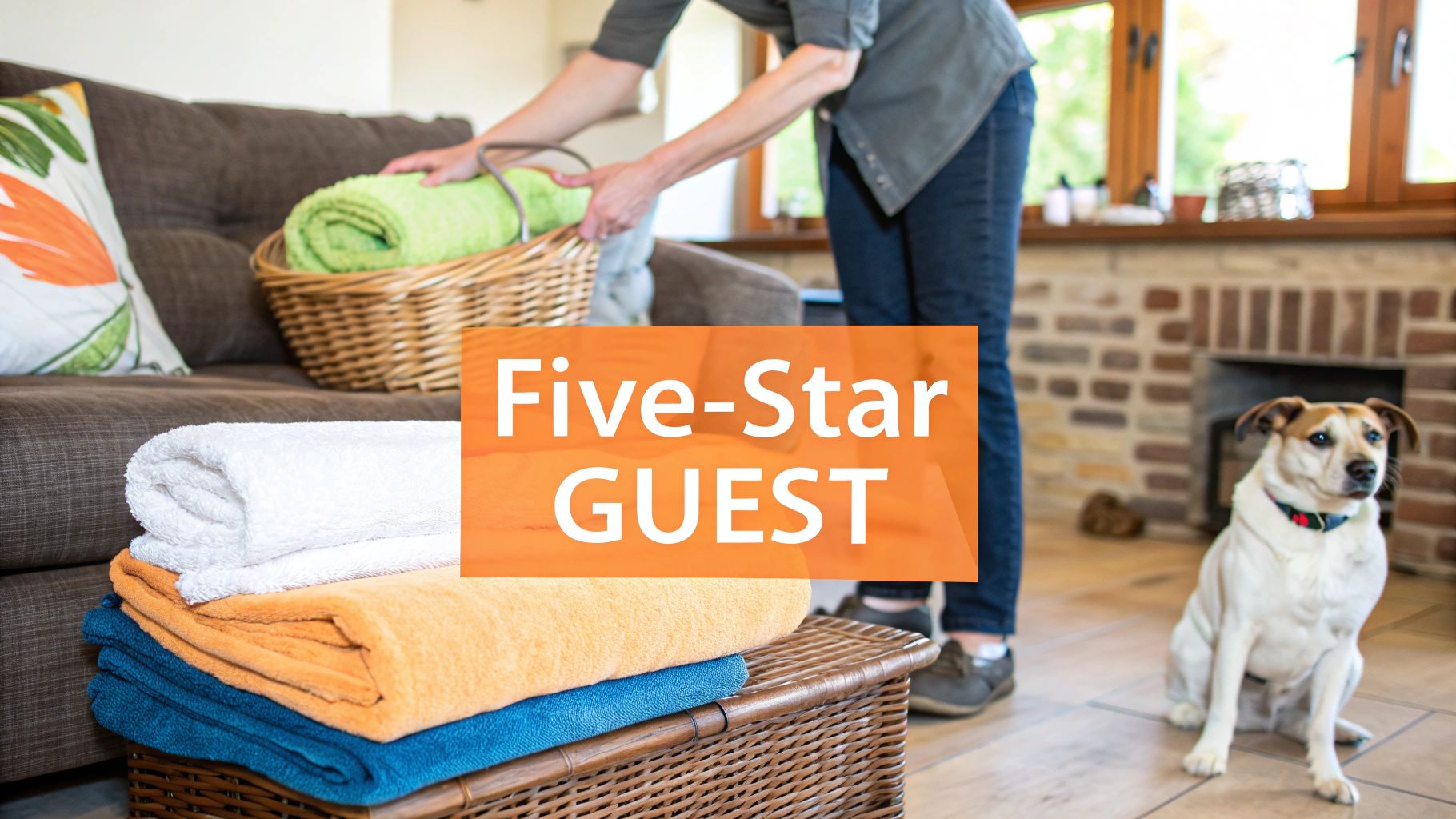
Think of it this way: you're an ambassador for pet-friendly travel. When you treat the host’s home with respect, you're paving the way for the next person and their dog. It all comes down to leaving the property just as you found it, or maybe even a little better.
Mastering Pet Etiquette
Good etiquette isn't complicated. It’s mostly about spotting potential issues before they happen and taking small, simple steps to prevent them. The goal is to make sure your pet’s presence is a delight, not a headache for the owner.
- Clean Up Immediately: This is the absolute golden rule. Always have waste bags on you and clean up after your pet, whether it's in the garden or on a walk nearby. Nothing should be left behind for the host to discover.
- Prevent Property Damage: A bored or anxious dog can quickly become a destructive one. Keep them busy with their favourite toys and make sure they get plenty of exercise to stop them from chewing furniture or scratching at doors.
- Manage Noise Levels: People escape to the countryside for peace and quiet. If your dog is a big barker, especially with new sounds, be ready to manage it. Try not to leave them alone if it makes them anxious, and be mindful of any neighbours, particularly in the early morning and late at night.
These simple gestures show hosts that pet owners are some of the most conscientious guests they can have. For more tips on making your getaway unforgettable, check out our guide to unique rural tourism experiences and how to make the most of them.
Being a five-star guest means showing gratitude through your actions. A quick ‘fur check’ before you leave to get pet hair off the sofa or rugs says more about your respect for the property than words ever could.
Preparing for a Smooth Departure
Leaving the house in great shape is the final, and most important, part of your stay. A tidy and thoughtful checkout guarantees you'll be welcomed back with open arms and reinforces the host’s trust in guests who travel with pets.
Before you hand over the keys, run through this quick checklist:
- Do a Thorough Fur Sweep: Pack a lint roller or use a damp rubber glove—they work wonders on soft furnishings to pick up as much pet hair as possible.
- Report any Accidents: If a little mishap occurs, clean it up right away and give your host a heads-up. Honesty is always the best policy and is greatly appreciated.
- Bring Your Own Gear: A simple way to protect furniture is to bring your pet’s own bed or a few familiar blankets for them to snuggle up on.
- Final Garden Check: Take one last stroll around any outdoor areas to make absolutely sure you haven’t missed anything.
By following these straightforward tips, you’re not just renting a holiday home; you’re building a relationship based on trust. You’re showing hosts that welcoming pets into their casa rural is a fantastic, worry-free decision.
Got Questions About Your Pet-Friendly Casa Rural? We've Got Answers.
So you've found a place that looks perfect, but a few questions are still bouncing around in your head before you hit 'book'. That's completely normal. Getting these last few details ironed out is the key to a genuinely relaxing trip for everyone, two-legged and four-legged alike.
Let's walk through the most common queries we see. Think of this as your final checklist to make sure there are no surprises, so you can book your casa rural con mascotas knowing you've covered all the bases.
Will I Have to Pay Extra for My Pet?
More often than not, yes. Most hosts add a small surcharge for pets, and it’s a perfectly standard practice. This isn't about profit; it’s simply to cover the extra deep-cleaning required to get the house spotless for the next guests.
The fee usually comes in one of three flavours:
- A nightly top-up: A small, fixed amount added for each night you stay.
- A one-off cleaning fee: A single charge added to your total bill for the post-stay clean.
- A refundable deposit: Some hosts prefer to take a security deposit, which you get back after they've checked the property for any pet-related mishaps.
The golden rule is to always double-check the property's listing or just ask the host directly how they handle pet fees. That way, the price you see is the price you pay.
What if My Dog Accidentally Breaks Something?
Let's face it, accidents happen. A wagging tail can send a lamp flying, or a nervous pup might have a chew on a chair leg. If your pet does cause some damage, you'll be responsible for the cost of the repair or replacement.
The best approach? Honesty and speed. Let your host know the moment you discover the damage. Most owners are incredibly understanding, especially when you're upfront about it. Usually, they'll just deduct the cost from your security deposit. This is also where good pet travel insurance can be a real wallet-saver, as many policies cover third-party liability.
Can I Leave My Pet Alone in the House?
This is a big one, and the answer can vary wildly from one host to another. It's crucial you get a clear answer on this before you book.
Many hosts have a strict no-pets-left-unattended rule. This is usually to prevent separation anxiety, which can lead to non-stop barking (unpopular with neighbours!) or destructive behaviour. However, other hosts are more relaxed, especially if your pet is well-behaved and happy in a travel crate for short periods. If you're planning to visit a museum or eat at a restaurant that isn't dog-friendly, you need to know what the house rules are.
What Paperwork Does My Pet Need to Travel in Spain?
When travelling with a dog, cat, or ferret within Spain, the law is the same everywhere. Your furry companion absolutely must have:
- A microchip for identification.
- A current rabies vaccination (given after the microchip was implanted).
- A valid pet passport (pasaporte para mascotas) that holds all their key information.
Those are the non-negotiables. It’s also wise to bring a copy of your pet's full health record, just in case. Some regions might have their own local ordinances, particularly around specific breeds, so a quick search for the rules in your destination province is always a sensible final step.
Ready to stop scrolling and start packing? On Picuco, you can find and book hundreds of incredible pet-friendly rural homes and activities all over Spain. Our smart filters make it easy to find the perfect spot for your next adventure. Find your authentic Spanish escape on Picuco.com.