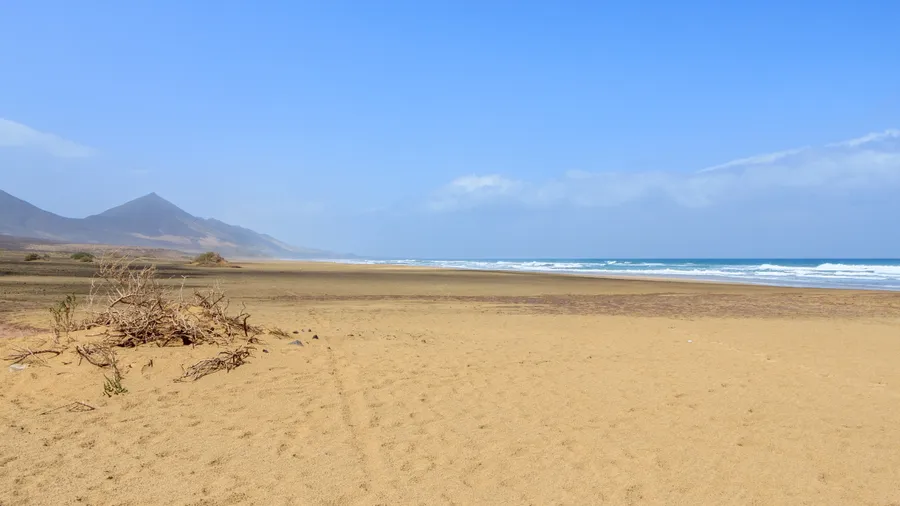
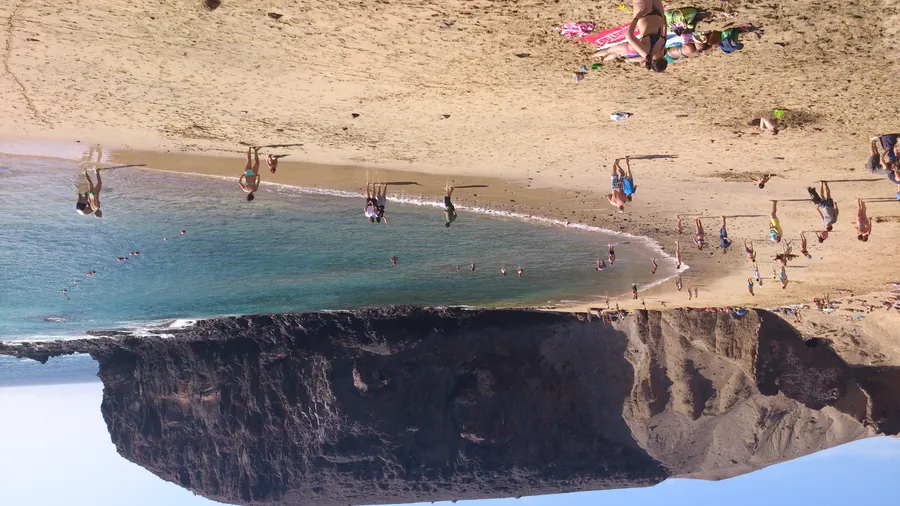
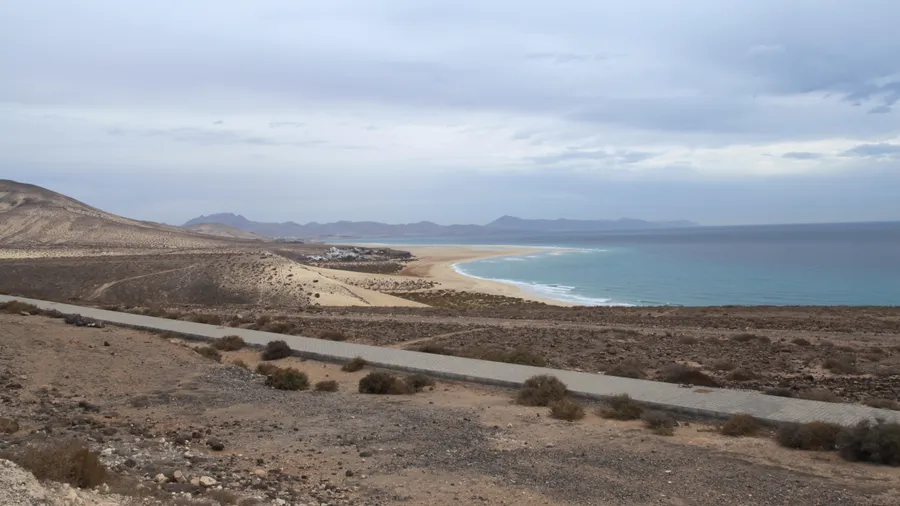
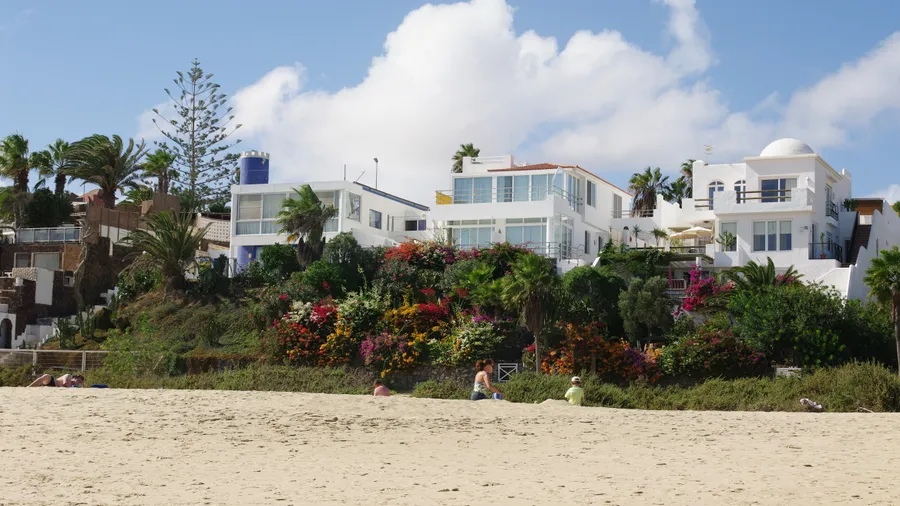
Fuerteventura is the oldest island in the Canary archipelago, boasting more than 20 million years of geological history sculpted by wind and ocean. Designated a UNESCO Biosphere Reserve in 2009, this 1,659 km2 island unfolds a landscape that feels more African than European: arid plains dotted with extinct volcanoes, deep ravines and over 150 kilometres of beaches ranging from the golden sands of Corralejo to the dark coves of Ajuy.
The first impression upon arrival is the light. A clean, almost mineral clarity that bounces off the dunes of Corralejo Natural Park -- 2,668 hectares of sand carried by wind from the Sahara over millennia -- turning the sea into turquoise glass. This dune field, one of Europe's most unique ecosystems, shelters endemic species such as the Canarian houbara bustard (Chlamydotis undulata fuertaventurae), whose population is estimated at just 200 individuals according to the Canary Islands Government.
But Fuerteventura is not all beach. Its interior reveals an island of contrasts: the volcanic badlands of the centre, where solidified lava creates whimsical formations; Tindaya mountain (400 m), sacred to the ancient Mahos who covered it with podomorph rock carvings; and the villages of Betancuria and Pájara, where traditional Canarian architecture blends with Norman echoes brought by 15th-century conquerors.
The sea is Fuerteventura's soul. Constant wind conditions and powerful swell have made it one of Europe's most important surfing destinations. El Cotillo beach hosts international surf and kitesurf competitions, while the waters of Sotavento on the Jandía peninsula regularly stage the Windsurfing World Championship. Beneath the surface, the Isla de Lobos Marine Reserve protects 700 hectares of seabed where grouper, manta rays and green turtles swim.
Majorera culture -- the demonym for Fuerteventura's inhabitants -- is intimately tied to the goat. Majorero cheese, holding Protected Designation of Origin since 1996, is made from raw majorera goat milk and has repeatedly won prizes at the World Cheese Awards. Grain mills scattered across the island, many now restored, recall an era when Fuerteventura was the granary of the Canaries.
For the active visitor, the island offers a trail network traversing ravines such as Barranco de las Peñitas, where a narrow gorge leads to a hermitage hidden between basalt walls. The GR 131, the great Canary Islands traverse, crosses Fuerteventura from north to south over 155 kilometres, linking volcanoes, palm groves and viewpoints overlooking the neighbouring African continent, visible on clear days just 97 kilometres away.
Fuerteventura invites you to slow down, to let the trade wind that combs its endless beaches carry you, and to discover that beneath its apparent aridity pulses a fragile, fascinating ecosystem that deserves to be explored with patience and respect.