
Welcome to Córdoba, a city where centuries of history whisper from every cobblestone and hidden courtyard. While the world-famous Mezquita-Catedral is a breathtaking starting point, the soul of this Andalusian gem lies in its intricate tapestry of Roman ruins, Jewish heritage, and flower-filled patios. This city, once the capital of an Islamic caliphate and a beacon of learning in the Middle Ages, offers a profound journey through time. Its layered past is visible not just in grand monuments, but in the narrow, winding streets and serene gardens that invite exploration.
If you are planning your trip and wondering what to see in Córdoba, Spain, this comprehensive guide is your essential companion. We have curated a list that moves beyond the obvious, detailing the most vital sights and experiences that define the city's unique character. You will discover the powerful Alcázar, wander through the historic Jewish Quarter, and step back in time at the ruins of Medina Azahara.
This is not just a list; it is a practical roadmap. Each entry is filled with actionable advice, insider insights, and the necessary context to help you connect deeply with each location. We provide details on navigating the sites, understanding their significance, and making the most of your visit. Prepare to uncover the architectural wonders, cultural treasures, and unforgettable atmospheres that make Córdoba a truly remarkable destination. This article will ensure you experience the full breadth of its enduring charm, from its most celebrated landmarks to its most enchanting hidden corners.
1. Mezquita-Catedral (Mosque-Cathedral)
No list of what to see in Córdoba, Spain, would be complete without its crown jewel, the Mezquita-Catedral. This architectural marvel is a stunning testament to the city's layered history, a place where Islamic and Christian faiths have left their indelible marks. Originally a Visigothic church, it was transformed into a magnificent mosque in 784 AD and later converted into a Roman Catholic cathedral in 1236.
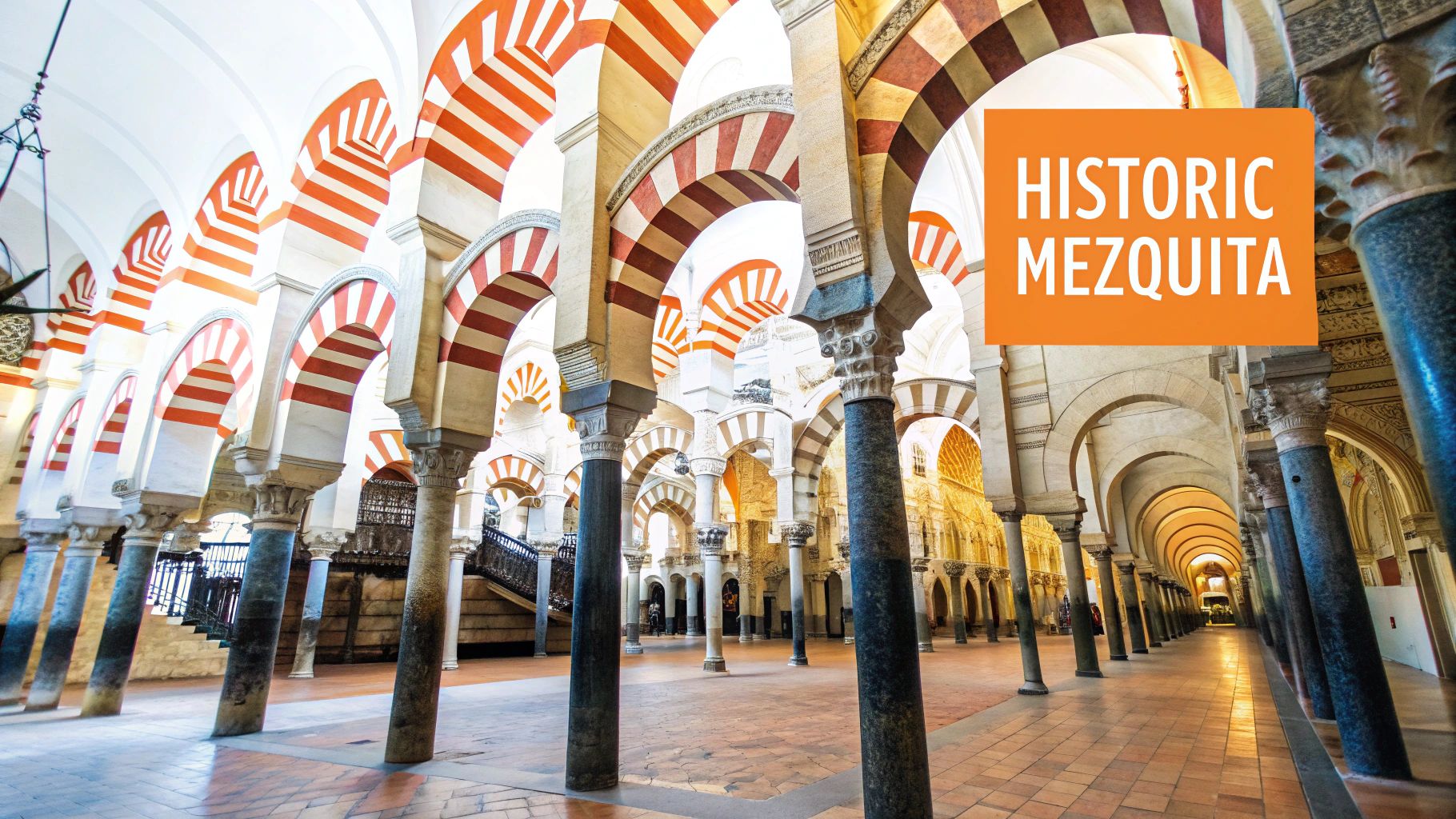
Stepping inside is like entering a forest of columns. The hypnotic sea of over 850 red-and-white striped arches creates an atmosphere of profound serenity and grandeur. As you wander deeper, you'll discover the Renaissance cathedral nave, dramatically inserted into the centre of the mosque's structure, offering a jarring yet fascinating contrast of architectural styles.
Practical Tips for Your Visit
To truly appreciate the intricate details and historical significance, consider these practical tips:
- Arrive Early: The best time to visit is right at opening (usually 10:00 AM) to experience the space with fewer people. Early morning offers softer light for photography.
- Allocate Enough Time: Plan to spend at least two to three hours exploring. Rushing through means missing key details like the stunning mihrab (prayer niche) and the intricate baroque choir stalls.
- Consider a Guided Tour: The building's history is complex. Engaging a guide can illuminate the symbolism and stories behind the architecture. You can explore options for a guided tour of Córdoba's monumental sites to get the most out of your visit.
- Respectful Attire: As it is an active place of worship, modest dress is required. Ensure your shoulders and knees are covered.
This monument is not just a building; it's a narrative of cultural fusion, conflict, and coexistence, making it an essential experience for any visitor to Andalusia.
2. Alcázar of the Christian Monarchs (Alcázar de los Reyes Cristianos)
Just a stone's throw from the Mezquita, the Alcázar de los Reyes Cristianos offers a different yet equally compelling window into Córdoba's regal past. This formidable fortress-palace, built in 1328 by King Alfonso XI, is a robust example of Mudéjar military architecture. Its history is layered and intense; it served as a primary residence for Queen Isabella and King Ferdinand, the headquarters of the Spanish Inquisition, and later, a prison.
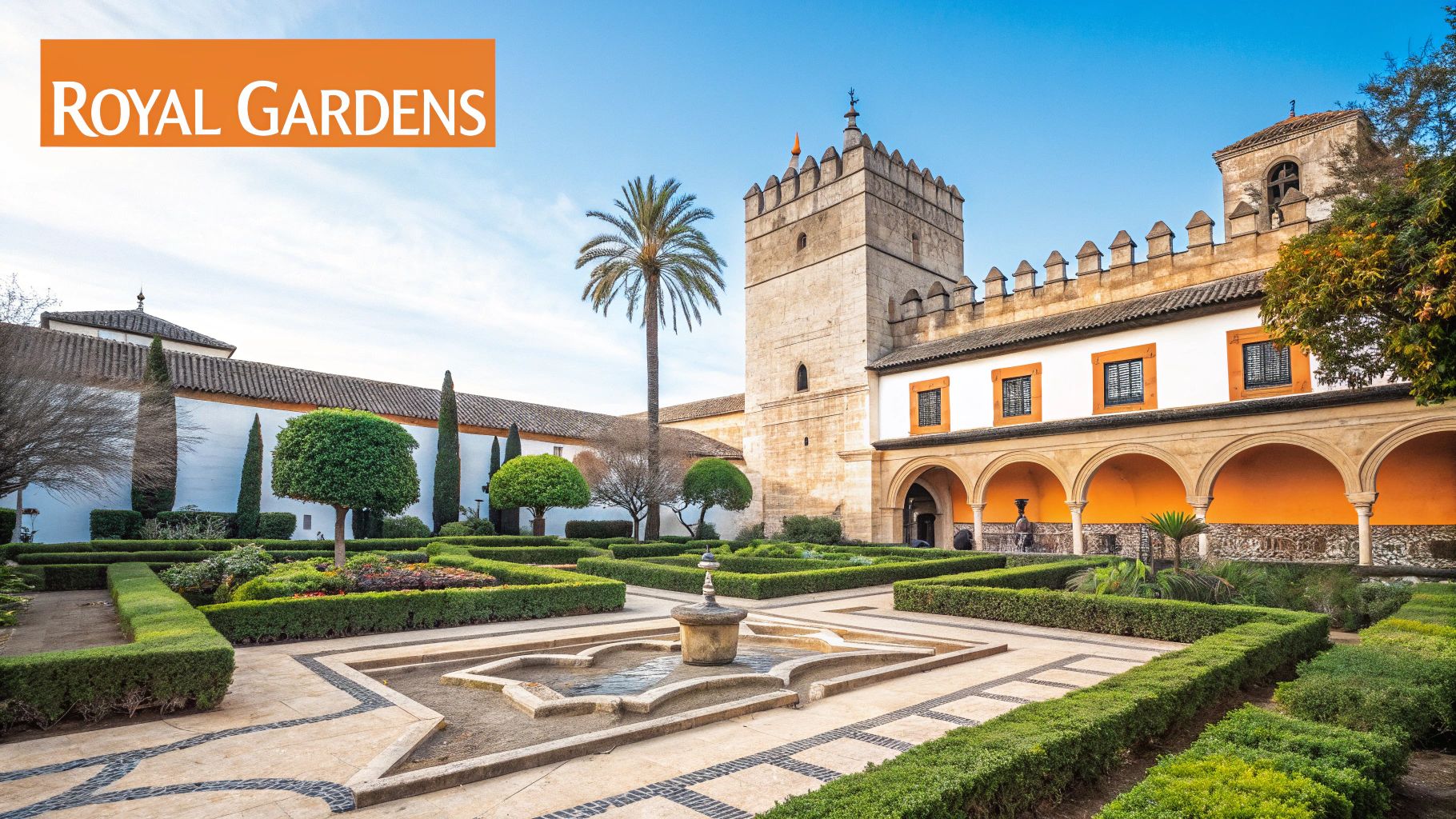
While the interior rooms house Roman mosaics and a royal bathhouse, the true highlight for many visitors is the expansive and meticulously manicured gardens. Here, tiered pools, fountains, and vibrant flowerbeds create a tranquil oasis. Climbing the fortress towers provides breathtaking panoramic views of the gardens, the Guadalquivir River, and the historic centre, making it a key destination for anyone exploring what to see in Córdoba, Spain.
Practical Tips for Your Visit
To get the most out of your experience at this historic stronghold, keep these suggestions in mind:
- Comfortable Footwear is Essential: You will be doing a lot of walking, including climbing the steep steps of the towers. Sturdy, comfortable shoes are a must.
- Plan for Photography: For the best lighting, visit in the late afternoon when the sun casts a golden glow over the gardens and stone walls, creating stunning photo opportunities.
- Book a Tour for Deeper Insight: The historical weight of the Alcázar, from royal courts to Inquisition tribunals, is immense. To fully grasp its stories, consider joining a guided tour of the Alcázar of the Christian Monarchs to bring its past to life.
- Check for Evening Events: During the summer months, the Alcázar often hosts a spectacular "Magical Nights" light and water show in the gardens. Check the official schedule in advance.
- Stay Hydrated: Especially in the warmer months, the open gardens offer limited shade. Be sure to bring water and sunscreen to stay comfortable while exploring.
3. Jewish Quarter (Judería)
Just a stone's throw from the Mezquita, you'll find another essential place to see in Córdoba, Spain: the historic Jewish Quarter, or Judería. This UNESCO World Heritage site is a captivating labyrinth of narrow, winding streets, whitewashed walls, and charming, flower-filled patios. It was the heart of the city's Sephardic community from the 10th to the 15th centuries, a period when Córdoba was a beacon of intellectual and cultural life.
Wandering through the Judería feels like stepping back in time. The area’s intimate scale invites unhurried exploration, revealing hidden squares, artisan shops, and traditional Andalusian courtyards. Key sights within the quarter include the 14th-century Synagogue, one of only three original medieval synagogues remaining in Spain, and the statue of the revered philosopher Maimonides. The atmosphere here beautifully evokes the city's past spirit of convivencia, or peaceful coexistence.
Practical Tips for Your Visit
To make the most of your exploration of this atmospheric neighbourhood, keep these suggestions in mind:
- Embrace Getting Lost: The joy of the Judería is in its discovery. Allow yourself to wander without a strict plan, but keep a map handy to reorient yourself when needed.
- Time Your Visit: Explore in the morning or late afternoon to avoid the midday heat and the largest crowds. The golden hour light beautifully illuminates the whitewashed alleys.
- Explore Key Sights: Don't miss the small but historically significant Synagogue. Also, seek out the Casa de Sefarad, a museum dedicated to Judeo-Spanish history and culture.
- Combine Your Tours: The Judería is located right next to the Mosque-Cathedral, making it easy to visit both on the same day. Consider a guided tour of the Mosque-Cathedral and Jewish Quarter to gain deeper historical context from an expert.
- Wear Comfortable Shoes: The streets are cobbled and uneven, so comfortable footwear is essential for a pleasant walk.
This enchanting quarter is not just a collection of old streets; it’s a living museum that offers a profound connection to Córdoba’s multicultural heritage.
4. Roman Bridge (Puente Romano)
Stretching gracefully across the Guadalquivir River, the Roman Bridge (Puente Romano) is an iconic symbol of Córdoba's enduring history. Originally built in the 1st century BC, this magnificent 16-arch structure has been a vital city artery for over two millennia. While it has been reconstructed many times over the centuries, its Roman foundations remain, offering a tangible connection to the city's ancient past and its prominence in the Roman Empire.

Walking across its cobblestones feels like a journey through time, with the imposing Mezquita-Catedral on one end and the historic Calahorra Tower guarding the other. It's not just a bridge but a central part of the city's landscape, a place where locals and visitors gather to soak in the views, especially during the magical golden hour. This historic landmark is a must-see for anyone wondering what to see in Córdoba, Spain.
Practical Tips for Your Visit
To make the most of your stroll across this ancient monument, here are a few suggestions:
- Visit at Sunset: The bridge is most breathtaking at sunset, when the golden light illuminates the stone and creates stunning reflections on the river. It's a photographer's dream.
- Best Views: For the classic postcard view of the bridge with the Mezquita in the background, cross from the south side (Calahorra Tower) to the north.
- Explore the Tower: At the southern end of the bridge, the Torre de la Calahorra houses a museum dedicated to the coexistence of the three cultures in Córdoba. It's worth a visit for both its exhibits and the panoramic views from the top.
- Combine with a Riverside Walk: The riverbanks are perfect for a leisurely walk. Strolling along the paths before or after crossing the bridge offers different perspectives and a peaceful escape from the city bustle. For a truly unforgettable view, consider seeing this historic skyline from above on a hot air balloon ride over Córdoba.
This landmark provides more than just a passage over the river; it offers a profound sense of place and history, connecting you directly to the centuries of life that have unfolded in Córdoba.
5. Palacio de Viana (Viana Palace)
For a fragrant and aristocratic glimpse into Córdoba's soul, the Palacio de Viana is an unmissable destination. Known as the "Museum of the Patios," this magnificent 15th-century palace offers a journey through five centuries of history, showcasing how the city’s nobility lived. It’s a place where architecture, nature, and art converge in perfect harmony.
The palace is most famous for its 12 stunning patios and beautiful garden, each with its own distinct character, from Roman-inspired layouts to romantic, fountain-centred courtyards bursting with orange blossoms, roses, and cypress trees. Inside, the opulent rooms are filled with period furniture, Flemish tapestries, and an impressive collection of leatherwork and fine art, providing a comprehensive look at aristocratic life.
Practical Tips for Your Visit
To fully immerse yourself in the beauty and history of the Palacio de Viana, keep these tips in mind:
- Visit in the Morning: The courtyards are at their most beautiful in the morning light, which is ideal for photography and appreciating the vibrant colours of the flowers.
- Allocate Ample Time: Plan for at least two to three hours to explore both the patios and the palace interior without rushing. Each space deserves unhurried attention.
- Opt for a Guided Tour: The stories behind the palace's evolution and the symbolism within each patio are fascinating. Enhance your experience with a guided tour of the Viana Palace to uncover hidden details you might otherwise miss.
- Follow the Sequence: The patios are numbered to guide you through a historical and stylistic progression. Following this route helps you understand the palace's development over the centuries.
- Don't Skip the Service Areas: Explore the historic kitchen and servant quarters to gain a more complete and authentic perspective on how this grand household functioned.
The Palacio de Viana is more than just a beautiful building; it is a living museum that offers a serene and enchanting counterpoint to the city’s other major monuments.
6. Synagogue of Maimonides (Sinagoga de Maimonides)
Tucked away in the heart of the historic Jewish Quarter (Judería), the Synagogue of Maimonides is a small yet profound site that offers a powerful glimpse into Córdoba’s multicultural past. Built in 1315 in the Mudéjar style, it is one of only two medieval synagogues still standing in Spain, making it an exceptionally rare and significant monument. Its existence is a testament to the period of convivencia, when Jewish, Christian, and Muslim communities coexisted.
Despite its modest size, the synagogue's interior is adorned with intricate stucco work featuring Hebrew inscriptions and delicate geometric patterns. Dedicated to the celebrated 12th-century philosopher and physician Maimonides, who was born in Córdoba, the building invites quiet contemplation. Standing within its walls allows you to connect directly with the rich Sephardic heritage that shaped the city, making it an essential stop for anyone wanting to understand the complete story of what to see in Córdoba, Spain.
Practical Tips for Your Visit
To make the most of your time at this historically dense location, keep these suggestions in mind:
- Check Hours in Advance: Opening times can be limited and may change seasonally. It's wise to verify them on the day of your visit to avoid disappointment.
- Combine Your Itinerary: Its location within the Judería makes it perfect to combine with a visit to the Zoco Municipal (artisan market) and a stroll through the narrow, whitewashed streets.
- Allow for Quiet Reflection: Plan to spend around 45 minutes to an hour. The space is small, but its historical weight deserves unhurried appreciation. Visit early in the morning for a more tranquil experience.
- Understand the Context: Reading about Maimonides and the history of Jews in Spain beforehand will greatly enhance your understanding of the inscriptions and the building’s overall significance.
- Dress Respectfully: Although it is no longer an active synagogue, it remains a site of immense cultural and historical importance. Modest attire is appreciated.
This treasured monument provides a crucial counterpoint to the city's grander Islamic and Christian landmarks, offering a more intimate and poignant look into its diverse history.
7. Medina Azahara (Madīnat al-Zahrā)
Just eight kilometres west of the city lies one of the most significant archaeological sites in Spain: Medina Azahara. This vast, ruined palace-city was built in the 10th century by Caliph Abd al-Rahman III as the magnificent capital of the Caliphate of Córdoba. Declared a UNESCO World Heritage Site, it was designed to be a symbol of power and sophistication, dazzling visitors and rivals alike.
Exploring the excavated remains of its halls, mosques, and administrative buildings offers a profound glimpse into the zenith of Al-Andalus civilisation. Though it only flourished for about 70 years before being destroyed, the remaining intricate stuccowork, horseshoe arches, and expansive terraces powerfully evoke its former splendour. A visit here is a journey back in time and a crucial part of understanding what to see in Córdoba, Spain, beyond the city centre.
Practical Tips for Your Visit
To get the most from your trip to these historic ruins, a little planning goes a long way:
- Start at the Museum: Begin your visit at the excellent on-site museum. It provides essential historical context and displays artefacts recovered from the site, which will enrich your understanding before you explore the ruins themselves.
- Book a Tour: The stories behind the stones are fascinating. Consider an organised tour that includes transport and a guide to explain the complex history and layout of the palace-city.
- Be Prepared for the Sun: The site is very exposed. Wear comfortable walking shoes, and bring a hat, sunscreen, and plenty of water, especially during the warmer months.
- Timing is Key: Visit early in the morning or late in the afternoon to avoid the intense midday heat and the largest crowds. Plan to spend at least three hours, including travel time from Córdoba.
8. Great Mosque Courtyard (Patio de los Naranjos)
Before you even step into the famous prayer hall, your journey through Córdoba's most iconic landmark begins in the Patio de los Naranjos, or Courtyard of the Orange Trees. This expansive, tranquil space is an integral part of the Mezquita's original design and one of the oldest continuously maintained gardens in Europe. It served as the sahn, or ablution courtyard, where the faithful would ritually purify themselves before entering the mosque for prayer.
Today, the courtyard offers a peaceful respite from the bustling city streets. Rows of perfectly aligned orange, cypress, and palm trees create a shaded canopy, while the gentle murmur of fountains provides a soothing soundtrack. The ingenious irrigation channels, still visible today, are a testament to the sophisticated engineering of the Umayyad caliphate. It's the perfect place to absorb the atmosphere before or after exploring the main building.
Practical Tips for Your Visit
To fully enjoy this serene introduction to the Mezquita-Catedral, consider these suggestions:
- Visit in Spring: The best time to visit is during the spring months, especially late March and April, when the air is filled with the intoxicating fragrance of orange blossoms.
- Early Morning Calm: Arrive early in the morning when the courtyard is at its quietest. You can appreciate the design and the sounds of the fountains without the crowds.
- Find a Quiet Bench: Take a moment to sit on one of the stone benches. It's a wonderful spot for quiet reflection, allowing you to appreciate the scale and beauty of the complex.
- Photography Angles: Use the symmetrical rows of trees to frame your photographs, capturing the impressive bell tower (the former minaret) in the background for a classic Córdoba shot.
- Notice the Details: Pay attention to the ancient fountains and the clever water system that has nourished the trees for centuries. It's a key part of what to see in Córdoba, Spain, for those interested in history and landscape design.
This beautiful courtyard is more than just an entrance; it's a living piece of history that sets the stage for the architectural wonder within.
9. Calleja de las Flores (Alley of Flowers)
Tucked away in the heart of the Jewish Quarter, the Calleja de las Flores is arguably the most photographed street in Córdoba. This narrow, enchanting alleyway embodies the essence of Andalusian charm, with its traditional whitewashed walls, stone archways, and a vibrant explosion of geraniums and carnations spilling from blue-potted plants. It offers more than just beauty; it’s a living piece of the city's soul.
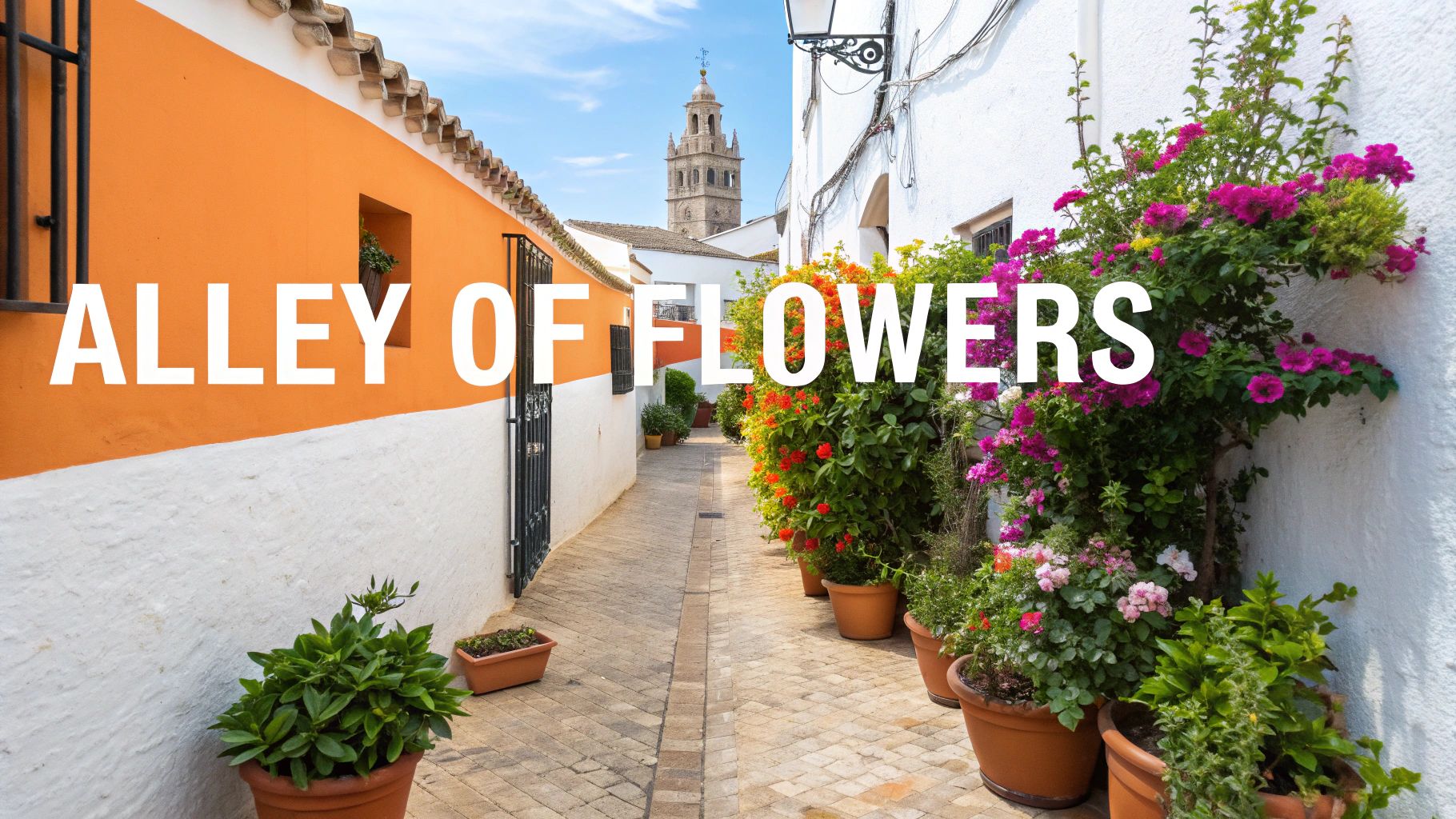
As you walk down the slender passage, it opens into a tiny square, a classic patio Andaluz. From this vantage point, looking back through the alley creates a picture-perfect frame for the Mezquita-Catedral's bell tower, blending the intimate floral beauty with the city's grand architectural icon. This quintessential view is a highlight for anyone wondering what to see in Córdoba, Spain, capturing its unique character in a single snapshot.
Practical Tips for Your Visit
To make the most of this iconic spot and capture its magic without the crowds, keep these tips in mind:
- Go Extremely Early or Late: For the best photos and a peaceful experience, visit before 8:00 AM or after 7:00 PM. This allows you to avoid the midday tour groups and enjoy the golden hour light.
- Best Season: The flowers are at their most vibrant and abundant during the spring and summer months, making this the ideal time to witness the alley in its full glory.
- Respect the Residents: Remember that this charming alley is a residential street. Keep your voice down, avoid blocking doorways, and be mindful that you are a guest in someone's neighbourhood.
- Be Patient: Even at off-peak times, you may have to wait a moment for a clear shot. Patience is key to capturing the perfect photograph without other visitors in the frame.
While it may be a quick visit, the Calleja de las Flores offers a lasting impression of Córdoba's picturesque beauty and is an unmissable stop on any itinerary.
10. Torre de la Calahorra (Calahorra Tower Museum)
Guarding the southern end of the Roman Bridge, the Torre de la Calahorra is a formidable medieval tower that offers a gateway into Córdoba's multicultural past. Originally a Moorish defensive gatehouse, it was extensively rebuilt in the 14th century. Today, it houses the fascinating Museo Vivo de Al-Andalus, a museum dedicated to showcasing the intellectual, scientific, and cultural coexistence of Christians, Jews, and Muslims in medieval Córdoba.
Inside, you won't find dusty relics. Instead, the museum uses engaging multimedia displays, detailed scale models, and lifelike figures to bring the era of Al-Andalus to life. It’s an immersive journey that highlights the period’s advancements in philosophy, medicine, and engineering. The experience is both educational and deeply atmospheric, providing crucial context for the other historic sites you'll see in Córdoba, Spain.
Practical Tips for Your Visit
To make the most of this historical deep-dive and its stunning location, keep these tips in mind:
- Combine with the Roman Bridge: The most logical way to visit is by crossing the Roman Bridge from the historic centre. This creates a natural progression, ending at the tower.
- Time for Sunset: Climb to the tower's rooftop terrace just before sunset. It offers one of the most spectacular panoramic views of the Guadalquivir River, the bridge, and the Mezquita-Catedral bathed in golden light.
- Allocate 1.5-2 Hours: To properly engage with the exhibits and soak in the views, plan for at least 90 minutes. Rushing through would mean missing the essence of the museum’s narrative.
- Use the Audioguide: The audioguide provides rich storytelling and detailed explanations of the exhibits, significantly enhancing the experience and bringing the history of the three cultures to life.
This tower is more than just a viewpoint; it's a celebration of a unique historical period, making it an essential stop for anyone wanting to fully understand the soul of Córdoba.
Top 10 Córdoba Sights Comparison
| Site | 🔄 Visit Complexity | ⚡ Resources & Time | 📊 Expected Outcomes / Quality ⭐ | Ideal Use Cases 💡 | Key Advantages |
|---|---|---|---|---|---|
| Mezquita-Catedral (Mosque-Cathedral) | High — crowded, dress code, restricted areas | €13; 2–3 h; guided recommended | Exceptional architectural & historical insight ⭐⭐⭐⭐⭐ | In-depth history/architecture tour; photography early morning | UNESCO site; unique Islamic–Christian synthesis; vast interior |
| Alcázar of the Christian Monarchs | Moderate — towers, stairs, outdoor exposure | €4.50; 1.5–2 h; mostly outdoor walking | Strong for gardens, views & medieval context ⭐⭐⭐⭐ | Garden photography; panoramic views; quieter alternative | Well-preserved fortress; manicured Islamic-style gardens; artifacts |
| Jewish Quarter (Judería) | Low–Moderate — narrow winding streets, limited signage | Free to explore; 2–3 h; walkable | Authentic atmosphere and photographic charm ⭐⭐⭐⭐ | Leisurely strolls, tapas, cultural immersion | Compact, walkable area; traditional patios; local dining |
| Roman Bridge (Puente Romano) | Low — pedestrian access, exposed but simple | Free; 30–60 min; open 24/7 | Excellent skyline & sunset photography ⭐⭐⭐⭐ | Sunset photos; riverside walks; easy sightseeing stop | Historic Roman arches; great views of Mezquita; accessible |
| Palacio de Viana | Moderate — many courtyards, some confined rooms | €8; 2–3 h; audio/guide recommended | Intimate look at aristocratic life & decor ⭐⭐⭐⭐ | Art/architecture appreciation; courtyard photography | 14 varied courtyards; private art collection; peaceful setting |
| Synagogue of Maimonides | Low — small space, limited hours | €2.50; 45–60 min; modest dress | High historical & religious significance in compact form ⭐⭐⭐⭐ | Focused visit on Jewish history; short educational stop | One of Spain’s medieval synagogues; informative exhibits |
| Medina Azahara | High — requires transport, exposed archaeological site | €5 (museum incl.); 2–3 h incl. travel; bus/tour advised | Outstanding archaeological context and panorama ⭐⭐⭐⭐ | Day-trip archaeology; quieter, contemplative exploration | UNESCO ruins; informative museum; valley views |
| Great Mosque Courtyard (Patio de los Naranjos) | Low — part of Mezquita access, tranquil | Included with Mezquita; 15–45 min | Peaceful sensory respite and garden aesthetics ⭐⭐⭐⭐ | Rest between tours; garden photography; reflection | Orange blossoms in season; calming fountains; connected to Mezquita |
| Calleja de las Flores | Low — very narrow and often crowded | Free; 5–15 min; best early morning | Iconic photogenic alley, short visit ⭐⭐⭐ | Quick photo stop; iconic social-media shots | Extremely photogenic; framed view of Mezquita tower; free |
| Torre de la Calahorra (Calahorra Tower Museum) | Moderate — stairs, museum layout | €4.50; 1.5–2 h; stair access to platform | Engaging, accessible history with good views ⭐⭐⭐⭐ | Complement Roman Bridge visit; family-friendly museum stop | Interactive exhibits; panoramic viewing platform; historical overview |
Planning Your Perfect Córdoba Adventure: Itineraries & Local Insights
Córdoba is not merely a city to be seen; it is a profound experience to be felt. From the mesmerising, infinite arches of the Mezquita-Catedral to the quiet, sun-dappled courtyards of the Palacio de Viana, you now have a comprehensive guide to what to see in Córdoba, Spain. We have walked through history at the Alcázar de los Reyes Cristianos, wandered the labyrinthine lanes of the Judería, and marvelled at the resilience of the Puente Romano under the Andalusian sky. The echoes of a Caliphate’s ambition at Medina Azahara and the simple, vibrant beauty of the Calleja de las Flores all contribute to the city’s complex and captivating narrative.
But knowing the sights is only the first step. The true magic of Córdoba reveals itself when you piece these individual wonders into a journey that is uniquely yours. This is a city that rewards a slower, more deliberate pace, allowing you to absorb the atmosphere that has captivated poets, philosophers, and travellers for centuries. Resisting the urge to rush from one landmark to another is key to unlocking its authentic character.
Crafting Your Córdoba Itinerary
To help you structure your visit, consider these flexible frameworks built around the key attractions we have explored. These are not rigid schedules but rather suggestions designed to maximise your time and enjoyment while minimising travel fatigue.
The Half-Day Immersion (4-5 hours):
If you only have a short time, focus on the absolute heart of the city. This itinerary is designed for maximum impact, covering the most iconic sights.
- Start: Begin your morning at the Mezquita-Catedral as soon as it opens to experience its grandeur with fewer people.
- Mid-Morning: Exit through the Patio de los Naranjos and walk directly across the Puente Romano to the Torre de la Calahorra for panoramic views of where you have just been.
- Late Morning: Cross back over the bridge and lose yourself in the Judería (Jewish Quarter). Let the narrow streets guide you, making sure to find the historic Synagogue and the charming Calleja de las Flores.
The Full-Day Discovery (8-10 hours):
A full day allows you to delve deeper into Córdoba’s palatial and garden culture, balancing major monuments with tranquil escapes.
- Morning (9:00 - 13:00): Follow the "Half-Day Immersion" plan, starting with the Mezquita-Catedral, Puente Romano, and Judería.
- Lunch (13:00 - 14:30): Enjoy a traditional lunch at a restaurant tucked away in the Jewish Quarter.
- Afternoon (14:30 - 17:00): Visit the Alcázar de los Reyes Cristianos. Dedicate ample time to strolling through its magnificent gardens and fountains.
- Late Afternoon (17:00 onwards): Escape the city centre’s hustle with a visit to the Palacio de Viana, exploring its twelve distinct patios. It offers a perfect, peaceful conclusion to a busy day.
Beyond the Monuments: A Sustainable & Local Approach
Truly understanding Córdoba means engaging with its living culture and stunning natural surroundings. To elevate your visit from a simple sightseeing tour to a memorable, conscious journey, consider these final tips:
- Timing is Everything: To avoid the intense summer heat and the largest crowds, plan your visit for the spring (March-May) or autumn (September-October). The weather is pleasant, and in spring, the city’s famous patios are in full, glorious bloom.
- Embrace the Siesta: Do as the locals do. The early afternoon is often hot and quiet. Use this time to relax, have a leisurely meal, or visit indoor attractions, saving your outdoor explorations for the cooler morning and evening hours.
- Go Deeper into Nature: The province of Córdoba is a haven for nature lovers. The Sierra Morena, just north of the city, offers incredible hiking trails, starlit skies, and a chance to see rural Andalusia. This is where you can truly connect with the region’s soul, far from the well-trodden tourist paths.
Córdoba is a city that has perfected the art of living beautifully, a legacy built over a thousand years. It invites you not just to look, but to listen, to taste, and to feel. Use this guide as your starting point, but let your curiosity be your compass. Whether you have a few hours or several days, the city's timeless charm is sure to leave an indelible mark on your heart.
Ready to discover the authentic heart of Andalusia beyond the city limits? Picuco connects you with unique, nature-focused getaways and rural experiences around Córdoba, from countryside homes to local artisan workshops. Find your perfect escape and explore the soul of Spain at Picuco.