If you've ever dreamt of exploring the Mediterranean's hidden depths, scuba diving in Costa Brava should be at the very top of your list. This isn't just another dive destination; it's a world-class experience, celebrated for its protected marine reserves, dramatic underwater cliffs, and astonishingly clear water. It’s a genuine paradise that welcomes everyone, from those taking their very first breath underwater to seasoned pros keen to explore historic wrecks.
Why Choose Costa Brava for Your Next Dive
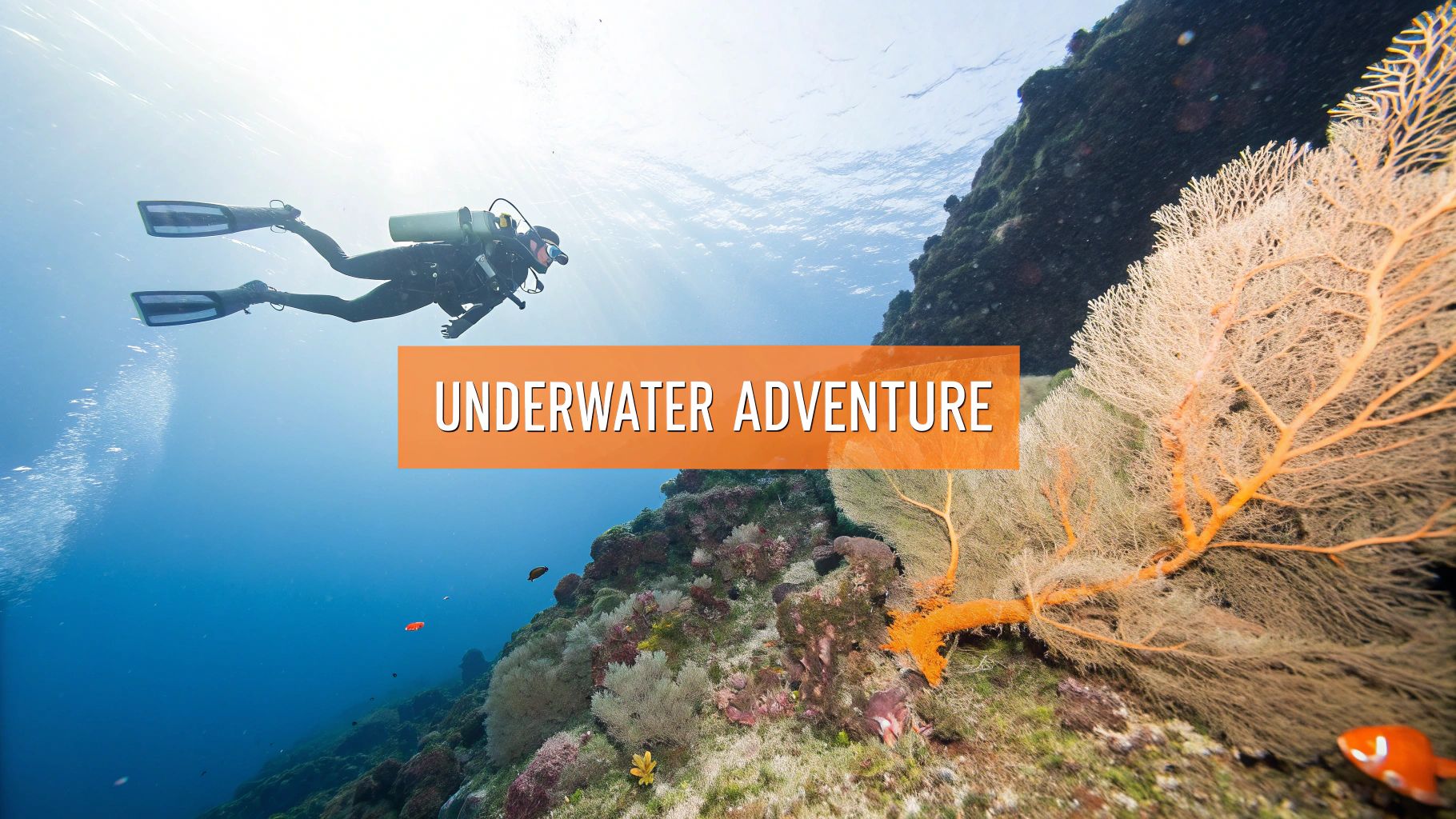
Picture this: you descend into a brilliant blue world where shafts of sunlight dance through the water, lighting up rocky canyons draped in vibrant red and yellow gorgonians. That's the magic of diving in Costa Brava, a rugged slice of Catalonia's coastline where the Pyrenees dramatically meet the sea. Its name literally means "Wild Coast," and that untamed beauty is just as breathtaking below the waves as it is above.
What really sets it apart is the topography. Forget about endless, flat sandy bottoms. Here, the underwater landscape is a direct continuation of the cliffs and coves you see on land. You'll navigate steep drop-offs, weave through hidden caves, and glide past enormous granite boulders that create a playground for divers and a perfect habitat for an incredible amount of marine life.
An Underwater Haven for All Divers
It doesn't matter if you're gearing up for your first certification dive or you've got hundreds of dives under your belt—Costa Brava delivers. The sheer variety of dive sites here is staggering, with something to excite every diver.
- For Beginners: Sheltered bays around towns like Tossa de Mar or Calella de Palafrugell offer calm, shallow conditions. They're the ideal spots for introductory dives and completing your Open Water course.
- For Advanced Divers: Legendary locations like the Medes Islands Marine Reserve and the Cap de Creus Natural Park are the main event. Think deep walls, thrilling swim-throughs, and currents that bring in the big fish.
- For Wreck Enthusiasts: The coast is scattered with fascinating wrecks, including the famous Boreas, a sunken tugboat that now serves as a fantastic artificial reef.
Here's a quick overview of what to expect when planning your trip.
Quick Guide to Diving in Costa Brava
| Aspect | Details |
|---|---|
| Peak Season | June to September |
| Water Temperature | 16°C in spring to 25°C in late summer |
| Average Visibility | 15-25 metres (can exceed 30 metres) |
| Marine Life | Groupers, barracudas, moray eels, octopus, nudibranchs, gorgonians |
| Wetsuit Needed | 7mm semi-dry for most of the year; 5mm in peak summer |
| Experience Level | Sites available for all levels, from novice to technical diver |
This table should give you a solid starting point for logistics, ensuring you pack right and time your visit perfectly for the best possible conditions.
Costa Brava isn't just a place to go diving; it's an entire ecosystem you get to experience. The deep commitment to marine conservation here, especially within the protected reserves, means the underwater world remains vibrant and full of life for divers to enjoy for years to come.
Think of this guide as your personal compass for planning the ultimate underwater adventure. We’ll walk through the can't-miss dive sites and introduce you to the rich biodiversity that makes every dive in Costa Brava completely unforgettable. And when you’re ready to come up for air, you can explore other fantastic trips in the region with our guide to Costa Brava getaways.
When Is the Best Time to Dive in Costa Brava?
Picking the right time to dive the Costa Brava really depends on what you're looking for. While you can technically get in the water almost any time of year, the experience changes dramatically with the seasons. It’s all about matching the conditions to the kind of diving you love.
The main diving window stretches from late spring through early autumn. This is when the Mediterranean is at its most inviting, especially if you're new to diving or just prefer not to shiver. The water warms up, the sun is out, and the whole underwater world seems to come alive.
The Peak Season: Summer Splendour
From June to September, the Costa Brava is absolutely buzzing, both above and below the surface. This is high season for a reason. The sea becomes comfortably warm, meaning you can spend more time exploring without getting chilled.
This energy is mirrored underwater. The marine life is at its most diverse and active. You’ll see more fish, bigger schools, and a lot more action on the reefs. It’s a fantastic, vibrant time to be diving here.
- Water Temperature: Climbs to a lovely 20°C to 25°C. A standard 5mm wetsuit is usually all you need.
- Visibility: Often at its best, frequently pushing past 20 metres. This gives you those incredible, wide-angle views of the underwater terrain.
- Marine Activity: Expect to see everything from huge schools of fish and curious octopuses to colourful nudibranchs dotting the rocks.
The Shoulder Seasons: A Quieter Charm
Ask any local diver their favourite time to get in the water, and many will tell you it's the shoulder months. May, late September, and October are the real sweet spots. You get the best of both worlds: great conditions with a fraction of the summer crowds.
The water holds its warmth from the summer, and the visibility can be absolutely spectacular as the seasonal plankton bloom starts to clear. It’s a dream for underwater photographers. The light is softer, the water is crystal clear, and you often have popular dive sites all to yourself.
I find the shoulder seasons offer a perfect balance. You still have that lingering summer warmth, but the underwater world feels more peaceful and intimate. It’s like having a private showing of the changing seasons.
Year-Round Diving Opportunities
While most of the action happens between May and October, the diving doesn't just stop. Thanks to a mild climate where the sea rarely dips below 13°C, many dive centres stay open year-round. If you want a deep dive into the specifics, this complete guide to scuba diving in Costa Brava is a great resource.
Winter diving is a whole different ball game, but it's magical in its own way. The colder water brings incredible clarity—we’re talking visibility that can sometimes hit a mind-blowing 30 metres. It’s the perfect time for divers who love solitude and want to appreciate the stark beauty of the underwater cliffs and rock formations. Just be sure to bring a 7mm wetsuit or a dry suit to stay comfortable.
Exploring Costa Brava's Top Dive Sites
The rugged, cliff-lined coast of the Costa Brava hides a world that’s just as dramatic beneath the waves. Every cove, island, and rocky outcrop offers a completely unique underwater experience, turning this stretch of coastline into a playground for divers of all stripes. From vibrant marine sanctuaries bursting with life to ghostly shipwrecks steeped in history, the region is a treasure map of dive sites just waiting to be explored.
Think of the coastline as a series of different underwater "neighbourhoods," each with its own distinct character. Some are bustling with energy, perfect for spotting huge schools of fish, while others are quiet, intricate labyrinths of rock that are a dream for macro photographers looking for hidden critters. The real key to an unforgettable scuba diving Costa Brava adventure is knowing which neighbourhood best suits your skills and what you're hoping to see.
This quick overview of the seasons will help you time your visit for the best possible conditions.
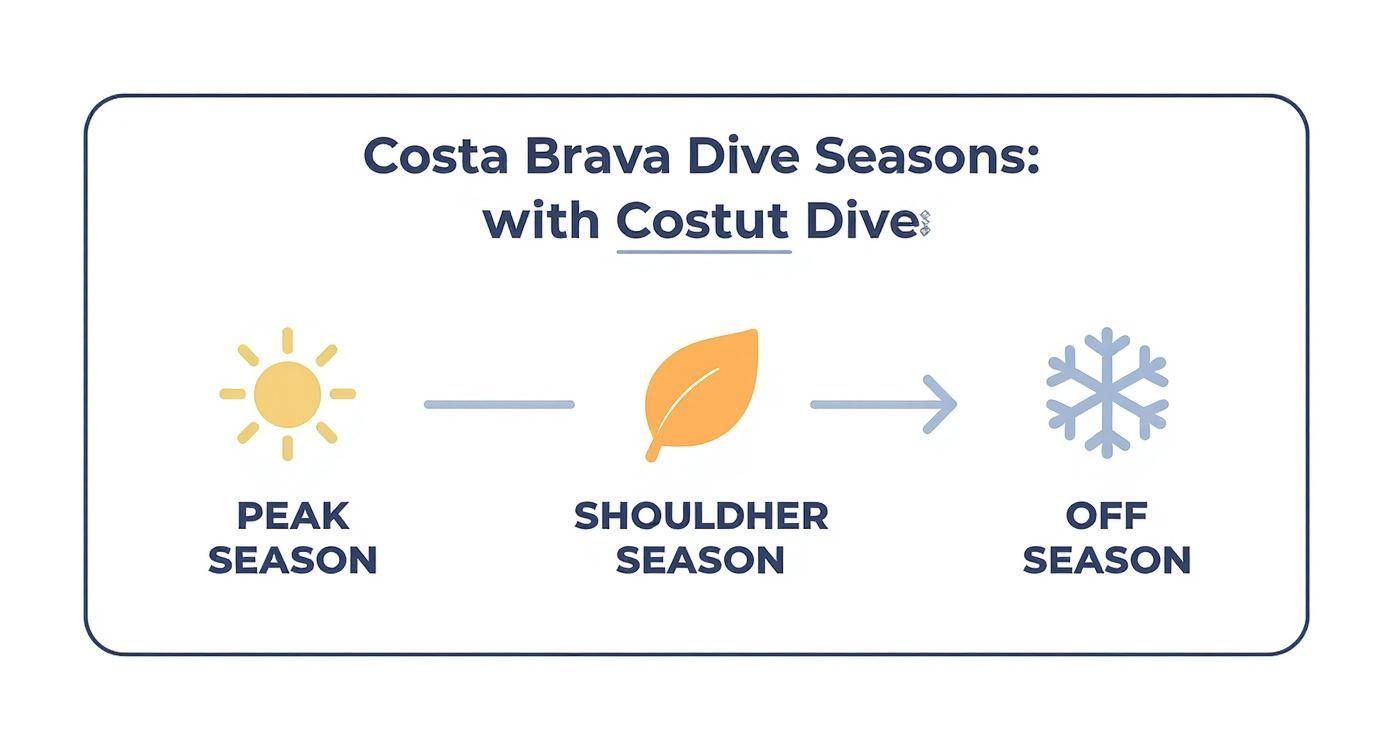
As you can see, while the peak summer months bring the warmest water, the shoulder seasons often deliver that perfect sweet spot: pleasant temperatures, fewer crowds, and fantastic visibility.
To help you get your bearings, here's a quick comparison of the must-see dive spots we'll be covering.
Top Dive Sites in Costa Brava at a Glance
| Dive Site | Location | Difficulty | Max Depth | What to See |
|---|---|---|---|---|
| Medes Islands | L'Estartit | All Levels | 40m+ | Giant groupers, barracudas, gorgonians, tunnels |
| Cap de Creus | North Coast | Advanced | 40m+ | Steep walls, pelagics (Mola mola), currents |
| Tossa de Mar | South Coast | Beginner | 20m | Octopus, cuttlefish, nudibranchs, easy access |
| The Boreas | Palamós | Advanced | 32m | Historic wreck, conger eels, lobsters, coral |
This table gives you a starting point, but the real magic is in experiencing each location's unique personality for yourself.
The Crown Jewel: The Medes Islands
You simply can't talk about diving here without starting with the Illes Medes (Medes Islands). This small archipelago, just a stone's throw from the shores of L'Estartit, is a strictly protected marine reserve and the undisputed epicentre of scuba diving on the Costa Brava. For over 30 years, all fishing has been banned, allowing the marine life to bounce back in a way that’s hard to find anywhere else in the Mediterranean.
What does that mean for you? An underwater world where the fish are not only everywhere but also completely unafraid of divers. You'll swim side-by-side with massive groupers—some tipping the scales at over 30 kilograms—that seem as curious about you as you are about them. Shimmering curtains of barracuda patrol the deep blue, while moray eels and octopuses peek out from countless rocky hideouts.
The Medes Islands feel like stepping back in time to a Mediterranean that existed centuries ago. The sheer density and size of the marine life are staggering—a powerful reminder of what our oceans can be when we give them a chance to heal.
The underwater landscape is just as breathtaking. Sites like Dofí Nord are famous for their spectacular tunnels and swim-throughs, while Carall Bernat is a dramatic pinnacle that plunges to depths of over 40 metres, its sheer walls draped in colourful gorgonian sea fans. It’s an experience that sticks with you. To truly grasp the beauty of this reserve, a Medes Islands aerial discovery flight offers a perspective you'll never forget.
The Wild North: Cap de Creus
For divers with a bit more experience under their belts, the Cap de Creus Natural Park offers a wilder, more untamed adventure. This is the easternmost point of the Iberian Peninsula, where the Pyrenees mountains dramatically crash into the sea. The result is a raw, powerful underwater environment sculpted by the elements. The currents that sweep through here bring nutrient-rich waters, attracting an incredible variety of life, including the occasional, magnificent Mola mola (ocean sunfish).
Diving in Cap de Creus is all about exploring dramatic canyons, vertigo-inducing drop-offs, and granite seascapes. It’s a place that demands respect and solid skills, but the payoff is immense.
- Key Sites: Places like Massa d'Or and El Gat are legendary among local divers for their breathtaking walls and the chance to spot larger pelagic species cruising by.
- Difficulty Level: The dives are typically deeper and can have strong currents, making them a perfect match for Advanced Open Water divers or those with equivalent training and experience.
The Accessible South: Tossa de Mar
As you head south, the coastline softens, revealing sheltered bays and coves that are absolutely perfect for new divers or anyone looking for a more relaxed day in the water. The area around Tossa de Mar is a firm favourite, known for its crystal-clear, calm waters and easy shore dives. But don't let the "beginner-friendly" tag fool you—the marine life here is still spectacular.
The sites are characterised by gently sloping seabeds, vast meadows of Posidonia seagrass (which acts as a vital nursery for countless species), and fascinating rock formations. You'll find a high concentration of octopuses, cuttlefish, and scorpionfish, alongside a whole rainbow of smaller critters like nudibranchs.
Wreck Diving: The Boreas and Beyond
For those drawn to the allure of history and mystery, the Costa Brava delivers with some truly excellent wreck dives. The most famous of them all is the Boreas, a German tugboat that was deliberately sunk off the coast of Palamós in 1989 to create an artificial reef.
Today, the Boreas sits perfectly upright on a sandy bottom at about 32 metres. It has since been completely colonised by an incredible amount of life. Massive conger eels have claimed the engine room, while lobsters peer out from the ship's nooks and crannies. For certified wreck divers, penetrating the ship adds a whole other layer of adventure. It's a fantastic dive that beautifully merges history with nature.
What You'll See: The Rich Marine Life of the Costa Brava
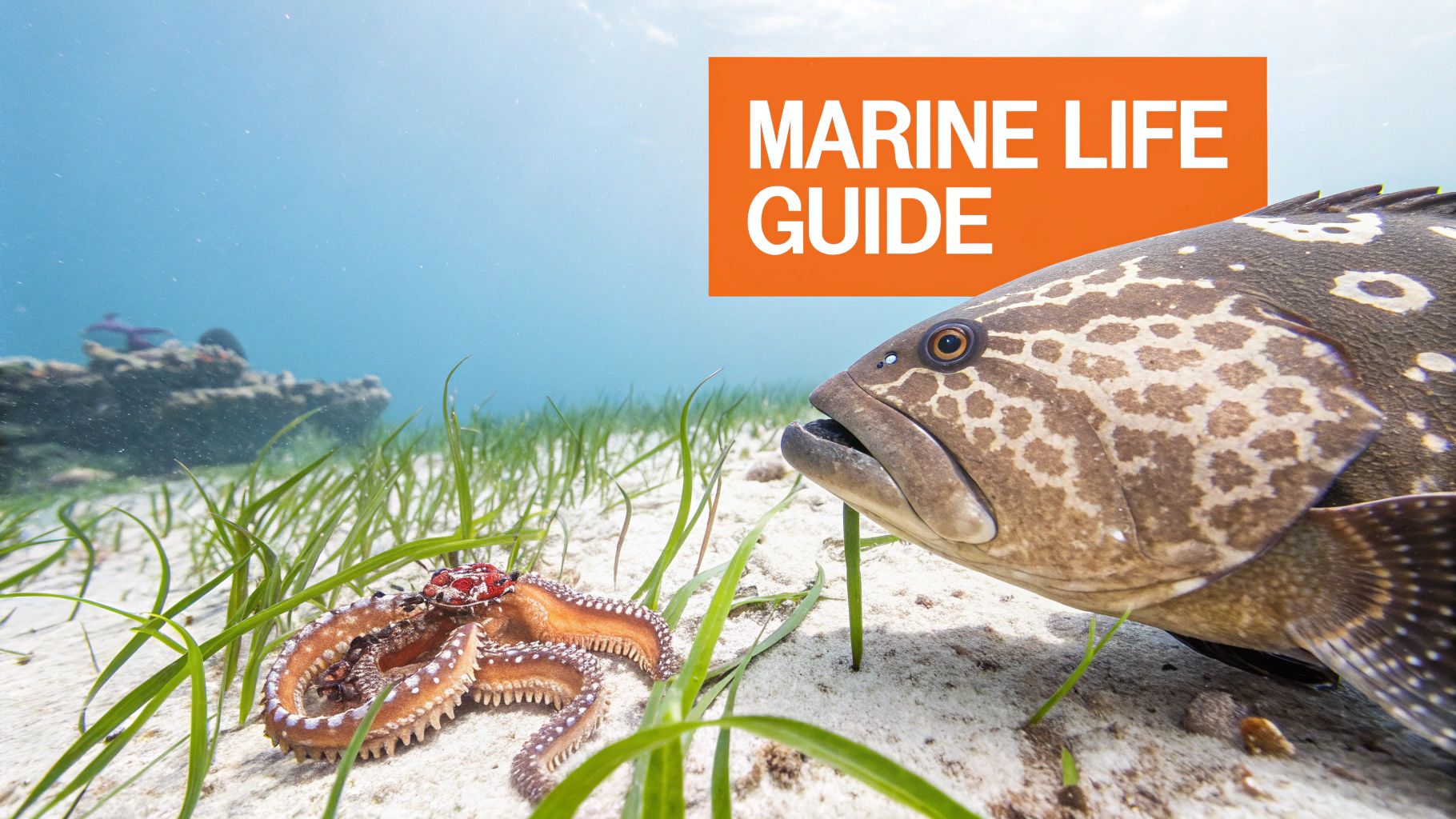
Sure, the dramatic underwater cliffs and canyons set the scene, but it’s the vibrant marine life that truly stars in any scuba diving Costa Brava adventure. This isn't just a random assortment of fish; it's a living, breathing ecosystem where every creature has a part to play. Knowing a little about this world before you get wet transforms a dive from a simple sightseeing trip into a front-row seat for the underwater drama unfolding all around you.
At the very heart of this ecosystem are the vast underwater meadows of Posidonia oceanica, a vital type of seagrass. Just think of these fields as the bustling nurseries and primary schools of the Mediterranean. They offer crucial food, shelter, and breeding grounds for hundreds of species, making them one of the most important habitats you’ll float over.
As you glide above these green carpets, you’ll spot juvenile fish darting between the leaves, while clever cuttlefish and octopuses use the dense cover for their disappearing acts. The presence of healthy Posidonia beds is a fantastic sign of clean water and is the foundation for the incredible biodiversity that makes this region so special.
Meeting the Local Celebrities
Once you move from the seagrass onto the rocky reefs and walls, you'll start meeting some of the area's most famous residents. The sheer variety is astonishing, with a new and exciting encounter potentially waiting around every corner.
Some of the most common and captivating creatures you'll likely run into include:
- Giant Groupers: These gentle giants are especially common in the Medes Islands and can weigh over 30 kilograms. They’re famously curious and often swim right up to divers, creating an unforgettable and personal interaction.
- Barracudas: You'll often find them hanging almost motionless in the blue, gathered in large, shimmering schools. Seeing their silvery forms flash in the sunlight is a truly mesmerising spectacle.
- Moray Eels: These impressive creatures are a bit shy, usually found peering out from cracks and crevices in the rocks. Keep an eye out for their distinctive snake-like heads as you explore the reef walls.
- Octopuses: The undisputed masters of disguise. Spotting an octopus is always a highlight, as they can change their colour and texture in the blink of an eye to blend in perfectly with their surroundings.
The real magic happens when you slow down and really look. What might seem like a simple rock at first glance could reveal a perfectly camouflaged scorpionfish or a tiny, colourful nudibranch. Patience is the key to unlocking the reef's best-kept secrets.
Beyond these headliners, the Costa Brava is home to a spectacular supporting cast. Colourful wrasse, damselfish, and bream are everywhere, adding constant movement and energy to the reefs. The marine life here is distinct from what you'd find in warmer tropical waters, which is part of its charm. For those curious about different Spanish diving environments, you can compare it with a discover scuba diving trip in another unique location.
The Thrill of the Unexpected Encounter
While every dive promises amazing sights, some encounters are the kind you talk about for years. They aren't guaranteed, of course, but knowing they're out there adds a thrilling layer of anticipation every time you look out into the deep blue.
One of the most sought-after sightings is the Mola mola, or ocean sunfish. This wonderfully bizarre and massive fish occasionally cruises through the deeper, current-swept sites, particularly around Cap de Creus. Spotting its huge, almost prehistoric silhouette finning in the distance is a moment no diver ever forgets.
Finally, the walls and overhangs are alive with colour themselves. They are often draped in vibrant gorgonian sea fans, painting the rock in shades of deep red and bright yellow. These delicate, tree-like corals create stunning underwater forests, offering a perfect backdrop for photographers and a critical habitat for smaller creatures. Floating past a wall completely covered in these fans is one of the signature moments of any classic Costa Brava dive.
Planning Your Costa Brava Dive Trip: A Practical Guide
A great dive trip doesn’t start when you hit the water—it starts with smart planning on dry land. A little bit of prep work is all it takes to make sure your scuba diving holiday on the Costa Brava is smooth, simple, and focused on what really matters: exploring the incredible world beneath the waves.
Getting There and Getting Around
Reaching the Costa Brava is easier than you might think. Most divers fly into one of two airports: Girona-Costa Brava Airport (GRO) or the much larger Barcelona-El Prat Airport (BCN).
Girona’s airport is your best bet for convenience. It drops you right in the heart of the region, often less than an hour’s drive from the prime dive spots.
Barcelona is a major international hub with far more flight options, but you'll have a slightly longer commute. Expect a drive of about 90 minutes to two hours to reach the central Costa Brava. I’d strongly recommend renting a car; it gives you the freedom to move between dive sites and discover the charming villages and hidden coves that make this coastline so special.
Picking the Perfect Home Base
Where you stay sets the tone for your entire trip. The Costa Brava is dotted with towns that make for excellent bases, each with its own character. Your choice really comes down to the kind of diving and overall vibe you’re after.
- L'Estartit: This is, without a doubt, the epicentre for anyone focused on the Medes Islands. The town lives and breathes diving, with a marina packed with dive boats and centres. If the marine reserve is your main goal, staying here is a no-brainer.
- Tossa de Mar: A stunning town, complete with a fairy-tale castle overlooking the bay. It’s ideal if you want to balance diving with culture and a bit of relaxation. The local sites are fantastic for newer divers and anyone who loves macro life, offering calm, sheltered coves.
- Palamós or Calella de Palafrugell: For a more authentic, laid-back Catalan experience, these traditional fishing villages are perfect. You’ll have easy access to a great variety of dive sites, including the famous Boreas wreck, while getting a real taste of local life.
If you’re looking for something different, consider staying in a rural hotel inland from the coast. You get the peace of the countryside in the evenings but are still just a short drive from the dive centres. We've put together some beautiful options in our guide to finding a rural hotel in Girona.
How to Choose and Book Your Dive Operator
With over 36 professional dive operators along the coast, you’ve got plenty of options. The key is finding the right one for you, as this can make or break your underwater experience. Look for shops with a solid reputation, good online reviews, and clear, friendly communication.
Here are a few things I always check before booking with a new centre:
- Affiliation: Are they certified by a major agency like PADI, SSI, or CMAS? This is a baseline for safety and quality standards.
- Rental Gear: Ask about their equipment. Is it well-maintained? Good gear is a sign of a professional, safety-conscious operation.
- Group Size: I always prefer smaller groups. It means a more personal tour and a safer dive. Ask about their typical guide-to-diver ratio.
- Language: Make sure they have guides and instructors who speak your language fluently. Clear communication underwater is non-negotiable.
It’s always a good idea to book ahead, especially if you’re travelling during the high season in July and August when things get very busy. Nearly every dive centre has a website, so you can easily book guided dives or courses before you leave home.
Pro Tip: Don't be shy about sending a few emails or making a few calls. How a dive centre responds to your questions tells you a lot about their professionalism and customer service. A good operator is always happy to help you plan.
What to Experience Beyond the Dive
The magic of a scuba diving Costa Brava trip isn't just what happens twenty metres below the surface; it's also about the rich, vibrant world you come back up to. This region is a stunning mix of wild nature, surrealist art, and incredible food, offering experiences that are the perfect way to round off a day of diving. The adventure keeps going long after you've rinsed your gear.
The innovative spirit of this coast even finds its way beneath the waves in the most surprising ways. Imagine sipping a glass of wine that's been aged in the very same sea you just explored. It sounds like something out of a storybook, but it’s a reality here.
A Taste of the Sea
In a fascinating project, the local Espelt winery teamed up with a dive centre in Cala Joncols to age their wine underwater. They sunk crates to a depth of 10 metres and left them for eight months. The results? Experts found the constant pressure and gentle sway of the sea actually sped up the wine's maturation, developing a unique flavour without sacrificing quality. You can read more about this incredible underwater wine aging process.
This story really captures the essence of the Costa Brava—it’s a place where tradition and innovation meet in the most creative ways.
Culture and Coastal Trails
Away from the world of wine, the region is soaked in artistic history. No trip is complete without diving into the world of Salvador Dalí. You can visit his surreal Theatre-Museum in Figueres or wander through his wonderfully eccentric home in Portlligat, near Cadaqués, to get a glimpse into the mind of a genius. The white-washed streets and sparkling bay of Cadaqués, once a humble fishing village, provide the perfect backdrop.
For anyone keen to keep the adventure going on land, the Camino de Ronda is an absolute must. This historic coastal path weaves its way along the entire Costa Brava, connecting hidden coves, dramatic cliffs, and postcard-perfect seaside towns.
The Camino de Ronda offers some of the most spectacular coastal views in all of Spain. Each turn reveals a new perspective of the turquoise water and rugged shoreline you’ve just been diving in.
It’s the ideal way to spend a non-diving day, stretching your legs while taking in the scenery. You can tackle a short, scenic section or plan a more ambitious multi-day hike. It's easy to mix and match activities, and you can even find guided trips that blend the best of both worlds, like this fantastic trekking and snorkelling trip near Tamariu.
Your Costa Brava Diving Questions, Answered
Alright, so you're getting excited about the idea of exploring Costa Brava's underwater world. Even with a plan shaping up, you probably still have a few questions swirling around. Let's tackle those common "what ifs" and "should Is" so you can book your trip feeling totally prepared.
Getting the practical details sorted out now—like what certification you need or what gear to pack—means less fumbling around when you arrive. You want to spend your time enjoying the dives, not stressing over logistics.
What Dive Certification Do I Need?
For the vast majority of guided dives here, you'll need to be an Open Water Diver (or hold an equivalent certification from an agency like PADI or SSI). The first thing any dive centre will ask for is proof of certification, so have your card and logbook handy.
Thinking of tackling something a bit more challenging? Some of the more advanced sites, like the deep walls around the Medes Islands or wrecks such as the Boreas, typically require an Advanced Open Water ticket. But if you're not certified at all, don't sweat it. Costa Brava is a brilliant place to get your feet wet with a "Discover Scuba Diving" taster session.
Should I Bring My Own Dive Gear?
Many of us divers get attached to our own kit, but lugging it all the way to Spain isn't always necessary. With over 36 professional dive operators scattered along the coast, you'll find high-quality rental gear almost everywhere. It's a fantastic option if you prefer to travel light.
That being said, there are a couple of things most divers agree are worth packing: your own mask for a guaranteed good fit and your own dive computer because you know how it works. If you do decide to rent everything, it’s a smart move to book it ahead of time, especially if you're visiting during the peak season in July and August.
"A well-fitting mask can make or break a dive. If you bring only one piece of personal gear, make it your mask. Clear vision and comfort are paramount to enjoying your time underwater."
What Wetsuit Thickness Is Best?
Staying comfortable underwater is all about matching your wetsuit to the water temperature, which changes quite a bit throughout the year.
- Peak Summer (July-August): The water is at its warmest, sitting around a lovely 24-25°C. A standard 5mm wetsuit is perfect for most people.
- Shoulder Seasons (Spring & Autumn): When things cool down a bit, you’ll be much happier in a warmer 7mm wetsuit.
- Winter: Diving in winter is for the truly dedicated! Water temperatures can dip to 13°C, so a 7mm semi-dry or a full dry suit is non-negotiable for a safe and comfortable dive.
Are There Strong Currents at the Dive Sites?
One of the best things about diving in Costa Brava is how manageable the conditions usually are. Most dive sites are tucked away in sheltered coves and bays where you'll encounter very little current, if any at all. This makes it an incredibly welcoming place for divers of all levels.
Of course, there are exceptions. More exposed spots, like the outer Medes Islands or the dramatic headlands of Cap de Creus, can occasionally get a bit of a push. Your dive centre will always check the conditions on the day and will only take you to sites that are safe and suitable for your group’s experience level.
Ready to plan your complete nature-filled getaway beyond the dive sites? At Picuco, we help you discover and book authentic local experiences, from coastal hikes to gastronomic tours, creating your perfect Spanish adventure. Build your dream trip with Picuco today.