
Lanzarote, an island sculpted by volcanoes and kissed by the Atlantic, offers a culinary landscape as dramatic and unique as its terrain. Far beyond the typical tourist hubs lies a rich gastronomic heritage rooted in simplicity, sustainability, and the ingenious use of local resources. This guide is your definitive passport to the authentic flavours of the island, a curated exploration of the comida típica Lanzarote that defines its culture and history. We move past generic recommendations to provide a comprehensive look at the dishes that truly capture the island's spirit.
This listicle is designed to be your practical companion for a culinary adventure. We will journey from the humble yet iconic papas arrugadas with their fiery mojo sauces to hearty stews like Rancho Canario that have warmed generations of islanders. You will discover the ancient, versatile grain gofio, the island's celebrated goat cheeses, and the simple perfection of freshly caught pescaito frito. Each item tells a story of resilience, tradition, and the profound connection between the volcanic land and its people.
Forget surface-level descriptions. Inside, you will find actionable advice on where to savour each dish, from local markets and coastal cofradías to traditional teleclubs. We provide pairing suggestions with local Malvasía Volcánica wines, notes on seasonality, and insights into sustainable food practices on the island. This is more than a list; it is a structured guide to experiencing Lanzarote’s gastronomy like a true connoisseur. Prepare to discover the essential tastes that make this Canary Island a genuine food lover's paradise.
1. Papas Arrugadas
No exploration of comida tipica Lanzarote would be complete without savouring Papas Arrugadas, arguably the most iconic dish of the Canary Islands. The name translates to "wrinkled potatoes," which perfectly describes their appearance. This humble yet flavourful dish consists of small, local potatoes boiled unpeeled in heavily salted water until the skin becomes wrinkled and a fine salt crust forms.
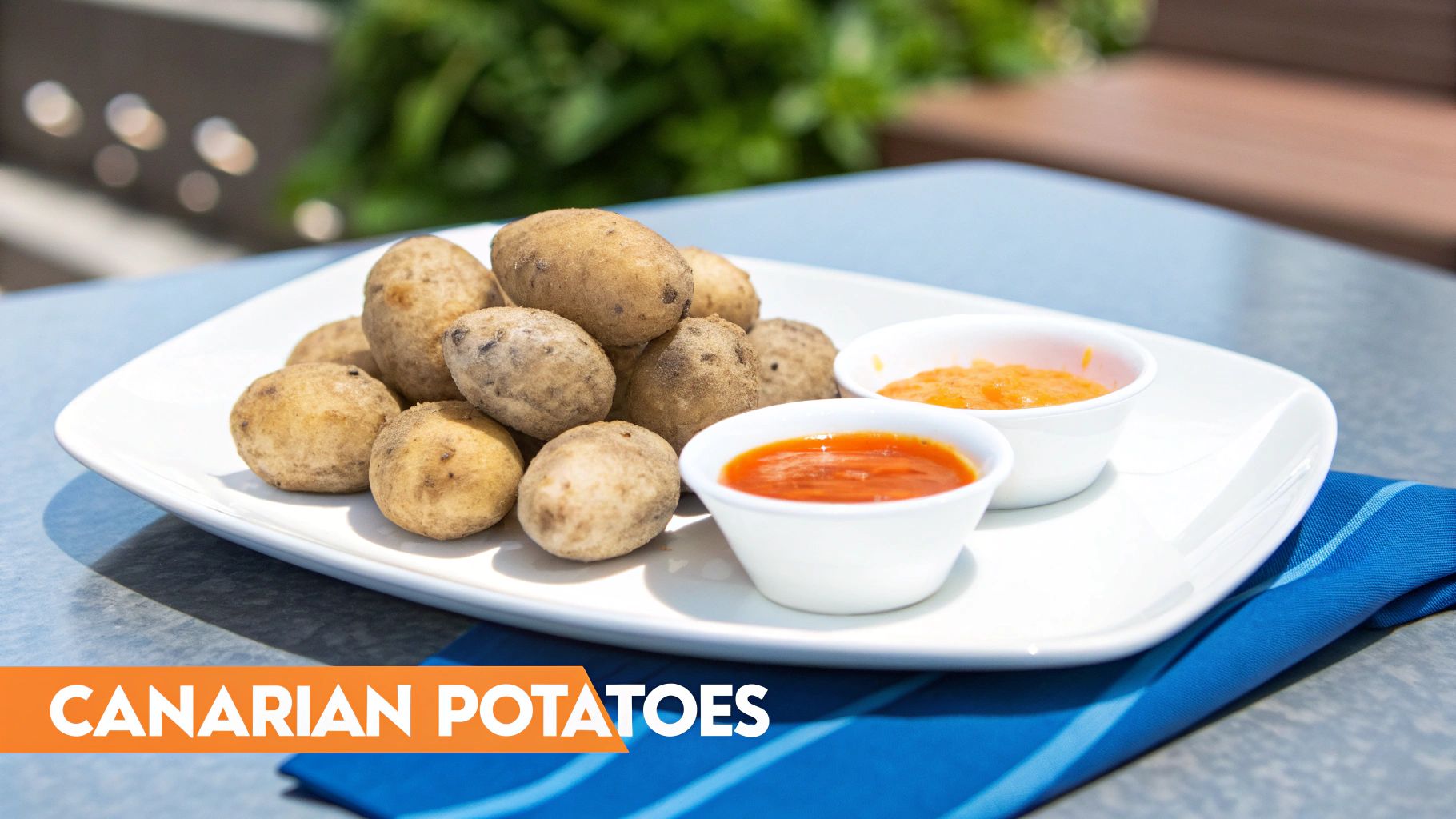
The secret lies in the simplicity and quality of the ingredients. Historically, islanders would cook the potatoes in seawater, a practice that imparted a unique saline flavour. Today, this is replicated by adding a generous amount of sea salt to the cooking water. This method not only seasons the potatoes but also draws out moisture, concentrating their earthy taste and creating the signature wrinkled skin. They are a staple found in nearly every traditional restaurant and tapas bar, from the coastal eateries of Playa Blanca to the rustic bodegas in the island's interior.
The Essential Pairing: Mojo Sauces
Papas Arrugadas are almost never served alone. They are the perfect vehicle for the islands' famous mojo sauces. You will typically be offered two varieties:
- Mojo Rojo (Red Mojo): A vibrant, spicy sauce made with red peppers (often the local picona variety), garlic, cumin, olive oil, and vinegar. It offers a smoky and piquant kick.
- Mojo Verde (Green Mojo): A milder, fresher sauce featuring coriander or parsley, green peppers, garlic, olive oil, and vinegar. It has a bright, herbaceous flavour.
Where to Try Them
You can find excellent Papas Arrugadas across the island. For an authentic experience, visit a traditional teleclub (a local social club with a restaurant) or a family-run establishment in villages like Haría or Yaiza. Many agricultural markets, such as the Teguise Sunday Market, also have food stalls where you can taste them freshly made. They are often served as a tapa, an appetiser, or a side dish to grilled meat or fish, making them a versatile component of any Lanzarote meal. After a day of exploring the volcanic landscapes, perhaps during a camel ride through Timanfaya National Park, a plate of these comforting potatoes is the perfect reward.
2. Mojo Sauce (Rojo and Verde)
A true cornerstone of comida tipica Lanzarote, Mojo Sauce is the vibrant, flavour-packed condiment that accompanies nearly every traditional meal on the island. More than just a sauce, it's an essential part of Canarian culinary identity, with recipes often passed down through generations. You will find it served alongside everything from potatoes and fresh bread to grilled fish and hearty meat dishes.
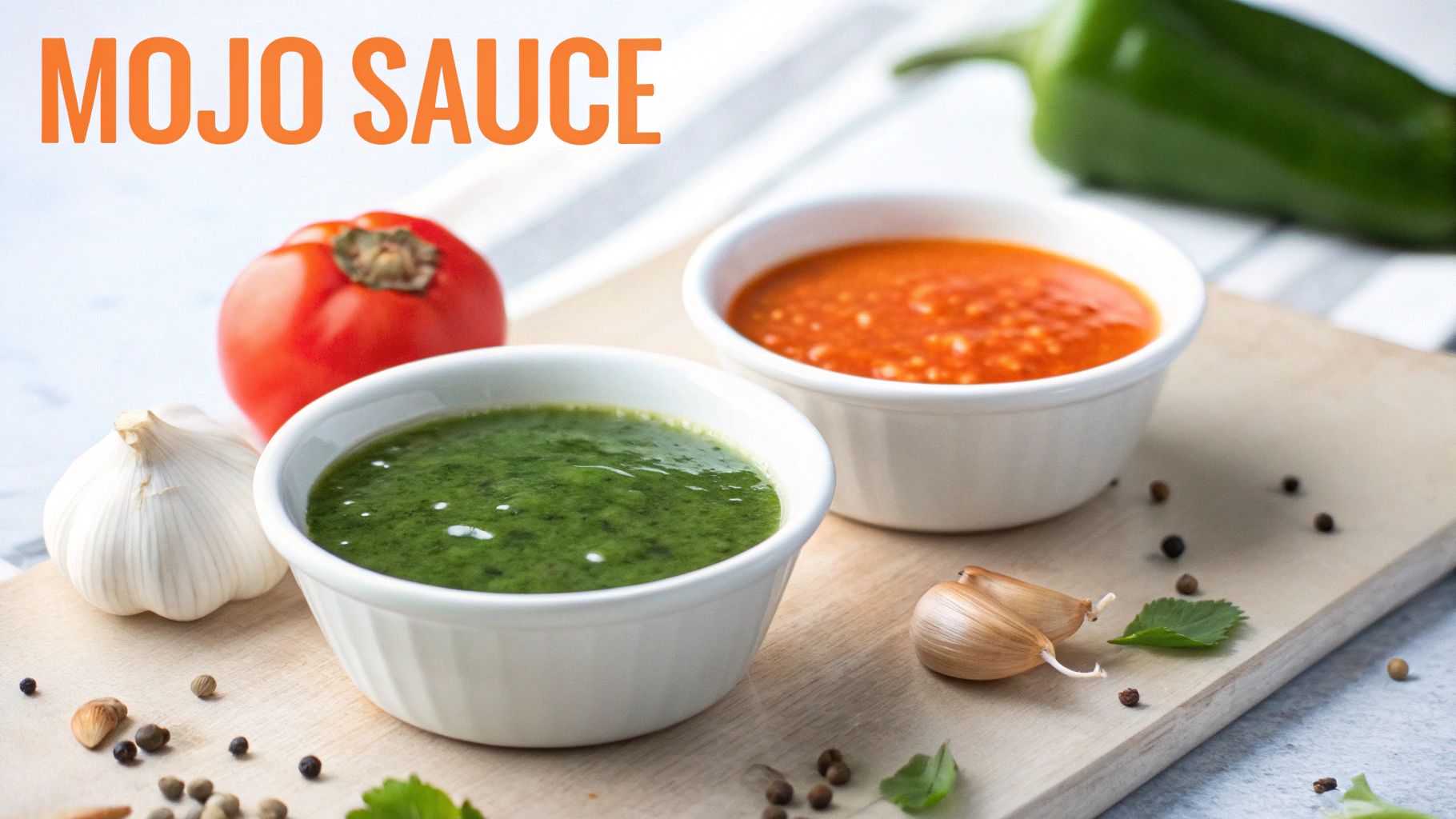
The name "mojo" is thought to derive from the Portuguese word molho, meaning "sauce," reflecting the historical maritime connections of the islands. The base ingredients are typically garlic, olive oil, vinegar, and sea salt, but from there, the variations are endless. Each family and restaurant in Lanzarote has its own secret twist, making the tasting experience a constant discovery of new flavours and textures.
The Two Classic Varieties
While many local variations exist, every visitor will become familiar with the two main types of mojo, which are always served together:
- Mojo Rojo (Red Mojo): Often called mojo picón, this is the fiery version. Its deep red colour comes from dried red peppers and paprika (pimentón). Cumin, garlic, and a touch of chilli provide a smoky, pungent, and spicy flavour that pairs exceptionally well with potatoes and roasted meats.
- Mojo Verde (Green Mojo): This sauce offers a fresh, herbaceous, and milder counterpoint. Its bright green hue comes from either fresh coriander (cilantro) or parsley. Combined with green bell peppers, garlic, and olive oil, it has a zesty and slightly tangy taste that is the perfect accompaniment for grilled fish and seafood.
How to Enjoy Mojo
Mojo is incredibly versatile. Beyond its classic pairing with Papas Arrugadas, it's used as a marinade for meat, a dressing for salads, or simply as a dip for fresh bread at the start of a meal. For a hands-on experience, you can explore Lanzarote's gastronomic culture by joining a cooking class where you can learn to make your own mojo from scratch. You can find out more about these immersive culinary activities and other gastronomic tours in Lanzarote. You can also purchase beautifully packaged jars at local markets, like the one in Teguise, to take a taste of Lanzarote home with you.
3. Gofio
Delving into the heart of Canarian gastronomy means discovering Gofio, a cornerstone of comida tipica Lanzarote that traces its roots back to the pre-Hispanic Guanche people. It is a finely ground flour made from roasted cereals, most commonly corn (millo), wheat (trigo), or a blend of several grains. This ancient foodstuff is not just an ingredient; it is a profound symbol of the islands' heritage and resilience, having sustained generations through times of both plenty and scarcity.
The roasting process gives gofio its characteristic nutty aroma and toasted flavour, distinguishing it from raw flours. Its versatility is unparalleled, and it is consumed in various forms throughout the day. For breakfast, many locals enjoy it mixed with warm milk to create a nutritious, porridge-like dish. Throughout the island, from bustling Arrecife to the quiet village of Femés, gofio remains a beloved and highly nutritious staple, rich in vitamins, fibre, and minerals.
Classic Gofio Preparations
Gofio can be prepared in both savoury and sweet ways, showcasing its incredible adaptability. You will most likely encounter it in these traditional forms:
- Gofio Escaldado: A thick, savoury paste created by whisking gofio into a hot fish or meat broth (caldo). It is often served as a starter, garnished with red onion and a sprig of mint (hierbabuena), and scooped up with pieces of onion.
- Gofio Amasado: A sweet, dough-like mixture made by kneading gofio with water, sugar, honey, almonds, and sometimes dried fruits like figs. It is typically shaped into a roll, chilled, and sliced to be eaten as an energy-boosting snack or dessert.
Where to Try It
You can find gofio escaldado on the menu of most traditional restaurants and teleclubs, where it is cherished as authentic comfort food. For a taste of high-quality, artisan gofio, look for products from local mills, such as La Molina de José María Gil in San Bartolomé, a working mill that offers a glimpse into the traditional production process. Gofio flour is also readily available in all supermarkets, allowing you to try preparing it yourself. It serves as a perfect, nourishing start to a day spent exploring Lanzarote's unique attractions, like the fascinating Cueva de los Verdes.
4. Pescaito (Fried Fish)
As an island blessed by the vast Atlantic, Lanzarote's cuisine is profoundly connected to the sea, and nothing captures this better than Pescaito Frito. This beloved dish, translating simply to "little fried fish," is a testament to the island's fishing heritage. It consists of fresh, locally caught fish, lightly coated in flour, and deep-fried to a perfect golden-brown crispness, offering a delightful crunch that gives way to tender, flavourful flesh.
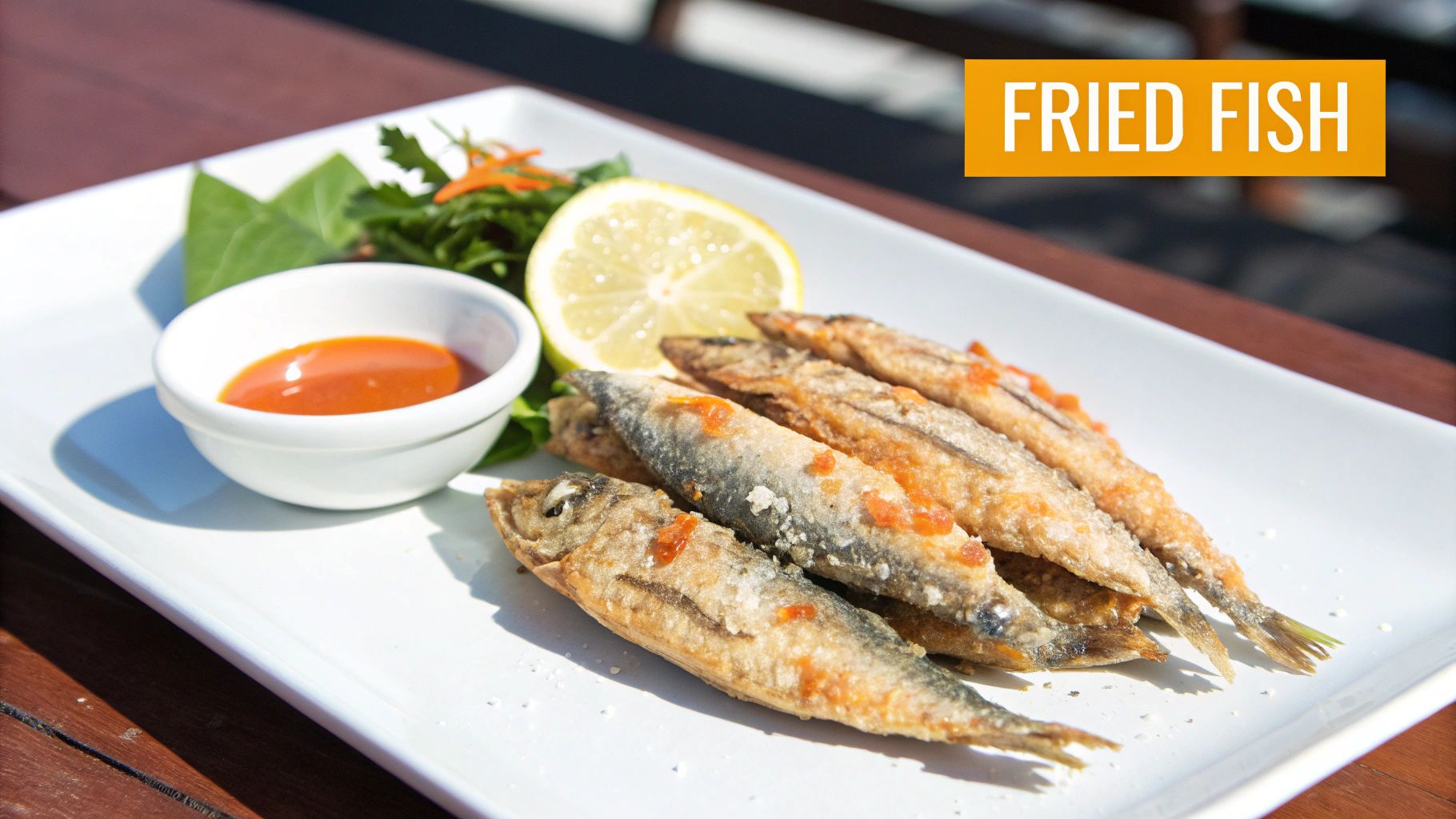
The brilliance of Pescaito Frito lies in its simplicity. The minimal seasoning, often just a touch of salt, allows the natural, fresh taste of the ocean to shine through. The type of fish used varies depending on the catch of the day, but common varieties include smaller fish like boquerones (anchovies) or larger types like sea bass or bream cut into manageable pieces. This dish is a cornerstone of the comida tipica Lanzarote, found everywhere from humble beachfront chiringuitos to family-run restaurants celebrating traditional recipes.
The Perfect Serving Suggestions
While delicious on its own with a squeeze of fresh lemon, Pescaito Frito is often enjoyed as part of a larger meal or as a generous ración (portion) to share. The most traditional and satisfying accompaniments include:
- Papas Arrugadas: The salty, earthy potatoes provide a wonderful textural contrast to the crispy fish.
- Mojo Sauces: Both Mojo Rojo and Mojo Verde are excellent for dipping, adding a zesty or spicy dimension to each bite.
- A Simple Salad: A light green salad with a simple vinaigrette helps cut through the richness of the fried dish.
Where to Find the Best Catch
For the most authentic Pescaito Frito, head to the coastal villages where the fishing boats come in. Places like Arrieta, El Golfo, or Playa Quemada are renowned for their seafood restaurants that serve fish caught just hours before. These establishments pride themselves on freshness, which is the key to a spectacular plate of fried fish. Exploring these seaside spots offers not just a great meal but also an insight into the island's maritime culture, a journey you can deepen by discovering more about Spain's rich maritime routes and seafood traditions.
5. Caldo de Papas (Potato Stew)
Delving into the heart of Lanzarote’s rural comfort food, Caldo de Papas is a humble yet deeply satisfying stew that speaks to the island's resourceful culinary heritage. This hearty one-pot dish, translating to "potato stew," evolved from peasant cuisine, designed to nourish families using simple, locally available ingredients. It’s a cornerstone of traditional comida tipica Lanzarote, showcasing how potatoes, onions, and garlic can be transformed into a soulful meal.
The base of the stew is always potatoes, simmered until tender in a flavourful broth seasoned with garlic, onions, peppers, and often saffron for a beautiful colour and aroma. While delicious in its purely vegetarian form, it frequently includes additions like salted fish (pescado salado) or pieces of meat to create a more substantial dish. Each family often has its own cherished recipe, passed down through generations, making every bowl a unique taste of Lanzarote’s history. It is the epitome of comfort, especially on cooler evenings in the island's higher villages.
The Perfect Finishing Touches
Caldo de Papas is a complete meal, but its flavour profile is often enhanced with simple, fresh additions just before serving. These elements elevate the dish from simple to sublime:
- Gofio Escaldado: A common practice is to mix gofio (toasted grain flour) with a little of the hot broth to create a thick, nutty paste served alongside or stirred into the stew.
- Fresh Herbs: A generous sprinkle of fresh coriander (cilantro) or parsley adds a burst of freshness that cuts through the richness of the broth.
- A Poached Egg: Many traditional recipes call for cracking an egg into the simmering stew during the last few minutes of cooking, allowing it to poach perfectly in the savoury liquid.
Where to Try It
While you might find Caldo de Papas on the menus of traditional restaurants, especially as a plato del día (dish of the day), the most authentic versions are often found in the small, family-run establishments in rural towns like San Bartolomé or Tinajo. It is also a staple at local fiestas and family gatherings. For those who enjoy hands-on culinary experiences and want to understand the techniques behind Spanish stews, a cooking class focusing on traditional dishes can offer fantastic insight into this style of cooking. Enjoying a bowl of this stew is a genuine way to connect with the island's agricultural roots and culinary soul.
6. Queso de Lanzarote (Local Cheese)
A true taste of Lanzarote's pastoral heritage can be found in its celebrated artisanal cheese, Queso de Lanzarote. Made primarily from the milk of the native Majorera goat, this cheese is a cornerstone of the island's gastronomy and holds a Protected Designation of Origin (PDO) status, guaranteeing its quality and authenticity. The cheese reflects the arid, volcanic terrain where these hardy goats graze on sparse, flavourful vegetation, which in turn gives their milk a unique character.
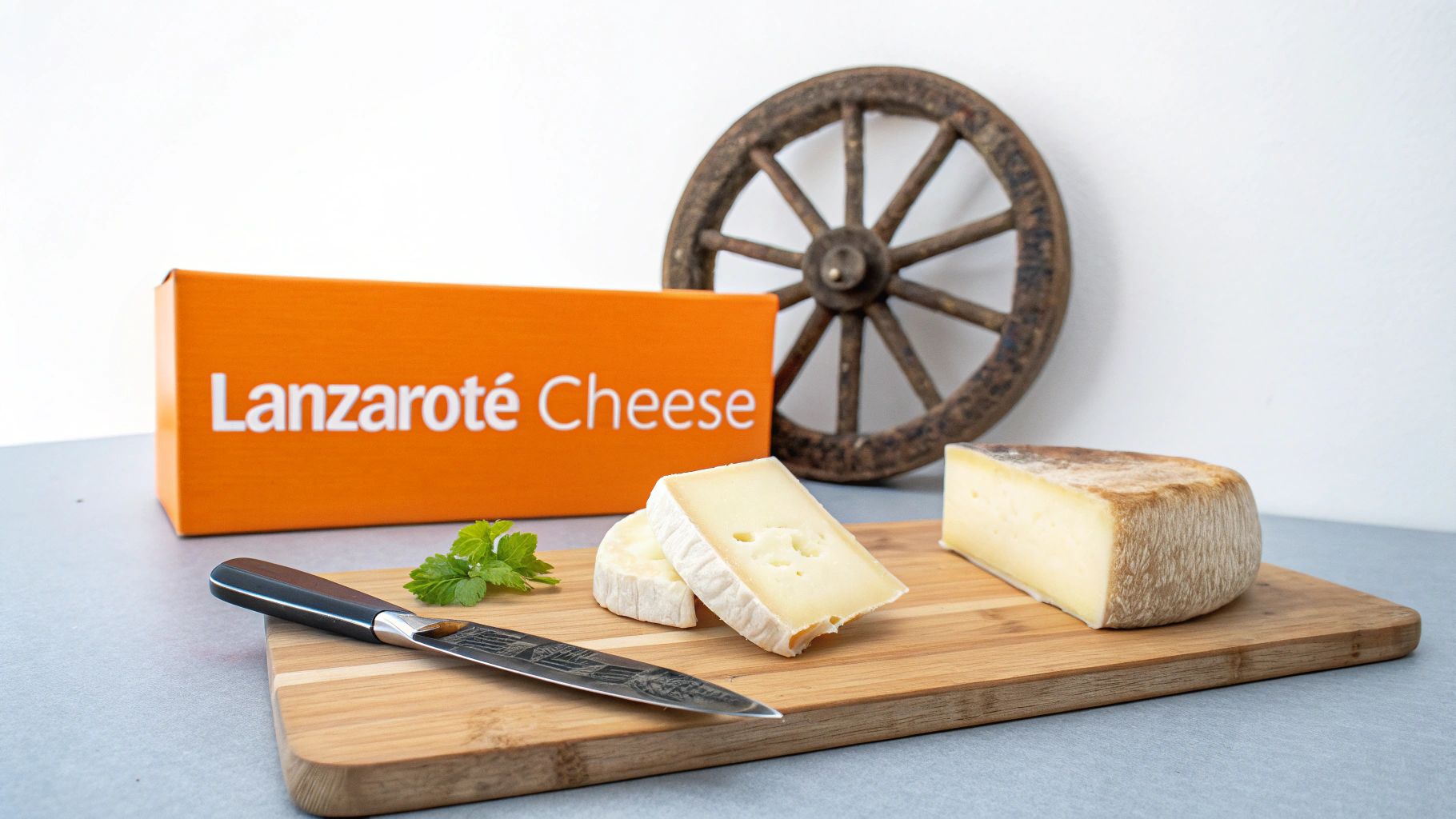
The production methods have been passed down through generations, combining traditional techniques with modern standards. The result is a diverse range of cheeses that cater to every palate, from soft and delicate to hard and intensely flavoured. It is an essential part of the comida tipica Lanzarote experience, often enjoyed simply with bread, as part of a tapas platter, or as a key ingredient in local recipes. Its presence on menus across the island is a testament to its cultural importance.
Types of Lanzarote Cheese
While all stem from goat's milk, Lanzarote cheeses vary significantly based on their curing time. You will commonly find three main types:
- Queso Fresco (Fresh Cheese): Soft, white, and mild with a slightly acidic tang. It is uncured and best eaten within a few days of production. Perfect for salads or drizzled with honey or palm syrup.
- Queso Semicurado (Semi-cured Cheese): Aged for 20-60 days, it develops a firmer texture and a more pronounced, nutty flavour. The rind is often rubbed with gofio or paprika (pimentón), adding another layer of taste.
- Queso Curado (Cured Cheese): Matured for several months, this cheese is hard, crumbly, and boasts a sharp, complex, and sometimes spicy flavour. It is excellent for grating or enjoying with a full-bodied local Malvasía wine.
Where to Try It
To truly appreciate this local delicacy, visit one of the island's artisanal dairies (queserías), such as Quesería El Cortijo in San Bartolomé, where you can often see the production process and sample different varieties. You can also find high-quality cheeses at local markets, like those in Teguise and Haría, and in specialised food shops. Many restaurants feature it on their cheese boards, often paired with fig jam or local fruits. For cheese aficionados, exploring the island’s dairies makes for a fascinating culinary journey, confirming why Lanzarote is a premier destination for cheese lovers in Spain.
7. Rancho Canario
For a true taste of Lanzarote's heartiest comfort food, one must try Rancho Canario. This substantial, stew-like dish is a one-pot wonder, representing the island's tradition of creating deeply satisfying meals from humble, accessible ingredients. It is a thick, flavourful soup combining thick noodles (like fideos), chickpeas, potatoes, and various meats, typically pork ribs, chicken, or chorizo, all simmered together in a rich and aromatic broth.
The origins of Rancho Canario lie in the necessity for nourishing, all-in-one meals that could feed a family for days. Its culinary DNA showcases a blend of Spanish stewing techniques with the local produce available on the islands. The slow simmering process allows the flavours of the meat, smoky chorizo, and vegetables to meld together, creating a complex and deeply comforting dish that feels like a warm hug in a bowl. It is a cornerstone of comida tipica Lanzarote for family gatherings and local fiestas.
What Makes a Great Rancho Canario?
While recipes vary from family to family, the best versions share a few key characteristics. The broth is the soul of the dish, often enriched with saffron, paprika, garlic, and onion, giving it a beautiful colour and savoury depth. The perfect Rancho Canario has a harmonious balance of textures:
- The Meats: Tender, fall-off-the-bone pork or chicken.
- The Legumes & Vegetables: Soft chickpeas and potatoes that absorb the broth's flavour.
- The Pasta: Thick noodles cooked until they are plump and satisfying.
Where to Try It
Rancho Canario is not typically found on the daily menus of tourist-focused restaurants. It is more of a local speciality, often served as a plato del día (dish of the day) in traditional bars and teleclubs in rural villages like Tinajo or San Bartolomé, especially during the cooler months. It is the kind of dish you might be lucky enough to sample during a local festival or a community event. If you see it advertised as a weekend special, do not hesitate to order it for an authentic taste of Canarian home cooking.
8. Bienmesabe (Almond Dessert)
For those with a sweet tooth, a taste of Bienmesabe is an essential part of the comida tipica Lanzarote experience. The name eloquently translates to "tastes good to me," a promise this delightful dessert wholeheartedly delivers on. This rich, sweet almond cream has deep historical roots, showcasing Moorish influences on Spanish and Canarian confectionery. Its texture can range from a thick, spreadable paste to a more syrupy sauce, but its core flavour is always a heavenly blend of ground almonds, sugar, egg yolks, and lemon zest.
Bienmesabe is a treasured recipe passed down through generations and is a staple during festive periods, particularly Christmas and Easter. Its preparation is an act of love, often involving the careful toasting and grinding of local almonds to release their full, nutty aroma. The ingredients are then slowly cooked to create a dense, fragrant cream that is both comforting and sophisticated. It’s a true taste of the island's sweet heritage, found in traditional pastry shops (pastelerías), local markets, and on the dessert menus of authentic Canarian restaurants.
How to Enjoy Bienmesabe
This versatile dessert can be savoured in several ways, each offering a unique culinary experience. It is most commonly served on its own in a small dish, but its use extends far beyond a simple pudding.
- As a topping: It is frequently drizzled warm over ice cream (especially vanilla or almond flavour), sponge cakes, or even fresh fruit.
- With biscuits: Bienmesabe is often served alongside simple, crunchy biscuits (galletas) for dipping.
- Paired with a drink: Traditionally, it is accompanied by a small glass of sweet Malvasía wine or a local honey rum (ron miel) to complement its rich flavours.
Where to Try It
You can find authentic Bienmesabe in many family-run restaurants, particularly in inland villages like San Bartolomé or Tinajo, where traditional recipes are carefully preserved. The Teguise Sunday Market is also a great place to find local artisans selling homemade jars of this sweet treat, perfect for taking home as a souvenir. Asking for the postre del día (dessert of the day) in a traditional eatery might just lead you to a freshly made bowl of this Canarian delight, offering the perfect sweet finish to your meal.
8-Item Comparison of Typical Lanzarote Foods
| Item | 🔄 Implementation complexity | 🧾 Resource requirements | ⚡ Speed / Efficiency | ⭐ Expected outcome | 📊 Ideal use cases / 💡 Key advantages & tips |
|---|---|---|---|---|---|
| Papas Arrugadas | Low — simple boiling technique | Minimal: small waxy potatoes, sea salt, (mojo) | Moderate — 30–45 min; can be made ahead | Authentic, salty-side dish; iconic regional flavor ⭐⭐⭐ | Casual meals and tapas; pairs with mojo; inexpensive and sustainable |
| Mojo Sauce (Rojo / Verde) | Low — simple blending or mortar work | Low: garlic, peppers, olive oil, spices | Fast — 10–20 min; stores well in oil | High-impact condiment that elevates dishes ⭐⭐⭐⭐ | Versatile condiment for potatoes, fish, bread; adjust heat; store in glass |
| Gofio | Low — ready-to-use flour; traditional milling is laborious | Low: roasted grain flour (wheat/barley/corn) | Fast to use (porridge or mixes); slow if roasting/grinding | Nutty, nutritious staple with lasting shelf life ⭐⭐⭐ | Breakfast porridge, thickeners, baked goods; store airtight, acquired taste |
| Pescaito (Fried Fish) | Moderate — frying skill and timing required | Fresh local fish, flour, frying oil, simple seasonings | Fast cook time (minutes); must be served fresh ⚡⚡ | Crispy exterior, moist interior; showcases freshness ⭐⭐⭐⭐ | Quick beach-side meals; pairs with papas and mojo; source fish locally |
| Caldo de Papas (Potato Stew) | Moderate — one-pot technique, layered flavors | Common pantry veg, potatoes, broths; optional fish/meat | Slow — 1–2 hrs; improves after resting | Hearty, warming stew that feeds many ⭐⭐⭐ | Family meals, cold weather, make-ahead freezer option; economical |
| Queso de Lanzarote (Local Cheese) | High — artisanal production and aging | Goat's milk, traditional rennet, aging/storage; DO status | Slow production/aging; ready-to-eat when purchased | Distinctive tangy cheese; regional protected quality ⭐⭐⭐⭐ | Cheese boards, wine pairing; visit producers, store cool; limited quantities |
| Rancho Canario | High — multi-ingredient, layered cooking | Various legumes, pasta, meat/stock, large pot | Slow — several hours; reheats/improves well | Filling, complex one-pot meal; communal comfort food ⭐⭐⭐ | Festivals and large gatherings; economical; make ahead and freeze |
| Bienmesabe (Almond Dessert) | Moderate — grinding and gentle cooking required | Quality almonds, sugar/honey, cinnamon/vanilla | Moderate — 30–60 min; stores refrigerated | Rich, sweet almond paste/dessert; elegant presentation ⭐⭐⭐ | Festive desserts and gifts; pair with sweet wine; beware nut allergies |
Bringing Lanzarote's Flavours to Your Table
Our culinary journey across Lanzarote reveals that its gastronomy is far more than just sustenance; it is a profound expression of the island's resilient spirit, shaped by volcanic earth, Atlantic winds, and centuries of tradition. From the humble yet iconic Papas Arrugadas with their salty, wrinkled skins to the fiery kick of Mojo Rojo and the herbaceous zest of Mojo Verde, each dish tells a story of making the most of a challenging landscape. We have explored how simple, high-quality local ingredients are the undisputed heroes of the Lanzarote table.
The dishes we have covered represent the pillars of the island's culinary heritage. Think of the earthy, nutty comfort of Gofio, a superfood that has sustained Canarians for generations, or the simple pleasure of Pescaito Frito, a direct taste of the surrounding ocean's bounty. Hearty stews like Caldo de Papas and Rancho Canario offer a window into the resourceful, nourishing cuisine of the island's interior, designed to fuel a hard day's work. Meanwhile, the celebrated Queso de Lanzarote, with its distinct character derived from local goat's milk, and the sweet, almond-rich indulgence of Bienmesabe showcase the diversity and sophistication of local production.
Key Takeaways for Your Culinary Adventure
To truly experience the authentic comida tipica lanzarote, your approach should be one of curiosity and engagement. Here are the most important principles to remember as you explore:
- Look Beyond the Tourist Hubs: While popular restaurants offer excellent food, the most memorable meals are often found in small, family-run establishments in less-travelled villages. These are the places where recipes have been passed down through generations.
- Embrace the Markets: Local markets, like the one in Teguise or the agricultural market in Tinajo, are not just for shopping. They are vibrant cultural centres where you can meet producers, taste fresh cheese, and buy the very ingredients that define the local cuisine.
- Pair Like a Local: Elevate your dining experience by pairing your meals with Lanzarote's unique Malvasía Volcánica wines. The crisp, mineral notes of these wines are the perfect complement to the island’s seafood, cheeses, and savoury stews.
- Ask Questions and Engage: Don't hesitate to ask your waiter or a market vendor about the origin of a dish or its ingredients. Lanzaroteños are proud of their culinary heritage and are often delighted to share their knowledge with interested visitors.
Your Next Steps: From Reading to Tasting
Now that you are equipped with the knowledge of what to eat, the real adventure begins. It is time to transform this information into tangible, delicious experiences. We encourage you to step out of your comfort zone and actively seek out these flavours. Make a personal checklist of the dishes from this article and challenge yourself to try them all during your visit.
By choosing to seek out and savour the comida tipica lanzarote, you are doing more than just enjoying a meal. You are participating in a living culture, supporting local farmers, fishermen, and artisans, and connecting with the island on a much deeper, more meaningful level. Each bite of freshly caught fish, each spoonful of hearty stew, and each taste of handcrafted cheese is a direct link to the soul of this extraordinary volcanic island. Your culinary journey will not only delight your palate but also enrich your understanding of what makes Lanzarote a truly unforgettable destination. May your exploration be as flavourful as it is memorable.
Ready to taste the real Lanzarote? Instead of just reading about it, let Picuco guide you to the most authentic culinary experiences on the island. Discover and book everything from guided food tours in local villages to exclusive visits with cheese makers and wine producers directly through the Picuco platform, connecting you with the heart of Lanzarote's gastronomy.