Imagine waking up to the gentle lapping of Mediterranean waves on the Costa Brava, or taking a deep breath of the crisp, clean air in the high Pyrenees. This is the heart of camping en cataluña—an experience that perfectly marries rugged adventure with serene coastal relaxation. Think of this guide as your personal roadmap to exploring one of the world's best outdoor destinations.
Why Camping in Catalonia Is an Unforgettable Adventure
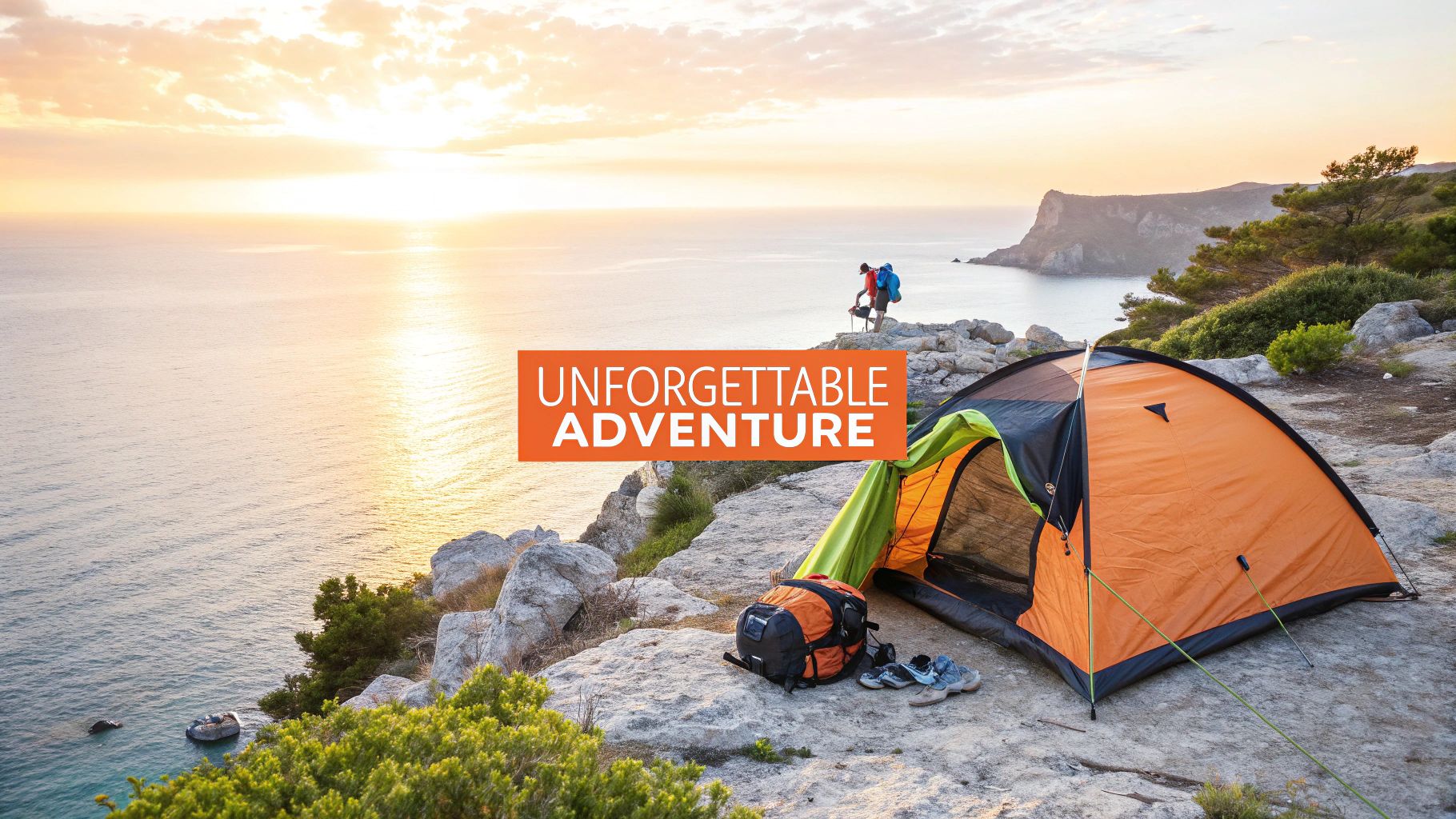
Catalonia isn't just a place to pitch a tent; it’s a mosaic of incredible landscapes packed into one dynamic region. It's an all-in-one outdoor playground. One day you could be kayaking through hidden sea coves, and the very next find yourself hiking a trail with jaw-dropping views of snow-capped peaks.
This remarkable variety is what really makes camping in Catalonia special. The region serves up a unique mix of environments, which means no two trips here are ever quite the same. You can completely shape your adventure to fit your mood, whether you're after peaceful solitude or a lively, family-friendly holiday.
A Landscape for Every Camper
The real magic is in the sheer diversity of what’s on offer. From sun-drenched beaches to ancient inland towns, Catalonia has something for every kind of outdoor lover. This geographical richness means finding your perfect spot is refreshingly simple.
What's your ideal trip?
- The Majestic Pyrenees: A paradise for hikers, climbers, and anyone who thrives in the mountain air. The Pirineus deliver dramatic scenery and challenging trails in spades.
- The Stunning Costa Brava: Famous for its rugged coastline, golden beaches, and crystal-clear waters. It's the perfect backdrop for a classic seaside camping holiday.
- Historic Inland Regions: Fancy a bit of culture with your nature? Explore areas like Tarragona with its Roman ruins or the unique volcanic landscapes of La Garrotxa.
This blend of mountain, coast, and culture makes Catalonia a top-tier destination. And people are noticing. In 2023, overnight stays at Catalan campsites jumped by 3.3% compared to the year before, proving just how vital they are to the region's tourism. You can dig into more of these trends over on Idescat.
Planning Your Perfect Catalan Escape
This guide is designed to be much more than a simple list of campsites. It’s a starting point, giving you the context and tools you need to plan a truly memorable trip. Whether it's your first family outing or a challenging solo expedition, everything you need is right here. For more coastal inspiration, check out our detailed guide to getaways on the Costa Brava.
Camping in Catalonia isn't just about finding a spot to sleep. It's about immersing yourself in a rich tapestry of nature, history, and culture that creates lasting memories.
We’re going to dive into the unique mix of elements that makes this region so special. This is your complete roadmap, covering everything from local rules and regional highlights to sustainable practices. Let's get your adventure started.
Understanding the Rules for Camping in Catalonia
Before you start dreaming of that perfect spot under the Catalan stars, it’s really important to get a handle on the local rules. The regulations for camping en cataluña are pretty straightforward but they are strict, and for good reason—they're there to protect the region's incredible natural landscapes. Knowing what's allowed and what's not will make sure your adventure is memorable for all the right reasons.
The simplest way to think about it is this: proper camping is only allowed in designated, official campsites. Anything outside of these zones is a no-go, with very few exceptions. It’s a system designed to manage the impact of tourism and keep the environment in good shape for everyone.
Authorised Camping: The Official Options
When you're planning your trip, you'll mainly be looking at two types of authorised spots. They each serve a slightly different purpose and come with their own facilities and rules.
- Official Campsites ('Càmpings'): These are the real deal. Fully equipped, regulated sites designed for everything from a small tent to a large caravan. You'll find amenities like bathrooms, electricity, and often extras like swimming pools or on-site restaurants. They're your safest and most common bet for a legal and comfortable stay.
- Motorhome Areas ('Àrees d'autocaravanes'): These are spots specifically for motorhomes and campervans to park overnight and use basic services. Think of them as service stops with permission to sleep over. They’ll have water and waste disposal, but they aren't meant for setting up a full camp with awnings, tables, and chairs spread out.
Sticking to one of these two options is the easiest way to stay on the right side of the law and have a stress-free holiday.
The Truth About Wild Camping
This is where things can get a bit confusing. The idea of "wild camping," or acampada lliure as it's known locally, is a romantic one, but in Catalonia, the rule is simple: it's illegal. You can't just pitch a tent on a beach, in a forest, or on the side of a road. Doing so can land you with a hefty fine.
This isn't to kill your sense of adventure, but to protect fragile ecosystems from being overused and to prevent risks like wildfires. The rules are enforced, especially in popular coastal areas and natural parks during the summer months.
The core principle is straightforward: unless you are in a designated campsite or a specifically authorised area, you should assume that setting up camp is not permitted. This protects both you and the environment.
That said, there is one key exception that experienced hikers and mountaineers should be aware of.
Bivouacking: A Limited Exception for Mountaineers
In some high-altitude mountain areas, a practice called bivouacking (bivac) is sometimes tolerated. Let's be clear: this is not the same as camping. Bivouacking means setting up a minimal, temporary shelter—like a bivvy bag or a tiny one-person tent—just for the night, from sunset to sunrise.
This exception is really just for hikers on multi-day treks through specific high-mountain zones, like parts of the Aigüestortes i Estany de Sant Maurici National Park, and usually only above a certain altitude. The moment the sun comes up, your shelter has to be packed away, leaving absolutely no trace you were ever there. These rules are very specific and can change from one park to another, so you must always check the regulations for the exact park you're heading to. For this kind of high-altitude trip, getting familiar with the basics is a must; you can brush up with our mountain safety in our comprehensive guide.
Finding Local Rules and Permits
To make sure you're camping legally and respectfully, a little bit of research beforehand goes a long way. Each municipality (ajuntament) and natural park (parc natural) can have its own specific rules on top of the general law.
A quick search for the local council's website or the official site of the natural park you want to visit is the best way to get accurate, up-to-date info on any permits or restrictions. It’s a small step that allows you to explore responsibly.
Where To Camp In Catalonia: A Region-By-Region Guide
Catalonia isn't just one place; it's a mosaic of landscapes, each with a completely different feel. Choosing where to pitch your tent or park your van is all about matching the region to the kind of trip you're dreaming of. Are you after the salty air of a hidden cove, the sharp, clean scent of a pine forest high in the mountains, or the rustic charm of inland villages?
Think of this as your compass. We'll explore the three classic Catalan camping experiences: the sun-drenched Costa Brava, the epic Pyrenees, and the culturally vibrant heartlands of Central and Southern Catalonia. For each, I'll point you to a few campsites that I think perfectly capture the spirit of the place.
To help you decide at a glance, here’s a quick comparison of what each region has to offer.
Catalonia Camping Regions at a Glance
| Region | Best For | Typical Landscape | Peak Season | Example Activity |
|---|---|---|---|---|
| Costa Brava | Beach lovers, families, water sports | Rugged cliffs, sandy coves (calas), pine forests | July–August | Kayaking to a secluded beach |
| Pyrenees | Hikers, nature seekers, adventurers | High peaks, green valleys, alpine lakes | June–September | Hiking in Aigüestortes National Park |
| Central/South | Culture buffs, foodies, explorers | Rolling vineyards, medieval towns, unique wetlands | Spring & Autumn | Birdwatching in the Ebro Delta |
Each region offers a distinct flavour of Catalonia, ensuring there's a perfect spot no matter what kind of adventure you have in mind.
The Costa Brava: Sun, Sand, And Secluded Coves
The Costa Brava is legendary, and for good reason. Its coastline is a stunning collision of wide, golden beaches and dramatic cliffs that hide secret coves, known locally as calas. This is the quintessential Mediterranean camping holiday. It’s a dream for families, anyone into water sports, or simply those who want to wake up to the sound of waves.
While many campsites here feel like full-blown resorts with fantastic facilities, the best ones are still tucked away in pine forests that roll right down to the sea, giving you a real connection to nature.
Our Top Campsite Picks On The Costa Brava
Camping Nautic Almata: Tucked inside the Aiguamolls de l'Empordà Natural Park, this place is an absolute haven for nature lovers. It has a unique network of canals, meaning you can literally moor a boat right next to your pitch. It’s an amazing blend of beach life and wildlife spotting, perfect for birdwatchers and families who live for being on the water.
Camping l’Àmfora: Right in Sant Pere Pescador, this spot is famous for its direct access to a massive sandy beach that’s a magnet for windsurfers and kitesurfers. The site itself is huge and well-kept, with an awesome pool complex. It’s a brilliant choice for active families looking for a lively, sun-soaked trip.
This quick guide lays out the main ways you can legally camp in Catalonia. It covers everything from established campsites and designated motorhome areas to the rules around wild camping.
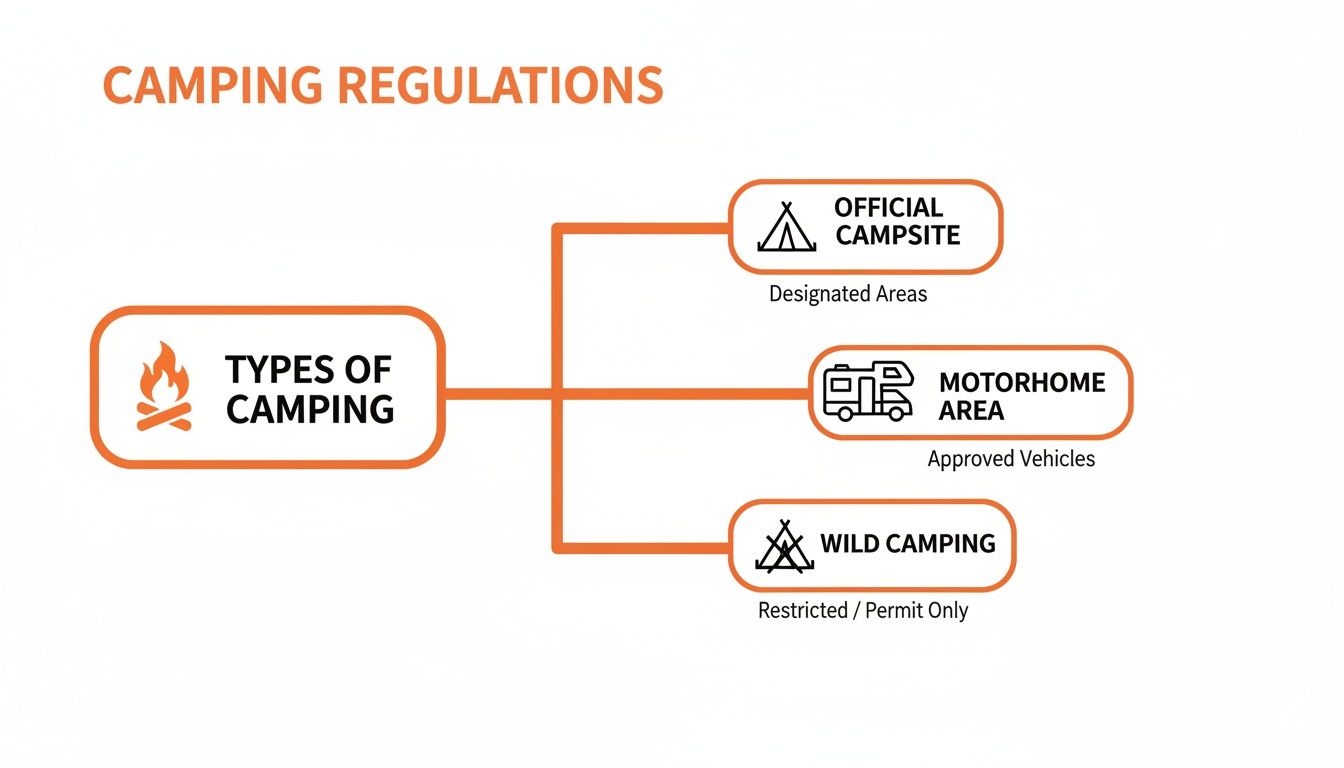
Starting with an authorised spot is the first step to making sure your adventure is both responsible and hassle-free.
The Pyrenees: Majestic Peaks And Hiking Adventures
Leave the coast behind and head for the mountains. The Catalan Pyrenees (Pirineus) feel like another world entirely. This is a land of sky-high peaks, deep green valleys, and stunning national parks like Aigüestortes i Estany de Sant Maurici. It’s paradise for hikers, climbers, and anyone looking for a dose of awe-inspiring scenery and quiet.
Camping in the Pyrenees is all about getting back to basics. The campsites are often simpler, acting as basecamps for whatever adventure you have planned. The air is crisper, the stars at night are unbelievable, and the sense of possibility is everywhere.
Our Top Campsite Picks In The Pyrenees
Càmping L’Orri del Pallars: Tucked into the Vall d'Àssua, this campsite delivers a truly authentic mountain experience. It’s known for its peaceful vibe, killer views, and its location right next to incredible hiking trails in the Alt Pirineu Natural Park. This is the spot for serious hikers or anyone just wanting to completely unplug.
Berga Resort: Want the mountain views but with a few more creature comforts? Berga Resort is the perfect compromise. It has top-notch facilities, including a spa and wellness centre, but it’s still perfectly placed for exploring the Cadí-Moixeró Natural Park. It’s a great balance for families who want a bit of adventure and a bit of pampering.
Central And Southern Catalonia: History, Culture, And Diverse Landscapes
Look beyond the famous coastline and towering mountains, and you’ll find a huge, varied region with a character all its own. Central and Southern Catalonia are a rich tapestry of history, from the Roman ruins in Tarragona to the medieval villages of Solsonès. The landscapes are just as mixed, with volcanic parks, rolling vineyards, and the incredible wetlands of the Ebro Delta.
Camping here is about slowing down and soaking it all in. It’s your chance to explore charming towns, discover hidden gems, and dive into the region's amazing food scene.
Our Top Campsite Picks In Central And Southern Catalonia
Camping El Solsonès: This family-run, eco-friendly campsite near Solsona is the definition of inland charm. With a big focus on sustainability and peace, it’s a tranquil retreat with great access to Pre-Pyrenean hiking and the historic town of Solsona. A wonderful choice for families after a quiet, nature-focused break.
Playa Montroig Camping Resort: Down on the Costa Daurada near Tarragona, this place feels like a tropical oasis with its lush gardens and direct beach access. It's a high-end resort with an impressive water park, making it a perfect base for exploring Tarragona's Roman history while still getting that premium beach holiday experience.
Taiga Delta de l’Ebre: Set right on the beach in the fishing village of L'Ampolla, this campsite is your gateway to the amazing Ebro Delta Natural Park. It's a hotspot for fishing, kayaking, and birdwatching in one of Europe’s most important wetlands. To get the most out of this unique ecosystem, check out our dedicated guide to the Parque Natural del Delta del Ebro. This is the ideal spot for campers who want to mix beach time with some serious ecological exploration.
Ready-To-Go Itineraries for Your Catalan Camping Trip
Knowing where to go is one thing, but piecing it all together into a solid plan is the next challenge. To get the ball rolling, I’ve put together three multi-day itineraries that really show off the incredible variety you'll find when camping in Catalonia.
Think of these as flexible blueprints for your perfect getaway. You can follow them to the letter or simply pick and choose the bits that catch your eye to create an adventure that’s all your own. Each one shines a light on a different face of Catalonia, from its sun-drenched coastlines to its magnificent mountain peaks.
Itinerary 1: The Coastal Explorer
This four-day trip is your classic Costa Brava deep-dive, mixing iconic beaches with impossibly charming medieval villages. It’s absolutely perfect if you're looking for a holiday that blends sun-lounging and water sports with a healthy dose of history.
Day 1: Arrival and Beach Time: Get yourself set up at Camping Nautic Almata. Spend the afternoon settling in, exploring the campsite's unique network of canals, and then wander straight onto the beach in the Bay of Roses.
Day 2: Sea Kayaking and Cadaqués: Head over to the stunning, whitewashed town of Cadaqués. I’d recommend spending the morning just getting lost in its narrow, winding streets before hopping on a guided sea kayaking tour to discover hidden coves and dramatic cliffs from the water.
Day 3: Medieval Villages and Ancient Ruins: Take a day trip inland to visit the beautifully preserved medieval village of Pals. Afterwards, it’s a short drive to the Greco-Roman ruins of Empúries, a truly fascinating archaeological site right on the edge of the sea.
Day 4: Aiguamolls Nature Reserve and Departure: Before you pack up, take a morning walk or cycle through the Aiguamolls de l'Empordà Natural Park, which is right on your campsite’s doorstep. It's a fantastic spot for birdwatching and just enjoying the peaceful wetlands.
Itinerary 2: The Pyrenean Hiking Adventure
This five-day itinerary is for anyone who hears the mountains calling their name. It’s an active, immersive journey through the breathtaking scenery of the Catalan Pyrenees, designed for hikers and nature lovers who are looking for a real escape.
This itinerary is all about embracing the wild heart of Catalonia. The focus is less on amenities and more on the raw beauty of the high mountains, offering a genuine sense of adventure and a real chance to disconnect.
Your base for this adventure will be Càmping L’Orri del Pallars, which I've chosen for its peaceful atmosphere and incredible location for accessing high-altitude trails.
A Five-Day Mountain Itinerary
- Day 1: Settle into the Valley: Arrive at the campsite and take the afternoon to get acclimatised. A short, gentle walk along the river in the Vall d'Àssua is a great way to stretch your legs and start soaking in the mountain air.
- Day 2: Aigüestortes National Park: Dedicate the whole day to exploring Aigüestortes i Estany de Sant Maurici National Park. My advice? Drive to the park entrance and take one of the official 4x4 taxis up to the higher trails. It’s the best way to maximise your hiking time among the park’s famous lakes.
- Day 3: The High Peaks of Alt Pirineu: Time to tackle a more challenging hike in the Alt Pirineu Natural Park. Choose a route that takes you to a summit like the Pic de l'Orri for incredible 360-degree views across the Pyrenees.
- Day 4: Adventure Sports in Llavorsí: For a change of pace, head to the nearby town of Llavorsí, a hub for adventure sports. Spend the day white-water rafting on the Noguera Pallaresa river for a serious adrenaline rush.
- Day 5: Relax and Depart: Enjoy one last, leisurely mountain breakfast at your campsite before packing up and heading home, your lungs full of fresh Pyrenean air.
If you’re based in the city, planning getaways like this can feel like a huge effort, but many of these stunning natural areas are closer than you think. You can find more ideas in our guide to escapes near Barcelona without a car.
Itinerary 3: Family Fun and Roman Culture
This four-day plan on the Costa Daurada strikes that perfect balance between family entertainment, cultural discovery, and beach days. It's an ideal choice for families with kids of different ages, designed to keep everyone happy and engaged.
Your home base here is Playa Montroig Camping Resort, famous for its fantastic facilities and almost tropical vibe.
- Day 1: Campsite Fun: Arrive and let the kids loose! Spend the first day enjoying the resort's seriously impressive water park, pools, and organised activities while you unwind in the lush, garden-like surroundings.
- Day 2: Roman Tarragona: Dive into history with a day trip to Tarragona. You can explore the incredible Roman Amphitheatre that overlooks the sea, walk along the ancient city walls, and try to imagine the chariot races in the Roman Circus. It really brings history to life.
- Day 3: PortAventura Theme Park: Just a short drive away, a full day at PortAventura World is a must. It's one of Europe's best theme parks and a guaranteed highlight for the kids (and any adults who are still young at heart).
- Day 4: Beach Day and Departure: Enjoy a final, chilled-out morning on the campsite's direct-access sandy beach. Build a few last-minute sandcastles, have one last swim in the Mediterranean, and then it’s time to pack up.
Packing Your Gear and Camping with Conscience
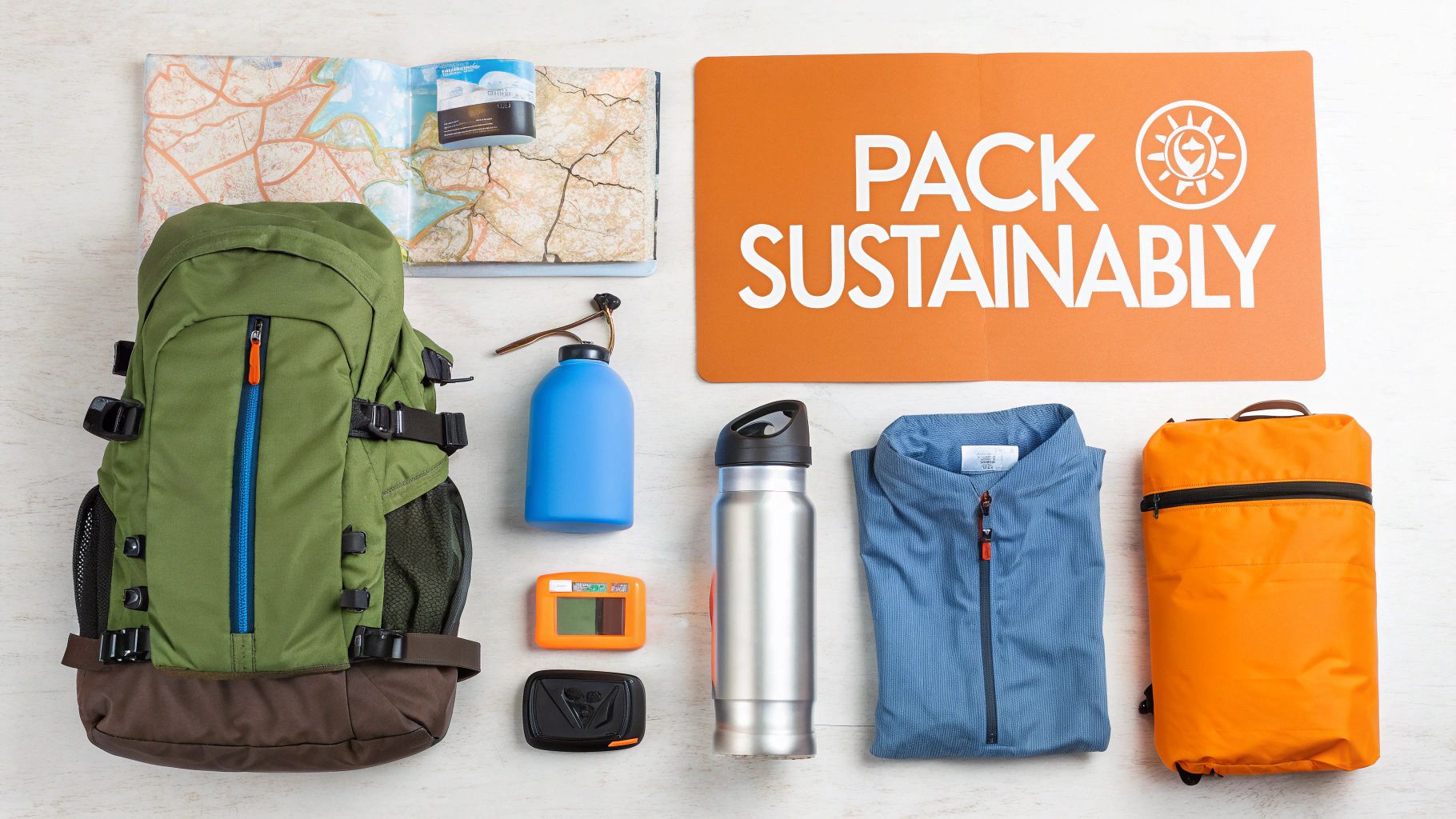
A brilliant camping trip really boils down to two things: bringing the right gear and having the right attitude. When you're packing for camping en Cataluña, you're preparing for its incredible diversity. What you’ll need for a sun-drenched week on the Costa Brava is worlds away from the kit required for a high-altitude trek in the Pyrenees.
But it’s more than just equipment. A truly successful trip is about preserving the very landscapes you’ve come to enjoy. It’s about camping sustainably, respecting the local communities, and leaving Catalonia even better than you found it.
Tailoring Your Kit to the Terrain
Don’t think of your packing list as a single, rigid checklist. Instead, see it as a modular system you can adapt to wherever you’re headed. Your core items—a good tent, a comfortable sleeping bag, a first-aid kit—are always going to be there. The specifics, however, change completely between the mountains and the sea.
Mountain Must-Haves for the Pyrenees
- Layered Clothing: The weather here can turn on a sixpence. You’ll need a moisture-wicking base layer, a warm fleece mid-layer, and a properly waterproof and windproof outer shell.
- Sturdy Hiking Boots: Those rugged, rocky trails are no joke. Good ankle support and a reliable grip are essential. Just make sure you’ve broken them in before you go!
- Navigation Tools: Your phone’s GPS is great, but don’t rely on it. A physical map and a compass are your foolproof backup, especially where the signal inevitably drops out.
- High-Energy Snacks: Nuts, dried fruit, and energy bars are your best friends for keeping your energy up on those long, demanding hikes.
For a deeper dive into gearing up for the mountains, have a look at our complete guide to your essential autumn hiking backpack—the advice is solid all year round.
Coastal Essentials for the Costa Brava
- Sun Protection: The Mediterranean sun doesn’t mess about. High-SPF sunscreen, a wide-brimmed hat, and a decent pair of sunglasses are absolutely non-negotiable.
- Quick-Dry Towel and Swimwear: You'll be in and out of the water constantly, so gear that dries quickly will make life much easier.
- Water Shoes: Many of the most stunning calas (coves) are rocky. A pair of water shoes saves your feet and makes exploring them far more comfortable and safe.
- Reusable Water Bottle: Staying hydrated in the heat is critical. A big, reusable bottle is not only better for the planet but also a great reminder to keep drinking.
Camping Sustainably: A Gentler Footprint
Being a responsible camper is about so much more than just taking your rubbish home. It's about consciously trying to minimise your impact and actively looking after the local environment and its communities.
True sustainable tourism isn't just about what you take away (your rubbish), but also about what you leave behind—goodwill, support for local businesses, and a pristine environment for the next visitor.
A few simple principles can make all the difference.
The Leave No Trace Philosophy
This is the golden rule for anyone who loves the outdoors. It’s a straightforward yet powerful way to enjoy nature without harming it.
- Plan Ahead and Prepare: Do your homework. Know your route and check the local rules, especially for fire bans, which are very common and very strict in summer.
- Travel on Durable Surfaces: Stick to marked trails and designated campsites. This protects the fragile plants and soil around you.
- Dispose of Waste Properly: If you pack it in, you pack it out. That includes every last thing, even "natural" waste like orange peels.
- Leave What You Find: Let others enjoy the magic of discovery. Resist the urge to pocket stones, pick flowers, or take home other natural "souvenirs."
- Minimise Campfire Impacts: Always use official fire pits or barbecue areas. If there’s a fire ban in place, never light one. It’s not worth the risk.
- Respect Wildlife: Watch animals from a safe distance. Never feed them; it’s bad for their health and messes with their natural instincts.
- Be Considerate of Other Visitors: Everyone is there to enjoy the peace and quiet. Keep noise to a minimum and give others their space.
Following these simple steps helps ensure that the stunning landscapes of Catalonia will be just as breathtaking for generations of campers to come.
Your Catalonia Camping Questions, Answered
Even the most seasoned camper has a few last-minute questions before heading off. To put your mind at ease and help you nail down those final details for your camping en Cataluña trip, I’ve put together answers to the queries I hear most often. Think of this as your final check-in before you hit the road, making sure your adventure is smooth from start to finish.
We'll tackle the practical stuff here—from the best time of year to pitch your tent to whether you can bring your dog along for the ride. My goal is to give you the confidence that comes from knowing exactly what to expect, so you can focus on making incredible memories.
When Is the Best Time of Year for Camping in Catalonia?
There’s no single "best" time—it all comes down to where you're headed and what you want to do. Catalonia's landscapes are so varied that the perfect season for the coast is completely different from the ideal time for the mountains.
Looking for that classic beach camping holiday on the Costa Brava? I always recommend the shoulder months: May, June, and September. You'll get glorious, warm sunshine but without the intense crowds of July and August. It makes for a much more relaxed vibe, both at the campsites and in the little coastal towns.
If you’ve got your heart set on hiking the high trails of the Pyrenees, your window is a bit tighter. The prime time is from late June to early September. This is when the high-altitude paths are usually clear of snow, the mountain refuges are open for business, and the weather is as stable as it gets for trekking.
For exploring the inland regions, like the Penedès wine country or the historic Roman sites near Tarragona, spring (April-May) and autumn (September-October) are simply perfect. The temperatures are mild and lovely for sightseeing, and the countryside is alive with seasonal colour.
Is It Easy to Find Pet-Friendly Campsites?
Absolutely. Many campsites across Catalonia roll out the welcome mat for pets, so you often don't have to leave your furry mate behind. That said, "pet-friendly" can mean different things to different owners, so it's vital you check the specific rules before you lock anything in.
When you're browsing campsites, look for a "pets" or "animals" section on their website. Keep an eye out for details like:
- Breed or size limits: Some places might have restrictions on certain breeds or larger dogs.
- Designated zones: It's common for pets to be restricted from areas like swimming pools, restaurants, or certain types of accommodation (like bungalows).
- Leash policies: It's a near-universal rule that dogs must be kept on a leash at all times within the campsite grounds.
My golden rule is to always confirm directly. A quick phone call or email to the campsite before you book can save a world of hassle when you arrive. It ensures a comfortable stay for everyone, two-legged and four-legged alike.
Can I Have a Barbecue or Campfire at My Campsite?
Fire regulations in Catalonia are incredibly strict, and for good reason. During the hot, dry summers, the risk of wildfire is a serious threat, and the rules are there to protect the region's stunning natural parks.
As a general rule, open ground fires are completely forbidden at all official campsites. Don't even think about planning for a traditional campfire.
However, many campsites know a barbecue is part of the fun. To handle this safely, they often have designated, built-in barbecue areas made from stone or concrete. These communal spots are the only places you're allowed to grill. A few sites might let you use your own charcoal or gas grill on your pitch, but you must check with them first. And always be aware of any regional fire bans that might be in effect, as these will override a campsite's individual policy.
Do I Need to Book Campsites in Advance?
I can't stress this enough: booking ahead is a very, very good idea. During the peak season of July and August, and over public holidays, popular campsites get completely booked out months in advance. This is especially true for those prime spots on the Costa Brava and at the main trailheads in the Pyrenees.
If you’re planning to stay in a bungalow, mobile home, or glamping tent, you pretty much always need to book ahead, no matter the season. For a simple tent or caravan pitch, you’ll have a bit more wiggle room in the spring and autumn. Still, if you've found a site with great reviews or a perfect location, I’d book it to avoid disappointment.
Ready to make it happen? With Picuco, you can find and book hundreds of amazing experiences across Catalonia, from guided hikes in the Pyrenees to kayaking adventures on the coast. Let our intelligent assistant, Picu, help you craft the perfect, authentic trip today. Start planning your next adventure at https://www.picuco.com.