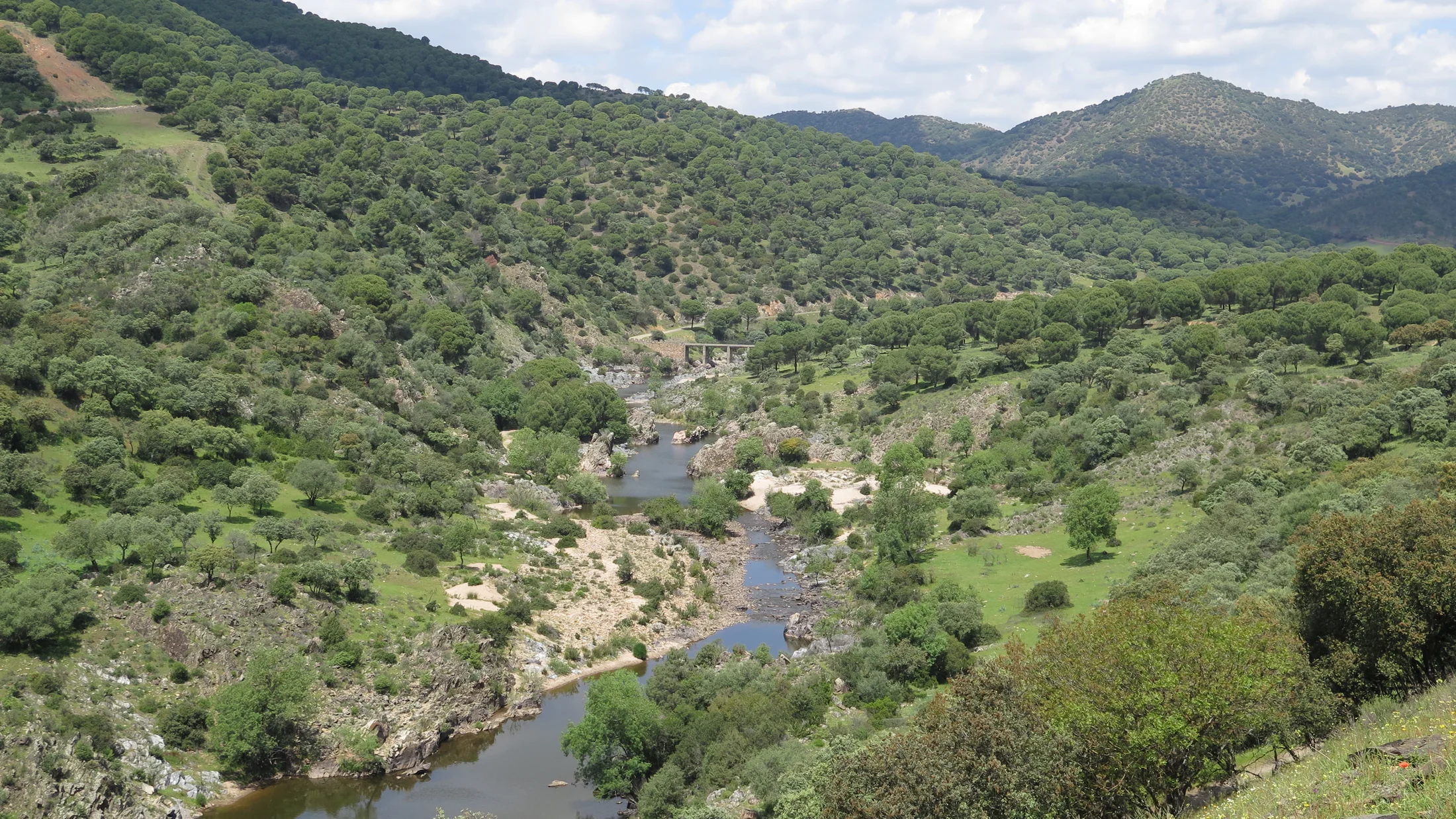
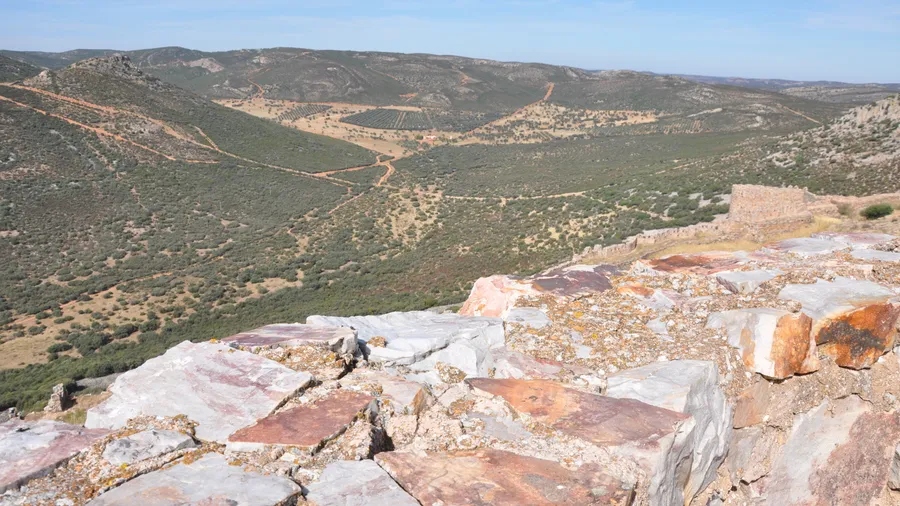
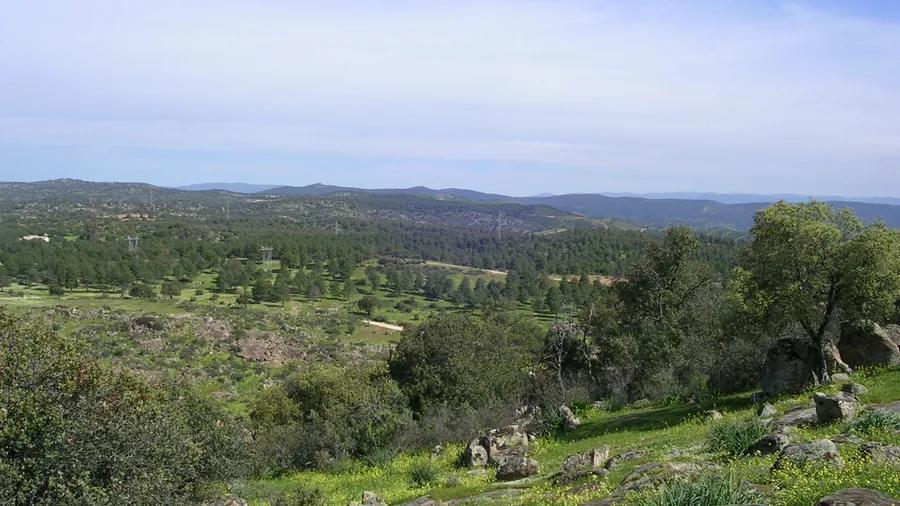
Parque Natural de la Sierra de Andújar covers 74,774 hectares in the north of Jaén province, occupying the eastern end of Sierra Morena. The landscape is shaped by dehesas of holm oak and cork oak alternating with Mediterranean scrub—cistus, lentisk, rosemary, lavender—and several rivers running north to south: the Jándula, the Encinarejo and the Guadalquivir itself, which marks the southern boundary. From the quartzite and slate crests above 1,300 m at Peña de Andújar, a single view takes in an unbroken expanse of dehesa that explains why Sierra Morena remains the largest Atlantic woodland in southern Europe.
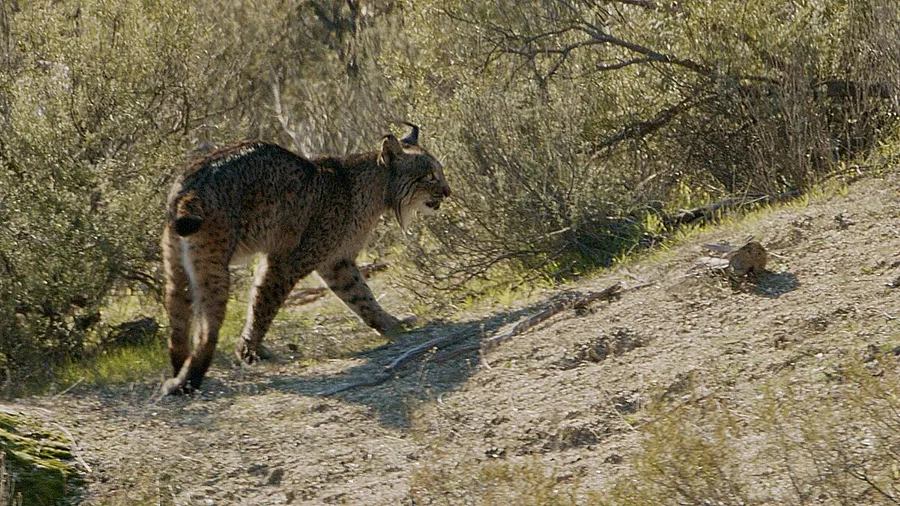
The park is known among wildlife enthusiasts as one of the world's best places to see the Iberian lynx (Lynx pardinus) in the wild. In the late 1990s, the Andújar–Cardeña population held around 90% of the surviving individuals, fewer than 100 in total. Coordinated conservation efforts between the Junta de Andalucía, the Spanish Government and international organisations have helped the species recover to over 1,000 individuals across the Iberian Peninsula, and Sierra de Andújar remains the most important breeding nucleus. Vehicle-based sightings on the park's dirt tracks are possible though not guaranteed; the best conditions are at dawn and dusk, particularly during the rut (December–February) and cub births (March–May).
The Iberian imperial eagle (Aquila adalberti) shares territory with the lynx as the park's second flagship species. Sierra Morena holds one of the highest densities of breeding pairs of this endemic raptor, which nests in centuries-old holm and cork oaks. The simultaneous presence of both species in the same dehesa ecosystem—sharing prey such as the European rabbit—makes the park a permanent subject of conservation biology study. Red deer and wild boar are abundant and regularly visible in grassland areas. During the red deer rut, from mid-September to mid-October, the calls echo across every valley at dawn.
The Santuario de Nuestra Señora de la Cabeza, situated at 793 m on the Cerro del Cabezo in the heart of the park, is the area's most significant heritage element. On the last Sunday of April each year it hosts Spain's oldest documented pilgrimage—traced to the 13th century—drawing over two hundred thousand people from across Andalusia. The coexistence of a top-tier natural protected area with an event of this scale is a case study in crowd management and the compatibility of cultural and natural heritage.
For outdoor activities, the park offers a network of forest tracks accessible by four-wheel drive or mountain bike, several marked trails including the GR-48 crossing Sierra Morena east to west, and swimming spots on the Encinarejo reservoir and the Jándula river. Rock climbing is practised in the Las Peñas de Castro sector on quartzite routes of moderate difficulty. Wildlife tourism is the highest-demand activity, with specialist operators running observation outings with certified local guides.