The Ebro Delta forms the largest wetland in Catalonia, covering 320 km² of land built up over millennia by sediment carried by the most voluminous river in the Iberian Peninsula. The river mouth advances roughly 15 metres each year, sustaining one of the most productive ecosystems in the western Mediterranean. Seen from above, the delta traces a flat tongue of rice paddies and winter floodwaters that mirror the sky with unusual clarity for such a level landscape.
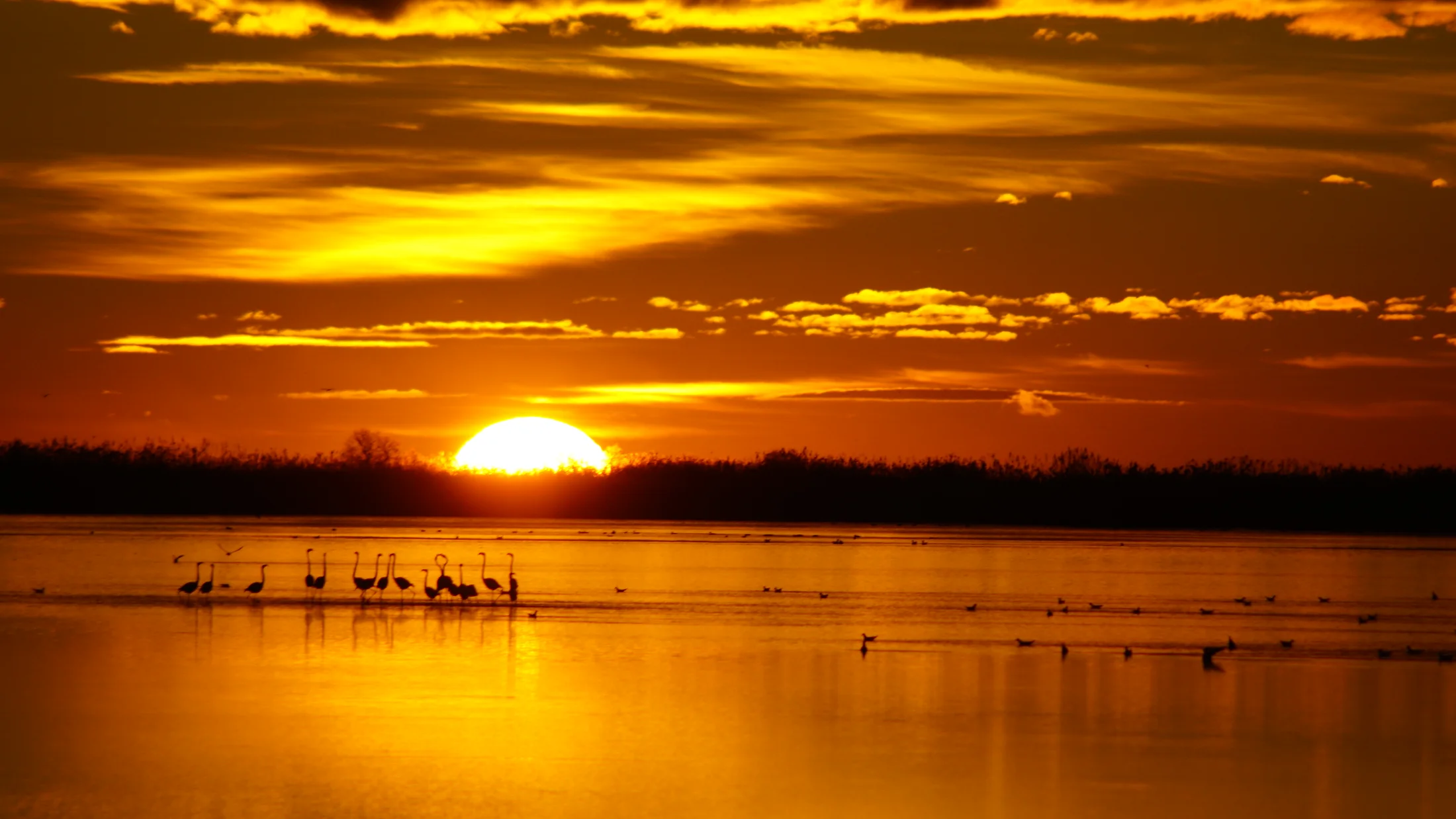
The heart of the natural park lies in its lagoons. L'Encanyissada, the largest at 1,400 ha, shelters up to 10,000 greater flamingos (Phoenicopterus roseus) during winter. La Tancada, a short distance north, holds mallards, greylag geese and avocets. Birdwatching hides positioned along the margins allow visitors to approach within 30 metres of flocks without disturbance. In total, the delta regularly hosts more than 300 bird species, making it the most significant ornithological site in Catalonia and one of the ten most important in Europe.
Rice paddies cover 65 % of the park's land surface. Controlled winter flooding of the fields from November to January attracts tens of thousands of waders and ducks during post-nuptial migration. In spring, grey herons and little egrets nest in dense colonies in the reedbeds beside L'Encanyissada. The black-winged kite quarters the rice fields at summer dusk, while the American red swamp crayfish — an invasive species — has altered the ecology of the irrigation channels without noticeably reducing the overall bird diversity.
The delta's coastline offers more than 20 km of quiet beaches ending at the Trabucador sandbar, an 8 km strip separating the sheltered waters of Punta de la Banya from the open sea, where the peninsula's largest sandwich tern colony breeds. The flat agricultural track network makes the delta ideal for cycling, with routes of 15 to 45 km and elevation gains under 10 metres. Local gastronomy centres on D.O. Delta del Ebro rice, mantis shrimp (galeras), rope-grown mussels and smoked eels available directly from the fish markets in Deltebre and L'Ampolla.
Declared a natural park in 1983, the delta is managed with rice farming as an active partner: the annual flooding cycle that farmers use for cultivation is the same hydrological pulse that drives the wetland's biodiversity. By kayak, the canal route between Deltebre and the river mouth passes through the heart of the wetland at water level, with herons lifting off metres from the bow and flocks of great cormorants (Phalacrocorax carbo) perched on wires above the rice fields. Unlike many large Mediterranean wetlands, the Ebro Delta retains a human scale — small towns, open tracks and a sense of continuous natural space that begins from the first kilometre.