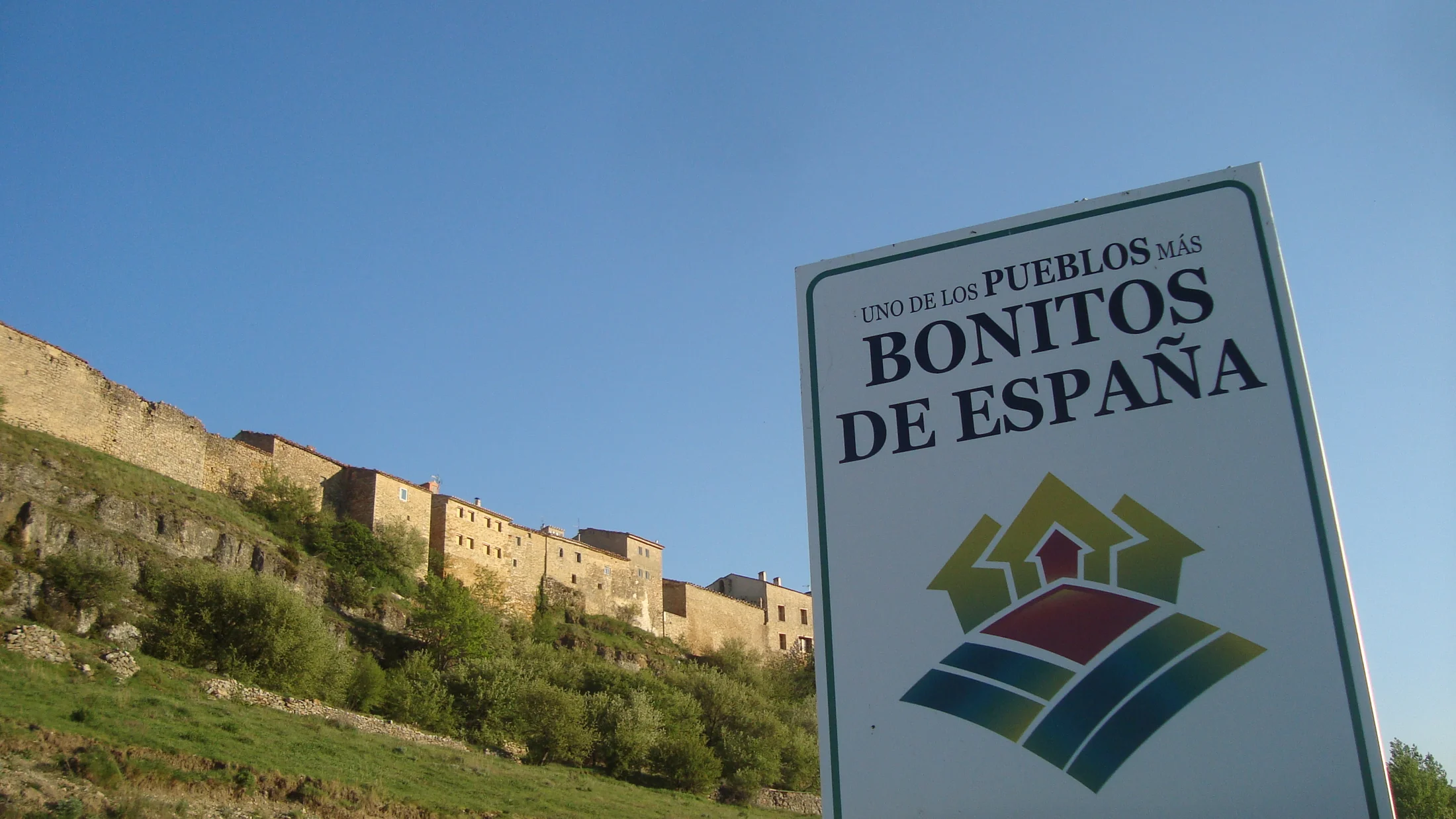
The Three Most Beautiful Villages of Spain (According to Travelers)
Introduction
What makes a village truly beautiful? It's not just the architecture or the landscape. It's that feeling of being in a place where time seems to have stood still, where each stone tells a story and every corner invites you to stay a little longer.
In Spain, the list of villages with charm is long. But there are three that stand out again and again in traveler reviews, in national awards, and in the conversations of those seeking an authentic getaway. Three villages that represent the diversity and richness of Spain's heritage: one medieval in the interior of Aragón, one Cantabrian that preserves its historical essence intact, and one white Andalusian that looks out to the Mediterranean.
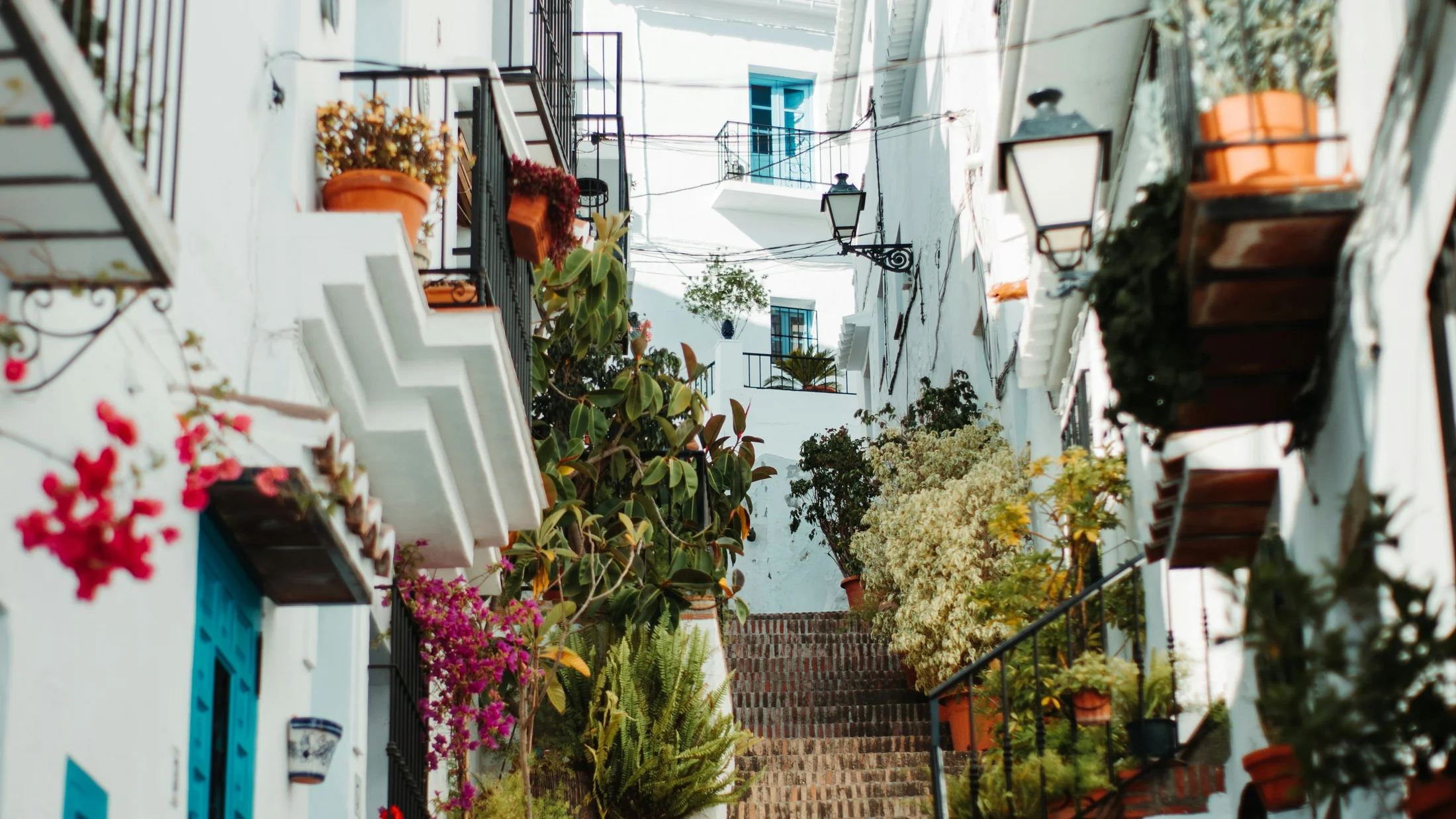
These three villages are not the largest or the most internationally known. But they are, according to those who have explored them, the most beautiful. Each with its own personality, its gastronomy and its way of captivating the visitor.
Are you ready to discover them?
Picuco te puede ayudar
Does something here catch your eye?
Tell us.
Write to us on WhatsApp or email: we answer questions, find the best options and help you sort out the booking.
1. Albarracín (Teruel, Aragón)
Why It Is One of the Most Beautiful
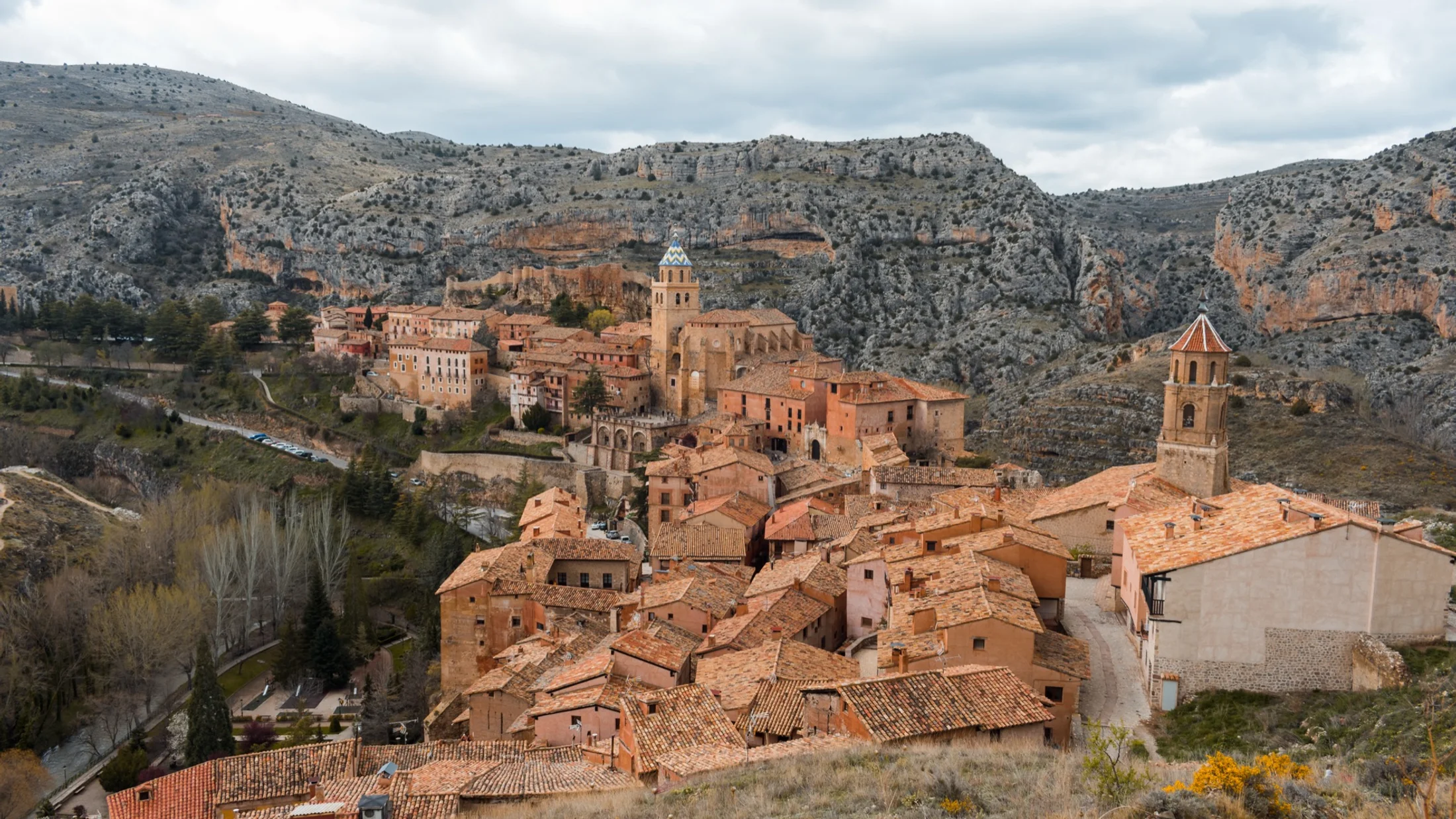
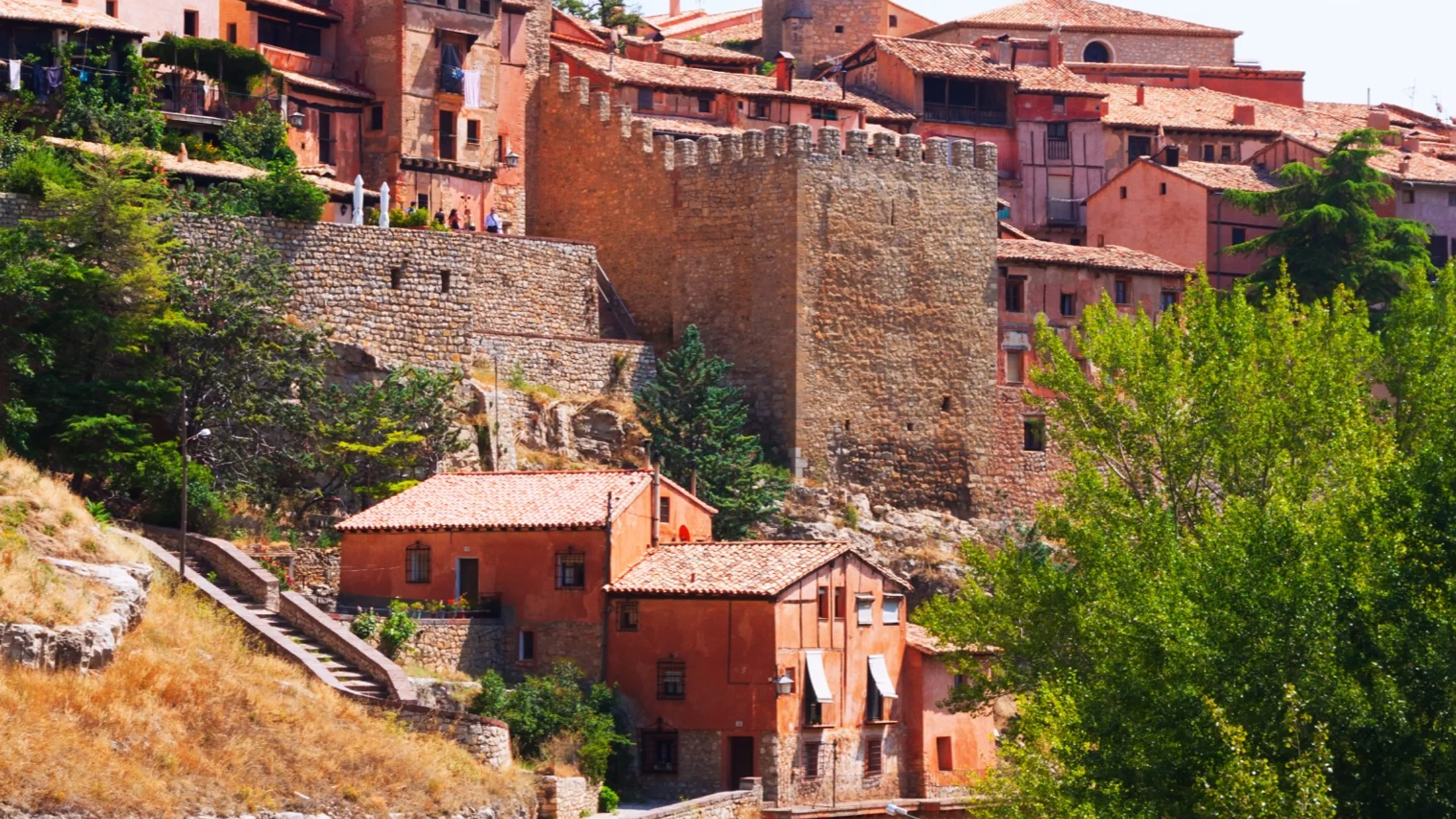
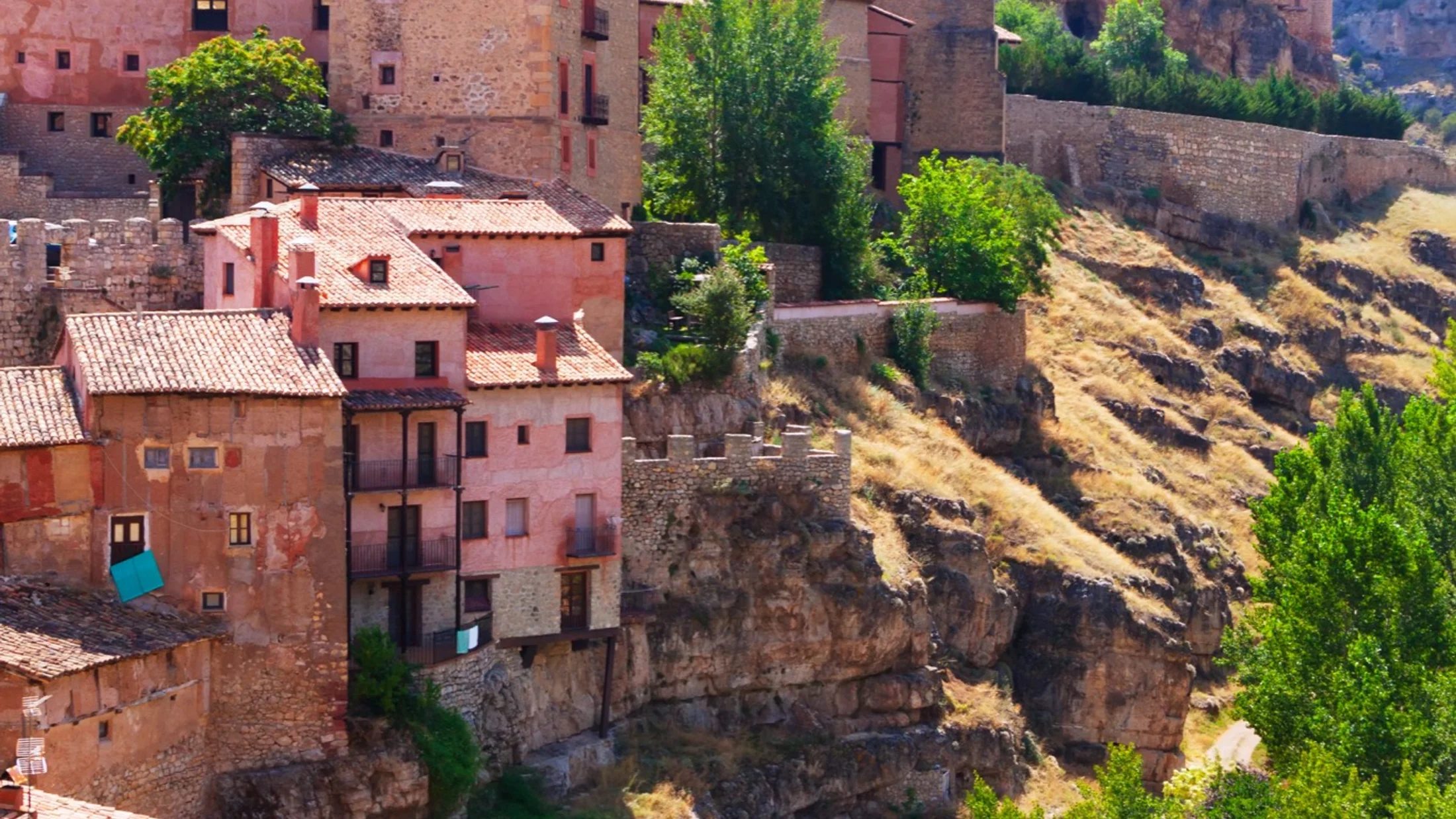
Albarracín seems to come from a medieval tale. Its pink houses literally hang over the river Guadalaviar, the walls embrace the village from above, and the narrow streets invite you to get lost without hurry.
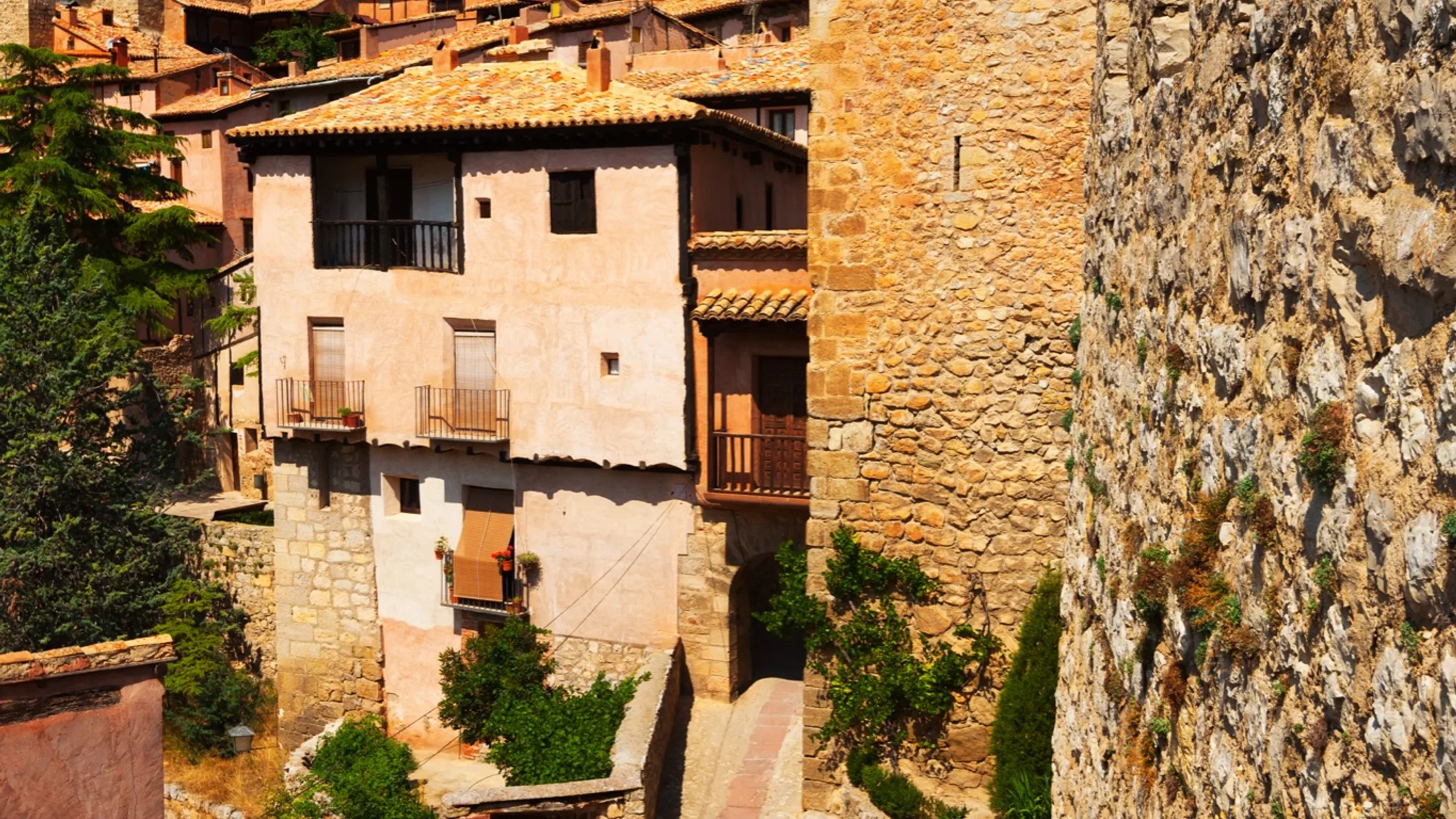
Declared a Monument in 1961, this village of barely 1,000 inhabitants is one of the best preserved in Spain. According to the Association Los Pueblos Más Bonitos de España, Albarracín has received multiple recognitions for its medieval architecture, its integration with the landscape, and the care of its historical heritage.
The pink color of its houses is not a coincidence: it is due to the gypsum of the Sierra de Albarracín, which was traditionally used as a coating. At sunset, the facades light up with the golden light of the sun, and the village seems to float over the rock.
What to See and Do in Albarracín
Start your visit at the Plaza Mayor, the heart of the historic center. From there, go up to the Catedral del Salvador (16th century), with its Mudéjar-style tower and its Renaissance altarpiece. The cobblestone streets will then take you to the medieval walls and the Torre del Andador, from where you will have views of the entire valley.
Do not miss the Museo Diocesano, located in the former Palacio Episcopal. There you can see a collection of 16th-century Flemish tapestries, art sacro and objects that tell the history of the diocese of Albarracín.
If you have time and are interested in rock art, visit the rock paintings of the Prado del Navazo, declared a World Heritage Site by UNESCO. These paintings, dating from the Neolithic, show hunting scenes and stylized human figures. They are about 4 km from the village and are visited by appointment.
The aroma of thyme and rosemary from the sierra accompanies you on every corner.
Where to Eat in Albarracín
The gastronomy in Albarracín is authentic and of the mountain. Try the migas del pastor, the ternasco de Aragón (roasted lamb in a wood oven) and the gazpachos turolenses (not to be confused with the Andalusian: here it is a hot stew of rabbit or hare with torta cenceña).
In season, black truffle from Teruel is the star of many dishes. You will also find artisan cheeses from the Sierra de Albarracín and ham cured in the area.
Some restaurants recommended by locals: Restaurante Tiempo de Ensueño (on the Plaza Mayor, with views) and Mesón del Gallo (traditional cuisine in a rustic environment).
Where to Stay
Albarracín offers accommodations with a lot of character. You can sleep in boutique hotels installed in historic houses, such as the Casa de Santiago or La Casa del Tío Americano, where the wooden beams and stone walls envelop you in an atmosphere of past centuries.
If you prefer to be closer to nature, there are rural houses in the natural environment of the Sierra de Albarracín, with hiking trails that leave from the door.
Best Time to Visit
The best time to visit Albarracín is in spring (April-May), when the almond trees bloom and the river carries more water, or in autumn (October-November), with the ocher and reddish colors of the leaves.
In summer the climate is mild (altitude of 1,200 meters), but August is the month with the most tourists. If you can, avoid the peak dates. In winter, the village is sometimes covered in snow and acquires a special charm, although some businesses close in the low season.
2. Santillana del Mar (Cantabria)
Why It Is One of the Most Beautiful
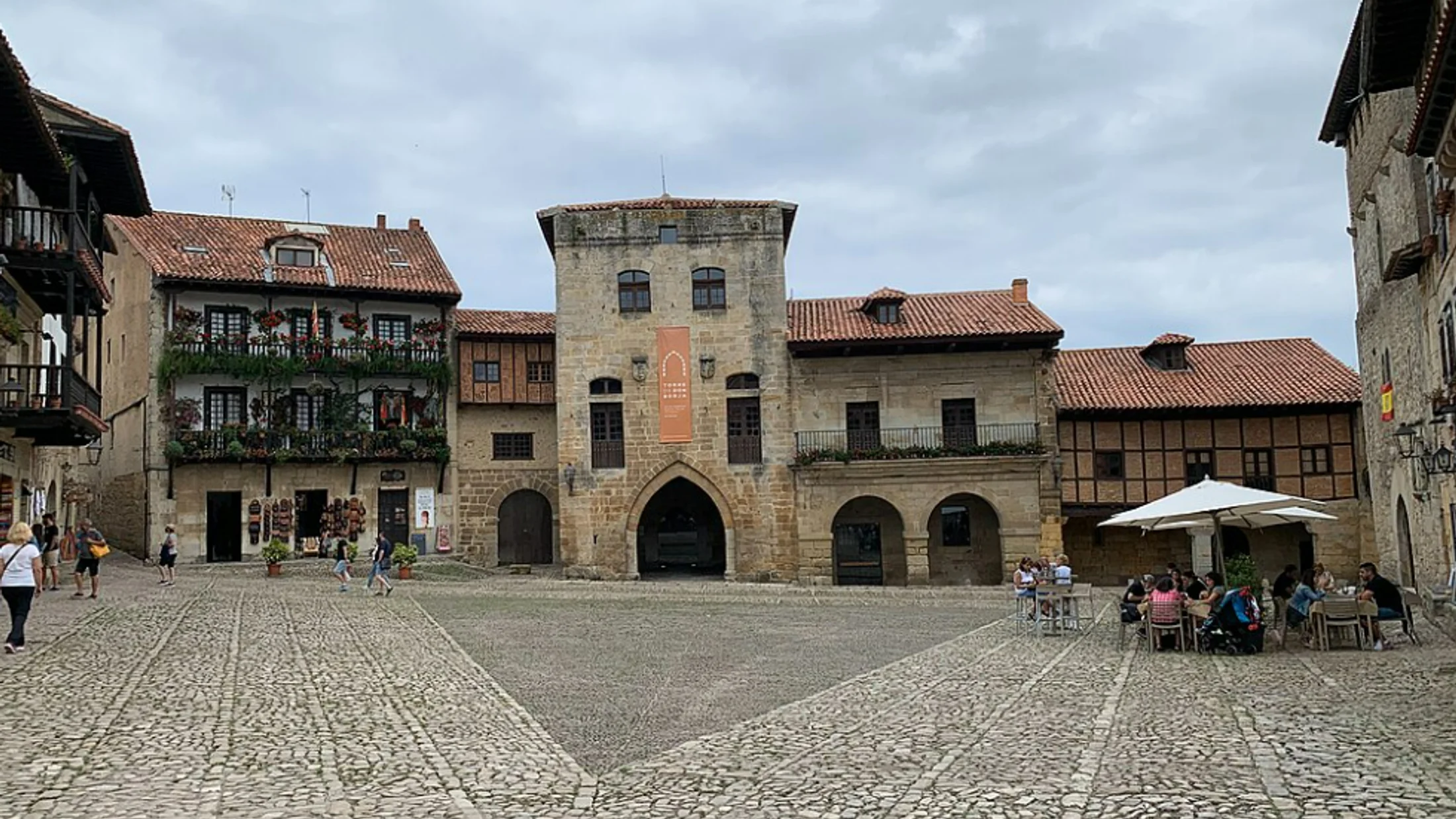
Santillana del Mar is famous for being "the village of the three lies": it is not holy, it is not flat, and it does not have a sea. But what it does have is a perfectly preserved medieval center, declared a Historic-Artistic Site in 1889.
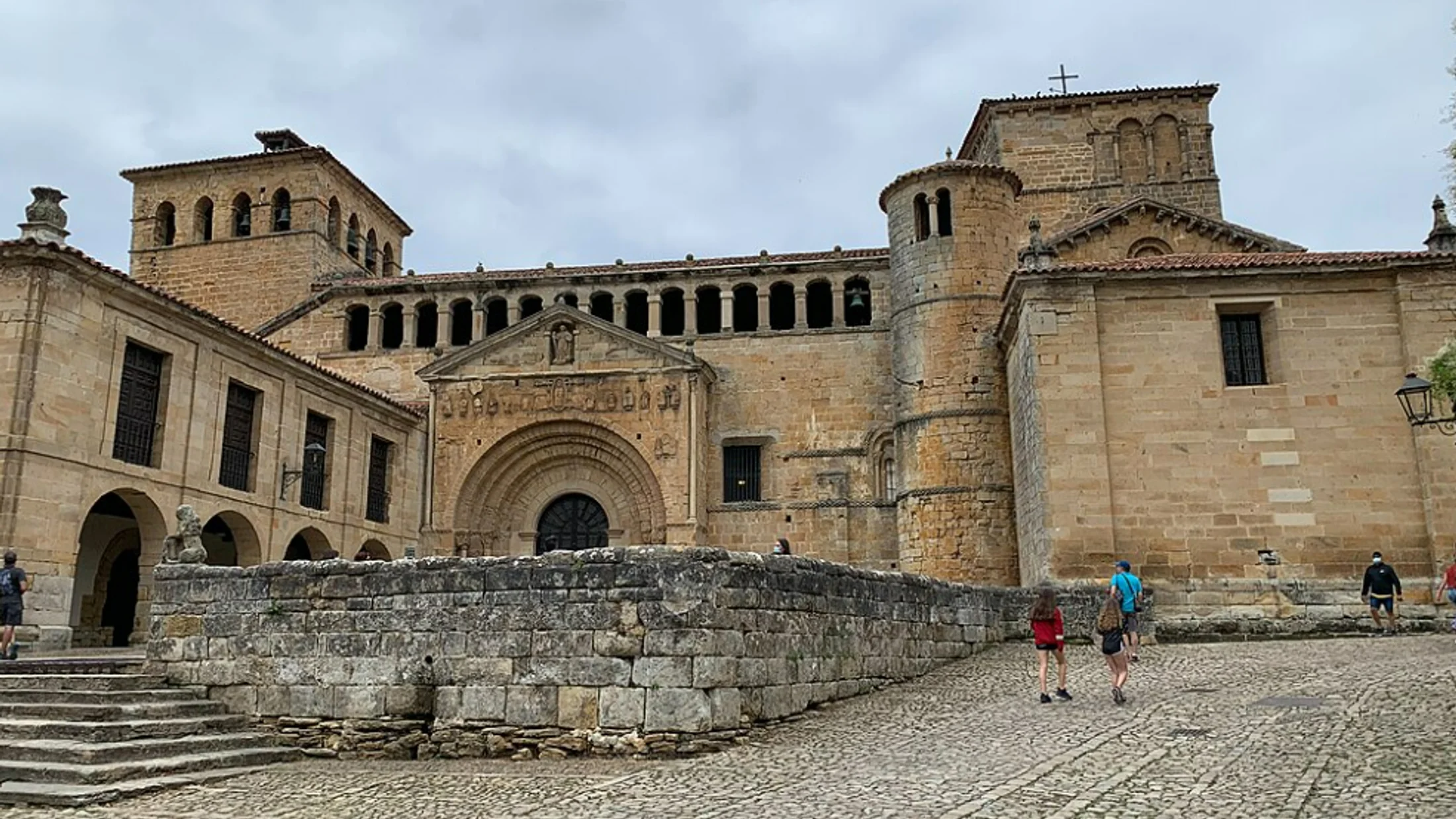
Located 30 km from Santander, this village is one of the most visited in Cantabria thanks to its stone architecture, its stately mansions with heraldic shields, and its proximity to the Cuevas de Altamira, one of the most important sets of rock art in the world (although the cave original is closed to the public, the replica is exceptional).
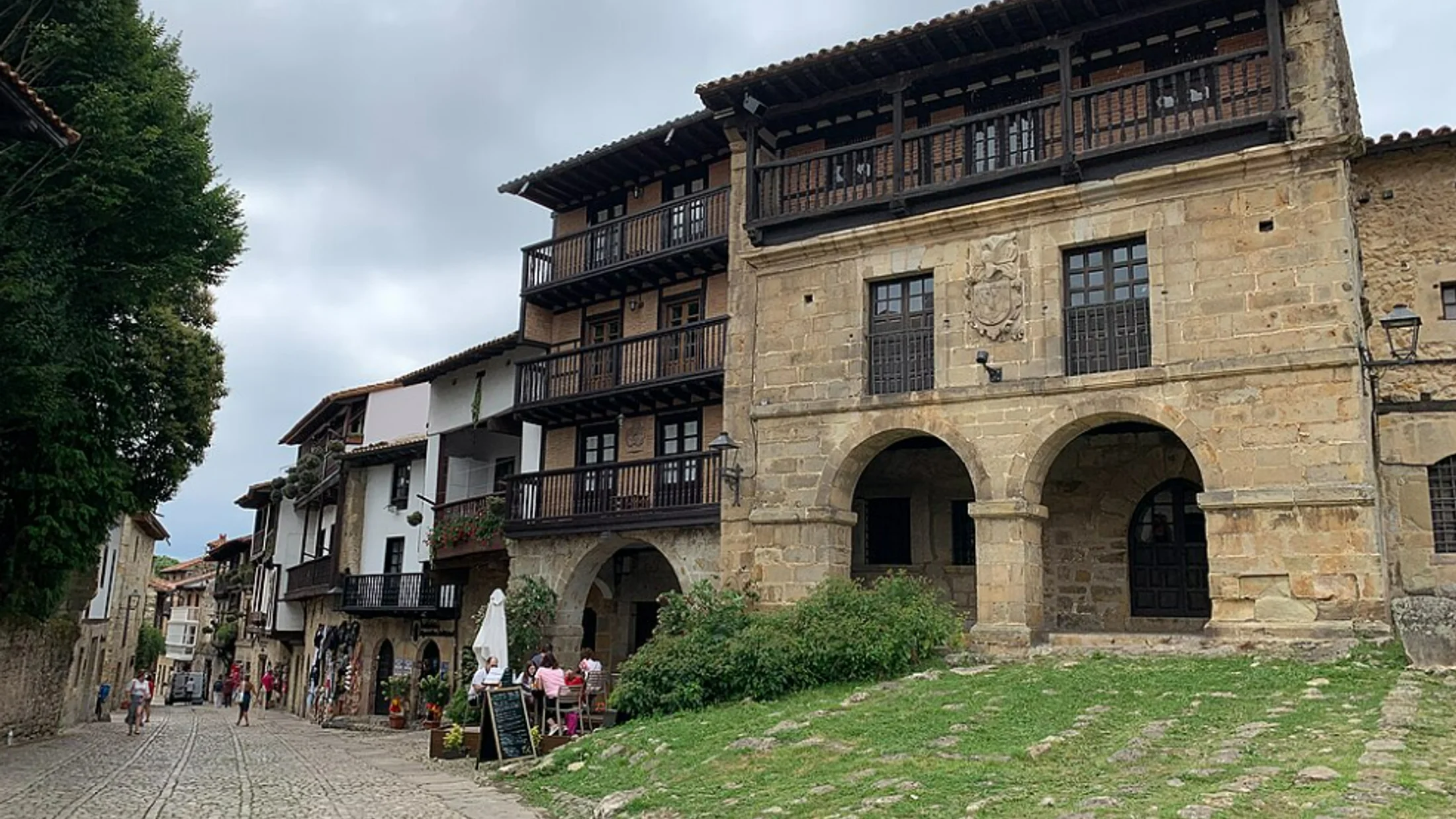
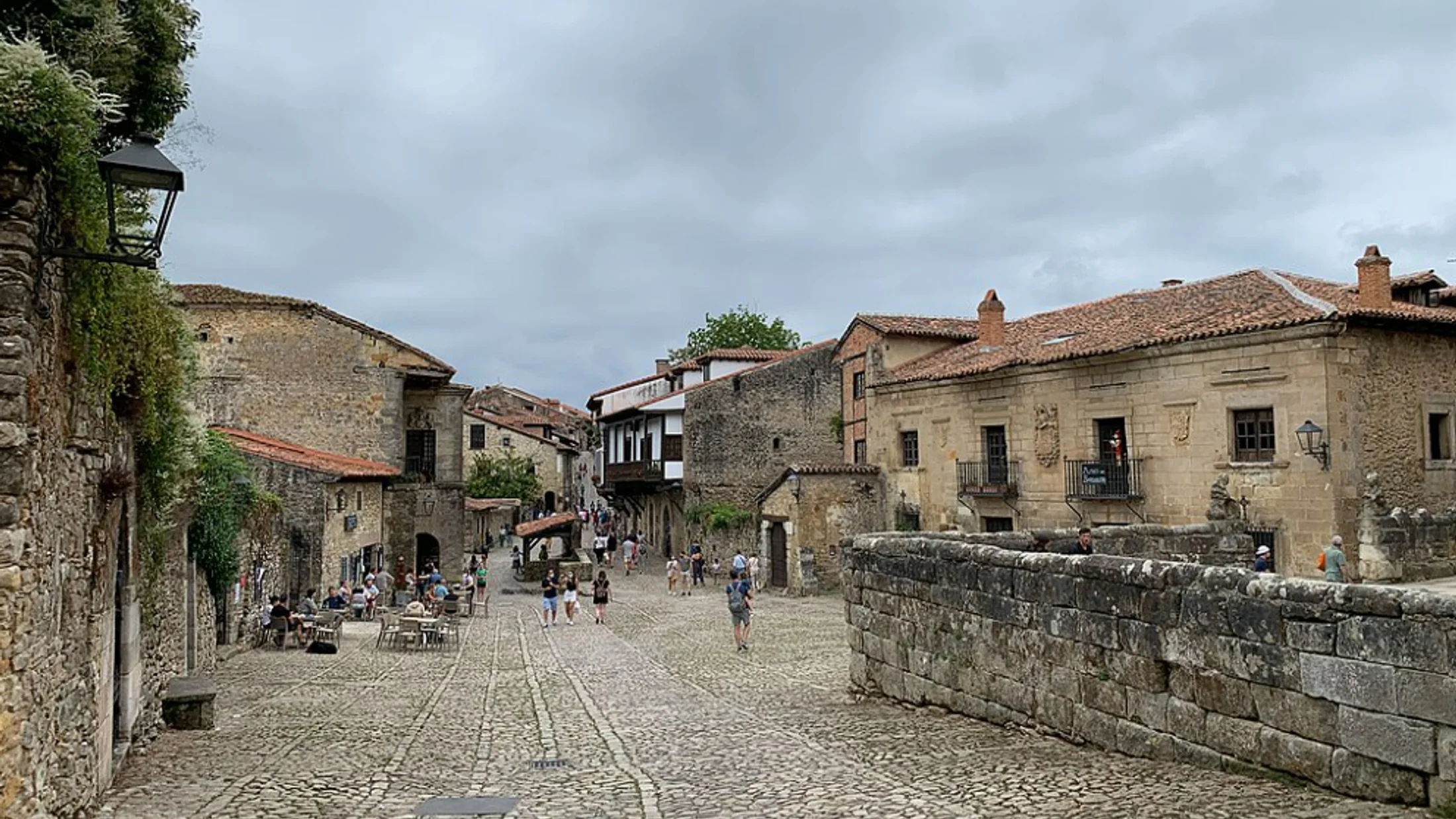
Walking through its cobblestone streets is like going back in time. The cows still graze in the nearby meadows and the smell of wet grass and fresh milk reminds you that you are in the middle of a rural area of Cantabria.
What to See and Do in Santillana del Mar
Start with the Colegiata de Santa Juliana (12th century), of Romanesque style, which gives the village its name (Sancti Iulianae = Santillana). Its cloister and its sculpted capitals are a jewel of Cantabrian Romanesque.
Stroll through the cobblestone streets of the historic center: Calle del Cantón, Calle del Río, Plaza Mayor... Each corner has a stone house with wooden balconies and flowers in spring. Among the most outstanding mansions are the Casa del Águila and the Parra and the Torre de Don Borja.
Visit the Diocesan Museum, located in the Regina Coeli convent, with sacred art and Baroque altarpieces. And if you travel with children, do not miss the Zoo de Santillana, specialized in fauna from the five continents and with an educational focus.
2 km from the town are the Altamira Caves (museum replica). The guided tour takes you through an exact recreation of the original cave, with paintings of bison, deer and hands dating back 14,000 years. It is one of the best cultural experiences you can have in Cantabria.
Where to Eat in Santillana
Cántabrian cuisine is hearty and flavorful. Try the cocido montañés (with beans, cabbage, sausage and blood sausage), the sorropotún (tuna stew) and, of course, the sobaos pasiegos and the cheesecake for dessert (a traditional sweet made with fresh cheese, eggs, sugar and cinnamon).
In Santillana you will find traditional cider houses where the cider is poured from above to oxygenate it. Some recommended restaurants: Gran Duque (traditional menu in the historic center) and Los Blasones (Cántabrian cuisine with a modern touch).
Where to Stay
Santillana offers a good variety of accommodations. You can stay at the Parador de Santillana Gil Blas, located in a mansion from the 17th century in the heart of the historic center, or in charming hotels like the Posada de la Abadía or the Casa del Marqués.
If you prefer something quieter, there are rural houses in the nearby valleys, such as Queveda or Oreña, a few minutes by car.
Best Time to Visit
The best time to visit Santillana is in spring (May-June) or early summer (July), when the climate is mild and the meadows are green. Cantabria has an Atlantic climate, with frequent rains, so always carry an umbrella or raincoat.
In August there is more tourism, especially on weekends. If you can, visit the town on a weekday and in the early morning, when it is still quiet.
3. Frigiliana (Málaga, Andalucía)
Why It Is One of the Most Beautiful
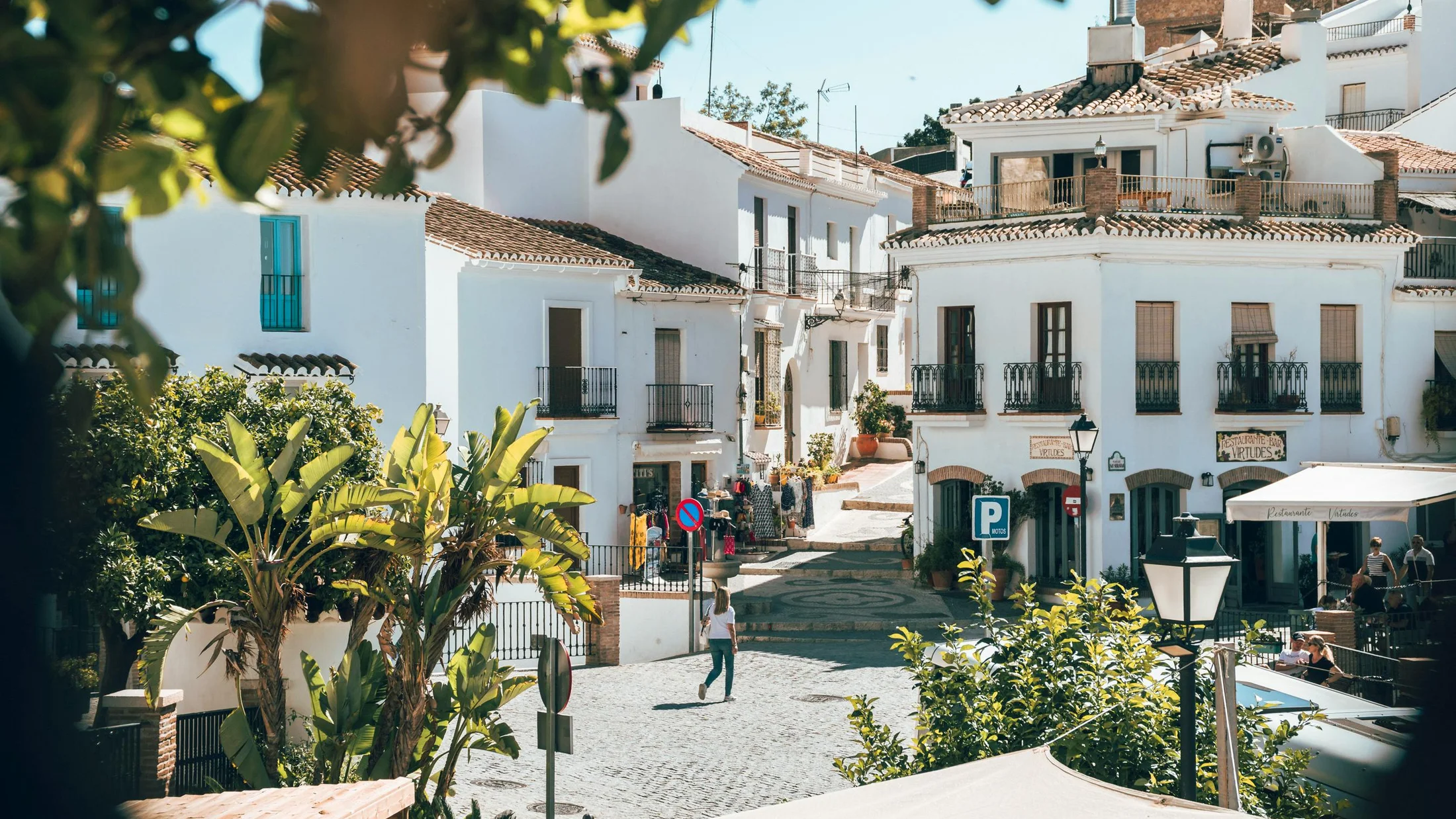
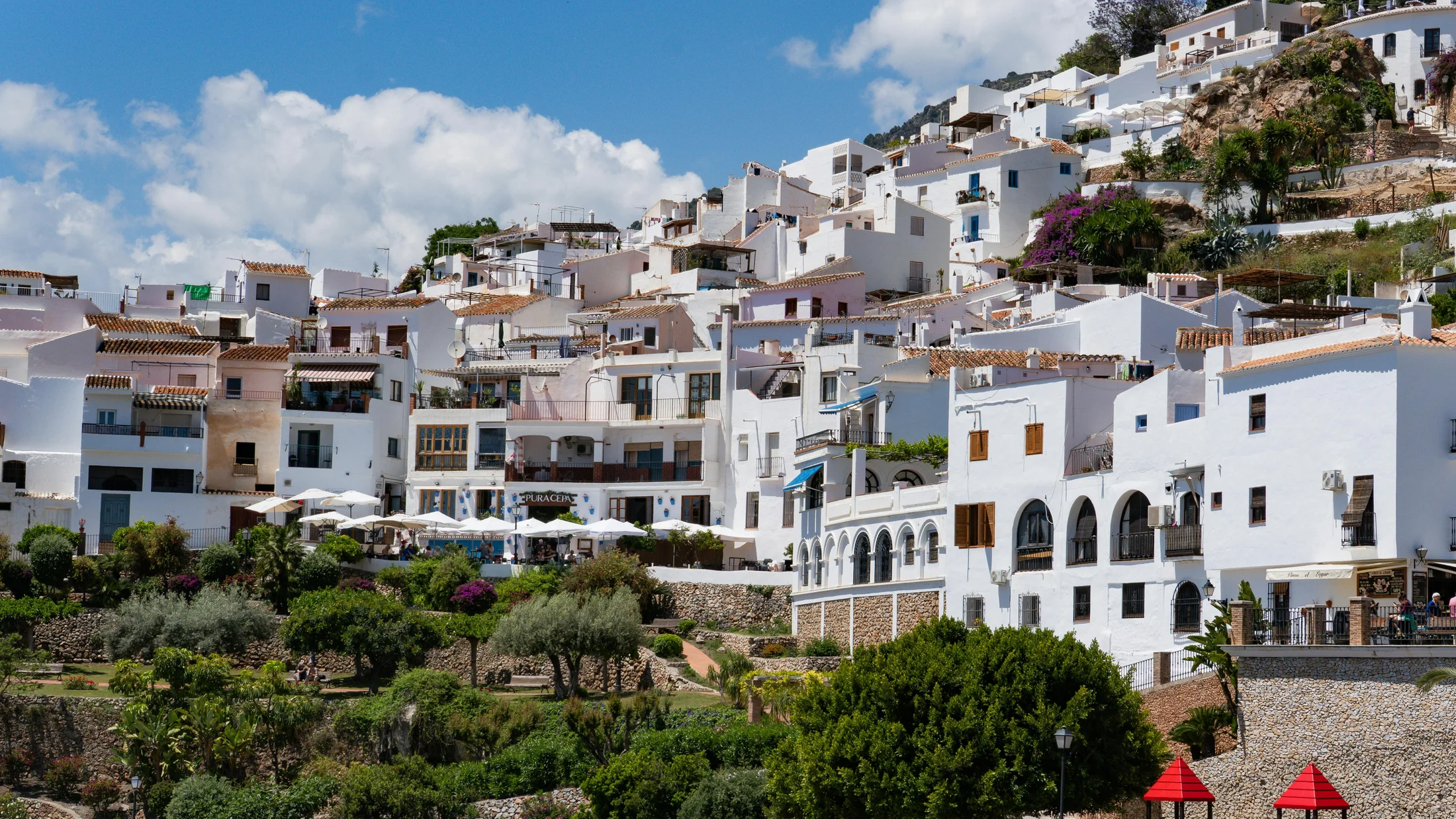
Frigiliana is the prototype of the white Andalusian village. Located on the slopes of the Sierra de Almijara, 6 km from Nerja and 60 km from Málaga, this village has been awarded several times as the most beautiful village of Andalucía and one of the most beautiful in Spain.
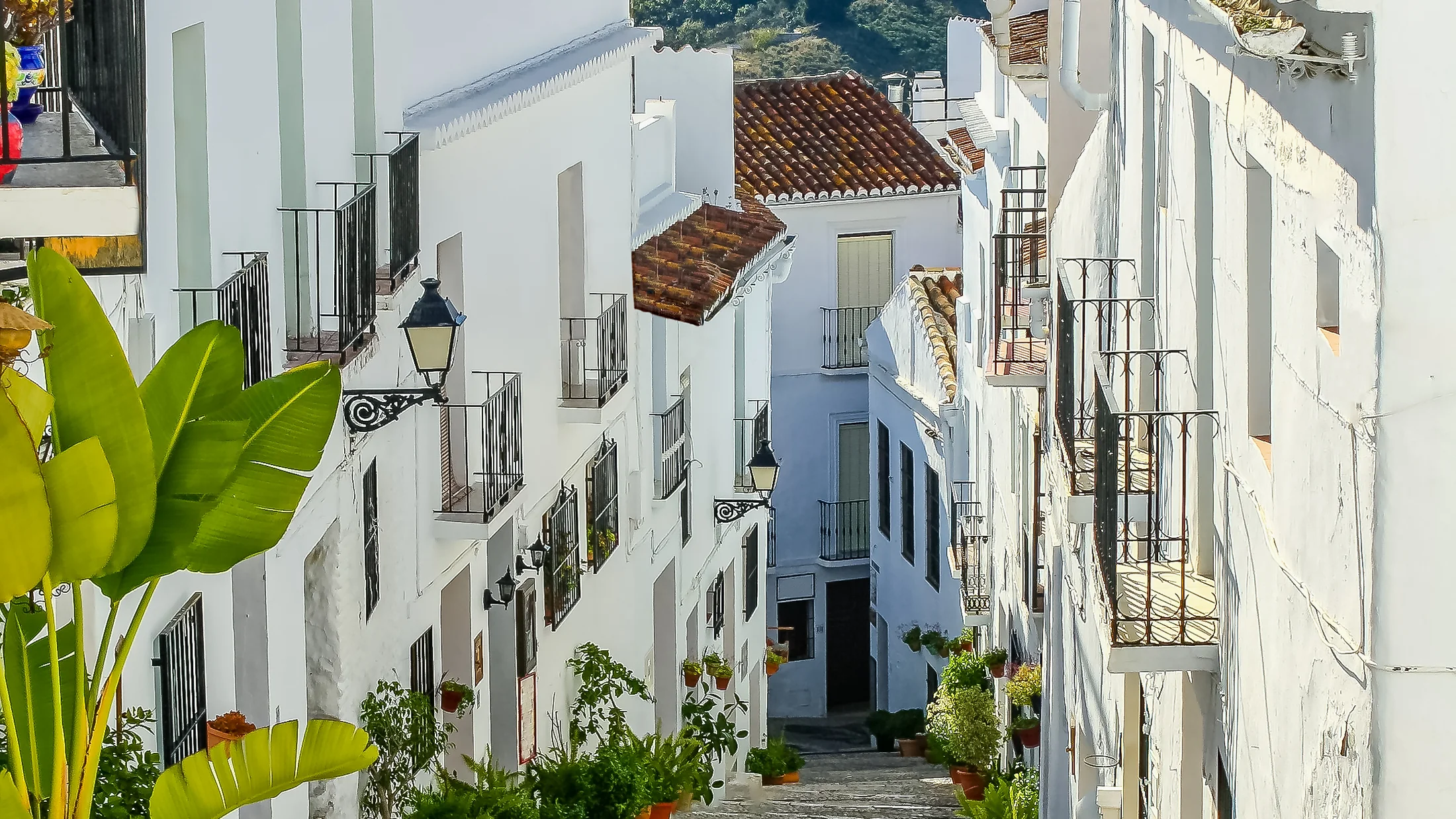
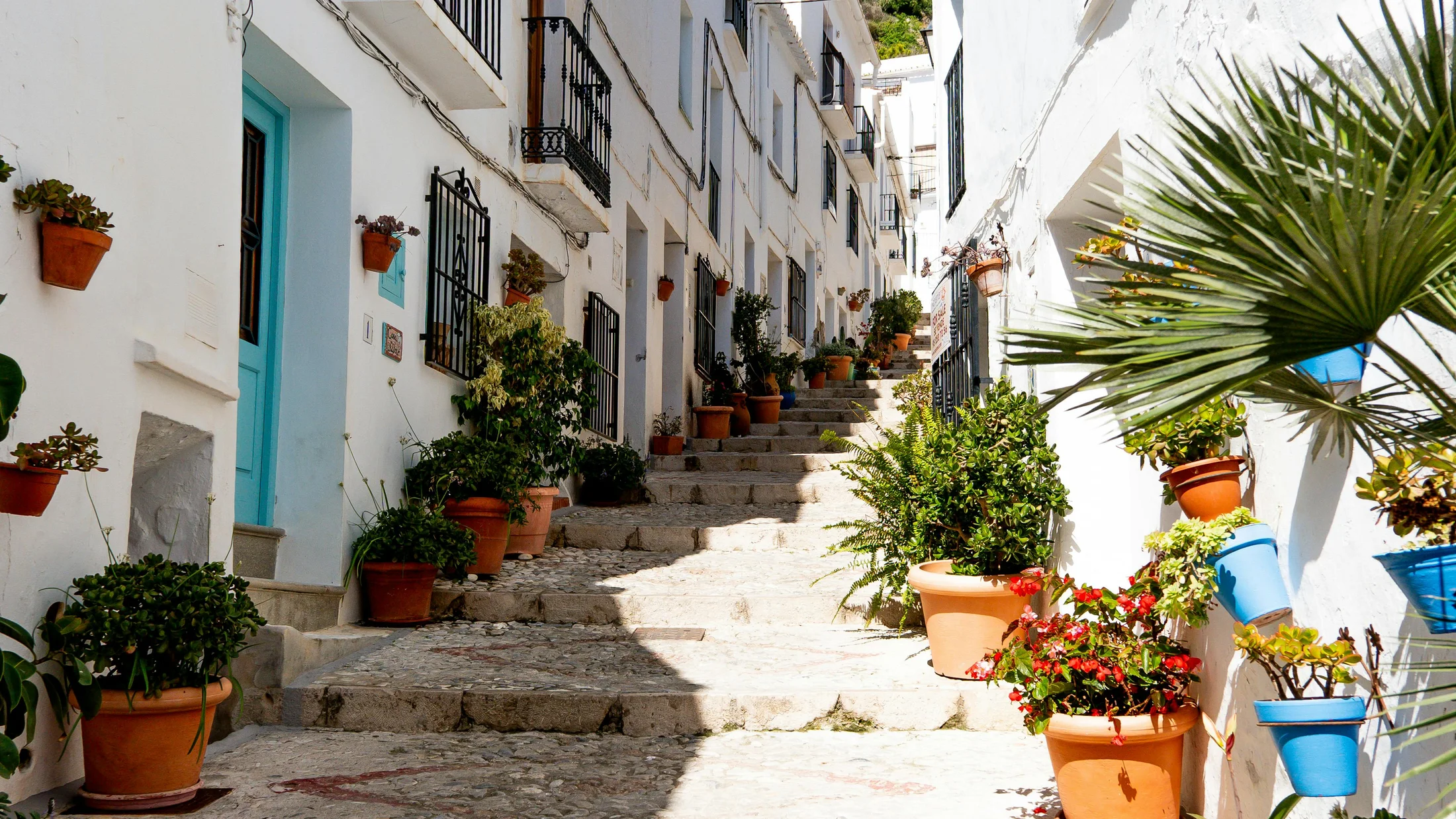
Its Mudéjar Quarter is a labyrinth of narrow, steep and whitewashed streets, decorated with pots of red geraniums and fuchsia bougainvillea. The houses are so close together that in summer they create a natural shade that refreshes the environment. From its viewpoints, the views of the Mediterranean Sea are impressive.
The subtropical microclimate of the area allows the cultivation of sugar cane honey (a sweet molasses produced in Frigiliana since the 16th century) and tropical fruits such as avocado and mango in the nearby valleys.
What to See and Do in Frigiliana
Get lost in the Mudéjar Quarter, declared a Historic-Artistic Site. The streets do not have names in many cases, only numbers and ceramic plaques that tell the story of the Morisco Rebellion in 1569. Every corner is a postcard.
Visit the Ingenio de Nuestra Señora de los Ángeles, the only sugar cane honey factory left in Europe. It can be visited during the harvest season (September to December) and artisan products can be purchased.
Climb up to the Mirador del Torreón, from where you will have views of the coast of Nerja, the Mediterranean and, on clear days, North Africa. The sunset from here is unforgettable.
If you like hiking, the Ruta del Río Higuerón is easy, family-friendly and takes you through a riparian forest with waterfalls and pools. In summer it is perfect for cooling off.
The aroma of orange blossom and jasmine floats in the air in spring.
Where to Eat in Frigiliana
Frigiliana's cuisine is Andalusian and maritime. Try the fried fish, the Andalusian gazpacho (cold and refreshing), the migas with tropezones and the tomato salad with extra virgin olive oil from the area.
For dessert, do not miss the sugar cane honey served with fresh cheese or the sweet wine of Frigiliana (similar to muscatel).
Some restaurants with views: El Adarve (terrace with valley views) and El Jardín (Andalusian cuisine in a flowery courtyard).
Where to Stay
Frigiliana has boutique hotels with charm like the Hotel Villa Frigiliana or La Posada Morisca, with Andalusian decoration, interior patios and pools.
If you prefer more tranquility, in the surroundings there are rural cortijos with views of the mountain and the sea, ideal for disconnecting.
Best Time to Visit
The best time to visit Frigiliana is in autumn (October-November) or winter (December-February), when the climate is mild (15-20°C) and there are fewer tourists. Spring is also beautiful, with flowers in full bloom.
In summer it is hot (over 30°C), but the village is a good place to escape the heat of the coast. In August the Festival of the Three Cultures is celebrated, with music, theater and gastronomy.
Comparison: Which One to Choose According to Your Profile?
For History Lovers: Albarracín
If you are passionate about medieval architecture, walls and well-preserved historic centers, Albarracín is your village. Perfect for walking without haste, taking photography and visiting museums. It is ideal for couples and travelers looking for tranquility and authenticity.
For Families: Santillana del Mar
If you travel with children, Santillana del Mar offers a perfect combination of culture (Colegiata, Altamira Caves) and fun (zoo, easy routes, accessible gastronomy). The green environment and meadows with cows delight the little ones.
For Romantic Getaway: Frigiliana
If you are looking for a romantic getaway with sea views, charming terraces and unforgettable sunsets, Frigiliana is your destination. Perfect for couples who want to enjoy a quiet atmosphere, Andalusian gastronomy and a mild climate all year round.
Conclusion: Plan Your Getaway
Albarracín, Santillana del Mar and Frigiliana are three jewels of Spanish heritage. Each with its own personality, its history and its way of falling in love. Three villages that invite you to slow down, walk without haste and enjoy the architecture, gastronomy and landscape.
Which will you visit first? It depends on what you're looking for: medieval history in Teruel, Cantabrian essence near the Altamira Caves, or Andalusian white with views of the Mediterranean.
The important thing is to let yourself go. Get lost in the streets, talk to the locals, try the daily dish in a family restaurant and take with you the feeling of having discovered something authentic.