Highlights

  • • Europe's largest concentration of eccentric stalactites
  • • Discovered in 1957 after a quarry blast
  • • Mineral formations with irregular growth
  • • Guided tours lasting 1 to 2 hours
  • • Located in Karrantza, Vizcaya
  • • Accessible for visitors with medium mobility

Description

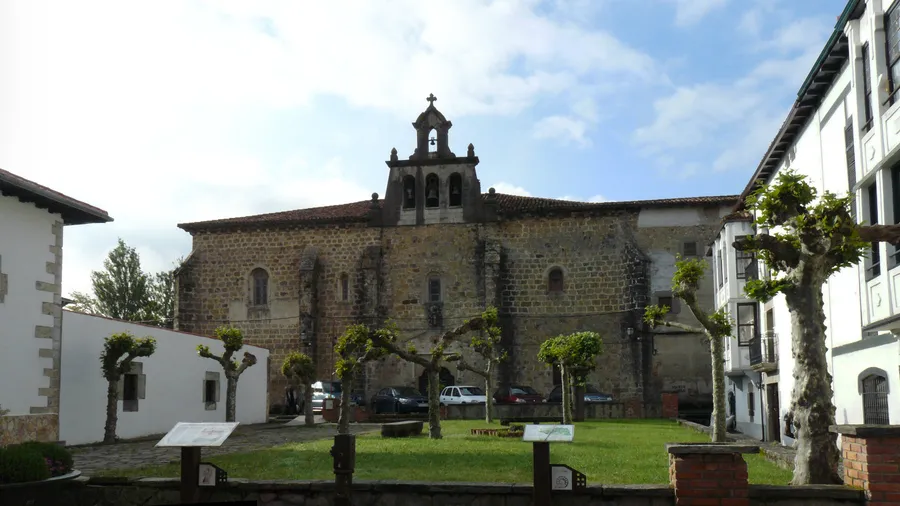
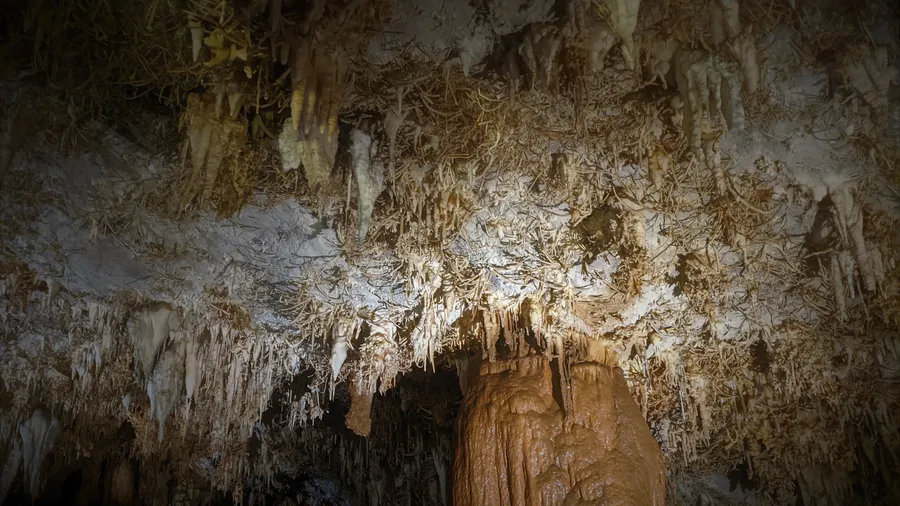
The Cueva de Pozalagua is located in the municipality of Karrantza, in the province of Vizcaya, within the Basque Country. This cave stands out for having the highest concentration of eccentric stalactites in Europe—mineral formations that grow in unusual directions due to air currents and specific humidity and temperature conditions. It was accidentally discovered in 1957 during a blast in a nearby quarry, granting access to a subterranean space with unique geology.

When visiting the cave, you can observe a collection of stalactites and stalagmites with whimsical and deviated shapes, contrasting with typical vertical formations. The interior lighting highlights the details and textures of these calcareous structures, creating a quiet and cool atmosphere. Additionally, you can appreciate the variety of colors and the delicacy of the formations, which have grown over thousands of years.

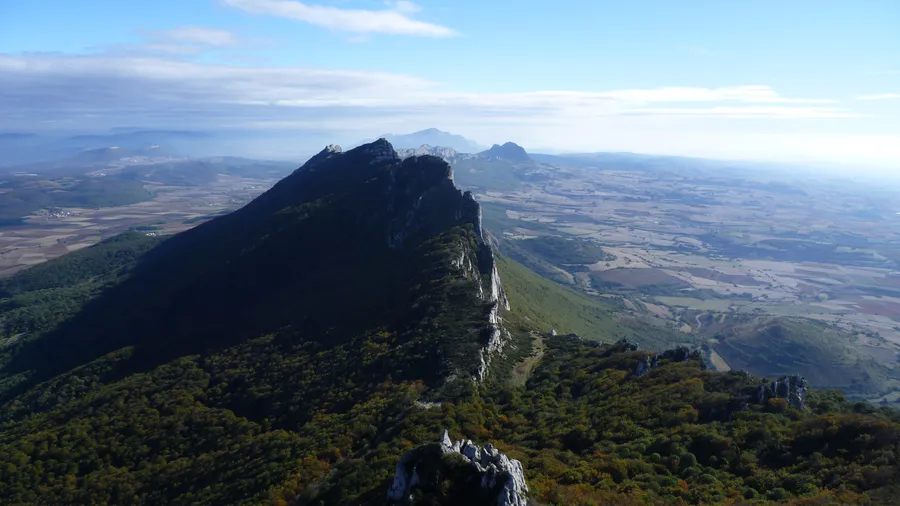
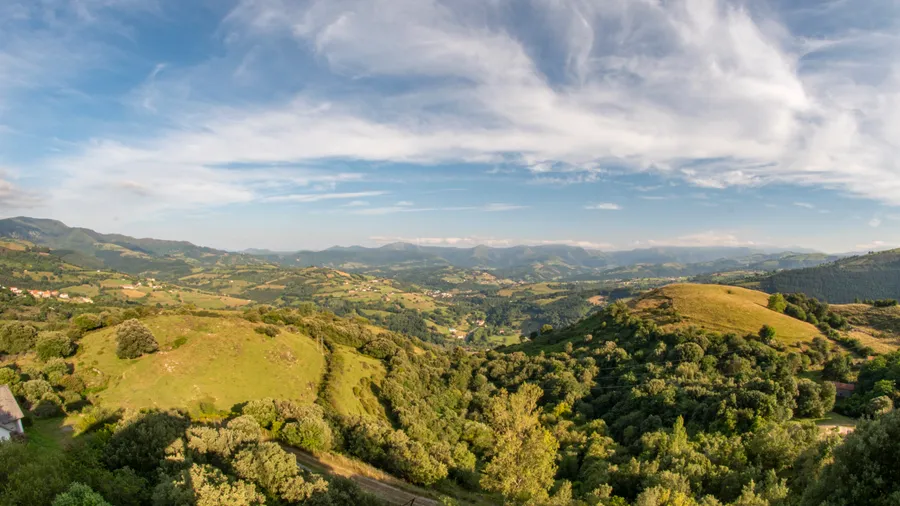
Historically, the Cueva de Pozalagua exemplifies how human activity can lead to significant geological discoveries. Its opening in the 20th century allowed the study of a rare underground ecosystem in the region and contributed to the conservation of Basque natural heritage. The Karrantza area, with its mountainous and forested landscape, represents the rural and natural environment of northern Spain.

To plan your visit, it is advisable to book in advance, as access is controlled to preserve the formations. The tour lasts approximately 1 to 2 hours, and the terrain is accessible for people with medium mobility. Pets are not allowed, and it is recommended to wear comfortable clothing and suitable footwear for walking in humid spaces. Entrance is free, and opening hours may vary by season, so checking ahead is recommended.

Key Information

Visit Duration

1-2 hours

Recommended Seasons

Spring, Autumn

Pricing

Free

Accessibility

Medium

Kid-Friendly Pet-Friendly Booking Required

Related Destinations

Guide

Essential information for visiting Pozalagua Cave

Location
Practical Information
Pricing
Free
Visit Duration
1-2 hours
Features & Services
  • Accessibility:Medium
  • Kid-Friendly:Yes
  • Pet-Friendly:No
  • Booking:Booking Required
Planning Information

Recommended Seasons

Spring · Autumn

Best Time to Visit

The best time to visit Cueva de Pozalagua is during spring and autumn, when outdoor weather is mild and the surrounding natural environment is at its most vibrant.

Visitor Tips

Book your visit in advance to secure your spot and check updated opening hours. Wear comfortable shoes and appropriate clothing for humid, cool environments. Follow all guidelines to avoid damaging formations and refrain from touching stalactites. Pets are not allowed, and avoid carrying bulky items to ease movement inside the cave.

Historical Facts

Discovered in 1957 after a quarry blast, Cueva de Pozalagua has been studied for its eccentric stalactites, which grow in unusual directions due to specific environmental factors, making it a key site for speleology in Europe.

Frequently Asked Questions

Get answers about Pozalagua Cave

Access is through guided tours that require prior reservation to control visitor numbers and preserve the cave.
Yes, the cave is suitable for children as long as they are accompanied and follow the guide's instructions.
No, pets are not permitted to protect the cave’s ecosystem.
Comfortable clothing and closed, non-slip footwear are advised due to humidity and uneven terrain.
Guided tours typically last between 1 and 2 hours, depending on the group and season.