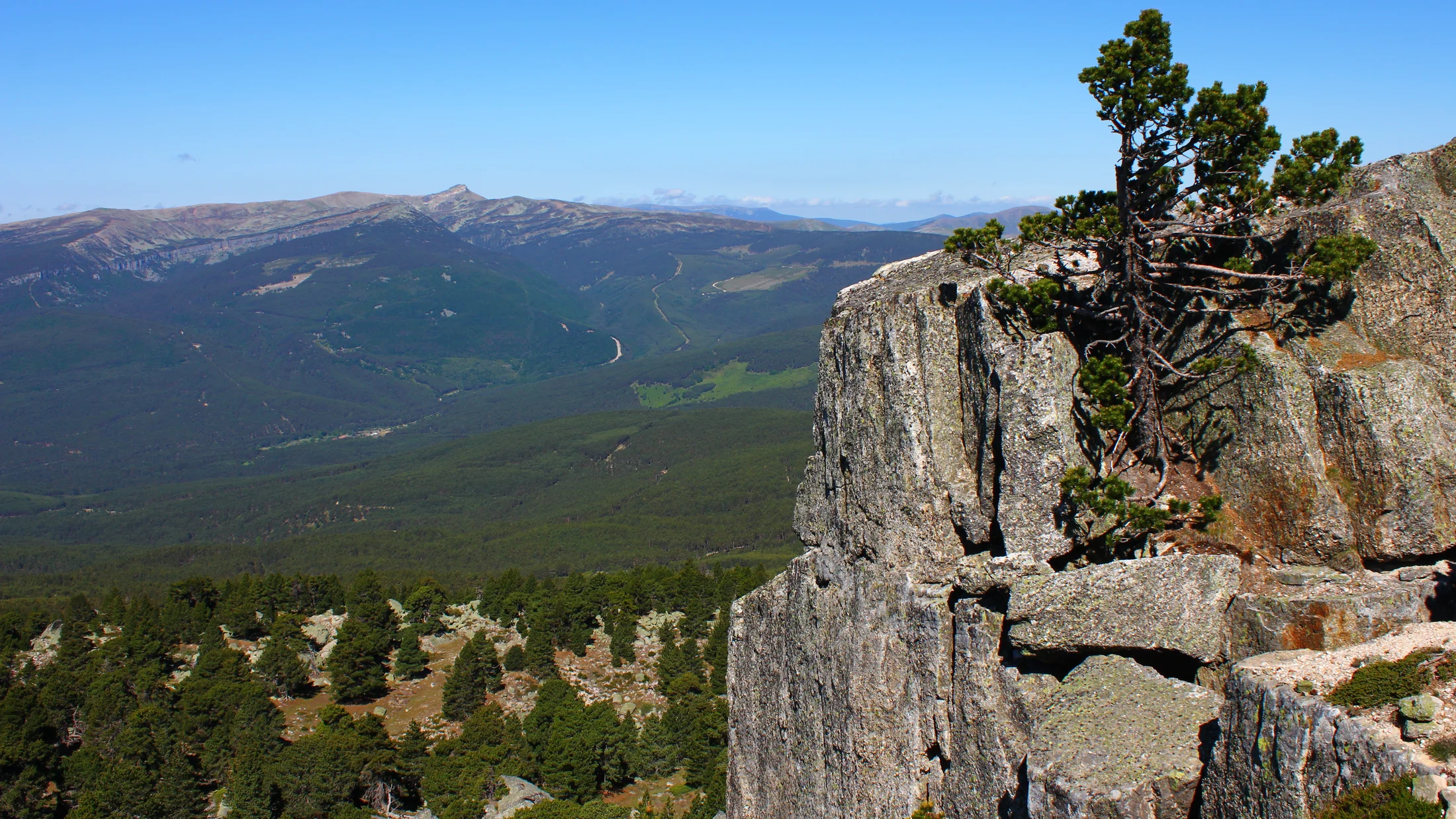
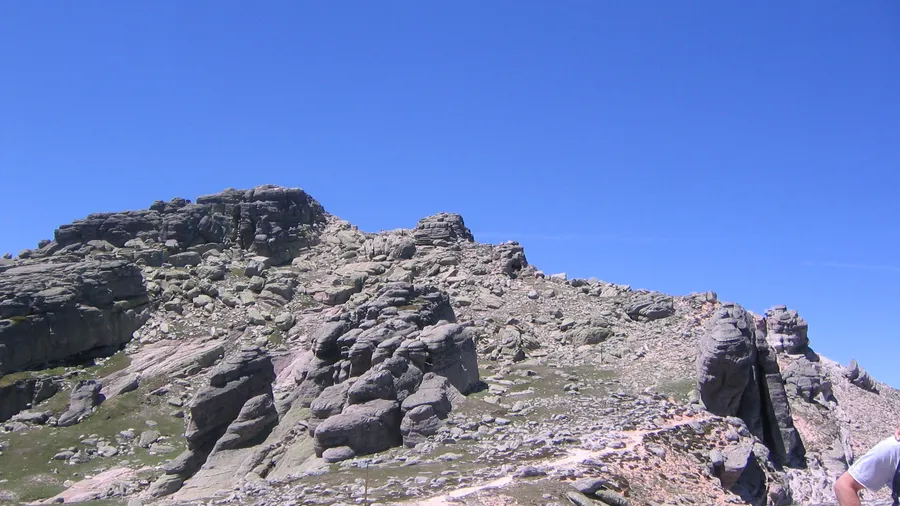
Sierra de Cebollera forms the easternmost section of the Iberian System in La Rioja, at the headwaters of the River Iregua. It is a massif of rounded summits and humid valleys, peaking at Pico Cebollera (2,148 m), the region's highest point. The natural park covers around 10,000 hectares of centuries-old beech forests, plantation pine, mountain pastures and peat bogs, making it one of La Rioja's quietest and least-visited natural spaces. Mist is a constant presence in the cold months, settling in the Iregua and Lumbreras valleys at dawn and turning them into white corridors of vapour from which the tips of larches and the first pines emerge.
Beech forest is the dominant ecosystem below 1,600 metres. The oldest specimens, with trunks up to a metre in diameter and grey bark mottled with lichens, cover north-facing slopes between Villoslada de Cameros and the Piqueras pass. In autumn, from mid-October to early November, the colours are particularly striking: the lemon yellow and copper of the beeches contrasts with the dark green of the Scots pines (Pinus sylvestris) that dominate at higher elevations. Above the treeline, Festuca and Nardus psychro-xerophytic grasslands support woodlark (Lullula arborea) and water pipit (Anthus spinoletta) in summer. Brown bear presence has been documented in the park following the species' expansion across the Iberian System.
The park's trail network connects the main valleys to the summits via seven waymarked routes ranging from four to twenty kilometres. The ascent of Pico Cebollera from Villoslada de Cameros (870 m of elevation gain, 12 km return) is the most frequented route and offers, on clear days, views to the Sierra de Urbión and the Picos de Europa. Laguna de Cebollera, at 1,840 metres, is a glacial wetland where sphagnum mosses grow and palmate newts (Lissotriton helveticus) breed. The walk to the lake from the Ermita de Lomos de Orio car park covers seven kilometres return with only 400 metres of ascent, making it accessible to hikers with moderate experience.
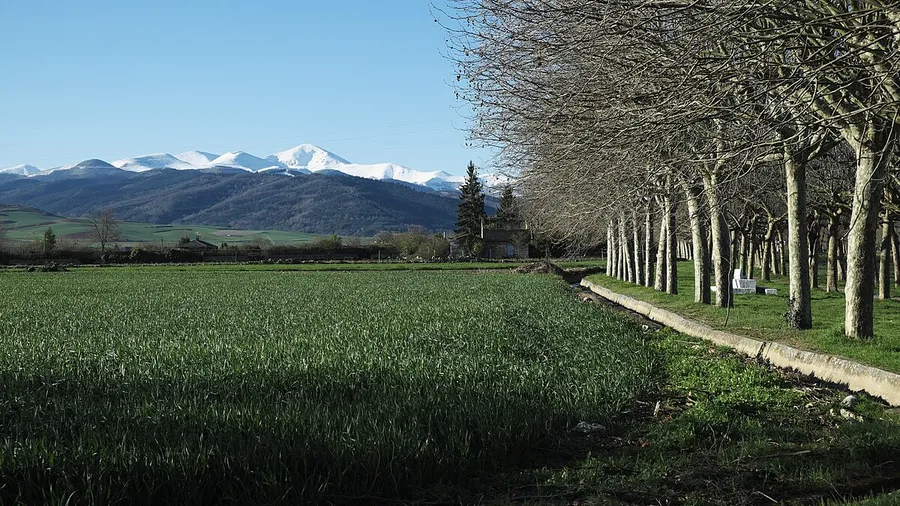
Activities in the park include hiking, mountain biking on forest tracks and, in winter, snowshoeing. Snow conditions are typically good between January and March, with 30 to 80 cm of accumulation at higher elevations depending on the year. The village of Villoslada de Cameros within the park retains traditional mountain architecture with sandstone manor houses and wooden balconies. The park's Interpretation Centre, located in the village, has permanent exhibitions on the massif's geology, flora and fauna, and provides up-to-date trail conditions and winter access information.