The essentials of Sierra de Guara

  • • Canyoning in the Vero gorge and Mascún canyon, Europe's canyoning capital
  • • Levantine rock art at Fuente del Trucho and Mallata, UNESCO World Heritage 1998
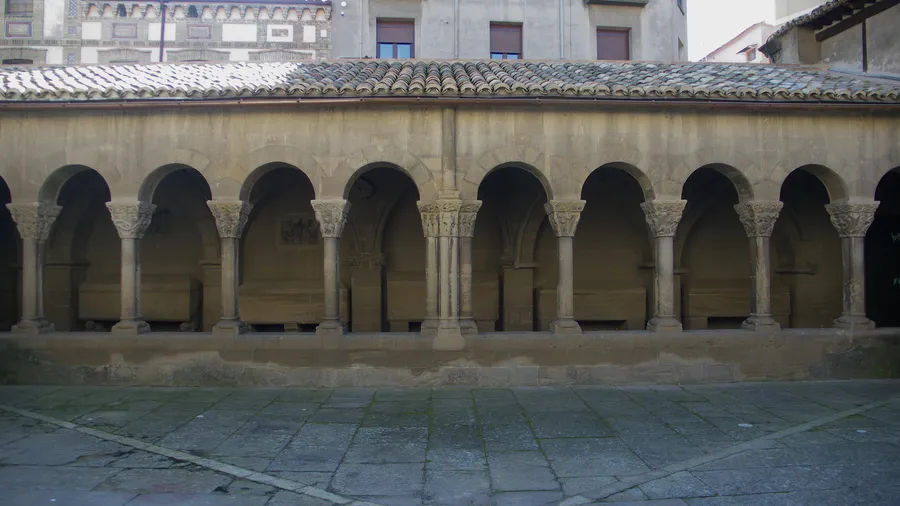
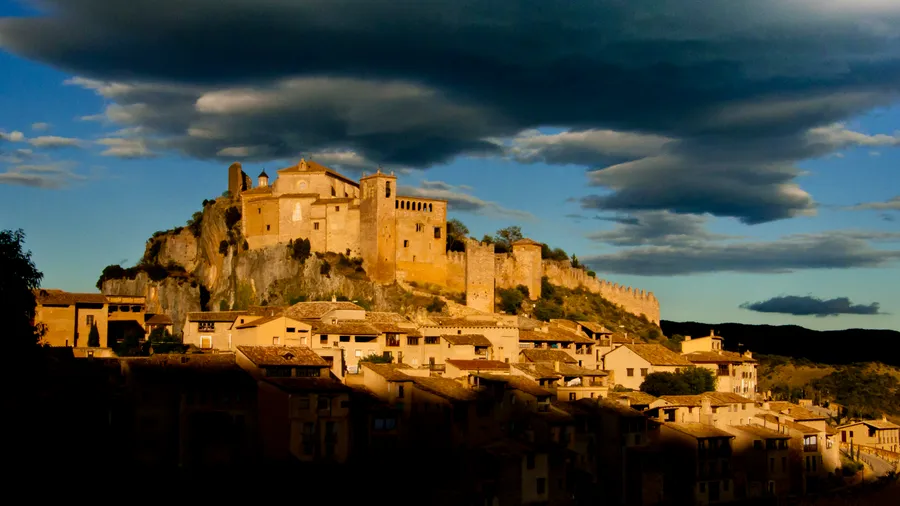
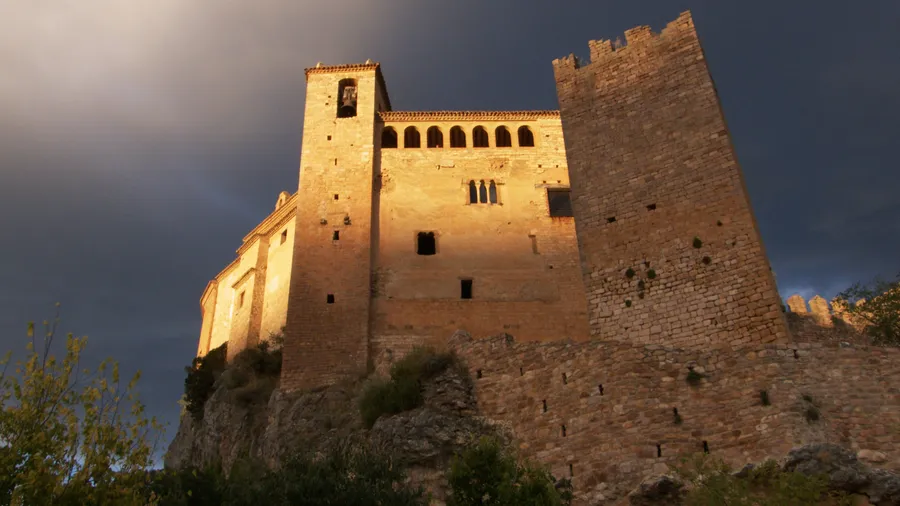
  • • Alquézar: 12th-century Romanesque collegiate church above the Vero canyon
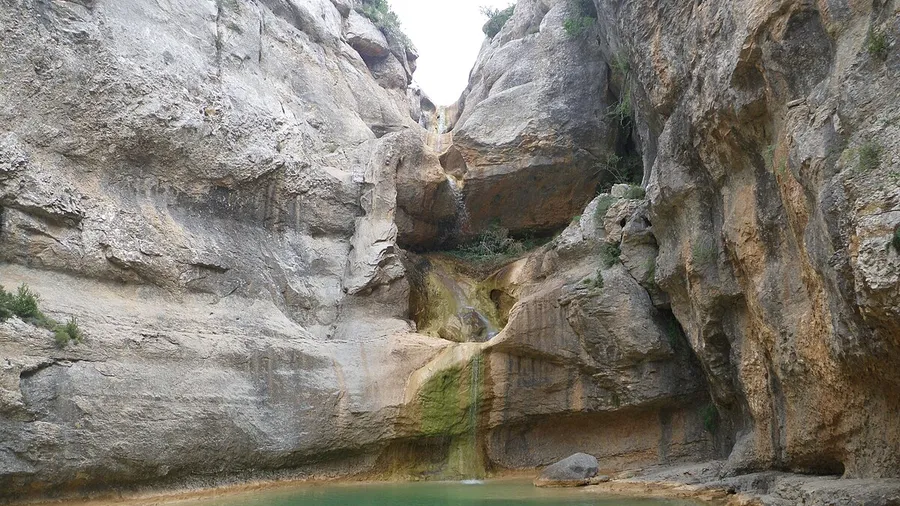
  • • Salto de Bierge: natural swimming pool in the Alcanadre river below a waterfall
  • • Griffon vulture, bearded vulture and golden eagle colonies on limestone cliffs

Description

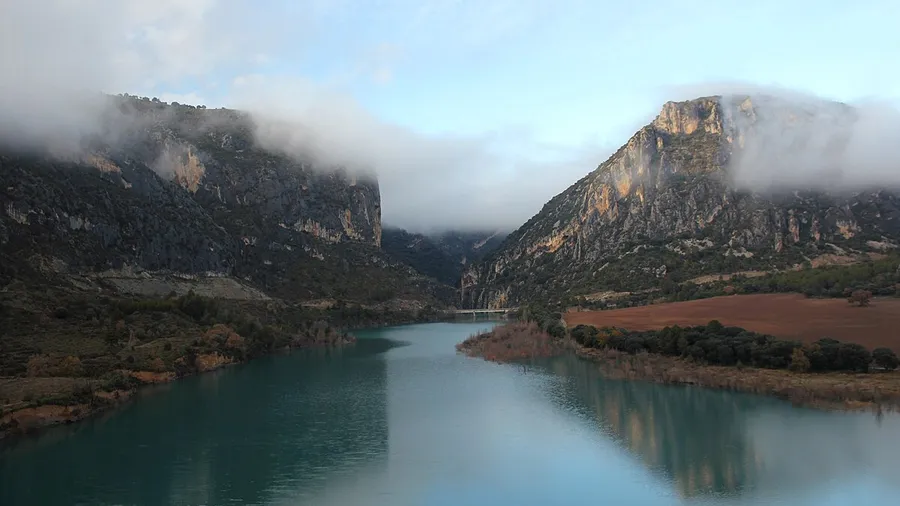
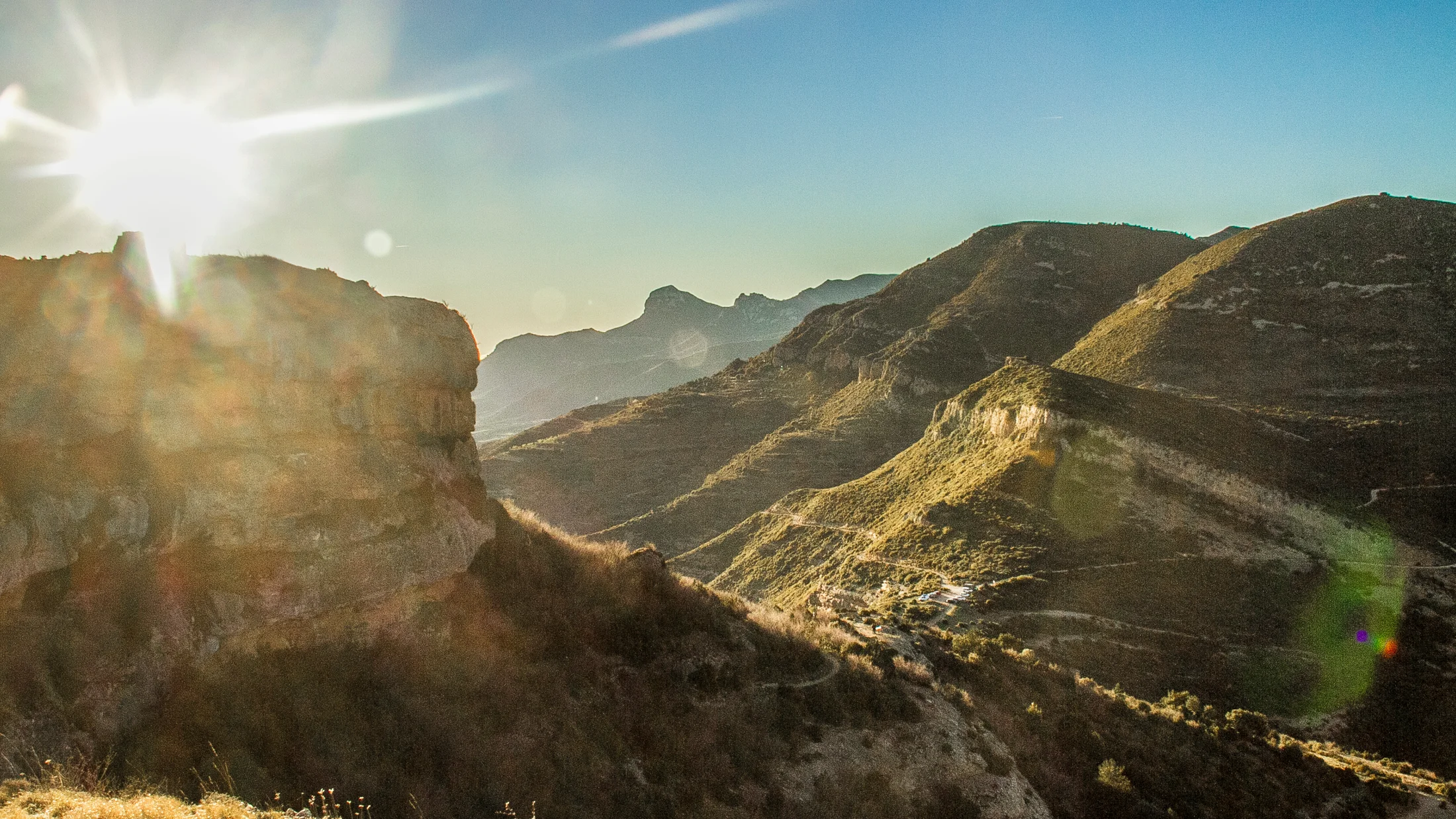
Parque Natural de la Sierra de Guara covers 47,453 hectares in the Huesca pre-Pyrenees, north of the Somontano region. It occupies a transition zone between the arid Ebro lowlands and the snow-capped Pyrenean summits, and this in-between position gives it a landscape diversity hard to match in a space of comparable size: vertical limestone gorges dropping 400 metres to a river on still days, open plateaux with views to France, dense pine forests where sound disappears, and abandoned villages whose stone houses are slowly being absorbed back into the scrub. Sierra de Guara is the birthplace of Iberian canyoning as it is practised today, and the gorges of the Vero, Alcanadre and Flumen rivers are global reference points for the discipline.

The Vero gorge near Alquézar and the Mascún canyon near Rodellar are the park's two most visited sites. Alquézar is a medieval village perched on a limestone spur at 660 m altitude, with an 11th-century Romanesque collegiate church and narrow stone streets that end abruptly at the canyon rim. From the village viewpoints, the Vero river appears at the gorge bottom as a turquoise-green line about 100 m below the level of the houses. The Vero gorge has several sections at different technical levels: from the popular Salto de la Bola section, suitable for beginners in guided groups, to the upper section with rappels exceeding 30 m and extended water passages. The Mascún canyon is more technically demanding and longer—completing the full traverse can take 8 to 12 hours—with narrow passages where water fills the channel wall to wall and progress requires swimming.

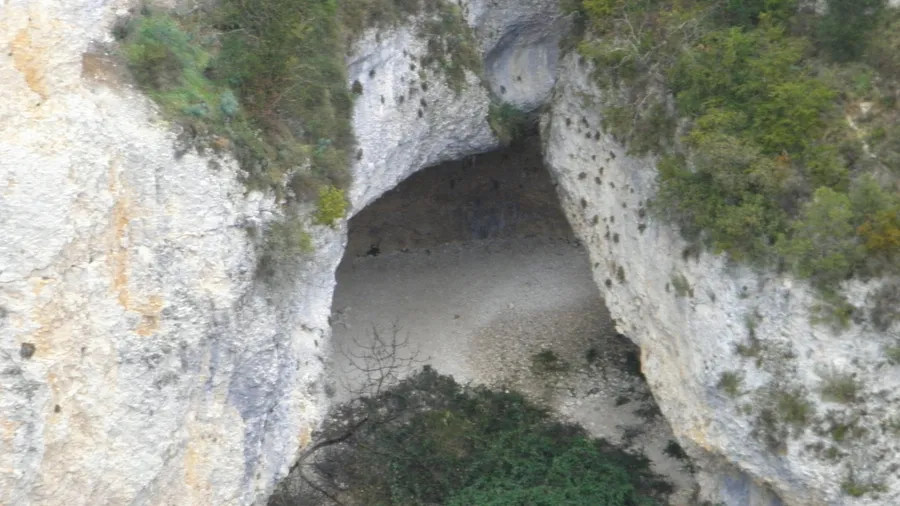
Beyond canyoning, Sierra de Guara holds one of Europe's outstanding rock art collections. The Vero paintings, near Colungo and Asque, form part of the Parque Cultural del Río Vero, designated UNESCO World Heritage in 1998 as part of the Rock Art of the Mediterranean Arc. The complex includes more than fifty shelters with paintings ranging from the Upper Palaeolithic to the Bronze Age, showing horses, bovids, human figures and hunting scenes. Access is through authorised guided visits departing from the local museums in Colungo and Alquézar.

Birdwatching is an equally important draw. Sierra de Guara holds one of Spain's densest griffon vulture (Gyps fulvus) colonies, with 400 to 600 breeding pairs recorded in recent counts. The bearded vulture (Gypaetus barbatus)—Europe's largest vulture, with a wingspan of up to 2.8 m—nests on the park's most inaccessible cliff faces, and its numbers have grown steadily following coordinated reintroduction with France and Italy. Egyptian vulture and cinereous vulture are also regular. The cliffs of Mascún and the Alcanadre river provide viewing conditions where these birds appear at eye level from the canyon-rim trails.

Hiking routes follow the network of paths connecting now-abandoned villages in the sierra interior. The Sendero de los Pueblos Abandonados, approximately 25 km and suitable for two days with an overnight at the Otín hostel, passes through the ruins of Santa Cilia, Otín and Balcé, where sunken roofs and empty threshing floors preserve traces of a life that left during the 1950s and 1960s. Landscape photography finds extraordinary material in these ghost villages, in the canyon walls at sunset and in the clouds of vultures riding the thermals.
Practical information for Sierra de Guara

Everything you need to know for your visit to Sierra de Guara

How to get there
From Huesca, the A-1207 reaches Alquézar in 50 km (1 hour). From Barbastro, 25 km via the A-1232. There is no regular public transport to Alquézar or the main gorges; a private vehicle or organised excursion from Huesca or Barbastro is recommended.
Area Information
Barbastro (17,000 inhabitants) is the regional capital and main service base. Alquézar (300 inhabitants) concentrates the active tourism offer with over 15 canyoning operators. Rodellar provides access to the Mascún canyon and has several hostels specialised in climbing and canyoning.
Geography
Pre-Pyrenean anticline of limestone and conglomerate. The Vero, Alcanadre, Flumen and Guatizalema rivers have carved gorges up to 400 m deep into the plateau. The highest peak is Tozal de Guara (2,077 m). The Vadiello reservoir regulates the Guatizalema river.
Flora & Fauna
Aleppo and Scots pine on the slopes, downy oak in cool valley floors, box and gorse on limestone ledges. Fauna: griffon vulture, bearded vulture, Egyptian vulture, cinereous vulture, Spanish ibex, badger, pine marten. Brown trout in the Vero and Alcanadre rivers.

Things to do in Sierra de Guara

Find the best plans and things to do in Sierra de Guara

60

What to see in Sierra de Guara

Discover the must-see sights in Sierra de Guara

Accommodations in Sierra de Guara

Best accommodation options in Sierra de Guara

Frequently asked questions about Sierra de Guara

Get answers about Sierra de Guara

For most gorges, it is necessary or strongly advisable. Technical descents such as the Vero, Mascún or Fuenmayor canyons require abseiling gear, progression technique and the ability to read water levels. Several companies with qualified guides operate from Alquézar and Rodellar, offering descents adapted to different levels from beginner to advanced technical. The Ferrería gorge and some sections of the Alcanadre are accessible for hikers without technical equipment.
Visits to the main sites (Fuente del Trucho, Mallata, Lecina-Barfaluy) are compulsorily guided and must be booked at the Parque Cultural office in Colungo (A-1232, km 39). Places are limited; in high season it is worth booking several days in advance by phone or in person. Each visit lasts between 2 and 3 hours depending on the site. Routes follow natural paths with moderate gradients.
Access to Salto de Bierge is regulated by the Bierge Town Hall and in summer (July-August) operates with limited capacity and paid parking. Arriving before 10:00 is advisable to secure a spot. Outside the peak season, access is free, though the water may be colder. The pool bottom has slippery rocks; jumping from the surrounding cliffs is not recommended.
Yes. Heavy rainfall in the upper catchment can trigger flash floods in the gorges even when the sky is clear over Alquézar. The risk is highest from November to May. Before any descent, you must check the weather forecast for the entire basin and the hydrological alert from the SAIH-Ebro automatic information system. Local companies cancel outings when the risk is elevated.
Alquézar is the larger hub with more accommodation, restaurants and canyoning companies. It is the gateway to the Vero canyon and the rock art. Rodellar, 30 km north along a mountain road, is a much smaller village focused on rock climbing and Mascún canyoning; it has several campings and hostels aimed at athletes. Regular Mascún climbers often prefer Rodellar for its proximity to the climbing sector.