The essentials of Parque Natural Sierra de Aracena y Picos de Aroche

  • • Iberian dehesa with acorn-fed pigs under centuries-old holm oaks in autumn
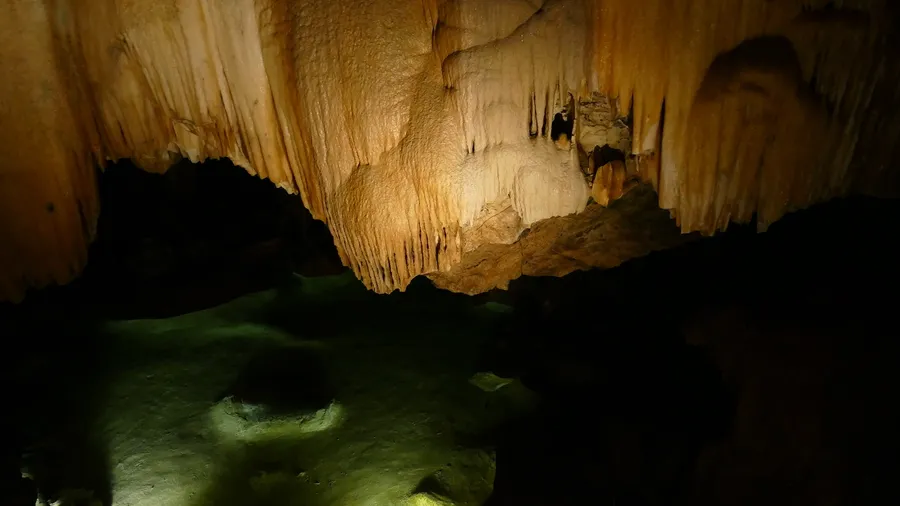
  • • Gruta de las Maravillas: 1,200 m of stalactite galleries beneath Aracena
  • • Chestnut forests of Fuenteheridos and Galaroza with intense autumn colour
  • • Jabugo acorn-fed Iberian ham with Protected Designation of Origin
  • • 10th-century Almohad mosque at Almonaster la Real

Description

Sierra de Aracena y Picos de Aroche Natural Park covers 186,000 hectares in the north-west of Huelva province, making it the largest protected natural area in Andalusia. The dominant landscape is the dehesa, a medieval agro-silvopastoral system where wide-canopied holm oaks and cork oaks grow over pastures grazed by Iberian pigs. The acorns of these oaks, which ripen between October and January, are the essential food that sustains the production of Jabugo's acorn-fed Iberian ham, which holds Protected Designation of Origin status. Walking these paths in autumn means hearing acorns crunch underfoot and the distant grunt of pigs between oak trunks.

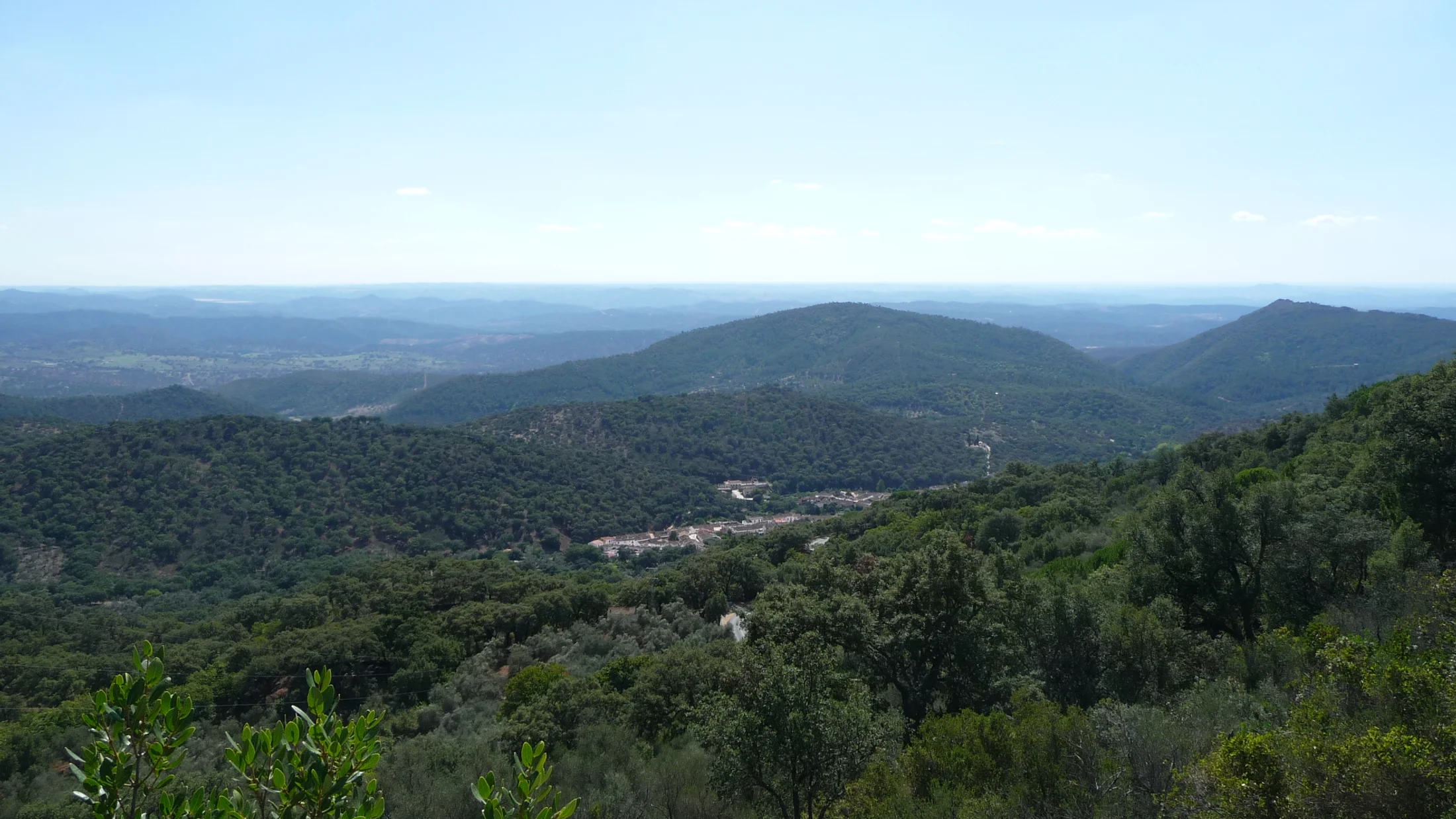
The sierra has moderate topography, with elevations ranging from 250 to 959 metres at Castaño del Robledo. This mid-elevation profile, combined with annual rainfall exceeding 1,000 mm in the higher zones, favours the presence of well-developed chestnut forests in the humid valleys. The chestnut groves of Aracena and the municipalities of Castaño del Robledo, Fuenteheridos and Galaroza form one of the most striking forest landscapes in the southern peninsula, particularly in autumn when golden leaves cover entire slopes. The Odiel river rises in the heart of the park and flows through hamlets that have preserved a vernacular architecture of slate and lime reminiscent of northern Portugal.

The cave system beneath Aracena and the surrounding Mármoles area is another dimension of the park worth noting. The Gruta de las Maravillas, beneath the town of Aracena itself, was declared a Natural Monument and contains calcite and aragonite stalactite and stalagmite formations across twelve chambers with 1,200 metres of visitable gallery. Interior temperature remains constant at 16-17°C year-round, making it a practical option during the extreme heat of the Huelva summer. The park's photographic and mineralogical heritage attracts landscape photographers and geology and mycology enthusiasts, as autumn brings a proliferation of mushrooms in the chestnut and holm oak forests.

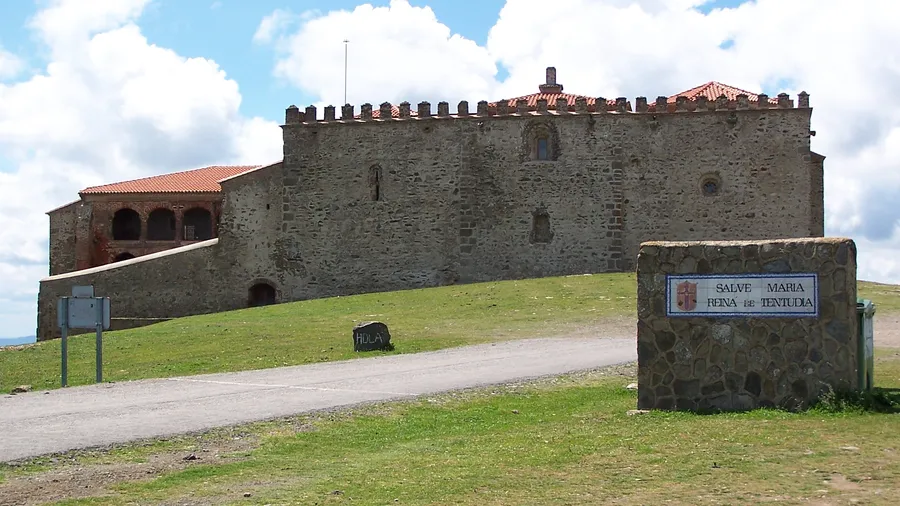
The park's villages share a consistent architectural identity based on local slate, with whitewashed facades and traditional ceramic roof tiles defining steep streets and plazas with central fountains. Aracena, the area capital, has the Aracena Castle with its priory church on the hilltop, visible from anywhere in the town. Almonaster la Real preserves a 10th-century Almohad mosque reused as a Christian chapel, one of the best-preserved medieval Islamic monuments in the province. Linares de la Sierra, with its river-cobble plaza paved in black and white and its stone streets, is one of the sierra's most carefully maintained historic ensembles.
Practical information

Everything you need to know for your visit to Parque Natural Sierra de Aracena y Picos de Aroche

How to get there
Aracena, the park capital, is 90 km from Huelva city and 100 km from Seville via the A-66. Access also from Portugal (Évora, 130 km). No direct public transport from Seville; private transport is recommended.
Area Information
The park spans 29 municipalities of the Huelva sierra. Aracena is the service hub. Jabugo, famous for its ham, is 12 km away. Cortegana preserves a 13th-century medieval castle. Portuguese border 40 km away.
Geography
Low sierra of Palaeozoic slates and quartzites, elevations 250-959 m. Odiel river rises in the park interior. Rolling relief with humid valleys and dehesa slopes. Portuguese border to the west.
Flora & Fauna
Holm oak, cork oak and chestnut dominate the landscape. Iberian lynx present in park sectors. Black vulture and black stork breeding. Otter in interior rivers. Mushrooms in chestnut forests: milk cap, porcini and cardoon mushroom in autumn.

Things to do

Find the best plans and things to do in Parque Natural Sierra de Aracena y Picos de Aroche

20

Accommodations

Best accommodation options in Parque Natural Sierra de Aracena y Picos de Aroche

Loading accommodation options...

Frequently Asked Questions

Get answers about Parque Natural Sierra de Aracena y Picos de Aroche

The Gruta de las Maravillas lies beneath the town of Aracena, accessed from the historic centre. It has 12 chambers and 1,200 metres of visitable gallery. Interior temperature stays at 16-17°C. Visits are guided in groups of around 20 people, departing every 30-45 minutes. Advance booking is essential on public holidays and in summer due to high demand.
The montanera is the period when Iberian pigs roam freely under dehesa holm oaks and feed on acorns. It runs roughly from October to January. During this period, pigs gain 50-80 kg in a few months. Walking through the dehesa in November and watching herds of black pigs foraging under oak trees is one of the most distinctive experiences in the park.
The GR-48 long-distance trail crosses the sierra east to west, connecting the main villages. The Aracena Green Ring route (12 km circular) departs from the town and traverses dehesa and chestnut forest. The path between Fuenteheridos and Galaroza (5 km) is particularly striking in autumn. All are low-to-medium difficulty and suitable for light trekking footwear.
Iberian lynx are present in some sectors of the park, though sightings are rare and not guaranteed. The species has recovered considerably in Andalusia since the 2002 low point, when fewer than 100 individuals remained across Spain. To improve chances, drive secondary roads at dawn or dusk in your own vehicle, watching the edges of forested areas carefully.