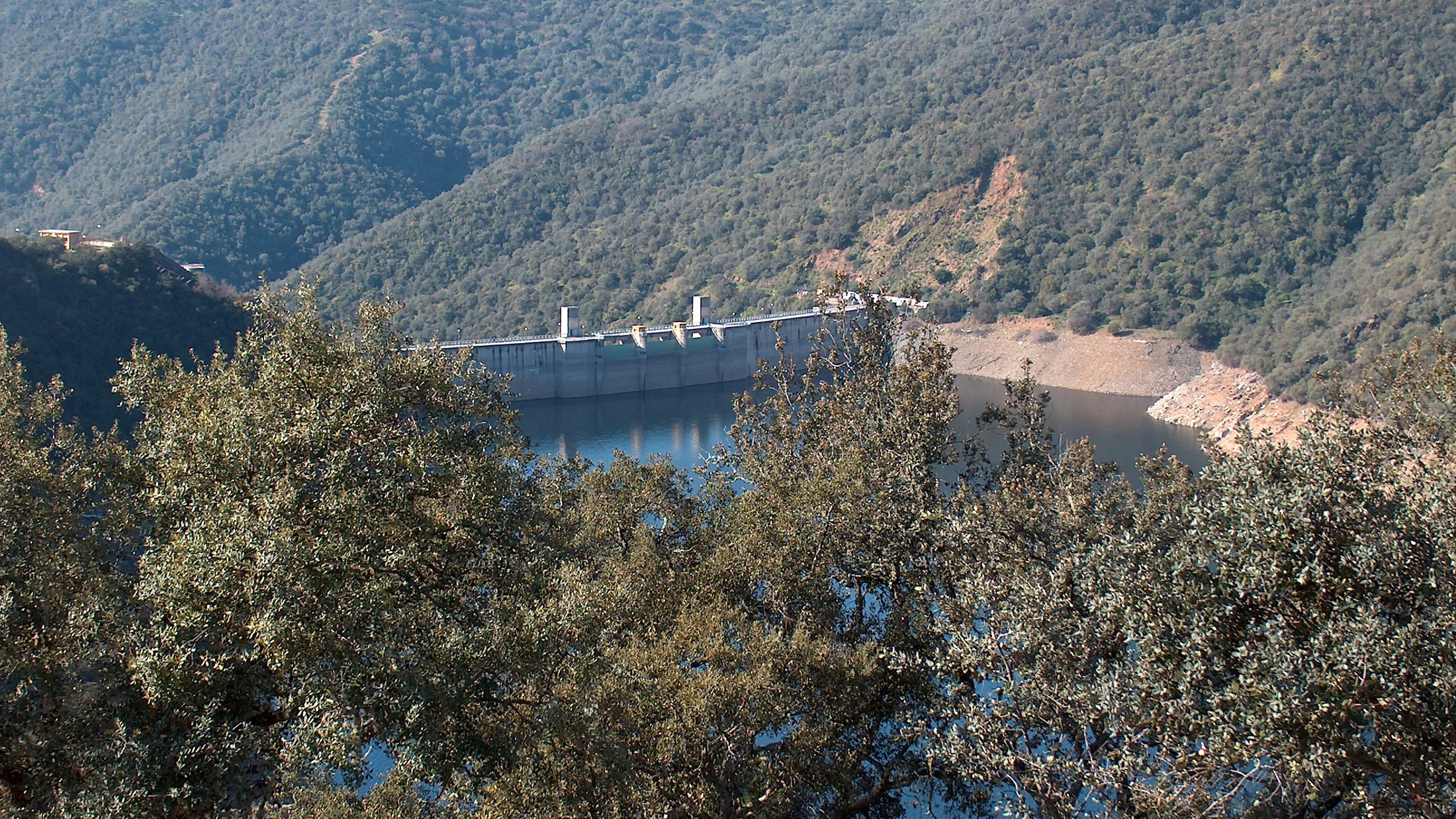
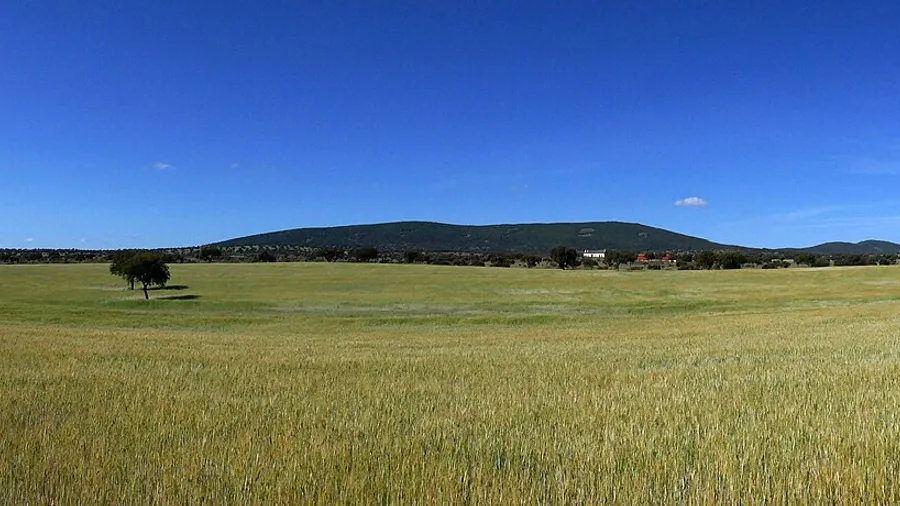
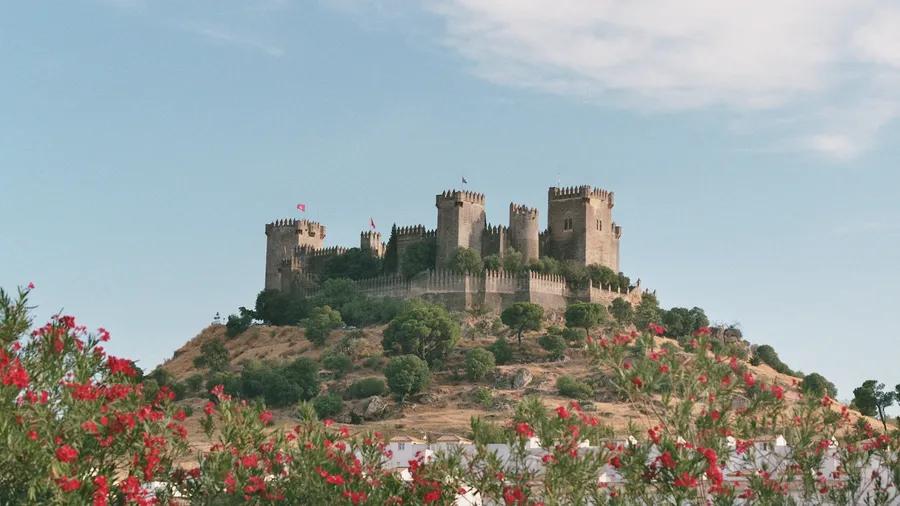
The Sierra de Hornachuelos spans 60,032 hectares across the western sector of the Sierra Morena range, between the municipalities of Hornachuelos, Almodóvar del Río, Posadas, Villaviciosa de Córdoba, and the provincial capital itself. It is one of the best-preserved Mediterranean forests in Andalusia: vast dehesas of holm oaks and cork oaks blanket gentle hills that slope down toward the Bembézar, Retortillo, and Guadiato river valleys. In spring, the understory bursts with rockrose, strawberry trees, and mastic, and the air carries an earthy scent of resin and damp bark along every forest path.
The wildlife alone justifies the visit. The park holds one of the largest black vulture colonies in Andalusia, with over one hundred breeding pairs nesting in the tallest cork oaks. Griffon vultures, Spanish imperial eagles, golden eagles, and black storks share the skies, forming a raptor census hard to match anywhere in southern Iberia. On the ground, the Iberian lynx maintains a confirmed breeding nucleus here, while red deer, wild boar, mouflon, and otters round out a faunal inventory that turns every outing into a serious field observation day. The deer rut in September-October fills the valleys with bellows audible from several kilometres away.
The trail network crosses landscapes ranging from the Bembézar riverbanks — where poplars and ash trees line the water and otters leave tracks in the sand — to sierra ridges where stripped cork oaks show their reddish trunks in the sun. The Bembézar River route and the Hornachuelos-to-reservoir trail are the most popular, but low visitor density means you can walk in silence for hours. Forest tracks are also open for mountain biking, with routes of 15 to 40 km crossing dehesas where retinta cattle graze alongside deer.
Cork harvesting sets the rhythm of the local economy. Every nine years, workers strip the cork oaks with curved axes, leaving the trunks exposed to regenerate their bark. It is one of the few industries that directly benefits ecosystem conservation: the more valuable the cork, the greater the landowner's incentive to keep the forest intact. The park's municipalities combine this activity with extensive livestock farming and regulated big-game hunting.
Since 2002, the park has been part of the Dehesas de Sierra Morena UNESCO Biosphere Reserve, a corridor exceeding 400,000 hectares that links with Sierra Norte de Sevilla and Sierra de Aracena natural parks. This ecological connectivity explains the biological richness: fauna moves freely across all three spaces without artificial barriers. For visitors, Hornachuelos is not an isolated reserve but the gateway to one of the most extensive and well-preserved Mediterranean ecosystems in western Europe. The Huerta del Rey visitor centre in the town of Hornachuelos is the recommended starting point for planning routes.