Highlights

  • • Palatial city built in the 10th century by Abderramán III
  • • Remains of palaces, mosques, and Islamic gardens
  • • Declared a UNESCO World Heritage Site
  • • Interpretation center with historical information
  • • Outdoor route with clear signage
  • • Accessible for people with reduced mobility

Description

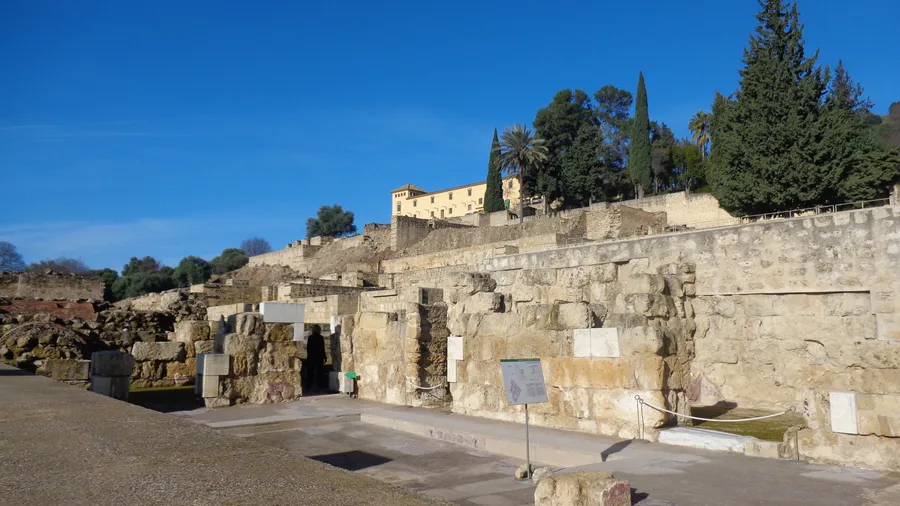
Medina Azahara is an archaeological site located on the outskirts of Córdoba, representing the remains of a palatial city built in the 10th century by Caliph Abderramán III. Conceived as a symbol of the power and grandeur of the Caliphate of Córdoba, this city served as the administrative and political capital during its peak. Although in ruins, the urban layout allows us to imagine the organization and splendor of a medieval Islamic court, featuring palaces, mosques, gardens, and residential areas.

As you explore Medina Azahara, you can observe architectural remains such as walls, arches, and columns, along with the foundations of public and private buildings. Notable are the caliphal palace areas, with their courtyards and fountains, reflecting Islamic art influences and adaptation to the mountainous landscape. The materials and construction techniques reveal the sophistication achieved at the time.

This historic site offers valuable context for understanding the history of Al-Ándalus and Córdoba's importance as a cultural and political center in the Middle Ages. Medina Azahara was abandoned after internal conflicts and the caliphate's fall, but its legacy endures as a testament to a key period in the Iberian Peninsula.

Visitors are advised to wear comfortable footwear and sun protection, as the tour is outdoors and can be extensive. Access is free, with an estimated visit time of 2 to 3 hours. The site features signage and an interpretation center that facilitates understanding of the space. It is adapted for people with reduced mobility, although some areas may present challenges. No prior reservation is required, but checking opening hours before visiting is recommended.

Key Information

Visit Duration

2-3 hours

Recommended Seasons

Spring, Autumn

Pricing

Free

Accessibility

Medium

Kid-Friendly Pet-Friendly Booking Required

Related Destinations

Guide

Essential information for visiting Medina Azahara

Location

In this area

Practical Information
Pricing
Free
Visit Duration
2-3 hours
Features & Services
  • Accessibility:Medium
  • Kid-Friendly:Yes
  • Pet-Friendly:No
  • Booking:Booking Required
Planning Information

Recommended Seasons

Spring · Autumn

Best Time to Visit

The best time to visit Medina Azahara is in spring and autumn, when temperatures are milder and the weather is pleasant for exploring the outdoor site.

Visitor Tips

Visit Medina Azahara in the morning to avoid intense heat, especially in summer. Wear comfortable shoes and bring water, as the route is outdoors and can be long. Take advantage of the interpretation center to contextualize what you see and consult the informative panels to understand each area's function. If traveling with children, prepare activities to keep them engaged, such as spotting architectural details or imagining life in the palatial city.

Historical Facts

Medina Azahara was constructed between 936 and 940 by order of Abderramán III to consolidate his power and showcase the wealth of the Caliphate of Córdoba. It functioned as the political and administrative center until its destruction in the 11th century following internal conflicts and the caliphate's fall. Its 20th-century archaeological discovery has helped recover part of its structure and deepen understanding of Al-Ándalus history.

Frequently Asked Questions

Get answers about Medina Azahara

It was built in the 10th century by Caliph Abderramán III as a palatial city and capital of the Caliphate of Córdoba.
Yes, it is an open and educational space suitable for family visits, though supervision is recommended in archaeological areas.
Reservation is not mandatory, but it is advisable to check schedules and availability before visiting.
Yes, the site has adapted access, although some areas may have limitations.
The visit usually lasts between 2 and 3 hours, depending on visitor interest and pace.