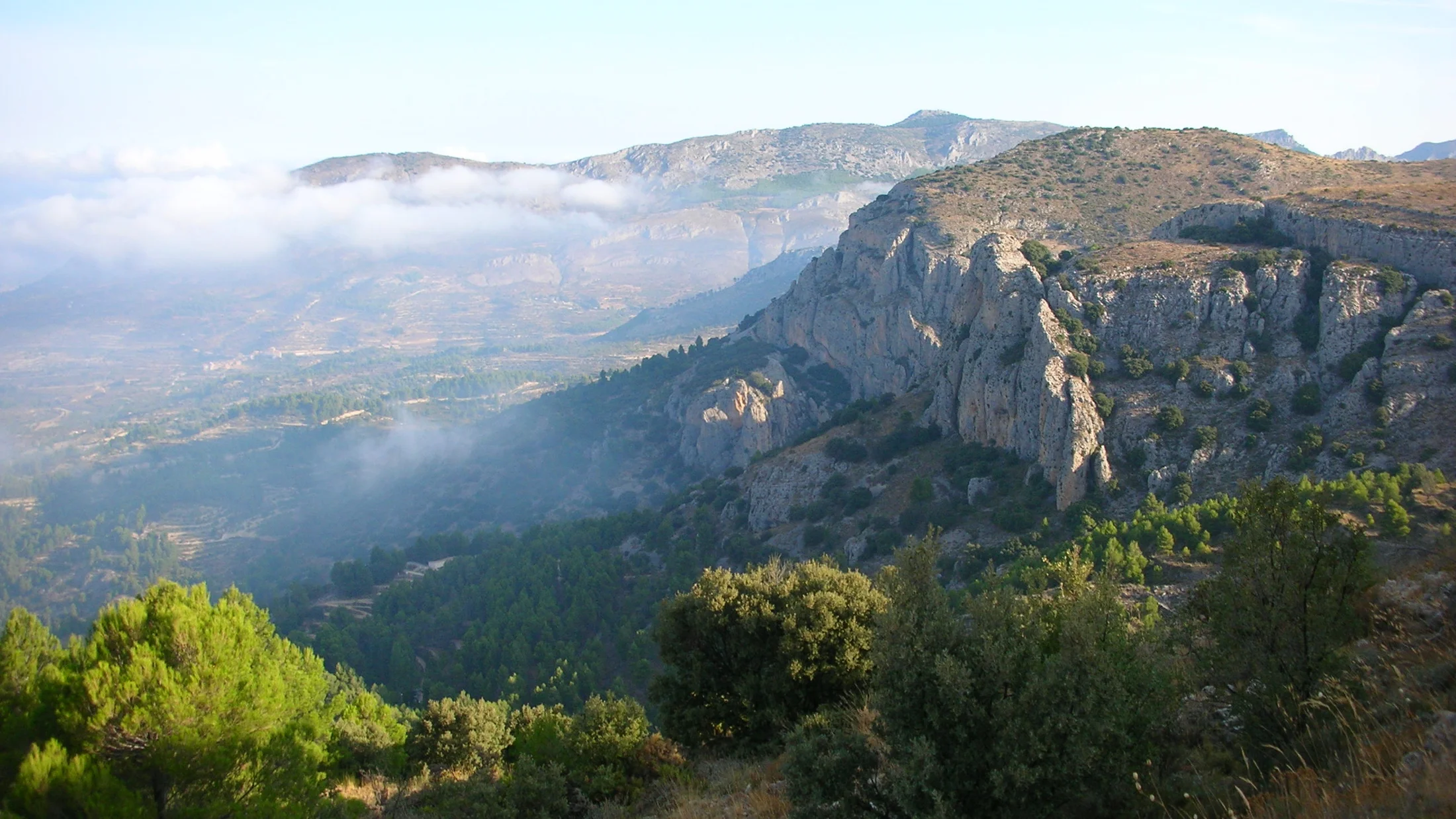
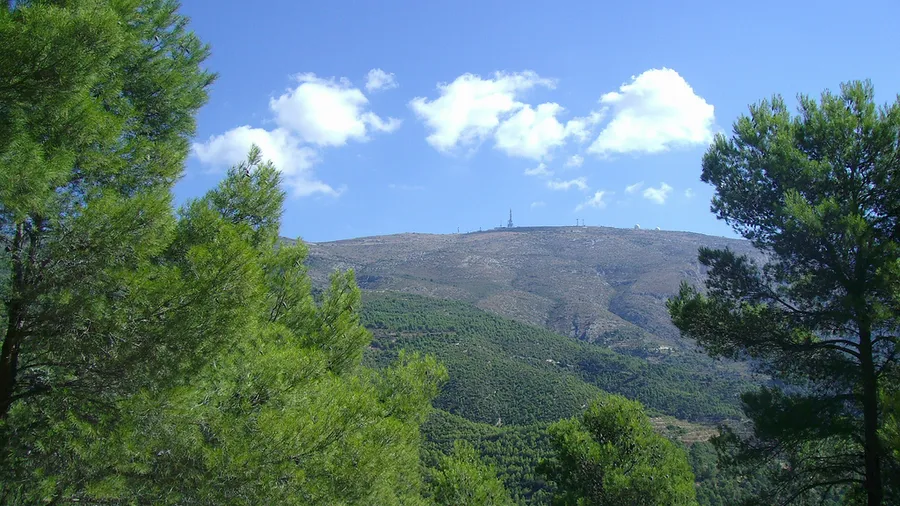
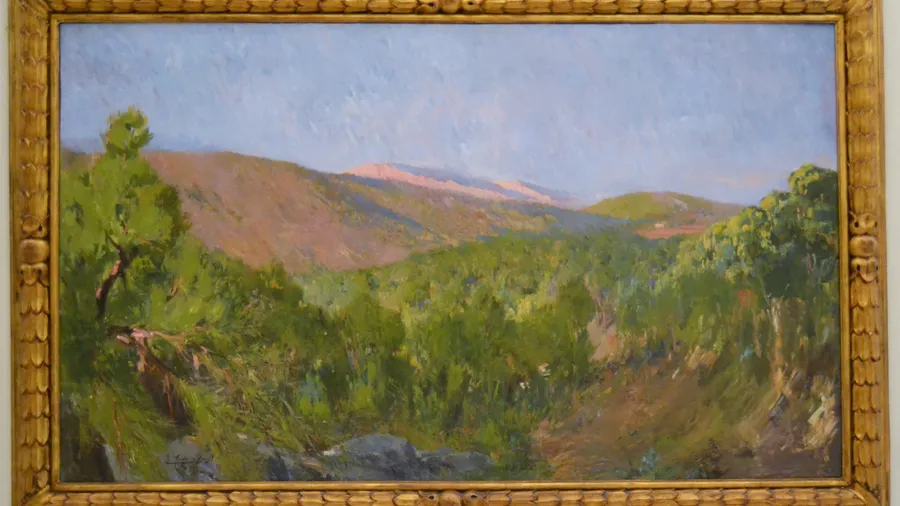
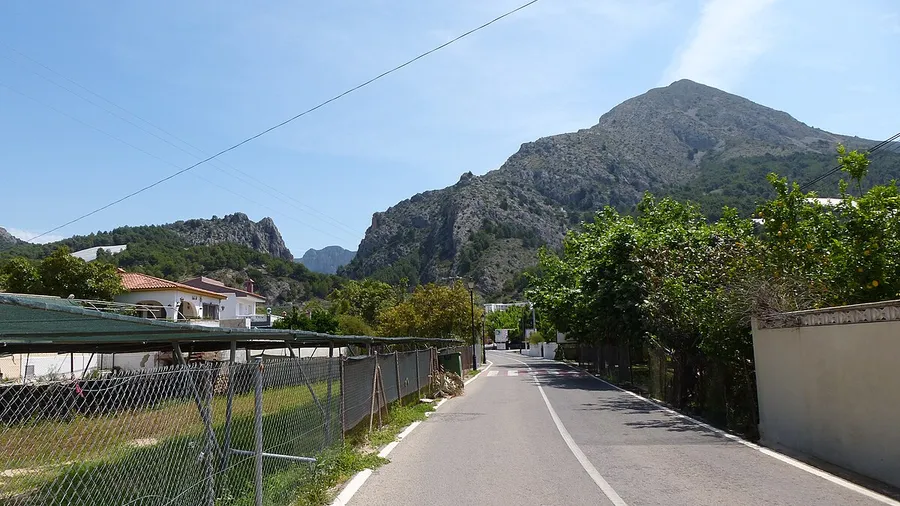
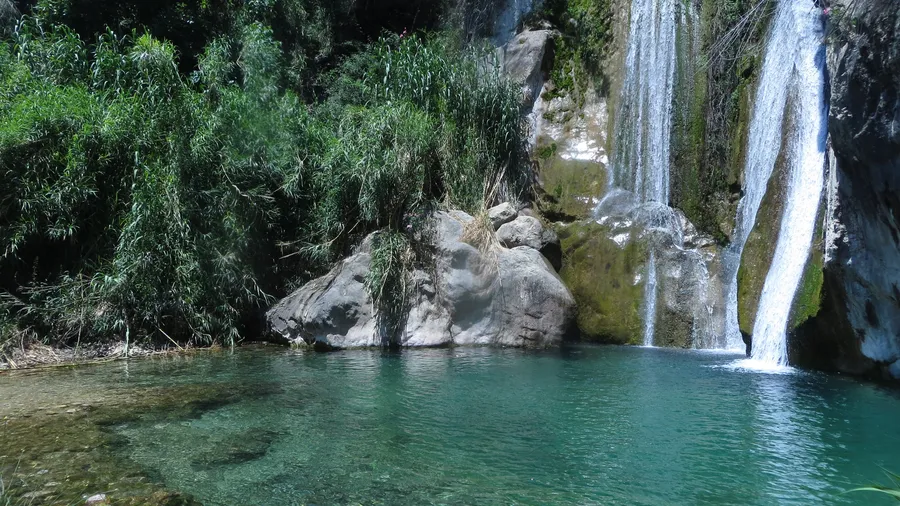
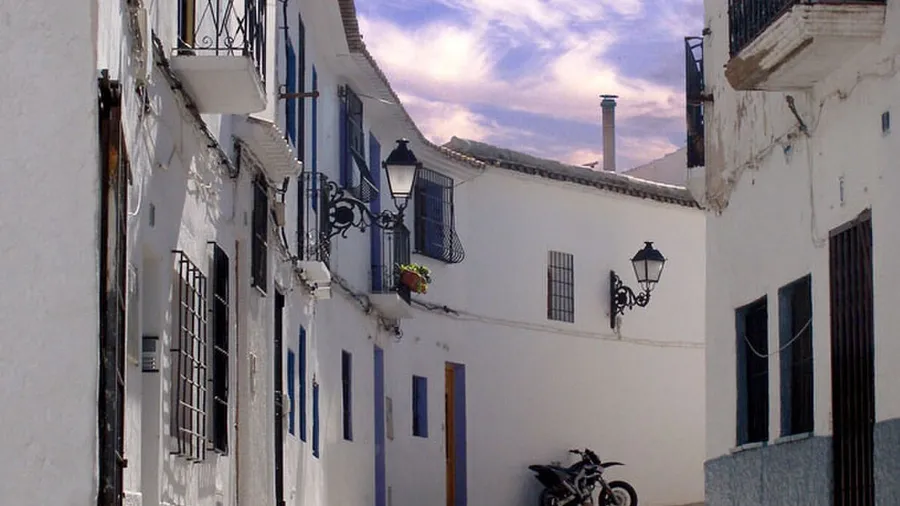
The Valle de Guadalest is enclosed in the interior of the Marina Baixa comarca of Alicante, about 24 kilometres north of Benidorm and 70 kilometres from Alicante city. The Guadalest reservoir, built in the 1960s on the river that names the valley, visually dominates the centre of the territory with waters that turn turquoise in summer and dark green in winter, surrounded by terraced almond and olive slopes that climb to the ridges of the Sierra de Aitana. The village of Guadalest, perched on a red sandstone outcrop at 720 metres altitude, receives the bulk of the more than one million annual visitors the valley attracts.
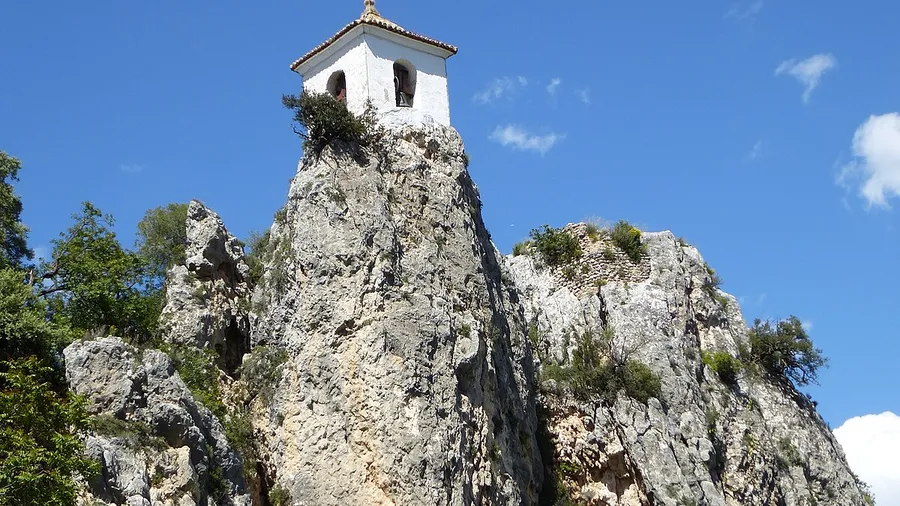
The municipality of El Castell de Guadalest, the main historic settlement, has one of the most unusual defensive sites in the Valencian Community. The rock it stands on is accessible only through a tunnel carved into the stone, which served as the sole entrance for centuries; on the far side, the remains of the Arab castle (11th century, remodelled in the 14th–17th centuries) and the bell tower of the church of San José stand against the void of the 700-metre drop to the reservoir below. From the Torre de la Alcozaiba terrace, the crags of the Sierra de Aitana (1,558 m) close the horizon to the north, and the villages of Benimantell, Confrides and Beniardà form an amphitheatre of orchards and farmsteads on the valley floor.
The valley's agricultural landscape combines almond trees (Prunus dulcis), which flower in February and March with a burst of white blossom before the leaves appear, with olive (Olea europaea) on dry-stone terraces and carob at the lower elevations. The vine was historically important but has retreated. The higher parts of the Aitana massif that borders the valley to the north support holm oak (Quercus ilex subsp. rotundifolia) and Aleppo pine (Pinus halapensis) on the shaded slopes, while the south-facing hillsides present thermophilous scrub of rosemary, gorse and esparto grass. Raptors include Bonelli's eagle (Aquila fasciata), which nests on the cliffs of the Peña de Sella, and peregrine falcon (Falco peregrinus), regularly seen on the reservoir cliffs.
The valley trail network includes the Sarga route (PR-CV-356), a 10-km path with 400 m of elevation gain linking Guadalest with the Encantada ravine and the La Sarga prehistoric rock art shelters, declared UNESCO World Heritage in 1998 as part of the Mediterranean Basin Rock Art of the Iberian Peninsula. The Sarga sites contain deer, archers and warrior figures painted from the Epipaleolithic to the Bronze Age and are the most accessible Levantine rock art ensemble in Alicante province. The Serrella route (PR-CV-183), 15 km with 700 m of gain, climbs the south face of the Serrella massif to the summit meadows with views to the sea to the south and the Sierra de Mariola to the west.