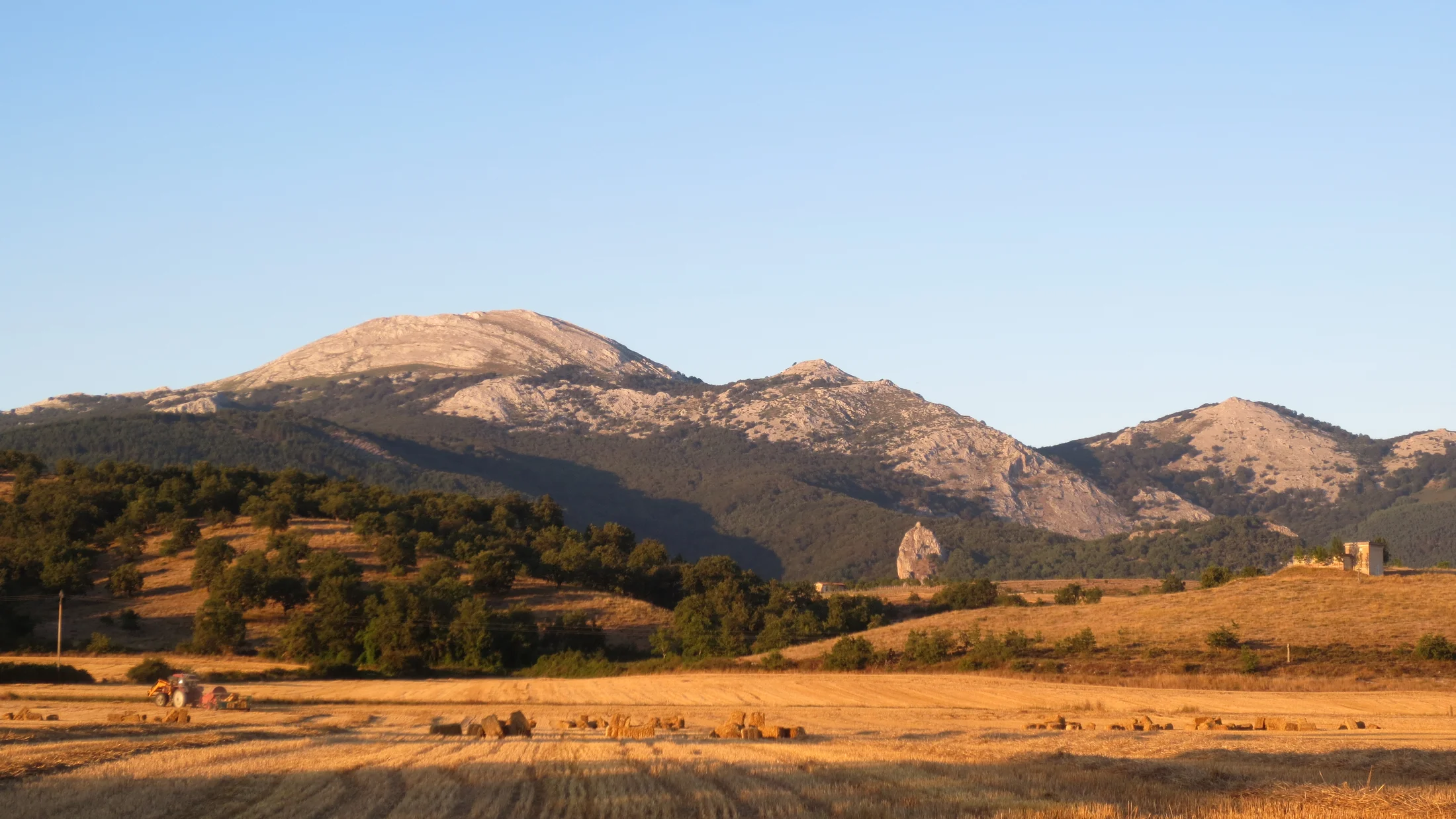
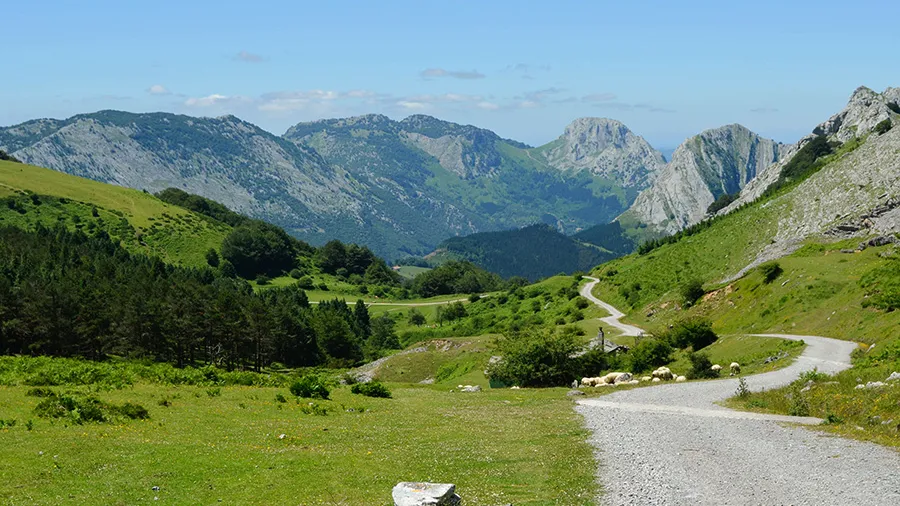
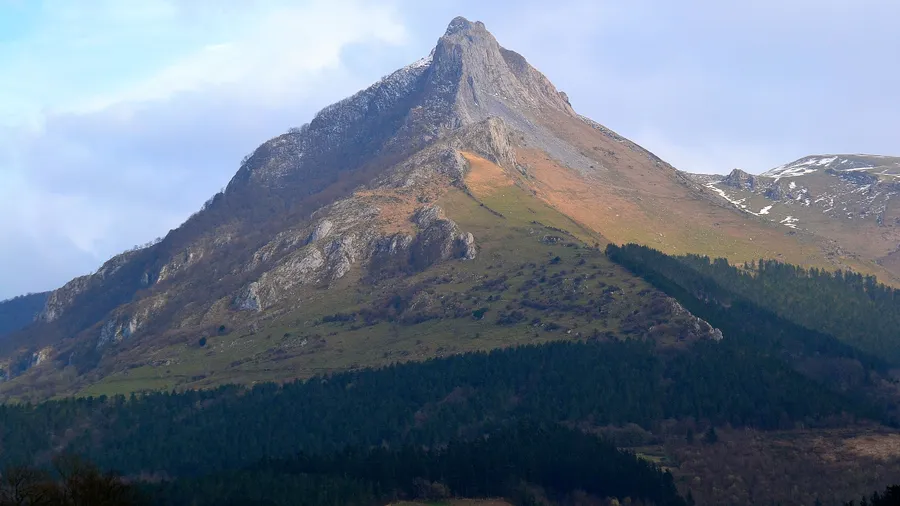
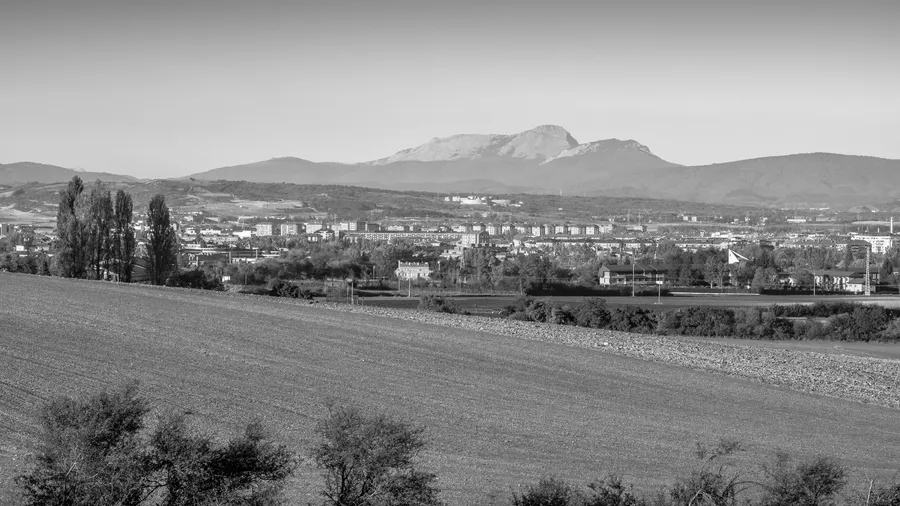
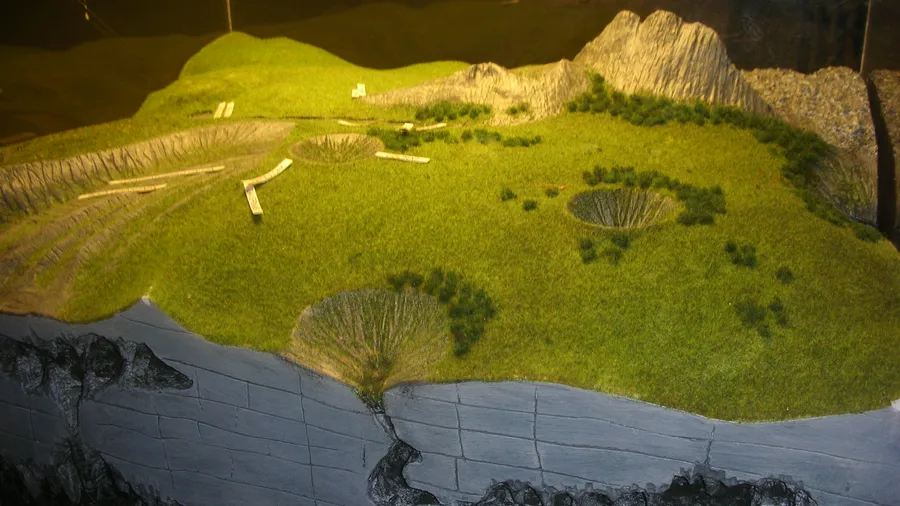
The Aizkorri-Aratz massif spans the southern edge of Gipuzkoa and the northern tip of Álava, forming a limestone barrier that reaches 1,528 metres at Aizkorri peak — the highest point in Gipuzkoa — and 1,443 metres at Aratz, its summit in Álava. This is the most rugged mountain system in the Basque Country: the flat or gently inclined ridgelines typical of Pyrenean and Cantabrian ranges give way here to pronounced karst topography, with sinkholes, swallow holes and poljes carved by water dissolving limestone over millions of years, creating an underground landscape as complex as the one above.
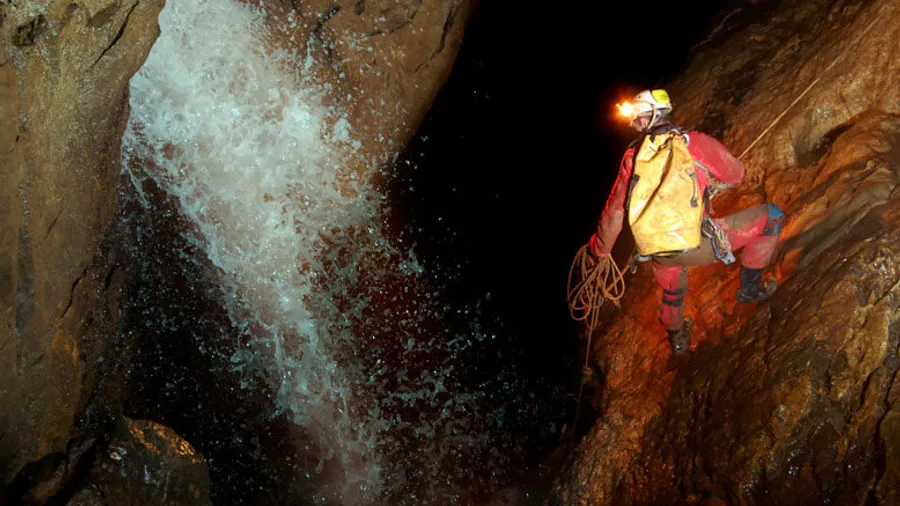
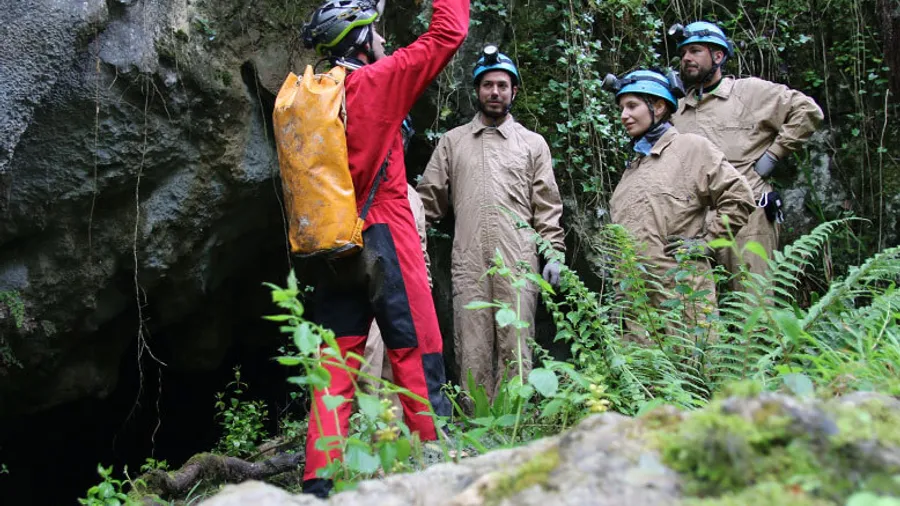
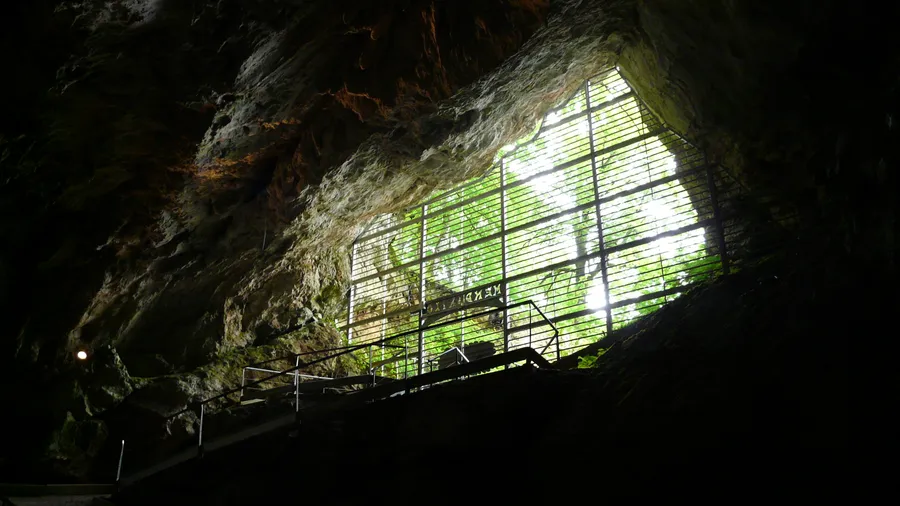
The Arrikrutz caves in the municipality of Oñati are the park's reference speleological site. The explored system extends more than 7 km with a depth of 270 metres. In the main gallery, accessible with a guide, stalactites and stalagmites of aragonite and calcite can be seen — formations that grew over hundreds of thousands of years in complete darkness. The deeper galleries are accessible only to technical cavers, but the 600-metre public section gives a representative sample of the Álava karst geology.
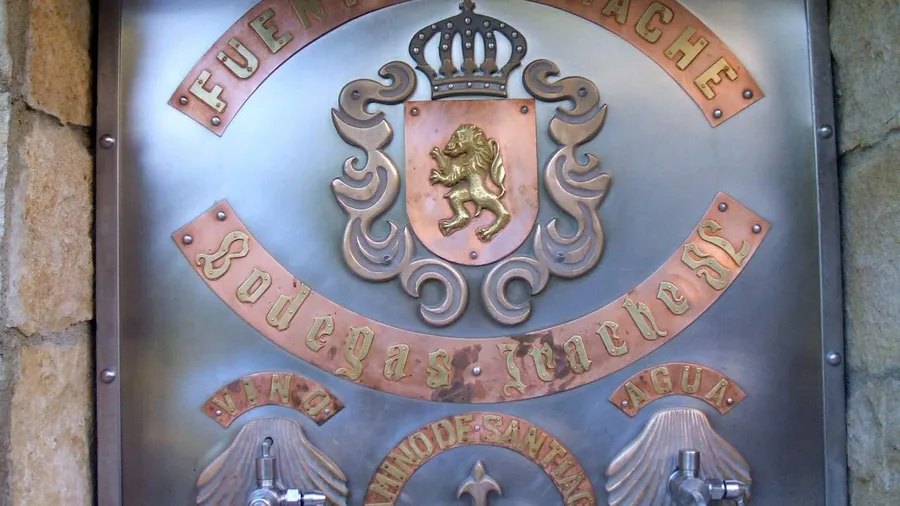
The San Adrián tunnel pierces the mountain at one of the most distinctive passes in the western Pyrenees. This natural gallery, 50 metres long and 7 metres high, served for centuries as one of the main routes of the Camino de Santiago, with a pilgrim hostel documented in the 12th century that sheltered travellers from the harsh winter crossing. At the northern entrance, a hermitage dedicated to Saint Adrian is carved directly into the rock. The trail climbing from Zegama to the tunnel gains 600 metres of elevation through beech forest and high-altitude pasture.
The park's beech forests are the most extensive in the western section of the Cantabrian range, with continuous stands covering the slopes between 400 and 1,000 metres. In autumn, the reddish foliage of European beech (Fagus sylvatica) contrasts with the grey-white limestone crags above. The GR 25, crossing the Aizkorri crest from north to south, is the park's defining mountain route: 18 km with 1,100 metres of accumulated ascent connecting Zegama with Arantzazu, the most visited Marian sanctuary in the Basque Country, dramatically situated at the base of the Aloñ limestone needles.
The natural park sees fewer visitors than other Basque mountains such as Gorbea or the Urola peaks, making it well suited for those seeking mountain days without crowds. Refuges and traditional stone farmsteads scattered along the crests allow two- or three-day traverses. The proximity of the Arantzazu sanctuary adds a cultural dimension rarely found in other parks: the 1950s architectural complex, with its lattice facades and integrated Chillida sculptures, is one of the most significant examples of avant-garde religious architecture in twentieth-century Spain.