The essentials of Urdaibai Biosphere Reserve

  • • Oka marshes: thousands of wading birds passing through between August and November
  • • Mundaka wave: left-hand barrel up to 400 m long over a river sediment sandbar
  • • Oma forest: hundreds of trees painted by artist Agustín Ibarrola
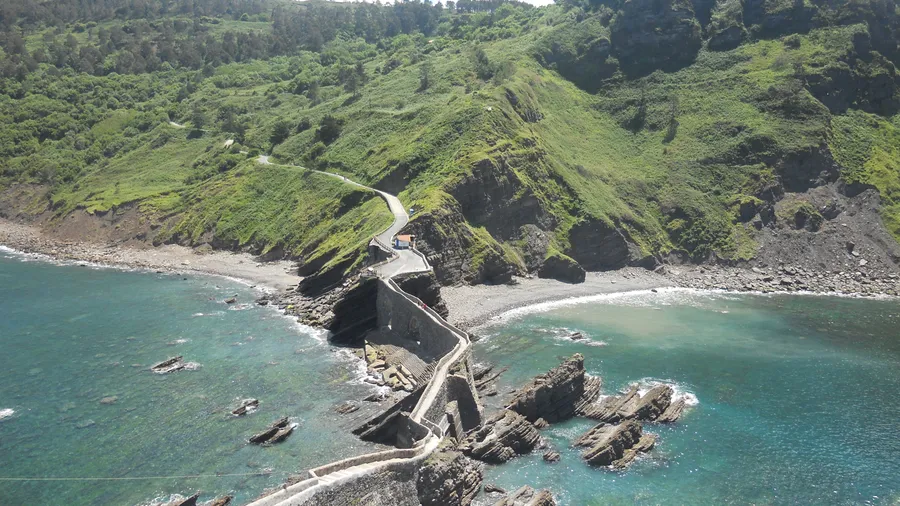
  • • San Juan de Gaztelugatxe: Romanesque hermitage on an islet reached by 237 steps
  • • Gernika: Tree of Gernika and Peace Museum documenting the 1937 bombing

Description

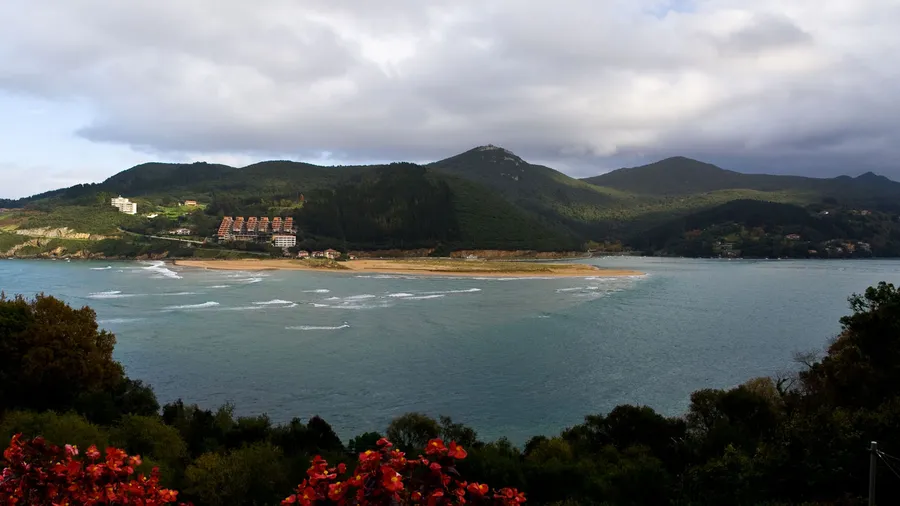
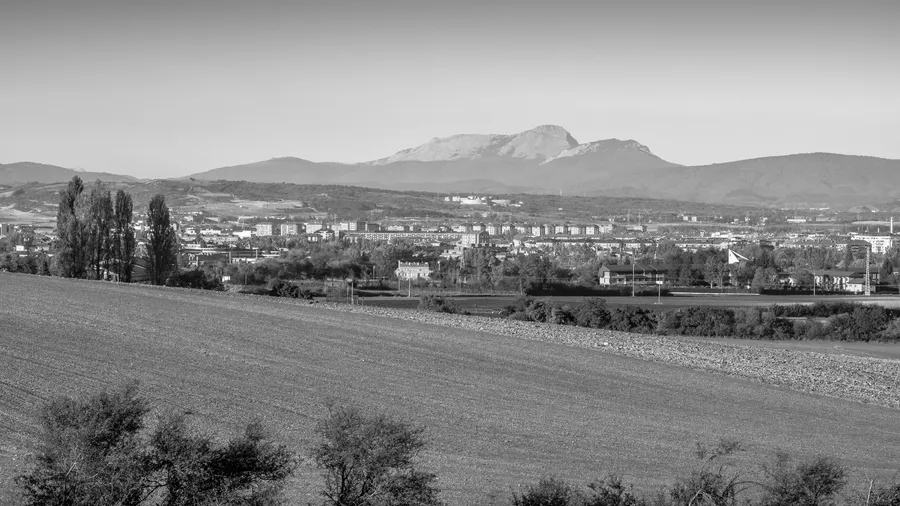
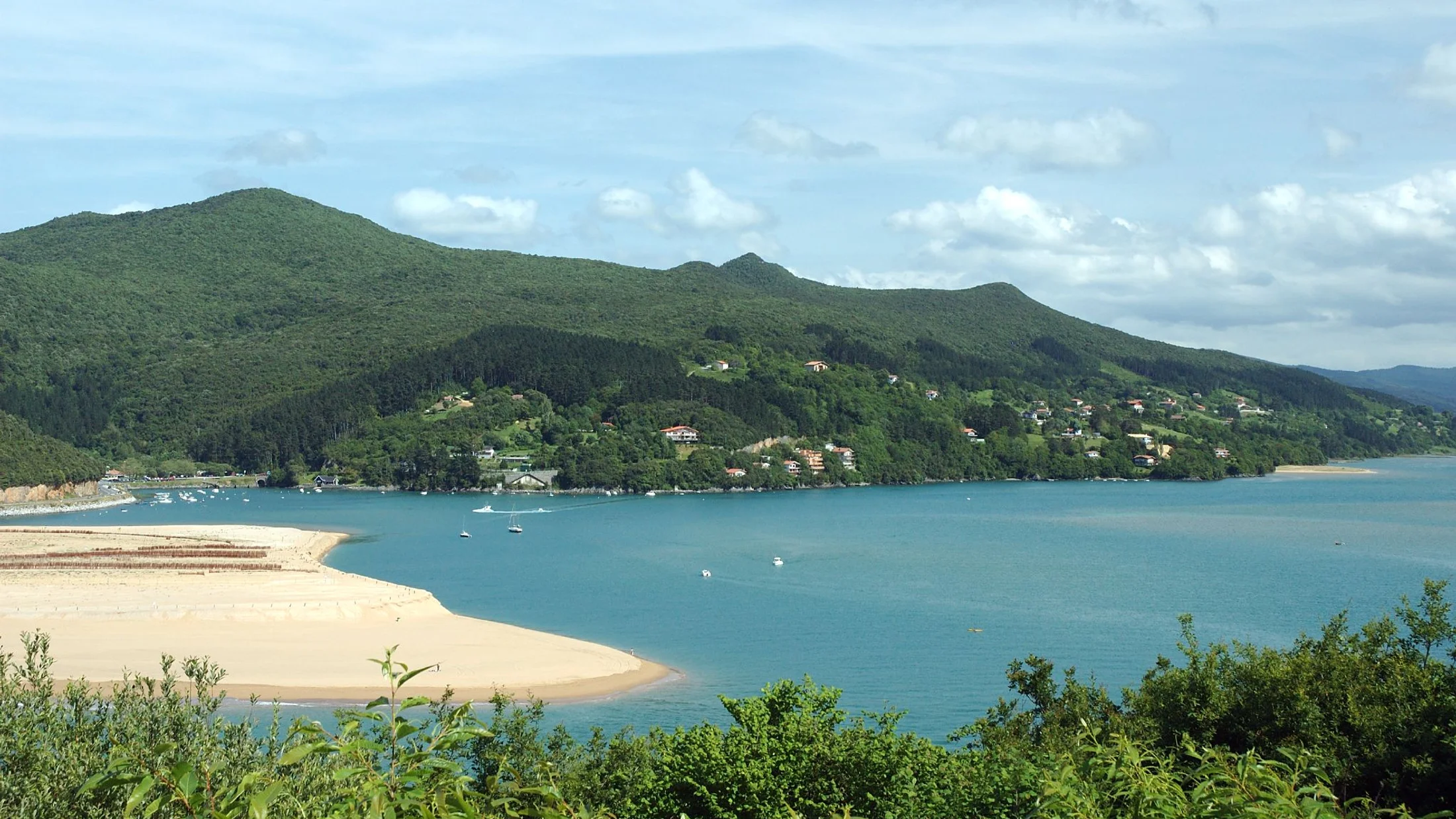
The Urdaibai Biosphere Reserve covers 22,041 hectares on the Biscay coast in the heart of Bizkaia province. The territory is organized around the Oka river estuary, which meets the sea at the Mundaka inlet forming one of the most important wetlands on the Cantabrian coast: intertidal mudflats, reed beds, shallow water sheets and plantation pine forests alternating with Atlantic oak woodland on the hillsides that close the estuary to the north and south. The landscape changes character every two hours with the tide; when it recedes, mud banks are exposed and hundreds of wading birds work across them in near silence.

Urdaibai is one of the most significant migratory stopover sites on the Cantabrian coast. Each autumn, between August and November, the estuary receives dunlin, black-tailed godwit, Eurasian curlew and oystercatcher that use the marshes to rest and feed on their route between Arctic breeding grounds and African wintering quarters. Grey heron colonies nesting in the oak woodland around the estuary are visible year-round. The European otter, a protected species, inhabits the middle reaches of the Oka. The Oma forest, on the hillside descending to the inlet, has been transformed by artist Agustín Ibarrola: hundreds of trees painted with geometric and human figures that shift in appearance depending on the viewer's angle, a landscape artwork that has become part of the territory's visual identity.

Gernika (Guernica), the reserve's reference town, carries the name of the Basque charter village bombed on 26 April 1937 during the Spanish Civil War. The town hall preserves the Tree of Gernika, a centuries-old oak that symbolizes Basque freedoms, and the Guernica Peace Museum documents the events of 1937 and their context. Eight kilometres to the north, Mundaka is a fishing village whose beach produces a left-hand barrel wave curling over a sand bar formed by Oka river sediments: it is considered one of the best long-distance surf waves in Europe, with tubes of up to 400 metres in optimal northwest swell conditions. The surf season runs from October to March when Atlantic storms generate the most consistent swells. A few kilometres further northeast, the islet of San Juan de Gaztelugatxe is connected to the cliff by a stone causeway, with 237 steps up to a Romanesque hermitage at the top, one of the most photographed landmarks in the Basque Country. The fishing villages of Bermeo, Elantxobe and Ea keep active harbours where the small-boat fleet still works squid, northern bluefin tuna and sea bream according to season. Local gastronomy centres on fresh fish, clams from the marshes and txakoli white wine from the Bizkaiko Txakolina designation. UNESCO declared Urdaibai a Biosphere Reserve in 1984, making it one of the first in Spain.
Practical information

Everything you need to know for your visit to Urdaibai Biosphere Reserve

How to get there
From Bilbao, the BI-635 connects to Gernika in 35 km (35 min). Mundaka is 15 km further north. Bizkaibus (line A3517) runs regular connections from Bilbao to Gernika and Mundaka. For San Juan de Gaztelugatxe, access via the BI-3101 from Bermeo (8 km).
Area Information
The reserve covers 22 municipalities in Bizkaia, with Gernika-Lumo as its main town. Mundaka, Bermeo, Ea and Elantxobe are the main coastal settlements. The Oka estuary is the central ecological axis. Distance to Bilbao: 35 km.
Geography
Oka river estuary with tidal marshes, surrounded by Atlantic hills covered in oak woodland. The river mouth forms the Mundaka inlet. The coastline alternates cliffs and small sandy beaches over about 20 km of shore.
Flora & Fauna
Marshes with Spartina maritima and reed beds. Atlantic oak woodland on hillsides. Birds: grey heron, dunlin, black-tailed godwit, Eurasian curlew. Mammals: European otter, European mink. Fish: eel, grey mullet.

Things to do

Find the best plans and things to do in Urdaibai Biosphere Reserve

20

Accommodations

Best accommodation options in Urdaibai Biosphere Reserve

Loading accommodation options...

Frequently Asked Questions

Get answers about Urdaibai Biosphere Reserve

The autumn migration period, from August to November, is the most active. Dunlin, black-tailed godwit, curlew and oystercatcher concentrate on the estuary mudflats during low-tide hours. The Kanala bird observatory on the south bank of the estuary is the best-equipped and most accessible observation point. In spring (April-May) grey heron and kingfisher are easy to spot in the inner channels.
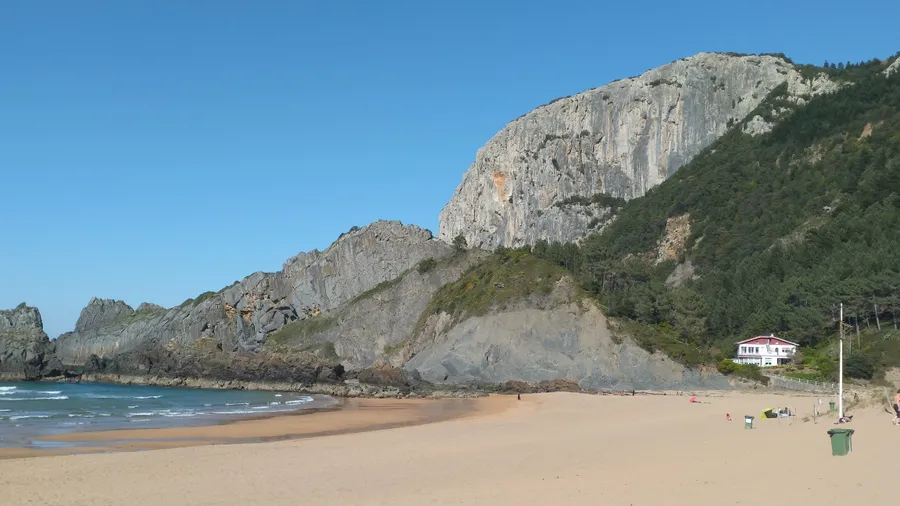
No. The Mundaka wave is a shallow-sandbar left-hander designed for experienced surfers. In good northwest swell conditions (October-March) it can be dangerous for intermediate levels. The beaches of Laida and Laga, within the reserve, offer more accessible conditions for beginners and intermediates. Surf schools in Mundaka and Bermeo run classes adapted to different levels.
From Gernika, take the road toward Kortezubi and continue to the Basondo neighbourhood. From the Kanala car park there is about 2 km of forest track with gentle ascent to reach the forest. Agustín Ibarrola's work is ongoing: the trees are repainted periodically. The circular walk through the forest takes approximately one hour. Access is free and open.
In high season (July, August and weekends in June and September) you must book a parking space online through the Bizkaia Provincial Council's booking system. Outside that period, access is free. The climb to the hermitage involves 237 steps carved into the rock. Access to the hermitage itself may be restricted during religious celebrations such as the feast of San Juan Degollado (29 August).
Gernika is the historic charter town of the Lordship of Biscay, where the kings and lords of Castile would swear to respect the Basque fueros (charters) under the Tree of Gernika. The bombing of 26 April 1937 by the German Condor Legion destroyed the town centre and caused hundreds of casualties. The Guernica Peace Museum, opened in 1998, documents the attack and provides context on the Civil War. The current Tree of Gernika is a sapling from the original tree and stands in the gardens of the Casa de Juntas.