Highlights

  • • World's first transporter bridge, inaugurated in 1893
  • • Connects Portugalete and Getxo over the Nervión estuary
  • • Declared a UNESCO World Heritage Site
  • • Offers panoramic views of the port and estuary
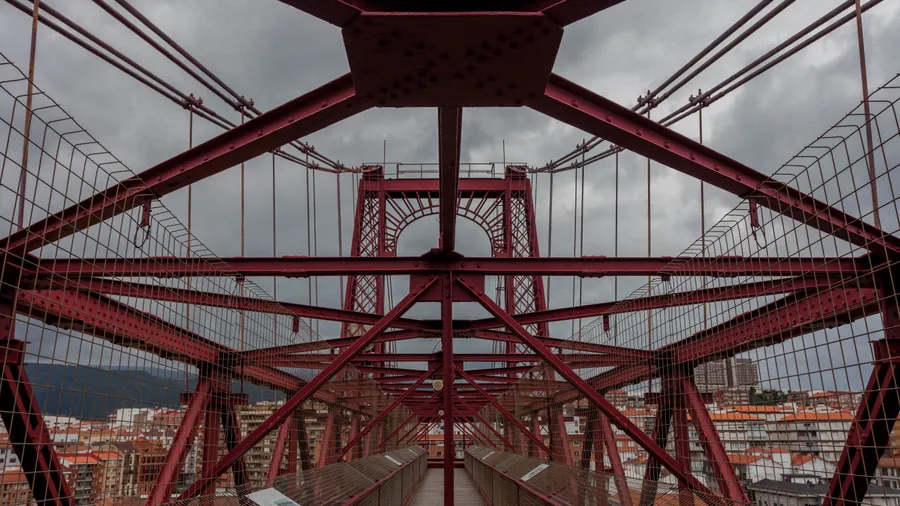
  • • 19th-century industrial engineering metal structure
  • • Pedestrian access and vehicle transport on a moving platform

Description

The Puente de Vizcaya, also known as the Hanging Bridge, is a transporter bridge inaugurated in 1893 that connects the towns of Portugalete and Getxo in Bizkaia, spanning the Nervión estuary. This metal structure stands out as the world's first transporter bridge, designed to allow the passage of people and vehicles without interrupting river navigation. Its silhouette combines 19th-century industrial engineering with functionality adapted to the maritime environment.

As you cross the bridge, you can observe the suspended platform moving back and forth, carrying cars and pedestrians while the main structure remains elevated. From its pedestrian walkways, clear views of the estuary, the port of Bilbao, and the industrial and urban landscape characteristic of this Basque region are visible. The combination of iron and cables offers a visual texture that harks back to the Industrial Revolution era.

This bridge is a symbol of Basque industrial development and a pioneering example of transporter bridge engineering. It was declared a UNESCO World Heritage Site in 2006, recognizing its historical and architectural value. Its construction responded to the need to connect two banks of the estuary without obstructing maritime traffic, reflecting the technical innovation of the late 19th century.

Visiting the bridge requires no entrance fee, and pedestrian access is possible via side walkways. A full visit can take between 1 and 2 hours, including observing the bridge and its surroundings. Comfortable footwear is recommended, and checking the transporter’s schedule is advisable as its operation may vary. The bridge is accessible for people with reduced mobility and allows visits with pets. No advance booking is necessary to access the monument.

Key Information

Visit Duration

1-2 hours

Recommended Seasons

Spring, Summer

Pricing

Free

Accessibility

High

Kid-Friendly Pet-Friendly No Booking Required

Related Destinations

Guide

Essential information for visiting Vizcaya Bridge

Location

In this area

Practical Information
Pricing
Free
Visit Duration
1-2 hours
Features & Services
  • Accessibility:High
  • Kid-Friendly:Yes
  • Pet-Friendly:Yes
  • Booking:No Booking Required
Planning Information

Recommended Seasons

Spring · Summer

Best Time to Visit

The best time to visit the Puente de Vizcaya is in spring and summer, when the weather is pleasant for strolling and enjoying outdoor views.

Visitor Tips

To make the most of your visit to the Puente de Vizcaya, wear comfortable shoes for walking along the walkways and enjoying the surroundings. Check the transporter’s schedule to see the moving platform in operation. Take the opportunity to explore the nearby towns of Portugalete and Getxo, which offer dining and cultural options. On sunny days, don't forget sun protection and water.

Historical Facts

The Puente de Vizcaya was inaugurated in 1893 and designed by Alberto de Palacio, a disciple of Gustave Eiffel. It was the world's first transporter bridge, an innovation that allowed crossing the estuary without interrupting maritime traffic. In 2006, it was declared a UNESCO World Heritage Site, recognizing its historical and technological significance.

Frequently Asked Questions

Get answers about Vizcaya Bridge

Yes, the bridge has pedestrian walkways that allow you to cross on foot and enjoy the views.
No, access to the bridge and its surroundings is free of charge.
Yes, the transporter bridge carries vehicles and pedestrians on its moving platform.
Yes, the bridge has adapted access for people with reduced mobility.
Yes, the bridge is pet friendly and allows visits with pets.