The essentials of Sierra Norte de Sevilla Natural Park

  • • Huéznar travertine cascades with boardwalks and a 3 km interpretive trail
  • • Cerro del Hierro: karst labyrinth with over 100 bolted sport climbing routes
  • • Centuries-old holm oak and cork oak dehesas with free-range acorn-fed Iberian pigs
  • • Winter crane colonies exceeding a thousand individuals across the dehesa grasslands
  • • 18 km cyclable Vía Verde along the former mining railway route

Description

The Sierra Norte de Sevilla spans 177,484 hectares across the northern part of the province, between the Viar and Huéznar river basins on the southern slopes of Sierra Morena. Its geological substrate combines Palaeozoic slates and quartzites with Cambrian limestone and granite outcrops, a lithological variety that produces a rolling landscape of rounded hills, incised valleys and wooded riverbanks. Elevations range from 200 metres in the Viar valley to 960 metres at La Capitana peak, enough relief to generate microclimates that multiply habitats across short distances.

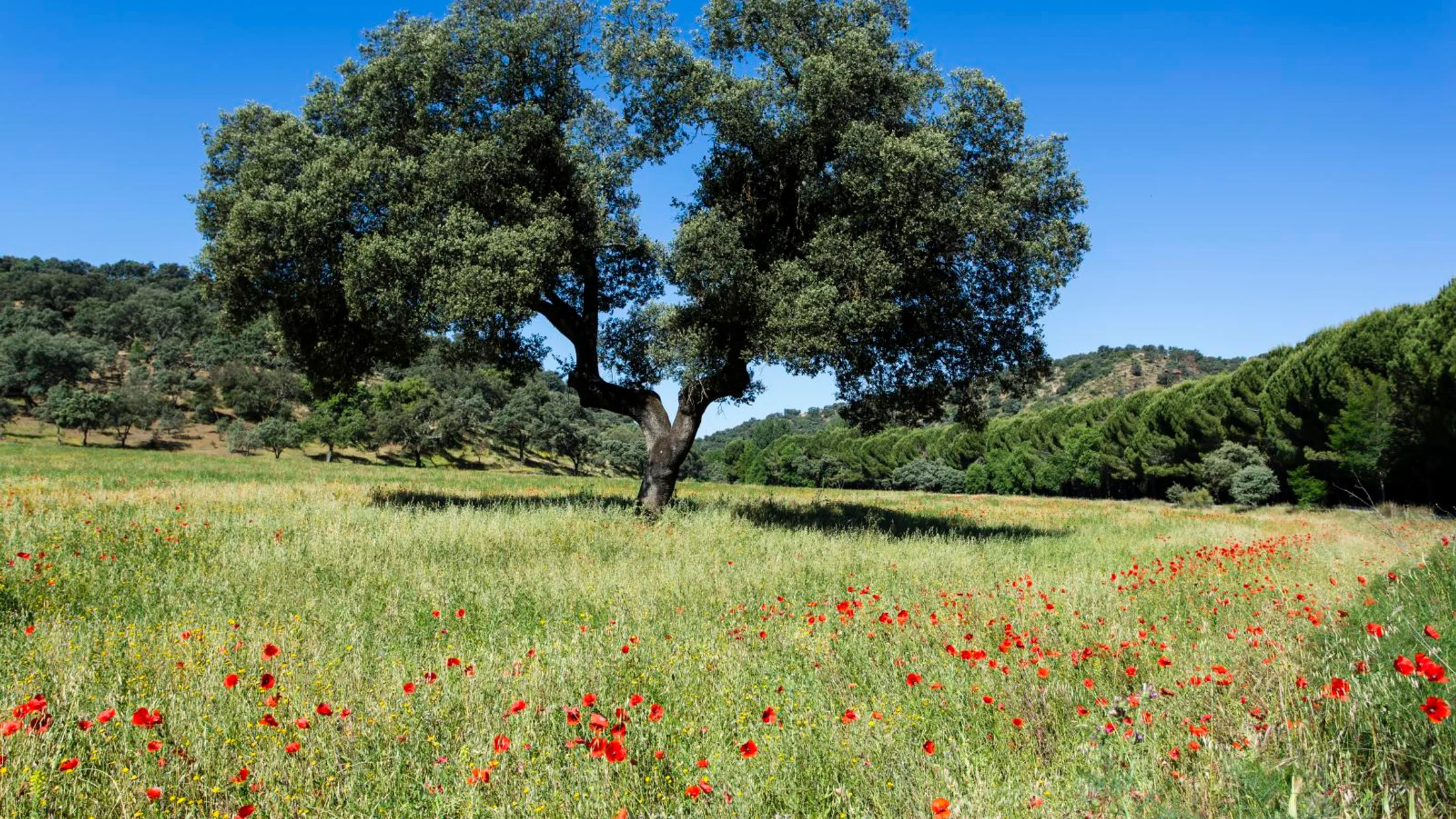
The dehesa is the dominant ecosystem and the park's defining feature. Centuries-old holm oaks and cork oaks, their trunks stripped to reveal reddish inner bark, spread in open formations where Iberian pigs, Retinta cattle and Merino sheep graze. This agrosilvopastoral system, managed across generations, sustains greater biodiversity than many closed forests: beneath the canopy grow rockrose, lavender and wild orchids, while Egyptian mongoose, badger and common genet forage among the roots. Along the banks of the Huéznar, designated a Natural Monument, alder, ash and willow form dense galleries where the temperature drops several degrees compared to the surrounding dehesa. The sound of water flowing over the Huéznar cascades, a sequence of travertine steps formed by calcium carbonate deposition, accompanies walkers for several kilometres along the riverside trail.

The Sierra Norte's birdlife is remarkable in both diversity and density. Black storks, present with several breeding pairs, nest on the most inaccessible river cliffs. Black vultures and griffon vultures share scavenging grounds with Egyptian vultures. In the dehesas, the azure-winged magpie, an Iberian endemic, moves in noisy flocks through the holm oak canopy. During winter, cranes arrive from northern Europe and gather in the dehesas in groups that can exceed a thousand individuals, feeding on acorns and tubers. Dusk over the dehesa, with crane silhouettes against an orange sky, is one of the park's most recognisable scenes.

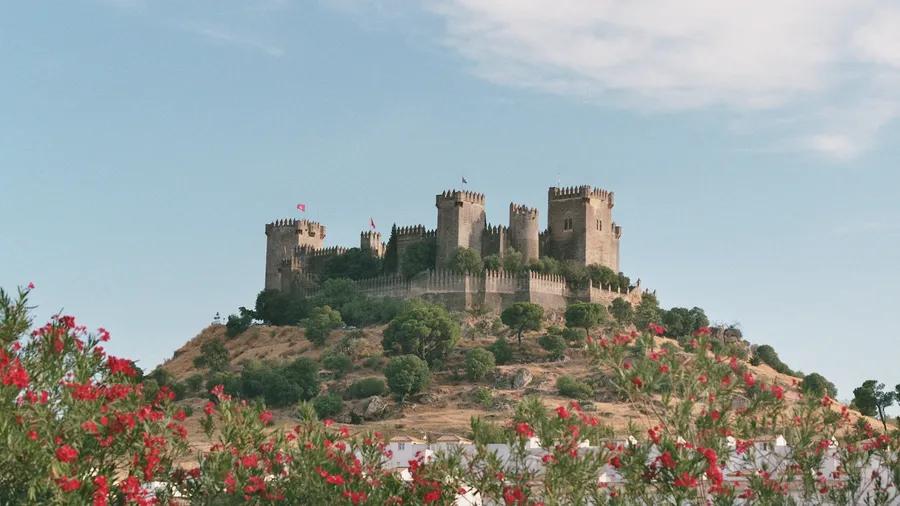
Mining and industrial heritage add a historical layer to the natural landscape. The Cerro del Hierro mines, worked from Roman times to the mid-20th century, have left an artificial karst landscape of pinnacles, canyons and hollows carved from limestone by iron ore extraction. Today this mineral labyrinth is a sport climbing area with over 100 bolted routes and an interpretive trail explaining both the geology and mining history. In Cazalla de la Sierra, traditional anise and aguardiente distilleries maintain a craft dating to the 16th century, with several producers still making artisanal liqueurs from aromatic sierra plants.

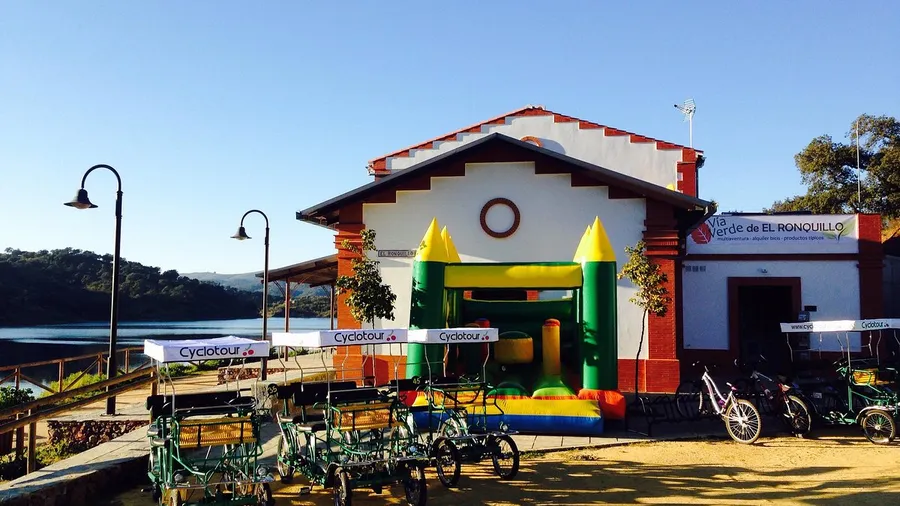
The park's towns preserve a mountain architecture of whitewashed houses, Mudéjar churches and squares shaded by orange trees. Constantina, Cazalla de la Sierra, Guadalcanal and San Nicolás del Puerto are the main settlements, each with its own character and a culinary tradition built on acorn-fed Iberian pork, goat cheese and seasonal mushrooms. The Al-Ándalus tourist train and the Vía Verde de la Sierra Norte, a former railway converted into a cycling and walking path, offer ways to explore the territory without a private vehicle. Seville city is less than an hour away via the A-455, making it easy to combine a day in the countryside with urban culture.
Practical information

Everything you need to know for your visit to Sierra Norte de Sevilla Natural Park

How to get there
From Seville, take the A-455 to Constantina or the A-432 to Cazalla de la Sierra (both 80 km, 50-60 min). San Nicolás del Puerto and Cerro del Hierro are reached via the A-455 and SE-163. From Córdoba, access via the N-432 to Llerena and the A-433 (120 km, 90 min). Car parks at main access points.
Area Information
Visitor centres in Constantina (El Robledo) and Cazalla de la Sierra. Marked trail network with over 15 routes. Vía Verde de la Sierra Norte (18 km, cyclable). Rural accommodation, campsites and restaurants in the four main towns. Equipped climbing area at Cerro del Hierro.
Geography
Southern slopes of Sierra Morena. Palaeozoic slate and quartzite substrate with limestone and granite outcrops. Rolling terrain from 200 to 960 m (La Capitana peak). Incised Viar and Huéznar valleys with travertine formations.
Flora & Fauna
Holm oak (Quercus ilex) and cork oak (Quercus suber) dehesas. Riparian forest with alder, ash and willow along the Huéznar. Black stork, black vulture, griffon vulture and azure-winged magpie. Egyptian mongoose, genet and otter. Wintering cranes (Oct-Feb). Wild orchids in spring.

Things to do

Find the best plans and things to do in Sierra Norte de Sevilla Natural Park

20

Accommodations

Best accommodation options in Sierra Norte de Sevilla Natural Park

Loading accommodation options...

Frequently Asked Questions

Get answers about Sierra Norte de Sevilla Natural Park

The Huéznar cascades are reached from San Nicolás del Puerto, where a signposted 3 km trail follows the riverbank. The starting point is beside the village recreation area, with free parking. The path is flat and suitable for families, with wooden boardwalks along the waterfall sections. Arriving early on spring weekends helps avoid crowds.
Cerro del Hierro has sport climbing routes graded from 4 to 8b, so there are beginner options with proper gear and a guide. Several local active tourism companies offer courses and introductory climbing sessions. The interpretive footpath requires no experience or equipment and lets you see the karst formations from below.
Cranes arrive at the Sierra Norte dehesas between October and November and remain until February or early March. The best observation points are in the open dehesas between Constantina and Cazalla de la Sierra. Late afternoon is ideal, when flocks regroup before roosting along the riverbanks. Bring binoculars and keep at least 300 metres distance to avoid disturbance.
Yes, the Vía Verde de la Sierra Norte covers 18 km of flat terrain along the former mining railway, with no significant gradients or motor traffic, making it suitable for families with children aged 6-7 and above who can ride a bicycle. Bike hire is available in Cazalla de la Sierra and Constantina. The surface is compacted earth, fine for touring or mountain bikes.
The cuisine centres on acorn-fed Iberian pork raised in the dehesas: jamón, loin, presa and secreto feature on nearly every restaurant menu. Fresh and semi-cured local goat cheese is another staple. In autumn, poplar mushrooms and gurumelos appear in scrambled eggs and stews. Cazalla de la Sierra is known for its artisanal aguardiente and anise liqueurs, with distilleries open to visitors.