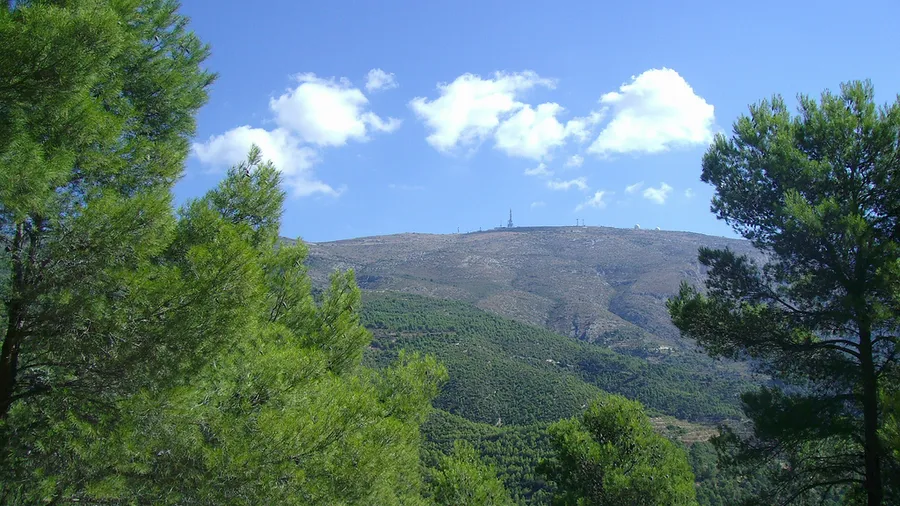
Sierra de Mariola rises as a natural barrier between the Valencian regions of El Comtat, L'Alcoià and La Vall d'Albaida, in the province of Alicante. The natural park that bears its name protects around 17,254 hectares of one of the botanically richest sierras in the Valencian Community, with more than 1,000 plant species catalogued within its boundaries. The highest point is Montcabrer, at 1,390 metres above sea level, from whose summit on clear days the profile of the Balearic Islands is visible on the horizon.
The name Mariola is linked to wild marjoram (Origanum majorana), an aromatic plant that colonises the open scrubland of the sierra and which, together with lavender, Thymus vulgaris and sage, has given rise to a living herbal tradition. The towns of Bocairent, Agres and Alfafara preserve this culture of medicinal plants: local businesses produce liqueurs, soaps and cosmetics from the sierra's aromatic herbs, reflecting the bond between the community and the surrounding landscape.
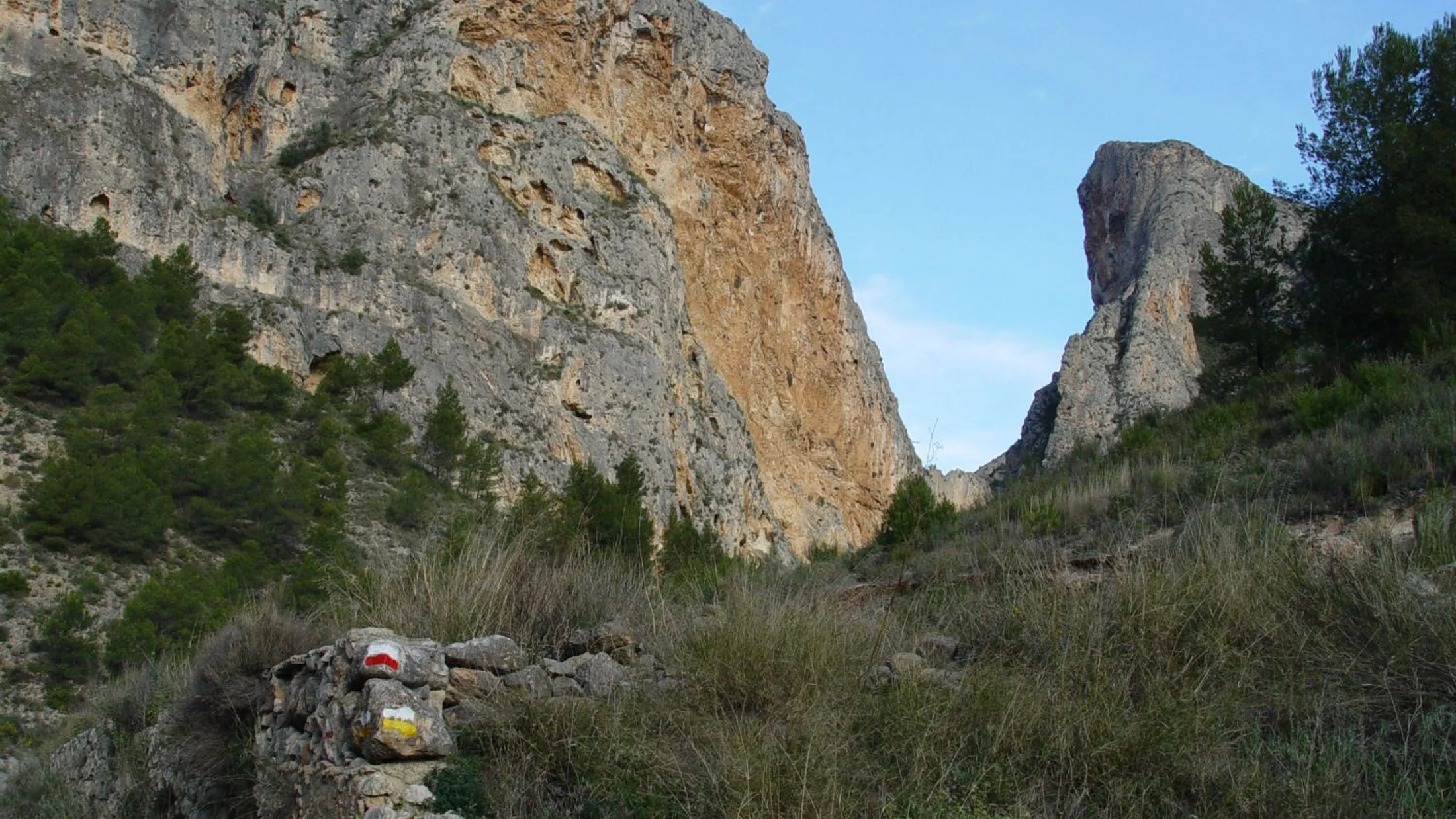
The park's trail network extends over 100 kilometres, traversing the deeply incised gorges of the north face and the valley floors with almond and cherry trees on the south-facing slopes. The long-distance path GR-7 crosses the sierra from east to west, linking the towns of Bocairent and Alfafara in a moderate-difficulty day walk. Climbers frequent the Les Penyes Altes sector, with sport routes on fine-grained limestone reaching up to 20 metres. Paragliding enthusiasts consider the Morro de la Penyeta launch one of the most valued hillside flying spots in the province of Alicante.
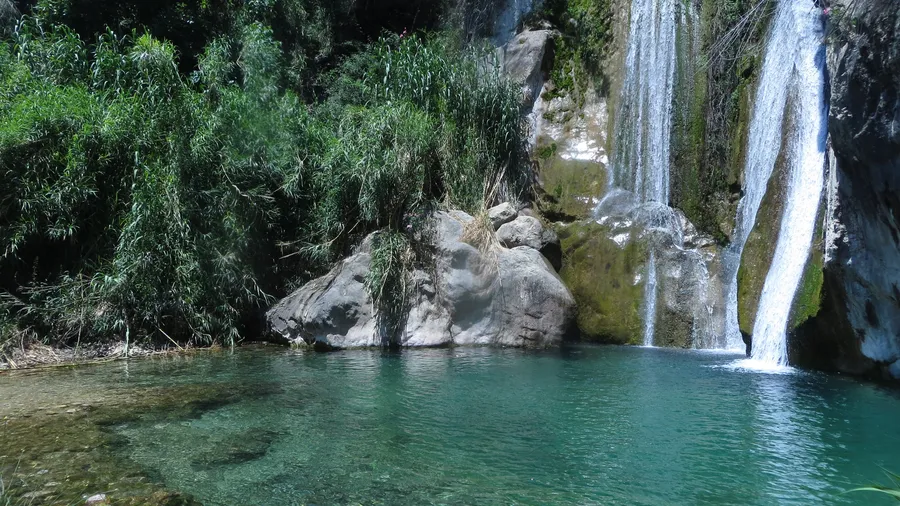
The park supports a well-preserved Mediterranean mountain fauna. Bonelli's eagle (Aquila fasciata) and golden eagle (Aquila chrysaetos) nest on the rocky faces; common genet (Genetta genetta) and European badger (Meles meles) inhabit the mixed forests of Lusitanian oak (Quercus faginea) and maritime pine (Pinus pinaster) at mid-altitude. Gorges with permanent watercourses, such as the Barranc del Cint, maintain populations of white-clawed crayfish (Austropotamobius pallipes), a species in decline throughout most of the Mediterranean arc.