The essentials of Costa de Lekeitio

  • • San Nicolás island walkable at low tide across a sand causeway
  • • Karraspio beach, 500 m of sand with surf-worthy waves
  • • Gothic basilica with a fifteenth-century Flemish altarpiece
  • • Active fishing port with daily anchovy and bonito landings
  • • San Antolín festival with the antzar jokua since the 17th century

Description

The Costa de Lekeitio unfolds along the mouth of the River Lea on the Cantabrian Sea, in the Lea-Artibai district of Bizkaia. Lekeitio is a seafaring town that prospered as a whaling port in the Middle Ages and as a deep-sea fishing base well into the twentieth century. That maritime past has left a historic centre of narrow streets, manor houses bearing noble coats of arms, and a Gothic basilica — the Asunción de Nuestra Señora — whose fifteenth-century Flemish altarpiece is considered one of the most important in the Basque Country. The old-town streets retain their original medieval layout, with covered arcades offering shelter from the rain and small squares where locals gather in the evening.

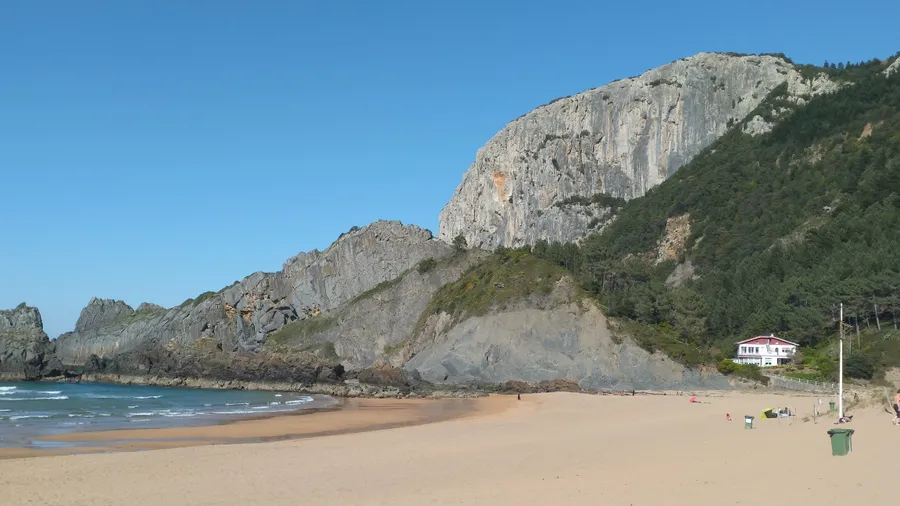
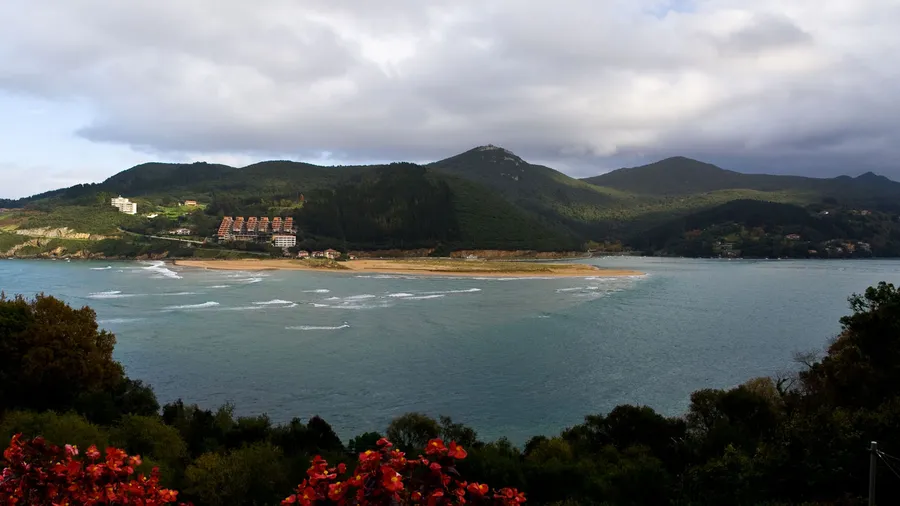
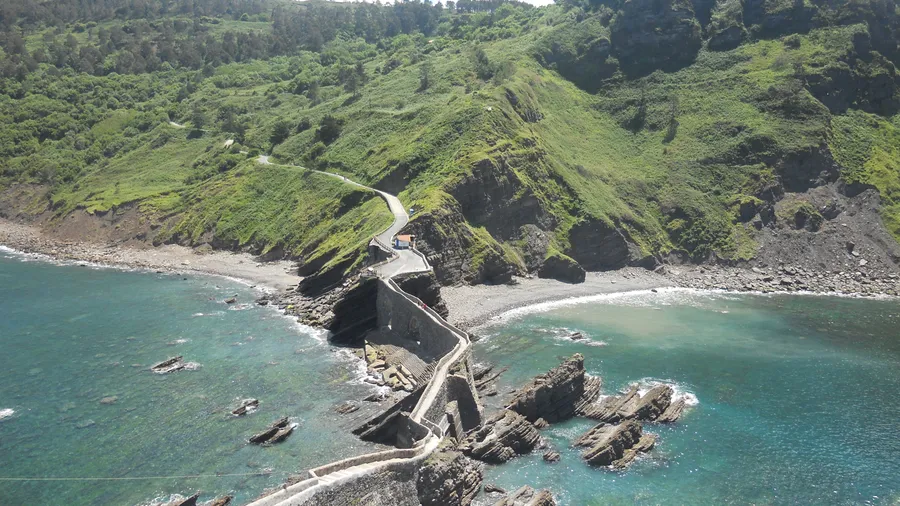
Isuntza beach occupies the bay formed by the harbour, with fine sand and waters relatively sheltered from open swell. From the sand itself, the view reaches the island of San Nicolás (Garraitz in Basque), a wooded islet connected to the mainland at low tide via a stone-and-sand causeway. Walking across to the island when the tide drops is an experience governed by the sea's timetable: check the tide tables and allow enough time, as the water rises quickly and can strand visitors. The island once housed a Franciscan convent that served as a quarantine hospital during plague outbreaks, and remains of its walls still stand among the vegetation that has colonised the islet.

Karraspio beach, on the far side of the headland, is longer — about 500 metres — and more exposed to swell, making it a spot for surfing and bodyboarding. The cliffs flanking both beaches offer coastal paths with views of the Cantabrian Sea and the Bizkaia shoreline. The local flysch — alternating layers of limestone and marl sculpted by the sea into stepped forms — is visible in the intertidal zone and is part of the same geological formation extending along the entire Basque coast from Deba to Barrika.

Lekeitio's cuisine centres on fresh Cantabrian fish. The harbour maintains daily fishing activity, with landings of anchovy, mackerel, bonito, and hake depending on the season. The old-town bars serve fish-based pintxos at the counter — marinated anchovy, hake croquettes, baby squid with onion — and several restaurants work with catch brought straight from the auction hall. Lekeitio anchovy, prepared in traditional brine curing, has a local tradition predating the industrialisation of canning on the Basque coast.

The San Antolín festivities in the first week of September feature the antzar jokua tradition (the goose game), a test of strength and balance in which participants hang from a rope stretched across the harbour. Documented since the seventeenth century, this event draws the entire district and retains a format essentially unchanged over centuries. Trails leading from the harbour towards Mendexa and Ea follow cliff sections where green pasture reaches the very edge of the drop — a coastal landscape typical of the eastern Cantabrian, where cattle grazing land meets the dark blue of the sea.
Practical information

Everything you need to know for your visit to Costa de Lekeitio

How to get there
From Bilbao, the BI-635 road reaches Lekeitio in about 65 km (roughly 1 hour). Regular Bizkaibus buses run from Bilbao with several departures daily. There is no train station in Lekeitio; the nearest is Deba (Euskotren), about 30 km away. Free public parking near the harbour.
Area Information
Lekeitio belongs to the Lea-Artibai district. The historic centre preserves arcaded streets and the Gothic basilica of the Asunción. The fishing harbour maintains daily activity. Nearby villages like Mendexa and Ea offer coastal trails and quiet coves accessible on foot.
Geography
Mouth of the River Lea on the Cantabrian Sea, Lea-Artibai district, Bizkaia. Two beaches separated by a rocky headland. San Nicolás island facing the harbour. Flysch cliffs in the intertidal zone. Indented coastline with coves and headlands.
Flora & Fauna
Coastal vegetation with Atlantic grasslands reaching the cliff edge. Cantabrian holm oak and oak woodland on inland slopes. Marine fauna: anchovy, mackerel, bonito, hake. Birds: yellow-legged gull, European shag, Balearic shearwater on migration.

Things to do

Find the best plans and things to do in Costa de Lekeitio

20

Accommodations

Best accommodation options in Costa de Lekeitio

Loading accommodation options...

Frequently Asked Questions

Get answers about Costa de Lekeitio

Only at low tide. The sand-and-stone causeway connecting the island to Isuntza beach is exposed roughly 2-3 hours before and after low tide. It is essential to check the day's tide tables and monitor the water level, as the tide can rise quickly and strand visitors on the island.
Yes, Karraspio beach receives consistent waves and is popular with local surfers. It is not a big-wave spot but offers suitable conditions for intermediate level. Surf shops in Lekeitio rent boards and wetsuits. Isuntza beach, being more sheltered, is not suitable for surfing.
It is a tradition documented since the seventeenth century in which participants hang from a rope stretched across the harbour while gripping the neck of a greased goose. The goal is to pull off the animal's head as the body rises and falls with the rope tension. Today a rubber goose is used for animal welfare reasons.
The Lekeitio-to-Ea trail covers about 7 km and takes roughly 2 to 2.5 hours at a relaxed pace. It follows cliffs with Cantabrian views and crosses green pastures. The elevation change is moderate. You can return by local bus from Ea or continue on to Elantxobe.
Yes, though the selection varies by season. Anchovy is caught from April to June, bonito from July to October, and hake is available nearly year-round. Harbour restaurants work with the day's catch. In winter, hake cheeks (kokotxas) and red sea bream are the area's signature dishes.