The essentials of Costa de Getaria

  • • Mount San Antón: the 'mouse of Getaria', a 78 m headland joined to town by a sandy tombolo
  • • Harbourside grill houses: turbot, bream and hake collar over holm-oak charcoal with txakoli
  • • Txakoli vineyards under DO Getariako Txakolina on hillsides overlooking the Cantabrian Sea
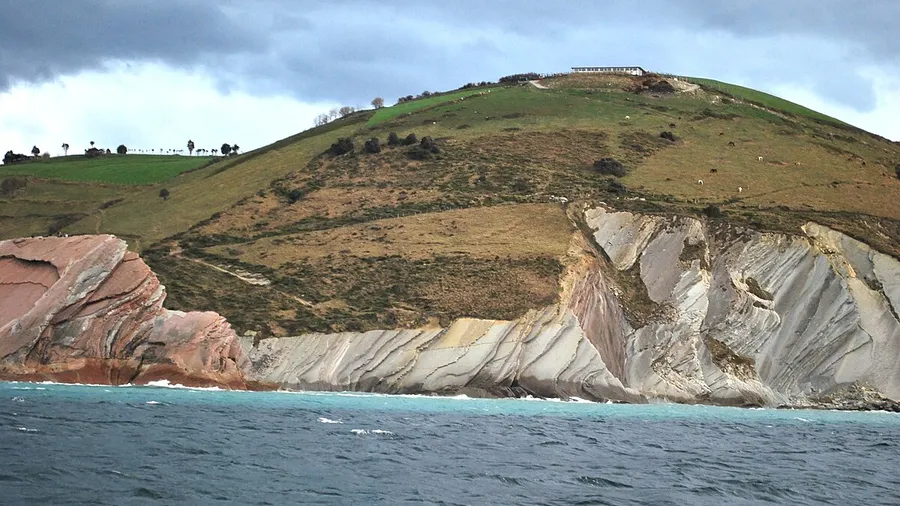
  • • Cretaceous-Palaeogene flysch cliffs with wave-cut platforms exposed at low tide
  • • Museum and legacy of Juan Sebastián Elcano, first navigator to circumnavigate the globe (1522)

Description

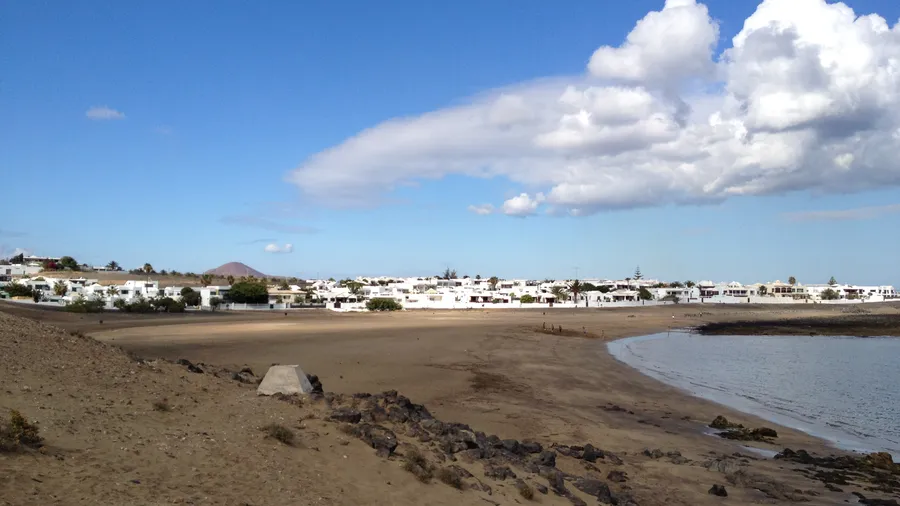
The coast of Getaria stretches roughly 6 km between Cape Getaria and Gaztetape beach, along the Gipuzkoa shoreline that separates Zarautz from Zumaia. The most recognisable landmark is Mount San Antón, a 78-metre headland known as 'the mouse of Getaria' for its silhouette seen from the sea, joined to the mainland by a sandy tombolo on which the old town sits. This tombolo, formed by sediment accumulating between the original island and the shore, acts as a natural breakwater that shields the fishing port on its western flank and creates two distinct beaches on either side: Malkorbe, a sheltered east-facing cove, and Gaztetape, an open stretch of dark sand that links to the Zarautz seafront promenade.

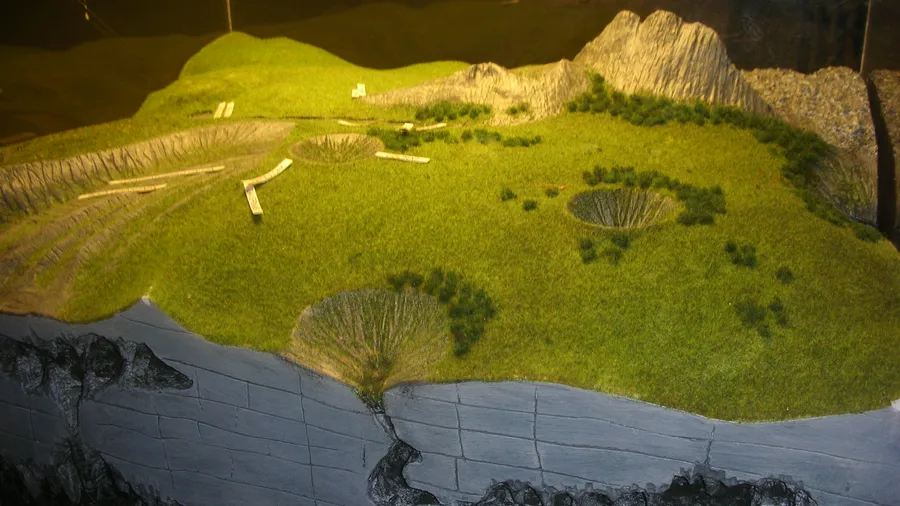
The geology of this coastal strip belongs to the Cretaceous-Palaeogene flysch, the same formation that outcrops between Zumaia and Deba and is considered one of the most complete continuous geological records on the planet. At Getaria the limestone-and-marl strata dip at 50-70° angles, forming wave-cut platforms exposed at low tide in a staircase of flat rock slabs where seaweed and goose barnacles accumulate. Atlantic swell strikes these platforms with an average energy of 25 kW per metre of wave front, generating powerful rip currents in the channels between the slabs and, at the same time, a nutrient-rich marine environment that supports a dense food chain.

Txakoli vineyards climb the hillsides behind the coast on steeply sloped, south-facing plots designed to maximise sunlight in a climate that delivers 1,500 mm of rain per year. The main variety is hondarrabi zuri, a thick-skinned white grape harvested between September and October that yields an acidic, lightly sparkling wine of low alcohol (10-11%) poured from height into a wide tumbler. Wineries under the Getariako Txakolina DO farm roughly 400 hectares across Getaria, Zarautz and neighbouring municipalities; several offer visits with tastings and sea views from the harvest terraces, where the green of the trellised vines contrasts with the dark blue of the Cantabrian Sea.

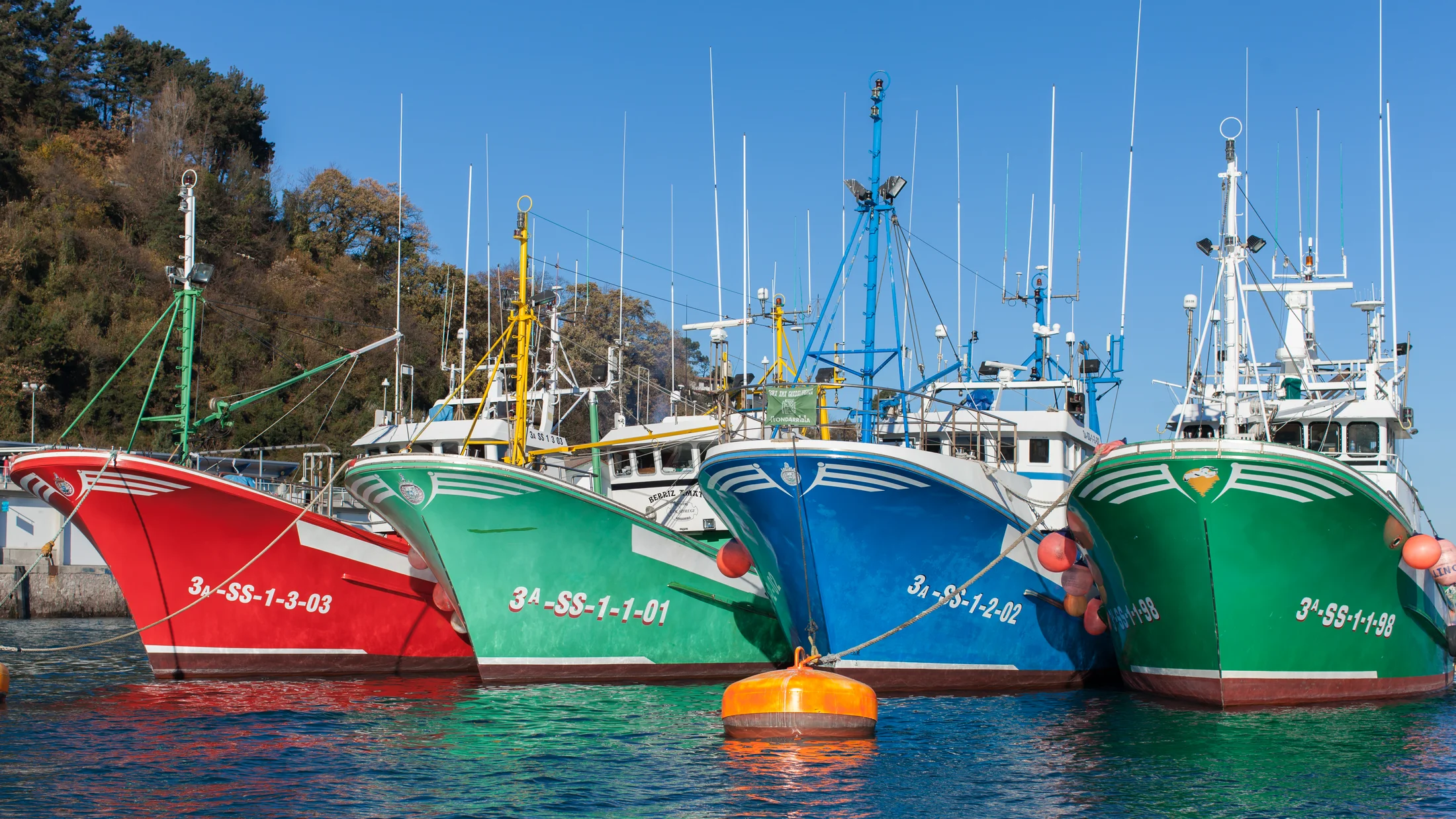
Getaria is also one of the most active fishing ports on the Basque coast, with an inshore fleet landing anchovy (April to June), white tuna (July to October) and baby squid (September to November). The tradition of grilling fish over holm-oak charcoal has become the town's culinary signature: harbourside grill houses serve turbot, red bream and hake collar by weight, with txakoli as the default accompaniment. The figure of Juan Sebastián Elcano, born in Getaria in 1476 and the first navigator to complete a circumnavigation of the globe, is present in the museum bearing his name and in the replica of the nao Victoria that presides over the port.

The GR-121, which traces the entire Gipuzkoa coastline, crosses Getaria from east to west in a roughly 4 km stretch between Zarautz and the San Prudencio hermitage, offering elevated views over the flysch cliffs, the vineyards and the mouse-shaped headland against the horizon. The walk extends easily to Zumaia (9 km) along the flysch cliffs, or towards Zarautz via the seafront promenade (3 km).
Practical information for Costa de Getaria

Everything you need to know for your visit to Costa de Getaria

How to get there
From San Sebastián, the AP-8 to the Getaria exit (25 km, 25 min). From Bilbao, the AP-8 via Zarautz (85 km, 1 h). The Euskotren railway links San Sebastián and Getaria (40 min, stop 1 km from the old town). Public parking by the port and at the town entrance.
Area Information
Getaria (pop. 2,800) has grill restaurants, bars, shops and varied accommodation. San Sebastián is 25 min by car and Zarautz 5 min. Several txakoli wineries offer visits by prior booking. Active fishing port with a fish auction and direct seasonal sales.
Geography
A roughly 6 km coastal strip on the Gipuzkoa shore, dominated by the Mount San Antón tombolo (78 m). Cretaceous-Palaeogene flysch cliffs with strata dipping at 50-70°. Wave-cut platforms, two beaches (Malkorbe and Gaztetape) and south-facing vineyard hillsides.
Flora & Fauna
Hondarrabi zuri vineyards, Atlantic meadows, holm oak and coastal scrub. Goose barnacles and seaweed on the flysch platforms. Yellow-legged gull, European shag and common tern on the cliffs. Anchovy, white tuna, baby squid and hake in the coastal waters.

Things to do in Costa de Getaria

Find the best plans and things to do in Costa de Getaria

20

What to see in Costa de Getaria

Discover the must-see sights in Costa de Getaria

Accommodations in Costa de Getaria

Best accommodation options in Costa de Getaria

Frequently asked questions about Costa de Getaria

Get answers about Costa de Getaria

Getaria has several historic grill houses by the port, the most notable being Kaia-Kaipe and Elkano, the latter holding a Michelin star. All work on the same principle: fresh fish from the local auction, grilled whole over holm-oak charcoal. Turbot and hake collar are the most popular choices. Prices are by weight (roughly €60-90 per kilo depending on species), so a full meal with txakoli typically runs €50-80 per person. Booking ahead is necessary at weekends and in summer.
Yes, several wineries under the Getariako Txakolina DO welcome visitors by prior booking. The best known are Txomin Etxaniz and Talai Berri, both with hillside vineyards and a terrace overlooking the sea. Visits usually include a walk through the vines, a winemaking explanation and a tasting of two or three txakolis, priced between €10 and €20 per person. The harvest period (late September to mid-October) is the most interesting time to see activity first-hand.
Yes, the GR-121 section between Getaria and Zumaia (roughly 9 km, 2.5 hours) follows the flysch cliffs on an elevated path with sea views and sightlines over the rock platforms. The trail is well signposted and technically straightforward, though it has some uphill and downhill sections. From Zumaia you can descend to Itzurun beach to see the flysch strata close up, including the K-Pg boundary that marks the dinosaur extinction. Check the tide table if you want to walk on the sea-level platforms.
Yes, both main beaches are suitable for swimming in summer, with some caveats. Malkorbe is a sheltered east-facing cove, calmer and better suited to families. Gaztetape is more open and connects with Zarautz; it has stronger waves and currents, especially at low tide. Both have lifeguards from June to September. Sea temperature ranges from 18 to 22 °C in summer. For calmer water, the natural pool by the old port is a sheltered alternative.
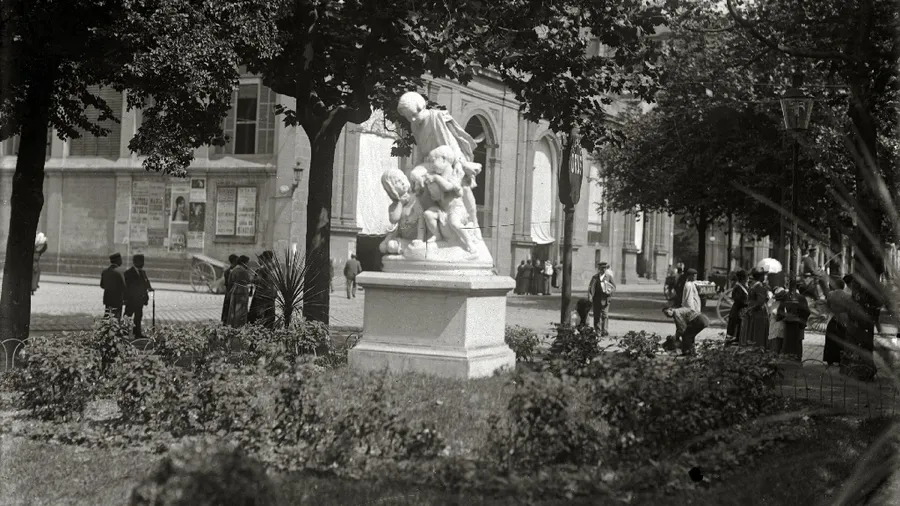
Juan Sebastián Elcano was born in Getaria in 1476 and was the captain who completed the first circumnavigation of the globe in 1522, after Magellan's death in the Philippines. The town keeps his memory alive through the Zuloaga Museum, a sculpture by the port and a replica of the nao Victoria. Every four years Getaria holds the Elcano festival with parades, historical re-enactments and a naval procession. The Gothic church of San Salvador, where he was baptised, has a sloping floor that follows the rock gradient of the tombolo.