The essentials of Montgó Natural Park

  • • Montgó summit (753 m): views reaching Ibiza on clear days, roughly 90 km distant
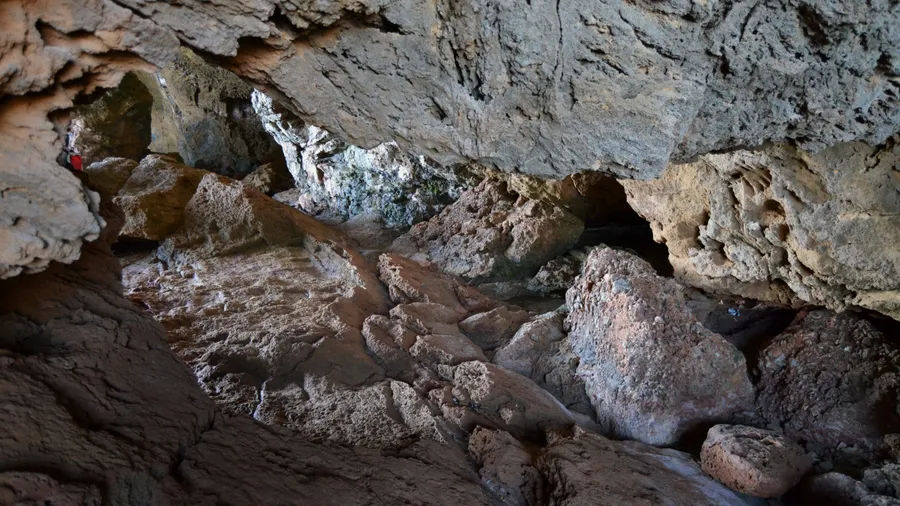
  • • Cova Tallada: a partially flooded former coastal quarry accessible by trail from Les Rotes
  • • Cape San Antonio marine reserve with Posidonia oceanica meadows between 5 and 25 m depth
  • • Carduncellus dianius: a blue-flowered endemic plant exclusive to this massif and the Marina Alta
  • • La Granadella and Portitxol beaches within a 15-minute drive from the park base

Description

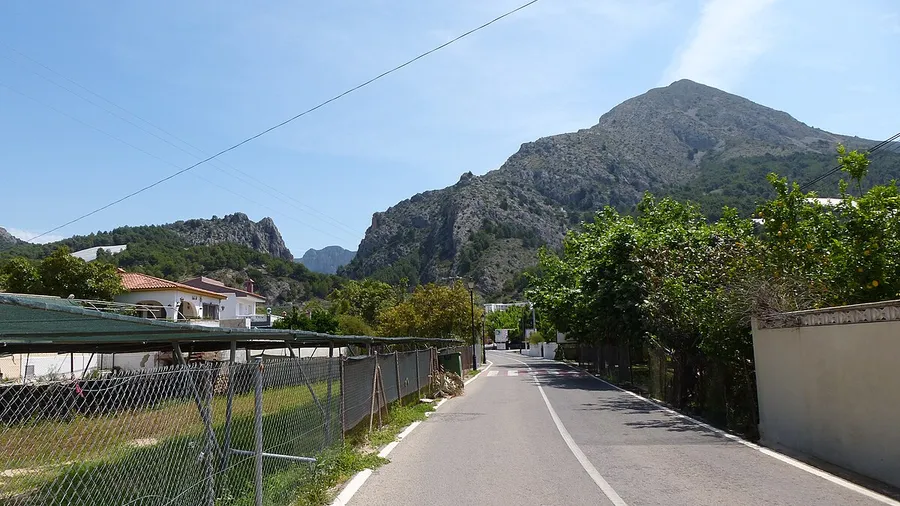
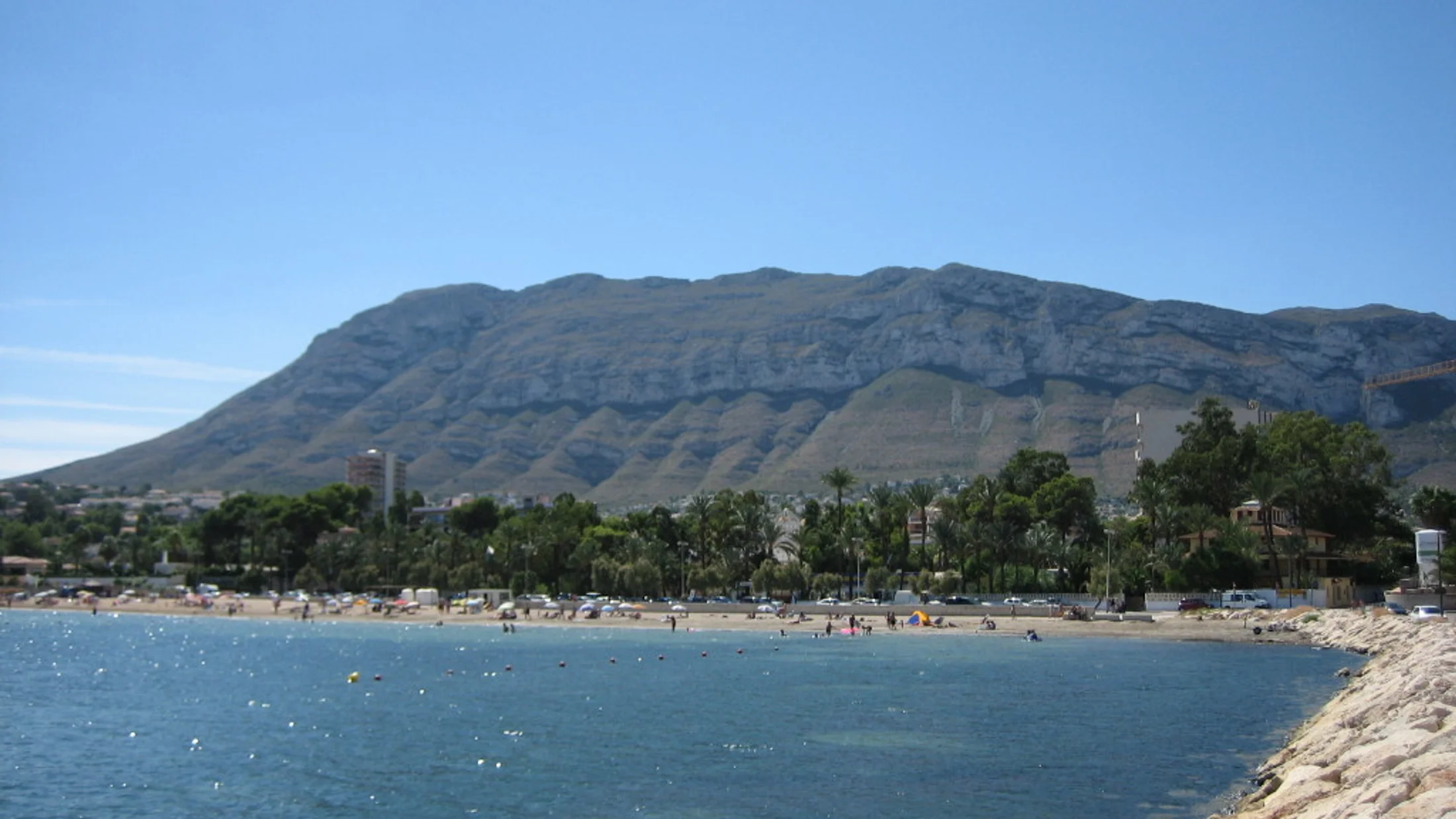
The Montgó is a limestone massif of 753 metres that rises directly from the Mediterranean between the towns of Dénia and Jávea in the Marina Alta district of Alicante. Its 2,117 protected hectares span from the summit to the coastal cliffs of Cape San Antonio and include a marine reserve extending 400 metres offshore. The north face drops towards Dénia in slopes of scrub and pine; the south descends more steeply towards Jávea, ending in 100-metre cliffs over the sea. On clear days the view from the top stretches along the coast from Cape la Nao to northern Valencia, and in the opposite direction the outline of Ibiza is faintly visible roughly 90 km away. Salt air rising from the cliffs mingles with the scent of rosemary and gorse that clothe the slopes, a blend that accompanies every metre of the climb.

Geologically the Montgó is a platform of folded Cretaceous limestone that differential erosion has sculpted into a prow shape when seen from the sea. On the south face the rock fractures into towers and pinnacles equipped by climbers with over 100 sport routes. At the base of the sea cliffs, freshwater caves such as the Cova Tallada — a former sandstone quarry now partially flooded — connect the massif's karst interior with the sea. The seabed off Cape San Antonio holds Posidonia oceanica meadows between 5 and 25 metres depth, an ecosystem that supports biomass three times greater than that of the neighbouring sandy bottoms.

Vegetation reflects the transition between the thermo- and meso-Mediterranean zones. On south-facing lower slopes, dwarf fan palm (Chamaerops humilis) — the only palm native to mainland Europe — thrives alongside kermes oak, mastic and scattered carob trees. On shaded, wetter ground, holm oak, manna ash and strawberry tree form a dense copse where filtered light reaches a leaf-litter floor. On the wind-battered ridges and summit, vegetation thins to creeping thyme, lavender and the endemic Carduncellus dianius (Dénia thistle), a blue-flowered composite found only on this massif and a handful of Marina Alta sites.

Terrestrial fauna includes Bonelli's eagle — one breeding pair on the south-face cliffs — eagle owl, genet, badger and a dense wild-boar population that has increasingly clashed with surrounding farmland. The marine reserve holds grouper, white seabream, brown meagre and octopus, plus the Posidonia meadows that function as juvenile nurseries. Notable reptiles include the Iberian wall lizard and the Iberian skink, and several colonies of long-fingered bat breed in the coastal caves.

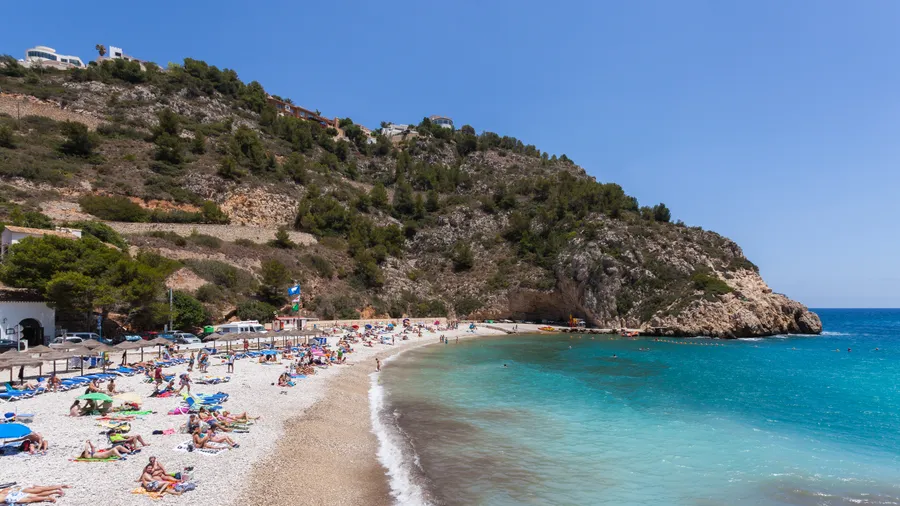
The main hiking access is the north-face trail from the Les Planes recreation area in Dénia: 6.5 km with 650 m of elevation gain, roughly three hours up. The Cova Tallada is reached from Les Rotes (Dénia) via an 800-metre coastal path that from 15 June to 15 September requires a free advance booking to cap numbers at 78 people at a time. Jávea supplies the beaches and coves that round off the day: La Granadella, Portitxol and Cala de la Barraca are all within a 15-minute drive.
Practical information

Everything you need to know for your visit to Montgó Natural Park

How to get there
From Valencia, the AP-7 to Dénia (95 km, 1 h 10 min). From Alicante, the AP-7 north (95 km, 1 h). The Les Planes recreation area (north side, Dénia) is the usual starting point for the summit. Cova Tallada is accessed from Les Rotes (Dénia).
Area Information
Dénia and Jávea offer extensive visitor infrastructure: hotels, apartments, restaurants and supermarkets. Park interpretation centre at Les Planes (Dénia). Dive centres in Jávea for the marine reserve. Parking at Les Planes and Les Rotes (limited in summer).
Geography
A Cretaceous limestone massif of 2,117 ha reaching 753 m between Dénia and Jávea. Sea cliffs up to 100 m on the south face and Cape San Antonio. Karst relief with coastal caves and freshwater springs. Marine reserve extending 400 m offshore.
Flora & Fauna
Dwarf fan palm (Chamaerops humilis), holm oak, strawberry tree, kermes oak and the endemic Carduncellus dianius. Rosemary, thyme and gorse scrub. Bonelli's eagle, eagle owl, genet, wild boar. Marine reserve: grouper, seabream, meagre, octopus and Posidonia meadows.

Things to do

Find the best plans and things to do in Montgó Natural Park

20

Accommodations

Best accommodation options in Montgó Natural Park

Loading accommodation options...

Frequently Asked Questions

Get answers about Montgó Natural Park

The most common route starts from the Les Planes recreation area in Dénia and covers 6.5 km with 650 m of elevation gain. Average ascent time is about three hours at a moderate pace; the descent takes 1.5 to 2 hours by the same path. The trail is well signposted but rocky in the final stretch, so hiking boots are recommended. In summer, set off before 08:00 to avoid the intense midday heat.
Between 15 June and 15 September a free reservation is mandatory through the Generalitat Valenciana website (cvatallada.gva.es). Capacity is capped at 78 people at a time to protect the site. Outside those dates access is open without booking. The path from Les Rotes is about 800 metres over uneven rock beside the sea, so bring shoes with good grip and water. Swimming inside the cave is possible but currents can be strong.
Yes, diving is allowed with certain restrictions. You need authorisation from the Generalitat Valenciana and must book through a licensed dive centre in Dénia or Jávea. The most popular dive is the Cape San Antonio arches and tunnels, between 8 and 22 metres depth, with typical visibility of 15-20 metres. Large grouper, barracuda, moray eels and extensive Posidonia meadows can be seen. Snorkelling is unrestricted outside the no-take zone.
It depends on the activity. The summit climb is not recommended for children under ten due to the distance and elevation. However, the first couple of kilometres from Les Planes are gentle and tree-shaded and work well as a family walk. Cova Tallada is manageable for children aged eight and over in sturdy footwear. The Jávea coves (Granadella, Portitxol) offer more comfortable alternatives for families with younger children.
Yes, both Dénia and Jávea have beaches within minutes of the park. On the Dénia side, Les Rotes offers rocky coves and access to Cova Tallada. On the Jávea side, La Granadella is a pebble cove with clean water and a rocky seabed ideal for snorkelling, about 15 minutes by car from Jávea centre. Portitxol and Cala de la Barraca are quieter options. In summer, car parks fill early, particularly at weekends.