Why do levels matter in caving?
Difficulty levels in caving categorise cavities according to the technique, physical exertion, and risks they demand. Knowing which level you are at and which level the cave is at completely changes the route you can take.
Understanding the classification helps you plan routes, adjust equipment, decide whether to go with a guide, and choose the right training. It is equally useful for beginners as it is for those coming from climbing or those guiding groups: it allows you to evaluate cavities, choose realistic objectives, and detect when to switch to a guided activity or courses.
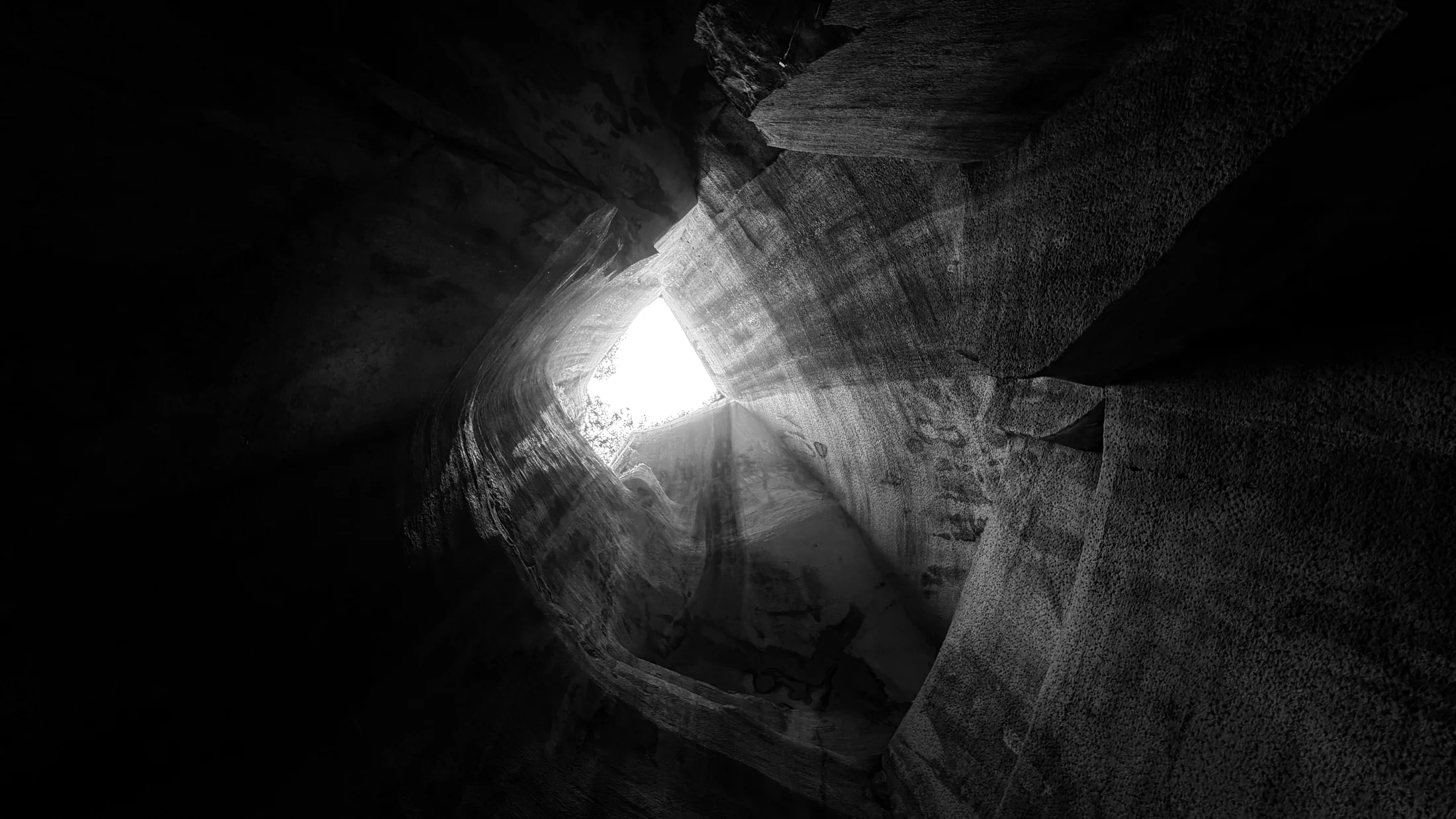
The humid air smells of cold stone and ancient silence. That silence is enjoyed when the cavity matches your experience.
From here on, you will see the key concepts and the factors that influence difficulty, a practical classification in six classes, the progression from initiation to cave diving, and common mistakes with checklists.
Safety in caving begins with an honest assessment of your own level and that of the cave. Simple decisions complete the circle: a route suited to your experience, verified equipment, reliable companions, and a clear plan.
Picuco te puede ayudar
Does something here catch your eye?
Tell us.
Write to us on WhatsApp or email: we answer questions, find the best options and help you sort out the booking.
Key concepts that define difficulty
A cavity is any natural hollow. A cave is usually horizontal or with little slope, and a pit is a vertical shaft. Inside, the vault is the curved ceiling, the conduit is a natural passage, and the sump is a continuous flooded section.
Someone who explores cavities is a caver; the guide is the professional who leads outings; the cave diver combines cave and diving with specific protocols. Total darkness muffles sounds and the dripping marks the rhythm.
Difficulty is measured by several factors at once:
- Technical difficulty: necessary manoeuvres such as crawls, unroping, or SRT (Single Rope Technique, rope progression techniques).
- Physical exertion: time in motion, edging steps (lateral supports), resistance to crawling and carrying loads.
- Water: humidity, puddles, underground rivers, or sumps; water multiplies the cold and the risk of flooding.
- Orientation: labyrinths, junctions, and topo-reality communication (reading sketches and compasses).
- Objective risk: rockfalls, unstable blocks, very slippery mud, or the possibility of flash floods.
If you are starting out, look for wide galleries, without verticals or water, and with clear topographies. Safety relies on habits: helmet with double lighting, time control, returning with a margin, and effective communication.
Essential equipment is a helmet with a headlamp and a spare, gloves, a jumpsuit or warm clothing, and footwear with grippy soles. To progress, you need knee pads and elbow pads, a dry bag, and rope and anchors if there are verticals. To orient yourself, carry a printed topo in a case, a compass, and adhesive tape for notes (removable; never mark the cave). In emergencies, a thermal blanket, a light first-aid kit, a whistle, and chemical heaters in winter.
Local federations and clubs maintain anchors, update topographies, and pass on best practices. Learn from them and give care back to the territory.
Caving difficulty classes (1–6)
The 1–6 class scale summarises what to expect in each class: the necessary skills and the main risks. It serves to compare cavities and choose a realistic progression before you head into a cave.
Each class tells you the technical level the route requires and what you will face inside. Take the scale as guidance for planning, not as a rulebook: it does not replace federative regulations.
Class 1: Walks and simple galleries
Start with friendly terrain and clear horizons. Caving difficulty levels begin at class 1, with caves featuring wide passages, stable floors, and no verticals or water crossings. You need basic physical fitness to walk and occasionally crouch; technique is minimal, with special attention to not dislodge stones. A cool breeze brushes against your skin without surprise.
Recommended equipment:
- Helmet with headlamp and spare, thin gloves.
- Comfortable clothing that withstands friction and some mud.
- Simple topography and time management.
Risks:
- Trips and minor bumps.
- Disorientation if there are multiple galleries.
- Hypothermia due to prolonged cooling (stable and low temperature).
How to recognise a true class 1:
- No ropes, no exposed climbs, no deep puddles.
- Clear topography and linear or "T" shaped layout.
- Possibility of a quick return in less than 30 minutes.
Representative areas in Spain to practice with clubs: horizontal entrances in Cantabrian karst, small non-touristic volcanic cavities in the Canary Islands, and rock shelters in karst systems in Burgos and Navarra.
Class 2: Routes with light technical passages
In class 2, your hands come into play: there are short climbs, easy scrambles, sustained crawling, and some moves in opposition. The physical demand is moderate and shallow water may appear.
Compared to class 1, here you need to use your hands to progress at several points. There are also mandatory narrow sections or passages where you have to choose your footholds.
Recommended equipment is a helmet with two lights, gloves, knee pads, and elbow pads. Wear footwear with grippy soles and mud-resistant clothing, and add a short strap or cord to secure your backpack during passages.
During climbs, maintain three points of contact with the rock. To move the backpack, push it from the front or pass it in a chain, and at bends, communicate via voice and hand signals.
Risks include falls from slipping, abrasions from friction, and loss of direction at multiple junctions. Plan your return with a 30% time margin, time the sections, and mark mental milestones.
Class 3: Verticals and moderate narrows
In class 3, the rope enters the scene. There are short verticals or stepped pits that require SRT/TPV, i.e., rappelling and ascending with ascenders. Narrows also appear that require stepping techniques and more complex navigation.
The humidity cools your hands and the rope drips continuously. For this reason, it is advisable to carry a lightweight thermal jacket in a dry bag.
The additional minimum equipment includes several pieces that you should have clear before entering:
- Waist and chest harness, descender (STOP or similar), ascenders (Croll, hand ascender), foot loops and double cow tails.
- EN 1891 semi-static rope, carabiners, locking carabiners and anchors if you need to equip.
Before you enter a cavity of this level, take an SRT/TPV course with a federation or club. Practice basic knots (figure-eight, clove hitch, dynamic safety knot) and learn to manage friction and traverses.
The risks are specific: being stuck on a vertical if manoeuvres fail, disorientation in parallel networks and hyperthermia-hypothermia due to exertion and the cool environment. In case of unforeseen events, practice changing directions on the rope and passing knots. Define a safe retreat point and a maximum return time, and leave notice of the plan with an external contact with an alarm time.
Class 4: Advanced sector with demanding sections
Class 4 is an advanced sector with demanding sections, where technique sustains the adventure. Long pits, series of linked rappels and ascents, complex manoeuvres on deflectors and handlines, deep mud and constant humidity appear.
You need advanced skills: equipping and unequipping lines safely, progressing through handlines and deflectors with double cow tails, and resolving awkward steps with your backpack hanging and makeshift knots. Compared to class 3, class 4 adds greater length of verticals, more traverses and technical decisions per section. It also requires fine navigation with a topo and compass in complex networks.
The equipment changes compared to previous levels. Carry a double lighting system (1 main + 2 backups), dedicated ropes per pit, a repair kit and spare anchors. Add improved thermal insulation, trail food and chemical heaters.
Rescue is prepared before entering. Set up an emergency plan with pre-agreed communication points and carry equipment capable of basic self-rescue (pulleys, controlled cutting). Coordinate the outing with your club and get to know the regional Speleosocorro.
Class 5: Caves for experienced cavers
Class 5 is the level of long, cold, and damp caves, with complex verticals and difficult navigation. It only makes sense if you already have previous experience in caving: here, passages can last for hours and logistics require several ropes, gear distributions and, often, bivouacking.
The technical equipment steps up a level: a wide set of ropes, anchors and slings for re-equipping, an agreed internal communication system (whistle or hand signals) and luminous reference beacons. Wear multi-layer technical clothing, double gloves and high-calorie food, and leave a stove on the surface.
You need to master SRT in all its manoeuvres, apply self-rescue and read 3D topography. You will also have to manage time and energy, lead head and tail relays and make conservative decisions regarding the weather and flow rate.
If it is your first foray into the system, go with a guide with local knowledge. Plan surface support with two people, with an alarm time and a plan B, and consider an early retreat at the first symptom of fatigue or heat loss.
The main risks are the cumulative effect of cold and humidity, equipment or knot errors due to fatigue and sudden floods in rainy regimes.
Class 6: Extreme terrain and integrated cave diving
Class 6 consists of caves with siphons, long flooded sections and mandatory submerged passages. Cave diving is part of the itinerary and the logistics are complex.
Level 6: inherent risk
The smallest error underwater has serious consequences. Without specific training and redundancies, do not enter flooded environments, even if the siphon seems "short".
To get here you need progressive cave diving certifications such as Cavern/Intro/Full Cave, from agencies like TDI, IANTD or CMAS. The training covers gas planning using the rule of thirds or quarters, navigation with a guide line and resolving failures in zero visibility.
The equipment includes a redundant breathing system with a double regulator and twinset or sidemount configuration. Add a thermal drysuit, spare mask, three lights (1 main + 2 backup), reels and a spool. If there are connected resurgence points, carry a surface marker buoy.
The safety protocol starts by placing a continuous guide line from the air to the return point. Then comes silt control, without stirring up silt, and team discipline with a clear order of entry and exit. On the surface, someone must monitor times, gases and communication.
Progression to this class always involves certified training, mentoring with instructors and practice in controlled environments before tackling natural siphons.
Practical progression by levels: from initiation to cave diving
The ideal progression combines caving training, supervised practice and the choice of caves according to your experience. Moving forward through clear steps avoids rushing and shortcuts in learning.
Initiation: first steps and recommended courses
In a horizontal cave, the first outing is measured in hours, not in metres: two or three are enough to learn the essentials. Initiation is for learning to orient yourself with a map and compass, reading natural markings, and moving with confidence.
Your personal safety starts with your helmet and double lighting, and continues with managing the cold. Simple equipment includes gloves, knee pads, a backpack, and material protection. A drop on your forehead reminds you that time is running: adjust your pace and your coat accordingly.
Initiation courses usually include progression in horizontal caves, basic knots, and risk prevention. Practise in class 1 and 2 caves with local clubs, on 2–3 hour outings. On dry land, you can practise crawling, opposition, and footlocks, and rehearse voice and light communication in bends.
Keep a log of outings with the cavity, the time, your sensations, and improvements. Learn to say "this is far enough" and to return with a margin: choose stable weather and small groups.
If you want to train for a qualification, the Initial Cycle of the T.D. in Speleology runs from 4 to 12 July 2026 and the Final Cycle, from 4 to 15 July 2026. The registration period for the common block is from 26 to 30 September 2025. It is necessary to book in advance.
Intermediate: consolidation of techniques and first verticals
At the intermediate level, the rope rules: mastering it and working as a team matters more than descending metres. This is where the first verticals and outings with several pitches arrive, for those who already move with ease in horizontal passages.
Key skills revolve around rope technique. Practise rappelling with brake and safety control, and ascending with Croll and hand-over-hand. Add transitions: knot passing, pitch changes, directional devices, and reversing direction. And train structured communication, with brief commands, confirmation, and light signals.
To practise, look for areas equipped by clubs for outdoor SRT and class 3 caves. Do simulations of rope and backpack management in narrow passages. Add navigation with map and compass in simple networks.
Plan every outing with several pitches: define the objective and an intermediate retreat. Prepare the list of ropes per pitch and distribute the loads. Set entry times, return points, and alarm times, and distribute the roles of gear leader, second verifier, and closer.
Before entering, check the checklist:
- Lighting 1+2, helmet, gloves, and joint protection.
- Harness, blockers, descender, double cowtails, and safety knife.
- Laminated map, compass, thermal blanket, and trail food.
If you run out of air, stop and re-evaluate.
Advanced: logistics management and complex scenarios
At the advanced level, you let go of the basic manoeuvres and work with complete systems. You rig and re-rig pitches, handlines and anchors with judgement, and you resolve a self-rescue using pulleys, counterweights, unanchoring and transferring a blocked person.
Practical tip
Before "leveling up", validate your key manoeuvres outdoors and on a short section, and ask a speleologist with more hours than you to audit your technique.
Logistics weighs as much as technique. Distribute the material by relays and cached points, and set up an external communication plan with a contact available 24 h and 112 as an emergency reference in Spain. Monitor the weather and the flow in underground rivers, and cancel the trip if there is heavy rain.
It is also up to you to manage the group with fatigue, cold and low morale. To train, look for self-rescue courses with clubs and federations, with practical sessions based on realistic simulations, and learn underground cartography: interpretation of contour lines, dips and overlapping networks.
Cave diving: specific training and critical considerations
Cave diving is learned in stages, with qualified instructors from TDI, IANTD or CMAS. The training path goes through Cavern, Intro to Cave and Full Cave, and before starting you need a solid foundation in open water diving and fine control of buoyancy.
Progression starts in a pool and confined waters, with equipment management, gas changes and simulated blackouts. Afterwards, you move on to caverns with natural light and a visible guide line and, later on, to short siphons with mentoring. The training includes blind navigation and resolving multiple failures.
The equipment demands total redundancy: double regulator, two gas sources and three lights. Use sidemount or twinset depending on the passages, and a drysuit to conserve heat.
Regarding protocols, keep the guide line continuous, carry a safety spool and apply the rule of thirds, or quarters in flow. On the surface, there must be a supervisor for times and gases and an evacuation plan. You also need agreed communication and a specific first aid kit with oxygen if access is available.
Under the water, the world filters into a soft and uniform hum, and every gesture must be deliberate and calm. Book the training in advance and count on several practice days before entering a cave.
Common mistakes and next steps
Most incidents in caves start with something small: a brief rain shower that closes the returns due to rising water levels. Underestimating water is the most repeated mistake, as is carrying only a single light instead of redundant equipment. Added to that are long orders without confirmation, which break communication, and failing to notify an external contact, so that no one activates the alarm.
Before entering, review this list:
- Helmet with 2 lights, gloves, knee and elbow protection, and appropriate clothing.
- If there are verticals, SRT verified; if there is water, thermal protection and a flow plan.
- Respect closures for conservation and bat colonies.
- Check the latest weather and flow update on the day of entry.
- Carry laminated topography, a compass, and a route plan with a return time.
- Define companions and roles, a surface plan, and the alarm time for the contact.
To continue your training, the regional federations and the Spanish Speleology Federation offer caving and self-rescue courses. In rescue operations, the regional cave rescue teams and the European Cave Rescue Association work, whose objective is to promote the exchange of knowledge and experience in cave rescue.
If water attracts you, the TDI, IANTD, and CMAS agencies offer courses and standards. The IANTD Introductory Cave Diver course has a maximum depth of 40 metres (132 feet) and requires a minimum of 30 logged dives.
Joining a local club gives you training outings and teaches you how to share the responsible maintenance of the territory. To progress with calm and local support, be part of a federated club. For a first contact, book guided experiences with local providers at Picuco and learn in controlled environments.