Why Spain’s Caves and Pits Are Unforgettable
Spain’s underground world blends science, adventure, and culture in one breath of cool, mineral air. You will find everything from Cantabrian karst labyrinths to volcanic tubes in the Canaries, making caving Spain a year-round pursuit with surprising variety. Picture a bead of water clinging to a helictite before it drops into darkness.
Across the country, caves protect rare fauna, prehistoric art, and fragile mineral formations that took millennia to grow. This guide highlights both accessible show caves and technical systems that demand training and permits, always with conservation first. Expect practical details you can use now, plus clear advice on safety and when to hire a guide. Plan your visits, then choose a rural base nearby to explore at your own pace.
Spain’s caving landscape at a glance
Cuevas España espeleología speaks to a vast diversity: limestone karst in the Cantabrian ranges and Castilian plateaus, giant chambers in Andalusia, and basaltic lava tubes in the Canary Islands. Karst means landscapes shaped by dissolving rock, creating pits, shafts, and galleries where water once carved its path. In these spaces, bats, cave crickets, and delicate microbes thrive, while human traces range from Paleolithic art to hermit chapels.
Caving (also called spelunking) is growing in Spain, with show caves welcoming visitors and federated clubs running technical trips. Authorities and local communities safeguard these resources through quotas, guided-only sections, and seasonal closures. According to regional tourism boards and cave conservancies, bookings now fill early on weekends and holidays, so advance planning is essential. You step into the quiet, and the drip of calcite becomes a metronome.
How we chose and what each profile includes
We prioritized: outstanding geomorphology (unique formations or underground rivers), clear options for guided visits versus technical routes, safety frameworks and permit clarity, accessibility and services, and educational value. Each profile gives you location context, how to get there, visit types (tourist or technical), approximate duration, best season, who it suits, difficulty, permits, and practical tips.
You’ll also find notes on conservation, restrictions, and where to confirm official details such as schedules and prices. Think of each entry as a reliable brief you can act on today. One torch beam on a wall can reveal a whole story.
Picuco te puede ayudar
Does something here catch your eye?
Tell us.
Write to us on WhatsApp or email: we answer questions, find the best options and help you sort out the booking.
How to Use These Profiles
Each profile mirrors what you need to plan without fuss: where it is (province, closest town, and principal access roads) and how to reach the entrance by car and public transport when possible. You’ll see the type of visit offered—show cave with paths and lighting, or technical caving that requires training, guides, and protective equipment. When we say show cave, we mean a developed route with built walkways, lighting, and fixed schedules; technical caving involves helmets, lights, ropes, and often single-rope technique (SRT), which is ascending and descending a fixed rope using specialized gear.
We include typical visit duration, best months (considering crowds and weather), and who each site suits—families, beginners, photographers, geology students, or experienced cavers. For costs, consult the official cave website or local tourism office, since tariffs change by season, age, and extras like concerts or special tours. Safety recommendations cover footwear, clothing layers, and booking windows; for technical trips, we flag permits, guide requirements, and insurance via regional federations. Imagine a cool draft brushing your cheeks as you step from daylight to the hush of stone.
Top Caving Destinations in Spain
1.El Soplao (cantabria): world-class helictites and guided exploration
El Soplao cave is perched between Valdáliga, Rionansa, and Herrerías in western Cantabria, a scenic drive from the Bay of Biscay. You reach it by the A-8 coast motorway and local roads that wind into green hills above the Nansa valley. The air tastes faintly of limestone and forest after rain.
- Location and access:
- Western Cantabria, near San Vicente de la Barquera and Cabezón de la Sal
- By car via
A-8then signed local roads; parking at the visitor area - Limited public transport; plan taxi or rental if traveling without a car
- Visit types:
- Show cave tour with a small train and walkways
- “El Soplao espeleología” adventure routes (helmet, lights, overalls; guided only)
- Duration and season:
- Standard tour around 1 hour; adventure routes longer depending on itinerary
- Best spring and autumn for lighter crowds; winter for quiet days, check weather
- Ideal for:
- Experienced cavers, geology students, formation photographers
- Difficulty and permits:
- Show cave: easy; technical routes: moderate to demanding with guide
- Technical visits require advance booking and adherence to equipment lists
- Highlights:
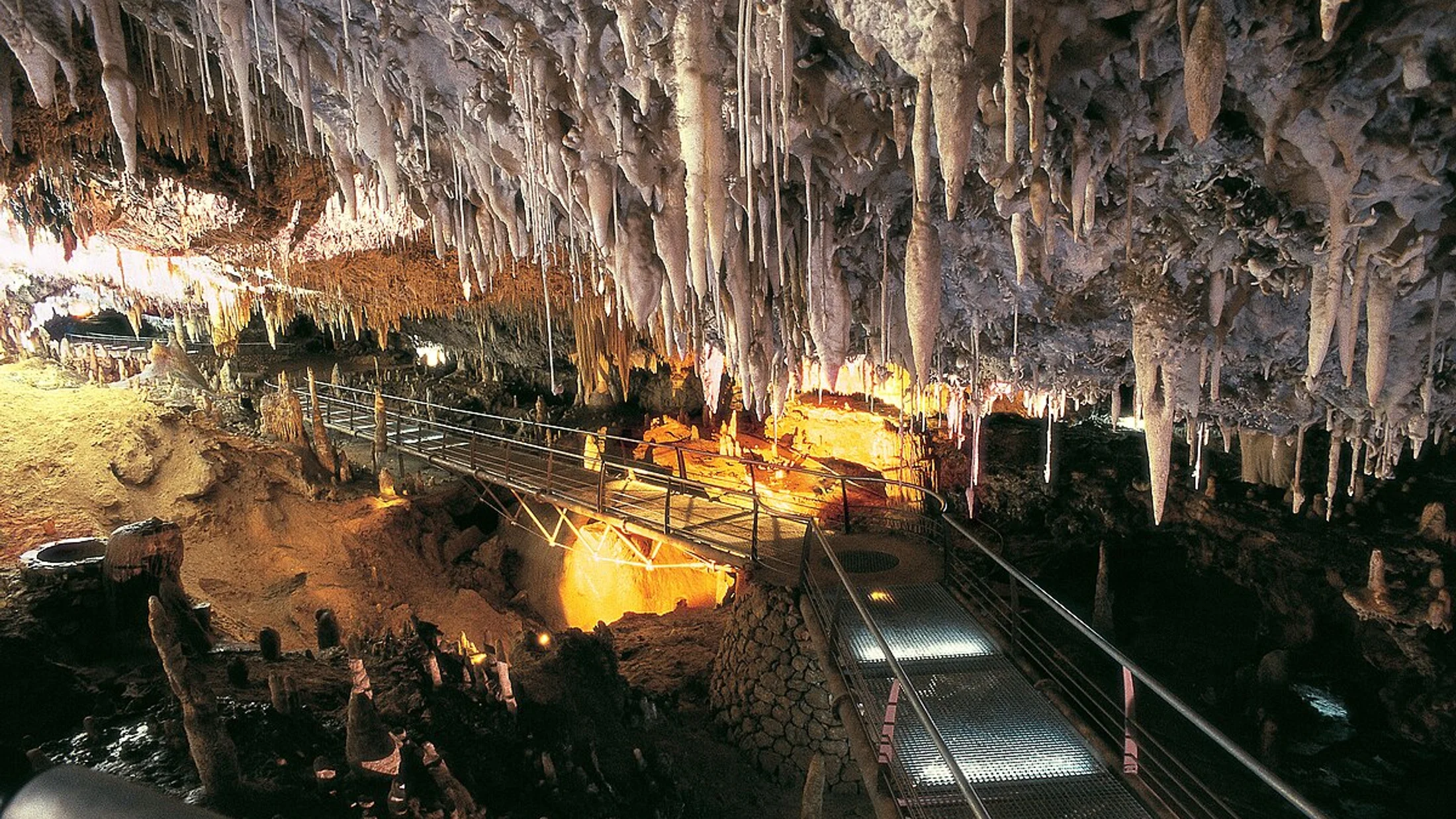
- Spectacular helictites (eccentric speleothems that defy gravity), aragonite flowers, mining heritage
- Interpretive content on geology and human history
- Practical notes:
- Book early on weekends and holidays via the official El Soplao site or Cantabria tourism
- Wear non-slip footwear; respect no-touch rules to protect delicate formations
Per the Government of Cantabria and the cave’s official information, conservation is taken very seriously—group sizes are capped, and routes can change seasonally. For current prices, special tours, and access notices, check the official El Soplao channels before you go.
2.Cuevas del Drach (mallorca): underground lake and live classical concert
On Mallorca’s east coast in Porto Cristo, the Cuevas del Drach are among the best caves in Spain for travelers seeking a seamless show-cave experience. You reach them by the Ma-15 from Palma, with frequent buses to Porto Cristo and short local connections. A soft echo rolls across Lake Martel as the concert lights fade.
- Visit type:
- Timed show-cave entry with a set walking route and a classical music concert by the underground lake
- Duration and season:
- Allow roughly 1 hour including concert; plan buffer time for entry queues
- Peak summer is busy; late spring and autumn offer calmer visits
- Ideal for:
- Families, first-time visitors, and those who enjoy curated cave tours Spain
- Difficulty and access:
- Easy walk on paved paths with steps; follow staff instructions
- Highlights:
- One of Europe’s largest underground lakes, polished calcite formations, atmospheric boat sequence
- Practical notes:
- Buy tickets in advance on the official site; same-day slots can sell out in high season
- Photography without flash is usually allowed; confirm on-site policies
- Combine with a coastal walk to Cala Romàntica or a slow lunch in Porto Cristo
Mallorca’s tourism office and the site’s official channels publish updated schedules and any special events. For families building a gentle itinerary, this is one of the most convenient show caves in Spain with consistent operations year-round.
3.Cueva de Nerja (málaga): giant halls and prehistoric echoes
Set in the Axarquía near the village of Maro, the Cueva de Nerja opens into some of Spain’s most spacious chambers under the Sierras of Tejeda, Almijara, and Alhama. From Málaga, drive the A-7 east and follow signs to the cave; frequent buses run to Nerja with short taxis or local buses onward. Cool air rises from the entrance like a steady exhale.
- Visit types:
- Show-cave circuit with interpretive panels, occasional special events
- Controlled, limited speleological experiences may run seasonally with guides
- Duration and season:
- Typical visit about 60–90 minutes depending on crowding
- Spring and autumn provide comfortable temperatures in town and fewer lines
- Ideal for:
- Families, prehistory enthusiasts, photographers of grand chambers
- Difficulty and access:
- Easy to moderate with stairs and handrails; check accessibility notes on the official site
- Highlights:
- Monumental columns and stalactites, microclimate stability, proximity to Mediterranean viewpoints
- Important Paleolithic art areas protected by strict access rules
- Practical notes:
- Reserve in advance during holidays and weekends; guided language options vary by schedule
- Combine with Balcón de Europa, coastal trails, or village tapas in Nerja
According to the Fundación Cueva de Nerja, conservation measures include restricted zones and controlled lighting. Always follow marked paths and never touch formations—the oils on skin halt calcite growth.
4.Grutas de San José (vall d’uixó, Castellón): a navigable underground river
In the Sierra de Espadán foothills, the Grutas de San José offer a rare European experience: a guided boat ride on an underground river, combined with short walking sections. From Valencia, take the A-7 north to Vall d’Uixó; from Castellón, it’s a short hop south on the same axis. Your oar’s dip sounds louder than expected in the hush of rock.
- Visit type:
- Guided boat tour on the subterranean river plus a walking segment on lit paths
- Duration and season:
- Visits typically under 1 hour; frequency varies by season
- Spring and autumn balance mild weather with manageable crowds
- Ideal for:
- Families, couples, and travelers seeking an original but accessible outing
- Difficulty and access:
- Easy; staff provide safety guidance; check accessibility specifics with the site
- Highlights:
- Silent navigation through sculpted galleries, reflections on still water, geology explained by guides
- Practical notes:
- Capacity is limited; reserve early on weekends and holidays via the official Vall d’Uixó channels
- Wear shoes with grip; low light and damp walkways are common
- Flash photography rules may apply; ask before boarding
Local authorities manage the cave as a protected resource; water levels, conservation needs, or maintenance can change operations temporarily. Always verify current schedules and any restrictions before you set off.
5.Ojo Guareña / Cueva Palomera (burgos): vast karst and serious caving options
Ojo Guareña, in northern Burgos near Merindad de Sotoscueva, is one of Spain’s largest karst systems, with more than 100 km of mapped galleries according to the Junta de Castilla y León. Access routes from Burgos and Bilbao converge on local roads that crest open moorland and oak woods. The cave breathes a faint earthy scent where wind crosses entrances.
- Visit types:
- Interpretive routes in Cueva Palomera for the general public (helmet and light provided)
- Technical itineraries for experienced cavers with permits and qualified guides
- Duration and season:
- Introductory interpretive visits range from about 2–3 hours
- Best in late spring to early autumn; winter requires close attention to weather and access
- Ideal for:
- Trained cavers, geology and biospeleology students, photographers of complex passageways
- Difficulty and permits:
- Guided interpretive routes: moderate; expect uneven terrain
- Technical trips require federation insurance, permits, SRT competence, and local guide services
- Highlights:
- A multi-level limestone system, ancient hermitage traditions at surface entrances, and notable cave fauna
- Practical notes:
- Book with local guide companies and the Ojo Guareña Natural Monument offices well in advance
- Base yourself in nearby villages for early starts; respect parking rules and quiet hours
Given the site’s protected status, quotas and route closures are standard tools of conservation. Check official Natural Monument updates and Burgos provincial tourism pages for route availability and mandatory paperwork.
6.Cueva de Valporquero (león): walkways through a classic show cave
High in the Cantabrian foothills north of León city, Valporquero is a reference among show caves for its sequence of rooms and sturdy walkways. Reach it via the LE-311 from León toward Vegacervera, with striking canyon scenery en route. Drops from stalactites tick like rain on stone.
- Visit type:
- Guided or timed show-cave itineraries along built paths and platforms
- Separate outdoor activity: the “Curso de Aguas” canyoning descent downstream (with guides)
- Duration and season:
- Standard underground visit roughly 1–1.5 hours depending on itinerary
- Spring and autumn shine; summer is popular; winter opening days vary—verify in advance
- Ideal for:
- Families, curious beginners, and travelers who prefer non-technical caving
- Difficulty and access:
- Easy to moderate; bring a warm layer—cave temperatures remain cool year-round
- Highlights:
- A sequence of named chambers, including the delicate “Sala de las Hadas,” varied speleothems, and strong interpretation
- Practical notes:
- Confirm schedules and ticketing on the Diputación de León/Valporquero official pages
- Combine with short hikes in the Hoces de Vegacervera; roads can be narrow—drive cautiously
Regional authorities emphasize conservation by restricting access to marked routes and controlling lighting regimes to limit algae growth. Follow staff guidance and keep to the path for your safety and the cave’s health.
7.Gruta de las Maravillas (aracena, Huelva): a historic show cave
Under the streets of Aracena in the Sierra de Huelva, the Gruta de las Maravillas has welcomed visitors for more than a century, making it a cornerstone of Andalusian show caves. From Seville, take the A-66 to the N-433; from Huelva, drive northeast on regional roads to Aracena. Lantern-like reflections dance on underground pools as footfalls fade.
- Visit type:
- Guided show-cave visit with fixed routes and group sizes
- Duration and season:
- Plan around 45–60 minutes; departures are scheduled throughout the day
- Visit in shoulder seasons or early morning to avoid peak crowds
- Ideal for:
- Families, cultural travelers, and anyone pairing nature with village life
- Difficulty and access:
- Easy, with steps and handrails; verify accessibility with the municipal tourism office
- Highlights:
- Pools and calcite draperies, early 20th-century cave-tour history, and a walkable town right above
- Practical notes:
- Buy tickets at the municipal point or official site; weekends fill fast in spring and autumn
- Combine with the Aracena castle, Iberian ham tastings in Jabugo, and local hiking routes
Aracena’s council manages the cave with strict conservation controls, including group caps and no-touch policies. Check municipal updates for maintenance closures or schedule changes before your trip.
Conservation comes first
Stay on marked paths, never touch formations, and avoid flash where restricted. Small impacts multiply underground; leave no trace so these places endure.
Map of Locations
An interactive map makes planning straightforward: place clear pins for the seven sites—El Soplao (Cantabria), Cuevas del Drach (Mallorca), Cueva de Nerja (Málaga), Grutas de San José (Castellón), Ojo Guareña/Cueva Palomera (Burgos), Cueva de Valporquero (León), and Gruta de las Maravillas (Huelva). Each pin should open a panel with visit type (show cave/technical), difficulty, ideal profiles (families, beginners, technical cavers), and links to official pages for schedules and booking. A faint blue halo could indicate the best seasons per cave.
Include driving times between clusters to help you chain visits: for example, León–Burgos for a northern loop, or Málaga–Huelva for an Andalusian weekend. If you add coordinates and label roads like A-8, A-7, or LE-311, travelers can export the route to GPS. A simple legend can separate “show caves” from “technical options,” and a filter can surface “family-friendly” picks quickly. Imagine a soft gradient on the map shifting from sea-cliff coasts to interior limestone sierras.
Use the map to build multi-day itineraries by region: a Cantabria–León arc for karst classics, a Valencian day for underground boating, or a Mallorca detour for the lake concert. Save your layers and share with your group so everyone arrives prepared.
How to Choose the Right Caving Route
Start with your honest experience level and goals. If you’re new to spelunking Spain, choose show caves with guided interpretation and lighting before considering a technical route. Technical caving means specialized skills such as SRT (single-rope technique—ascending and descending a fixed rope using devices like a descender and ascenders) and route-finding in darkness.
- Safety and training:
- Join a course with a local caving club or certified guide to learn movement, knots, and emergency protocols
- Never cave alone; set a surface contact with your estimated exit time
- Gear basics (non-technical visits):
- Grippy footwear, warm layer, small daypack, water, and hands-free light if permitted
- Technical equipment (with training):
- Helmet with mounted primary light plus backup, harness, cow’s tails (safety lanyards), descender/ascenders, gloves, and appropriate ropes
- Personal protective equipment (PPE) should be inspected regularly and rated for caving, not climbing gyms alone
- Permits and regulations:
- Many protected caves need permits or mandatory guides; confirm with regional environment offices, park services, or municipal tourism
- Some sectors close seasonally to protect bat colonies—respect closures without exception
- Weather and season:
- Heavy rain can affect pits and river caves; check forecasts and hydrology notes via local clubs or authorities
- Crowd levels peak on weekends and holidays; shoulder seasons help you move more calmly and safely
- With kids:
- Pick short, well-lit show caves; brief the group on staying together and not touching formations
- Bring layers and snacks; confirm age rules with each cave
For credible, current information, consult the Federación Española de Espeleología, regional federations, Natural Monument offices, and each cave’s official website. One cool breath at the entrance can tell you a lot—if the draft grows stronger, conditions may be changing.
Plan a base and make it easy
Choose a rural stay near your target cave so you start early and avoid peak groups; explore options on Picuco and build a two-day loop with short drives and local food stops.
Frequently Asked Questions
Do I need prior experience to visit these caves?
No for show caves: they are designed for general visitors with lighting and paths. Yes for technical routes: you need training, a guide, permits, and insurance through a federation or guiding service.
What basic gear should I bring?
For show caves: sturdy shoes with grip and a light jacket. For technical caving: helmet with mounted light plus backup, harness, cow’s tails, descender/ascenders, gloves, and ropes as specified by your guide.
Are there restrictions for photographers?
Most show caves allow non-flash photography from designated areas; tripods are often restricted. Technical trips follow guide rules; never touch or lean on formations for a shot.
Can I visit with children?
Yes at show caves like Drach, Nerja, Valporquero, San José, and Aracena—check minimum ages and accessibility details. Keep visits short, bring layers, and brief kids about conservation.
How far in advance should I book?
For weekends and holidays, book at least one to two weeks ahead for popular show caves. Technical trips and seasonal events often require longer lead times—reserve as early as possible.
What’s the difference between show caves and technical caving?
Show caves have built paths, lighting, fixed schedules, and staff supervision. Technical caving involves undeveloped terrain, darkness, rope systems, and usually permits and certified guides.
Ready to Go Underground?
Spain’s underground landscapes range from navigable rivers to cathedral-sized halls, proving that cuevas España espeleología can suit every traveler with respect and preparation. Choose one show cave for a first taste or plan a loop that pairs El Soplao cave with Valporquero and Ojo Guareña for contrasting karst. Book ahead, dress for cool, damp air, and follow conservation rules without compromise. If you want help planning, save this list and subscribe to receive a downloadable PDF with safety checklists and regional maps. When you’re set, reserve your cave tours Spain via official sites or local guides, and pick a quiet rural base on Picuco to turn your exploration into a memorable, unhurried escape.