Introduction and selection criteria
Why a list of villages
Explore charming villages in Spain to travel slowly, connect with the land, and hear living stories. In them you find daily culture, cared-for landscapes, and local flavors, perfect for weekend getaways and for the slow tourism gaining followers in Europe (source: Eurostat, trends 2022-2024). The air smells of oven bread and damp firewood at dusk. Choose with care so every kilometer is worth it.
Selection criteria
We weigh heritage (state of preservation and protection status), landscape (river, mountain, coast), authenticity (active local life and crafts), and tourist services (accommodation, restaurants, visits). We consider accessibility (road and public transport) and carrying capacity in season. We prioritize geographic variety so you can plan balanced routes. We cross-reference data with the National Geographic Institute, UNESCO, and regional bulletins.
What you'll find in this guide
Picuco te puede ayudar
Does something here catch your eye?
Tell us.
Write to us on WhatsApp or email: we answer questions, find the best options and help you sort out the booking.
You will see a map with the 10 villages marked, quick fact sheets with prices, best time to visit, activities, and who will enjoy them most. We include how to get there, practical tips, a comparison, and FAQs, plus a final call to book experiences in Picuco. It is for curious travelers, couples, families, and photographers looking for simple, well-chosen plans.
Map with the location of the 10 villages
General map description
We propose an interactive map with markers for each village, color-coded regions, and links to each profile. You can view it embedded on mobile and desktop or download it in GPX/KML format for your favorite app. Recommended alt-text: "Map of Spain with 10 villages marked: Cantabrian coast, Castilian interior, Pyrenees, Andalusia, and Mallorca". The initial view shows provinces and main roads.
How to use the map to plan your trip
Zoom by region, apply filters by landscape type (coast, mountain, vineyard), and save your routes in "My Places". Create combinations of 2-3 nearby villages for a weekend, or 5-6 for a week. One example: the green north in 7 days linking Cudillero, Santillana del Mar, and Laguardia via the A-8 and A-1. Imagine oblique light on tiled roofs when the sun breaks through clouds.
Suggestions for grouping by proximity
- Cantabrian coast in 3-4 days: Cudillero + Santillana del Mar (A-8, about 2 h). Contrast between a fishing port and a medieval town.
- Andalusia in 2-3 days: Setenil de las Bodegas + Frigiliana (A-7/A-367, 2 h 30). White walls, narrow streets, and local food.
- Historic interior in 3-4 days: Pedraza + Albarracín (A-1/AP-61 and A-23, 3 h). Arcaded squares and town walls.
- Ebro and Pyrenees in 4-5 days: Laguardia + Aínsa + Besalú (route via AP-68/N-260/C-66, sections of 1.5–3 h). Vineyards, rivers, and a Romanesque bridge.
Top 10 villages: quick guide
How to read the guides
Each guide summarizes the essentials: location and approximate coordinates, indicative prices (accommodation per double room and food per person: budget/mid/high), best season, ideal visitor profile, and 3 must-sees. If traveling as a couple, prioritize villages with sunsets, wineries, or viewpoints. If going with family, look for a pedestrianized center and small museums. Photographers and hikers, note the light, terrain, and proximity to natural parks. The stone warms in the sun and whispers in the quiet squares.
The 10 charming villages in Spain
-
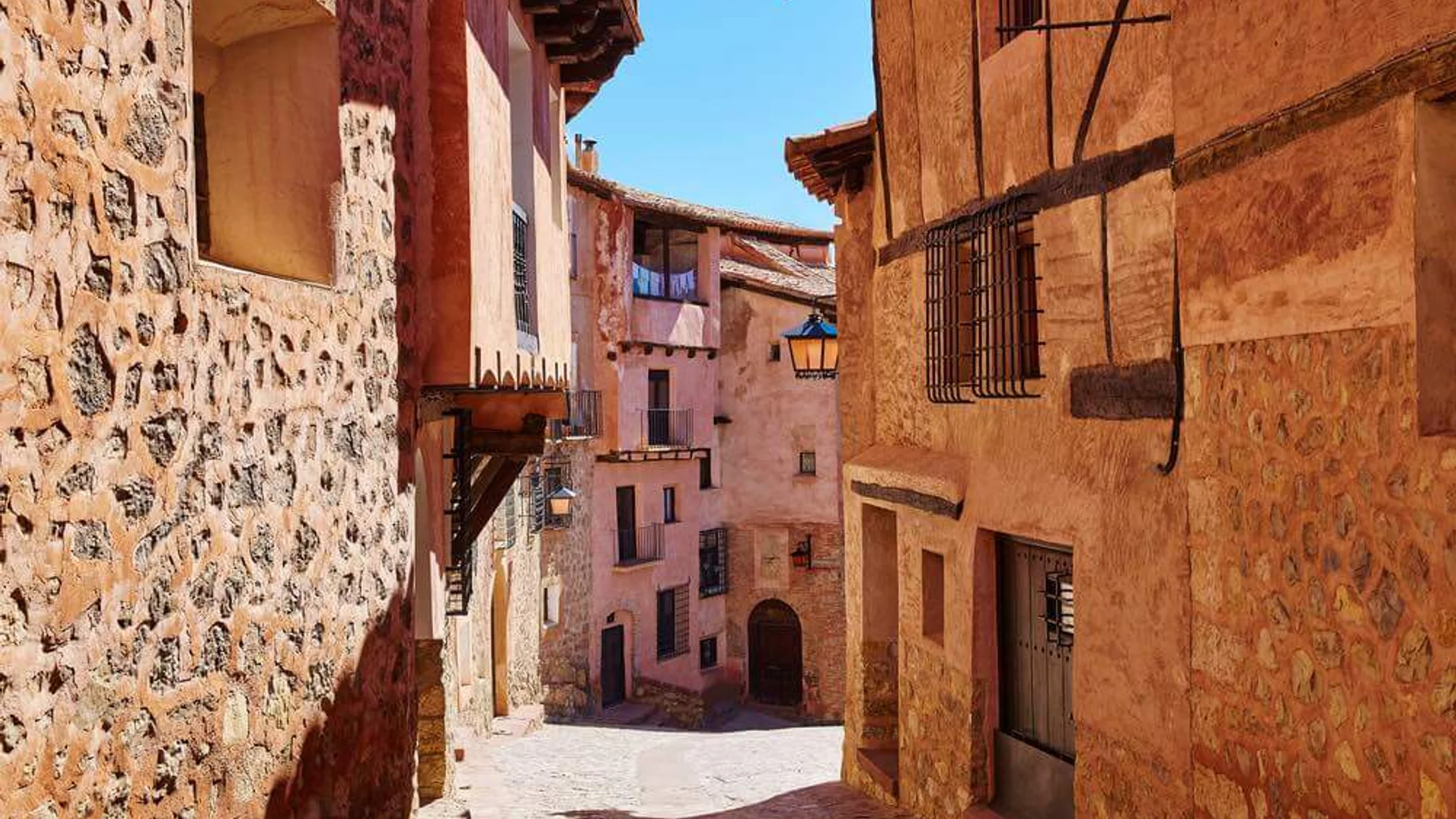
Albarracín (Teruel). Historic-Artistic Site since 1961 (source: BOE), a reddish labyrinth above the Guadalaviar River. Location: Aragón, 40.407, -1.443. Price: accommodation 80–140€ (mid), food 18–28€. Best season: May-June and October for weather and color. Ideal for history and photography. Must-sees: walls and walkway, Cathedral and Diocesan Museum, viewpoint from Portal de Molina.
-
Cudillero (Asturias). An amphitheater of colorful houses facing the Cantabrian Sea, a lively port with fish auctions. Location: Asturias, 43.563, -6.145. Price: accommodation 70–130€ (mid), food 18–30€. Best season: May-September; winter is photogenic but rainier. Ideal for sea and gastronomy. Must-sees: Garita viewpoint, port and fish market, Playa del Silencio (15 km away).
-
Frigiliana (Málaga). Cobblestone streets, Moorish tiles, and views of the Almijara range. Location: Andalucía, 36.793, -3.898. Price: accommodation 70–120€ (mid), food 15–25€. Best season: March-May and October. Ideal for romantic getaways and gentle hiking. Must-sees: Upper Town, cane honey factory, trail to the Higuerón River (family-friendly section).
-
Santillana del Mar (Cantabria). A medieval stone town, neighbor to the Altamira Cave (Neocueva replica). Location: Cantabria, 43.388, -4.107. Price: accommodation 80–150€ (mid/high), food 18–30€. Best season: April-June and September. Ideal for families and culture. Must-sees: Collegiate Church of Santa Juliana, Altamira Museum, walk along Calle del Cantón.
-
Besalú (Girona). A 12th-century Romanic bridge over the Fluvià river and a well-preserved Jewish quarter. Location: Catalunya, 42.200, 2.700. Price: accommodation 80–140€ (mid), food 18–28€. Best season: April-June and September. Ideal for medieval Spain and photography. Must-sees: fortified bridge, mikveh and synagogue, Monastery of Sant Pere.
-
Aínsa (Huesca). At the confluence of the Cinca and Ara rivers, gateway to the Pyrenees and Sobrarbe. Location: Aragón, 42.417, 0.146. Price: accommodation 80–140€ (mid), food 18–30€. Best season: May-July and September. Ideal for hiking and nature. Must-sees: Plaza Mayor and Castle, La Casa de los Títeres Ecomuseum, trip to the nearby Ordesa Valley (source: PN Ordesa, 1918).
-
Laguardia (Álava). Capital of Rioja Alavesa, with underground cellars beneath cobblestone streets. Location: País Vasco, 42.554, -2.584. Price: accommodation 90–160€ (mid/high), food 20–35€. Best season: September-October (harvest) and May. Ideal for wine tourism and couples. Must-sees: visit a cellar with underground tunnels, Walls and Portals, polychrome Portico of Santa María.
-
Valldemossa (Mallorca). In the Serra de Tramuntana, a UNESCO World Heritage Site since 2011 (source: UNESCO), famous for Chopin and George Sand. Location: Illes Balears, 39.710, 2.622. Price: accommodation 120–220€ (high), food 22–40€. Best season: April-June and September. Ideal for photography and relaxation. Must-sees: Charterhouse and viewpoints, potato coca from a local bakery, drive along the Ma-10 viewpoints.
-
Setenil de las Bodegas (Cádiz). Cave houses under overhanging rocks in the gorge of the Guadalporcún River. Location: Andalucía, 36.864, -5.180. Price: accommodation 60–110€ (budget/mid), food 15–25€. Best season: March-May and October. Ideal for curious travelers and foodies. Must-sees: Calle Cuevas del Sol, Homage Tower, route through the high viewpoints.
-
Pedraza (Segovia). A porticoed square and castle on the edge of a ravine; candles in July light up the village (Candlelight Concerts). Location: Castilla y León, 41.134, -3.811. Price: accommodation 80–140€ (mid), food 20–30€. Best season: spring and autumn; winter has photogenic mists. Ideal for history and families. Must-sees: Plaza Mayor, Castle and Zuloaga Museum, gate of the town.
Quick comparison between villages
Nature and mountains: Aínsa and Valldemossa for proximity to parks and viewpoints. Pure medieval history: Albarracín, Besalú, and Pedraza. Best value for money: Setenil and Cudillero in the mid-season. Most photogenic: Cudillero (colors), Albarracín (ochres), and Valldemossa (stone and sea). Concentrated wine tourism: Laguardia. Gentle family plan: Santillana and Besalú for pedestrian centers and manageable museums.
How to Get There and Transport Options
Reaching from Major Urban Centers
From Madrid: Pedraza 1 hour 30 minutes via A-1/AP-61; Albarracín 3 hours 30 minutes via A-23; Laguardia 3 hours 30 minutes via A-1; Santillana 4 hours 30 minutes via A-1/A-67. From Barcelona: Besalú 1 hour 30 minutes via AP-7/C-66; Aínsa 4 hours via A-2/N-230/N-260. From Seville/Málaga: Setenil 1 hour 30 minutes from Málaga via A-357/A-367; Frigiliana 50 minutes via A-7. Palma-Valldemossa: 25 minutes via Ma-1110 or TIB bus L-203. Check Renfe (AVE and Medium Distance) and combine train + regional bus.
Local Transport and Moving Between Towns
On the Cantabrian coast, use FEVE and ALSA for intercity sections and buses to villages (reduced frequency on Sundays). In the Pyrenees and the Iberian System, a rental car is almost essential for linking valleys. Useful apps: Renfe, Moovit, TIB (Mallorca), ALSA, Blablacar. Consider rural taxis or on-demand services in season; some town centers are pedestrianized, plan parking. The smell of diesel starts early at small stations.
Practical Tips on Bookings and Costs
Book your car in advance for long weekends and summer; prices rise by 20–40%. Look for regional discount cards (like TIB in the Balearics) and opt for regional trains on short trips to save money. Carpool on long journeys and avoid tolls if time allows; estimate between €0.12–0.20/km for fuel in 2024 (source: MITECO).
Highlighted activities and recommended experiences by village
Activities by type
Gastronomic: wine tastings in Laguardia's historic cellars, cane honey in Frigiliana, roast meats in Pedraza; ideal for couples and foodies. Outdoors: walks to viewpoints in Cudillero, gentle gorges near Albarracín, coastal paths in Valldemossa; perfect for relaxed hikers. Cultural: guided tours of Besalú and Santillana, castles in Aínsa and Pedraza; great for families. Wellness: rural houses with fireplaces and small spas in the Tramuntana; total rest. The breeze smells of rosemary as you climb to a viewpoint at dusk.
Recommended experiences linked to Picuco
Book private visits to underground wine cellars in Laguardia with tasting and a local guide. Sign up for a mountain cooking workshop in Albarracín or a sunrise photography route in Cudillera with local photographers. Hire interpretive walks through Besalú and Santillana to understand the stone and its crafts. Benefits: secure payment, verified reviews, flexible cancellation, and direct contact with local providers. Tip: choose small groups (max 8) for a closer experience.
Must-do activities in some villages (examples)
- Albarracín: sunset on the walls, 1 h, light effort.
- Cudillero: viewpoint route, 1.5 h, stairs.
- Frigiliana: cane honey workshop, 45 min.
- Santillana: guided Collegiate Church visit, 1 h.
- Besalú: mikveh visit, 30 min.
- Aínsa: walk along N-260 to nearby viewpoints, 2 h, light effort.
- Laguardia: tasting in historic cellar, 1.5 h.
- Valldemossa: Charterhouse and Chopin's cell, 1 h.
- Setenil: cave house tour, 1 h.
- Pedraza: Conciertos de las Velas (July), 2 h; book in advance.
Practical tips for choosing the perfect village
Assess your profile and priorities
Define what you are looking for: peace or activity, sea or mountains, wine tourism or Romanesque architecture, and whether you will go by car or public transport. If you want nature and short routes, Aínsa or Valldemossa; for concentrated history and urban walks, Albarracín, Besalú, or Pedraza. Tight budget: Cudillero and Setenil; high budget and boutique: Valldemossa or Laguardia. The cool stone under your hand will tell you if you made the right choice.
Season, climate, and local events
High season (July-August and Holy Week) increases prices and fills plazas; go early and book ahead. Spring and autumn offer soft light, longer opening hours, and temperate weather in almost all these rural Spain destinations. Research local markets, patron saint festivals, and the grape harvest to add experiences, or avoid those dates if you dislike crowds.
Accommodation, ideal length of stay, and combinations
Choose rural houses if traveling as a family, a state-run hotel (parador) for a couple, and a boutique hotel in wine regions. Suggested stays: 1 night per village, 2 if you do activities. Combine coast + interior (Cudillero + Santillana) or wine + mountains (Laguardia + Aínsa) for balanced trips.
Quick checklist before booking
- Access and parking.
- Public transport schedules.
- Restaurants open on your dates.
- Reservation of key activities.
- Flexible cancellation policy.
Frequently asked questions (FAQ)
Logistics and seasonality
When to go? Spring and autumn balance weather and crowds; summer for the sea and long daylight hours. What are the schedules? Lunch is 13:30–15:30 and dinner is 20:30–22:30; museums sometimes close on Mondays. What restrictions apply? During festivals, there are traffic cuts and access controls; check the municipal websites for details.
Accessibility and services
Many old towns have cobblestones and hills; consult accessible routes at tourist offices. Basic services like pharmacies and ATMs exist in most towns, but confirm reduced hours in winter and on holidays. Carry cash in small villages.
Bookings, security, and cancellations
Book accommodation and experiences 2–4 weeks in advance during the medium season and 6–8 weeks in high season. Travel with basic insurance covering cancellation and assistance. Common policies: free cancellation up to 48–72 hours; check conditions with each provider. Enter Picuco to compare options with clear policies and reviews.
Conclusion and call to action: book your experience with Picuco
Summary and final recommendation
Here is a curated selection of Spain's best villages for a quiet and meaningful trip. Choose according to your style: sea and color, medieval stone, or vineyards and viewpoints—all with verified services and authenticity. Every square, every bakery, and every winery exists thanks to communities keeping these places alive.
Call to action for Picuco
Take the next step: visit Picuco, search by village or by type of experience, and book with local guides. You will get secure payment, helpful reviews, and close support to make your getaway perfect. Start today: pick your village, lock in dates, and secure that guided tour that will make a difference.