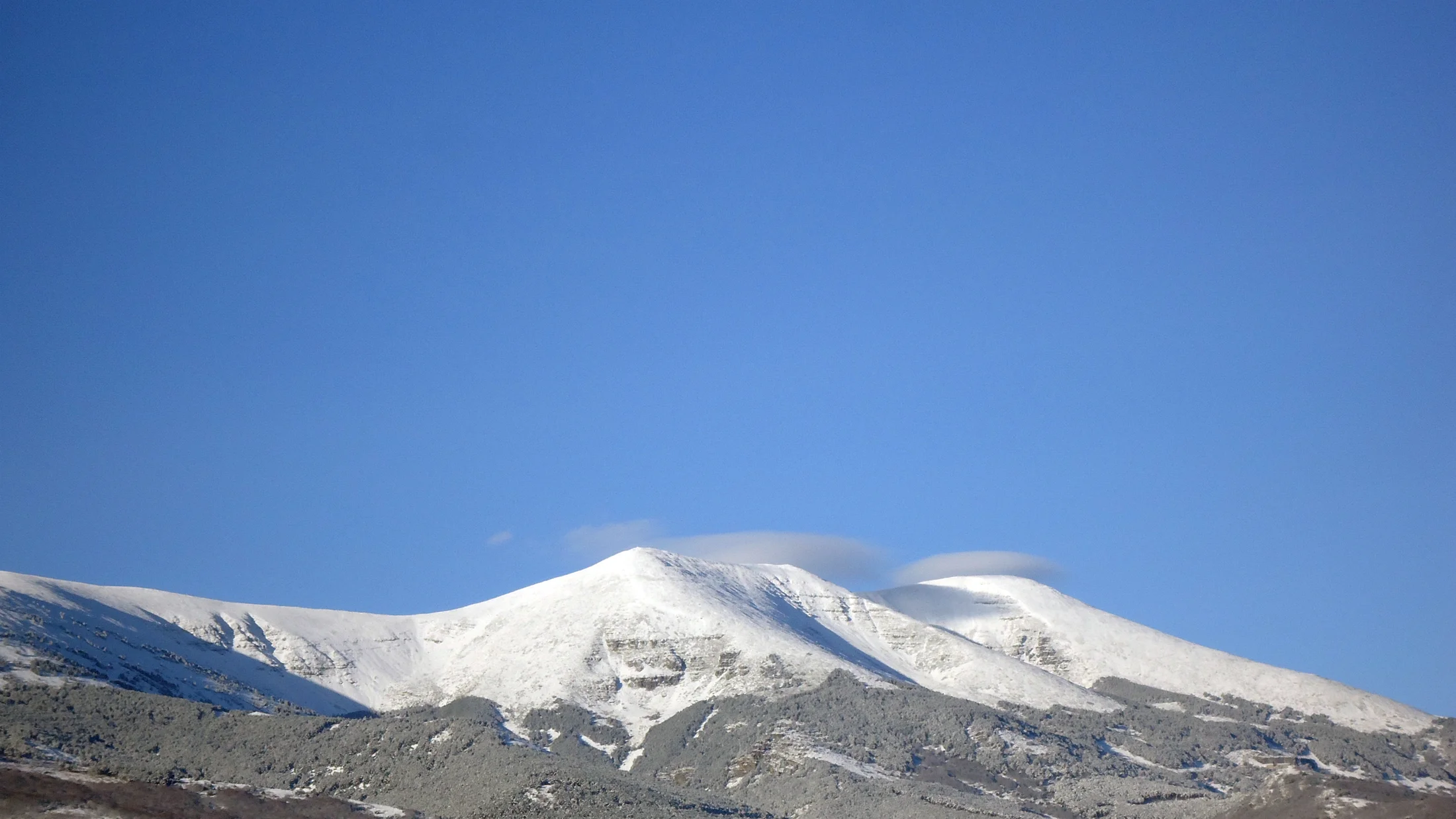
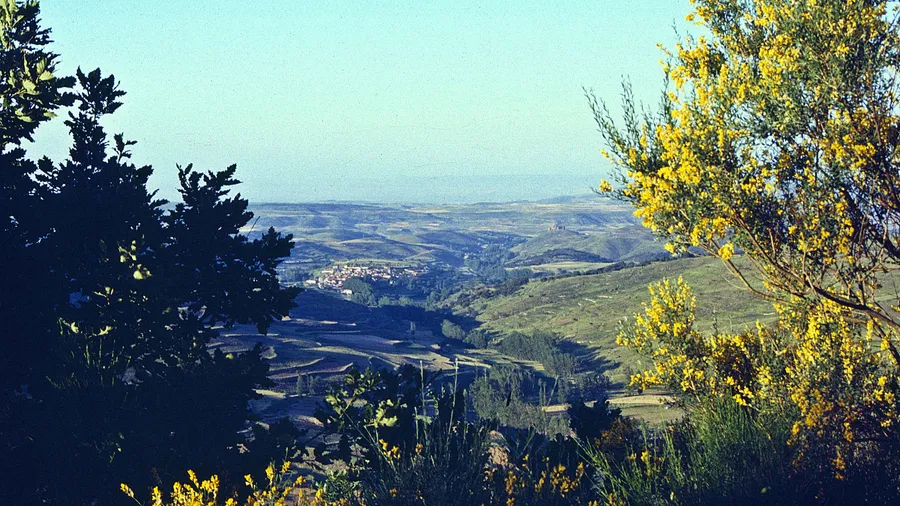
Moncayo Natural Park covers the highest peak of the Iberian System, with Mount Moncayo reaching 2,314 metres above sea level on the border between Aragon and Castile-León. The massif dominates the Castilian plain with a visual presence felt from dozens of kilometres away: from the AP-2 motorway between Zaragoza and Madrid, the Moncayo silhouette cuts the western sky with a clarity that shifts in tone throughout the day. The park's slopes concentrate an ecological diversity unusual for the interior of the Iberian Peninsula, from forests of Pyrenean oak and Scots pine at middle elevations to subalpine grasslands where creeping juniper grows, and quartzite scree in the summit zone where pioneer plant communities colonise cracks between rocks. The park protects 11,287 hectares and was declared a protected natural area by the Aragon Government under Law 6/1998.
The park's trail network revolves around the Moncayo Beech Forest, one of the southernmost beech stands on the Iberian Peninsula, growing on the shaded north-facing slope between 900 and 1,500 metres. In autumn, when the leaves shift to copper and yellow and the ground is carpeted with fallen beech, the paths climbing towards the Cañada del Traslapado and the Moncayo Sanctuary become routes of dense vegetation that filters light into oblique beams. The circular route departing from the Agramonte recreation area, passing through Los Visitos and ascending to the summit via the Pulpillos trail, covers around 14 kilometres with 900 metres of cumulative elevation gain and is completed in five to six hours of continuous walking. It is a demanding route but accessible to hikers with mountain experience and appropriate footwear.
The wildlife of Moncayo reflects the massif's biogeographic transition position between the Mediterranean and the Euro-Siberian worlds. Griffon vultures ride thermals above the eastern cliffs, with groups of ten or more individuals common from mid-morning. Peregrine falcons nest on the north-face rock walls, and their stoop silhouette against the quartzite face is one of the park's defining images. Among mammals, roe deer appear regularly in forest clearings at dawn and dusk, particularly in transition zones between beech and oak woodland. Fire salamanders colonise stream edges of the Huecha river tributaries, whose headwaters rise within the park above 1,800 metres. In the lower meadows, between April and June, several wild orchid species can be found.
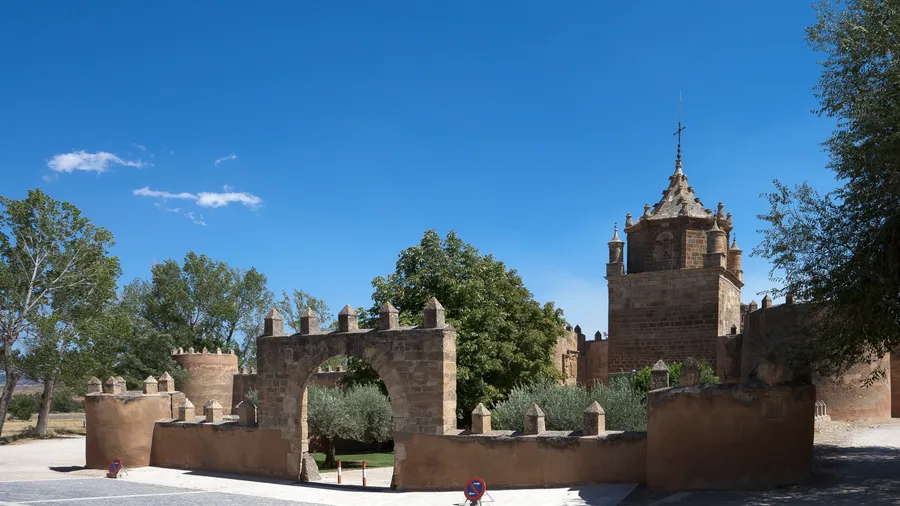
The immediate surroundings include cultural and historical references that extend the visit beyond hiking. Tarazona, 17 kilometres from the main entrance, preserves a 12th-century Mudéjar collegiate cathedral regarded as one of the finest examples of this architectural style in Aragon, and a historic centre whose neighbourhoods still bear traces of medieval Arab presence. Veruela Monastery, 10 kilometres from the park, is the best-preserved Cistercian complex in Aragon: its Romanesque-Gothic transitional cloister served as the retreat of poet Gustavo Adolfo Bécquer during the summers of 1863 and 1864, where he wrote the Letters from My Cell. The wineries of the Campo de Borja Designation of Origin, whose territory extends at the foot of the massif, produce high-alcohol garnacha on stony soils that lend minerality to the wine.