The essentials of Parque Natural de la Sierra de Irta

  • • Last undeveloped coastline in the Valencian Community, with coves accessible only on foot or by kayak
  • • Protected posidonia oceanica meadows visible while snorkelling at less than 5 m depth
  • • 12th-century Templar castle ruins set in the heart of the sierra
  • • Santa Lucía hermitage trail (14th c.): 12 km ridge walk with sea views and Peñíscola in the distance
  • • Alcossebre as a low-key base with kayak hire and scuba trips

Description

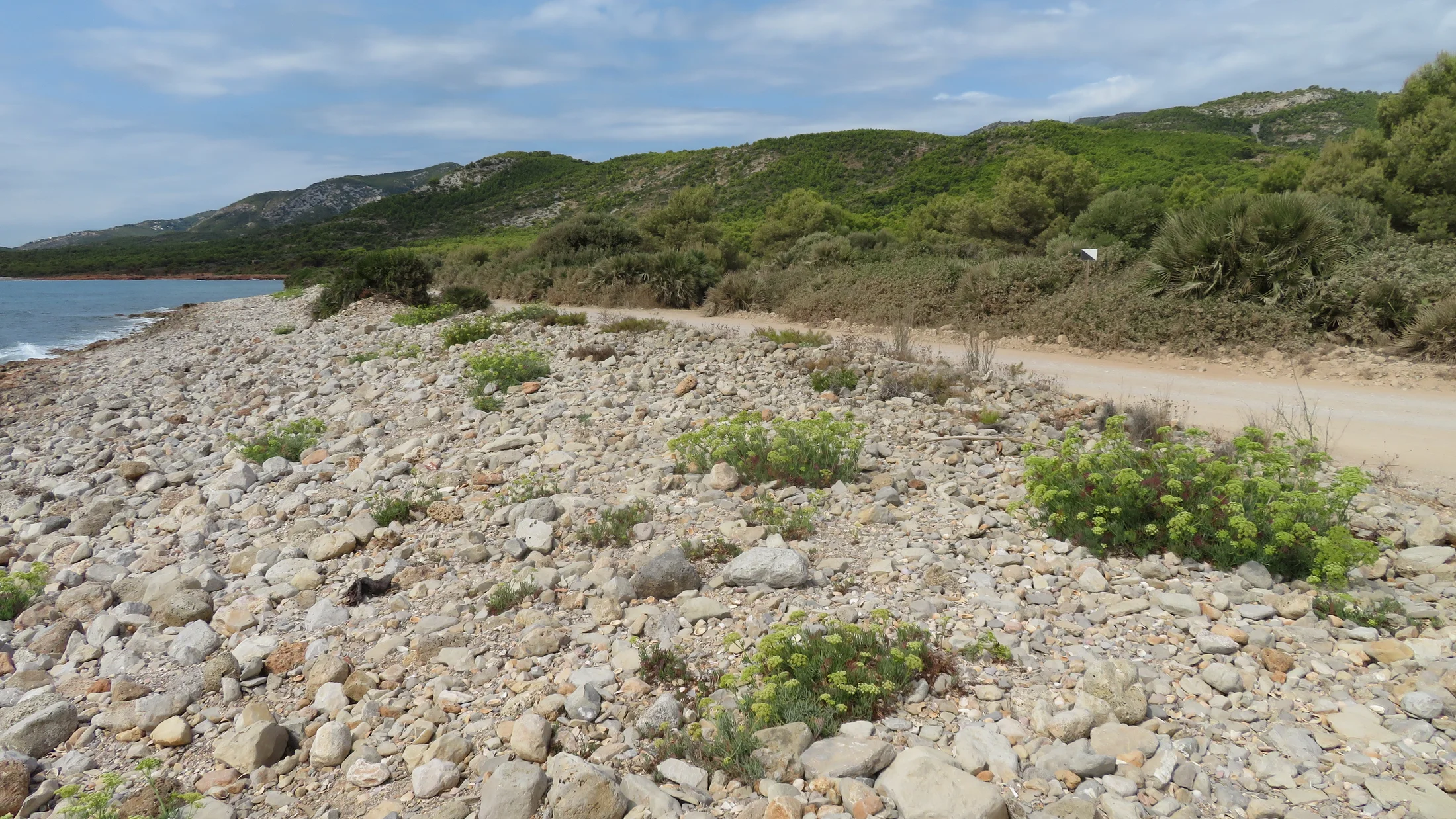
The Sierra de Irta faces the Mediterranean between the municipalities of Peñíscola and Alcalà de Xivert in Castellón province, forming the last stretch of undeveloped coastline in the Valencian Community. Unlike most of the northern Valencian coast, where the first line of beach has been occupied for decades by hotels and apartment complexes, Irta's maritime front retains its original profile: limestone and sandstone hills dropping directly to the sea, alternating with coarse-sand coves and rocky seabeds beginning less than 5 metres from the shore.

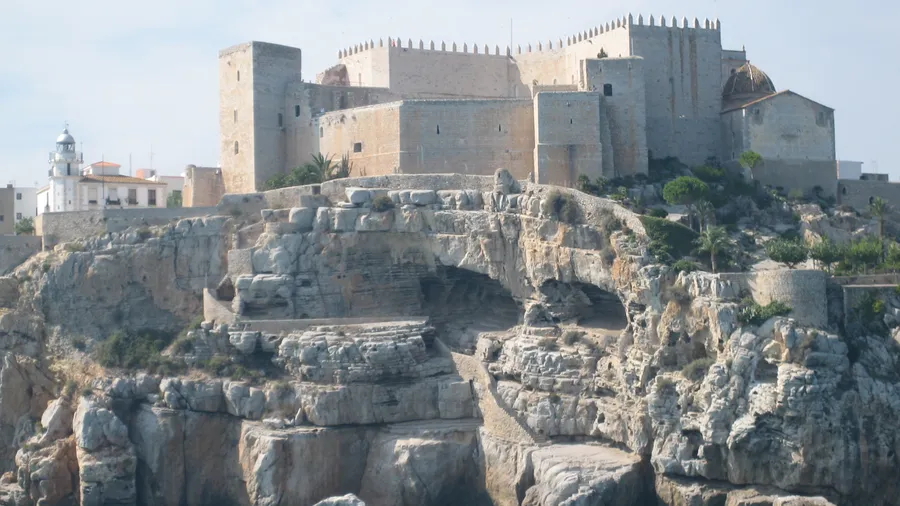
The highest point of the sierra is Moleta de la Cova at 571 metres. From the summit, the silhouette of Peñíscola castle on its limestone promontory is visible to the north, while the Castellón plain stretches south to the horizon. The 12-km ridge trail running north to south connects Alcossebre with the hermitage of Santa Lucía, a 14th-century sanctuary that was a medieval pilgrimage destination and is today the starting point of the park's most popular circular route.

The ruins of a 12th-century Templar castle, known as the Castillo de Irta, stand inside the sierra at around 300 metres elevation. The structure preserves part of its original walls and overlooks Cala del Moro, a small inlet reachable only on foot or by kayak, with water clarity of 8 to 15 metres depending on the season. The seabeds in this section of the park include meadows of Neptune grass (Posidonia oceanica) covering several square kilometres, protected from anchor damage since the natural park designation in 2002.

On land, Mediterranean scrub of kermes oak, mastic and dwarf fan palm combines with maritime pine (Pinus pinaster) forests at higher elevations. The park's trails are suitable for mountain biking on wider sections, though the irregular gradient requires careful route planning. Snorkelling and scuba trips depart from Alcossebre to explore the reefs and posidonia meadows. Low tourist pressure in the area — Alcossebre has around 2,500 registered residents in winter — keeps crowds modest even in August.

The park's designation in 2002 has prevented the construction that absorbed most of the Valencian coastline during the preceding three decades. Walking here between April and June, with yellow broom and rosemary in flower along the clifftop paths and the sea at a shade of blue that deepens towards the horizon, makes the contrast with the built-up stretches of Costa Azahar to the north and south immediately apparent. Outfitters in Alcossebre organise guided half-day sea kayaking routes that pass through three or four coves unreachable by any road, arriving finally at Cala del Moro for a swim before paddling back along the cliff base.
Practical information

Everything you need to know for your visit to Parque Natural de la Sierra de Irta

How to get there
Via the AP-7 motorway, take exit 44 towards Alcalà de Xivert / Alcossebre, about 70 km north of Valencia and 35 km south of Castellón city. From Alcossebre the main park entrances are signposted. There is no direct public transport from Castellón; a private vehicle is recommended.
Area Information
The Serra d'Irta Natural Park was declared in 2002. The main base for visits is Alcossebre, which has nautical hire services and tourist information offices. Peñíscola, with its famous Papal castle of Pope Luna, lies about 15 km to the north.
Geography
A coastal ridge of limestone and sandstone with summits up to 571 m (Moleta de la Cova). The shoreline alternates low cliffs, pebble coves and small sandy beaches. The park covers around 5,700 ha across the municipalities of Peñíscola, Alcalà de Xivert and Santa Magdalena de Polpís.
Flora & Fauna
Mediterranean scrub of kermes oak, mastic, dwarf fan palm and rosemary. Maritime pine (Pinus pinaster) at higher elevations. Neptune grass meadows (Posidonia oceanica) on the seafloor. Notable fauna includes the ladder snake, Mediterranean chameleon and raptors such as peregrine falcon.

Things to do

Find the best plans and things to do in Parque Natural de la Sierra de Irta

20

Accommodations

Best accommodation options in Parque Natural de la Sierra de Irta

Loading accommodation options...

Frequently Asked Questions

Get answers about Parque Natural de la Sierra de Irta

Cala del Moro is accessible on foot from the Santa Lucía hermitage car park (about 30 minutes along a marked trail) or by kayak from Alcossebre. There is no direct road access. In summer, some kayak rental companies offer half-day guided tours that include the cove as a destination.
Yes. The wider tracks in the interior, particularly those at mid-elevation, allow mountain biking. The full ridge route is better suited to hiking due to its irregular gradient. The trail map available from the Alcossebre tourist office indicates which sections are suitable for each activity.
The Castillo de Irta is a 12th-century fortress attributed to the Knights Templar, who controlled this territory for much of the Middle Ages. The perimeter walls and some interior structures survive. It sits inside the sierra at around 300 metres elevation, reached by a trail starting from the Santa Lucía hermitage.
The best snorkelling conditions are found in coves along the southern section of the park, such as Cala del Moro and the inlets near Alcossebre. Rocky seabeds less than 5 metres deep hold posidonia meadows, sea urchins, octopus and a variety of reef fish. Visibility is generally better in autumn and spring than in midsummer.
No, the town and castle of Peñíscola lie outside the natural park boundaries, though Peñíscola's municipal territory borders the park to the north. The Sierra de Irta and Peñíscola castle are complementary visits that can be combined in a single day from Alcossebre, about 15 km apart.