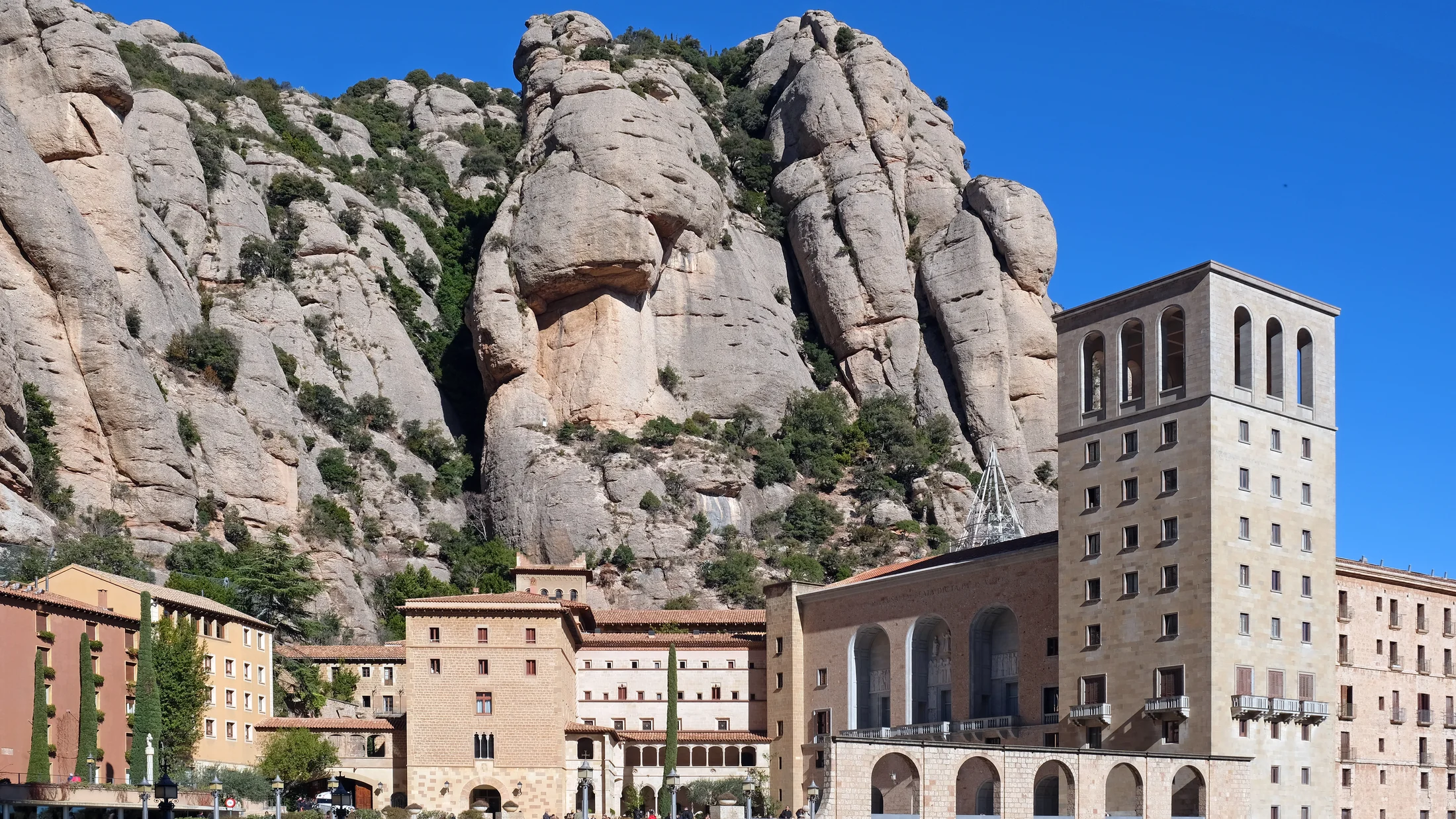
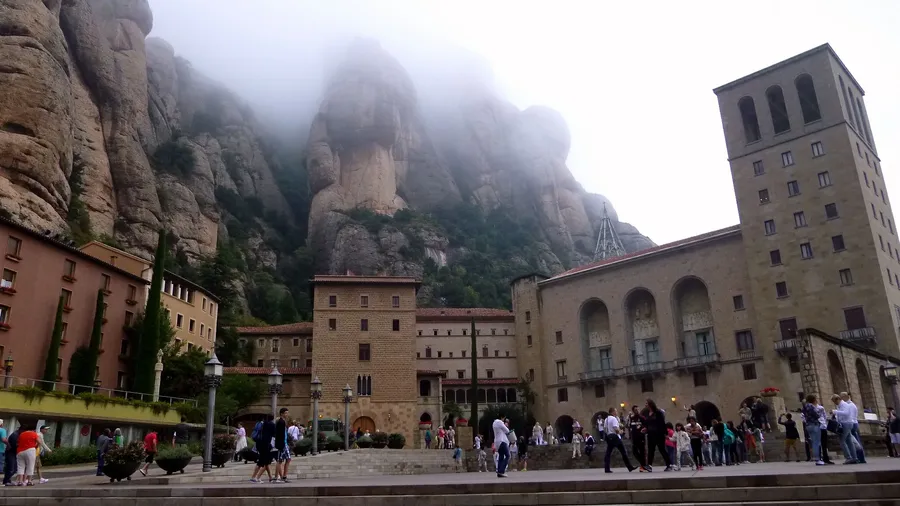
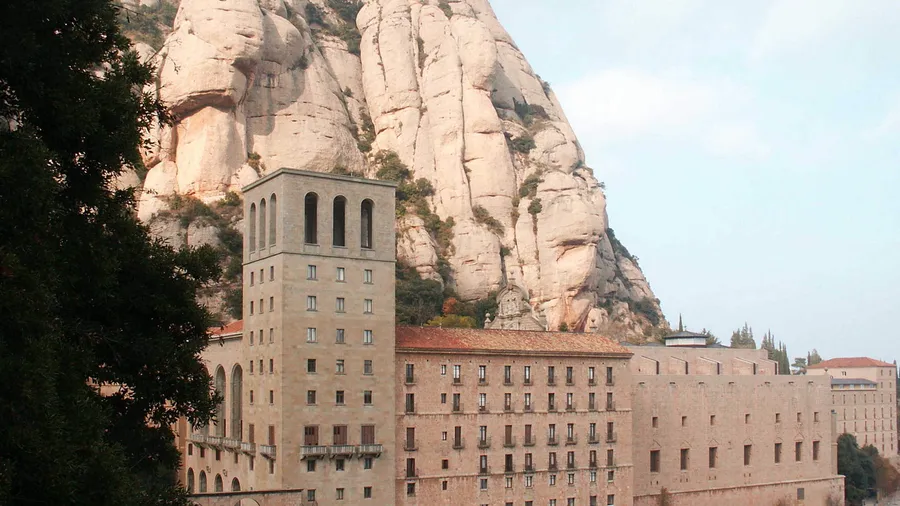
Montserrat is a conglomerate massif that rises steeply from the Baix Llobregat plain about 40 kilometres northwest of Barcelona. Its profile of rounded pinnacles and towers — formed by differential erosion of a cemented deposit of pebbles and sand — is visible from the surrounding lowlands and has defined the Catalan landscape imagination for centuries. The highest summit, Sant Joan, reaches 1,236 metres, but the most striking formations — Els Degotalls, Cavall Bernat, Els Frares Encantats — are concentrated between 700 and 1,000 metres and are accessible on foot from the monastery or via the rack railway and cable cars.
The Monastery of Santa Maria de Montserrat has occupied this site for over a thousand years. La Moreneta, the dark Romanesque carving of the Virgin, is the patron of Catalonia and draws over a million visitors per year. The Escolania choir, one of the oldest boys' choirs in Europe, performs daily in the basilica except in July. The simultaneous presence of religious heritage, natural landscape and climbing infrastructure creates a layering of uses that few European mountains share: pilgrims, tourists, hikers and climbers occupy the same space without any single group dominating it.
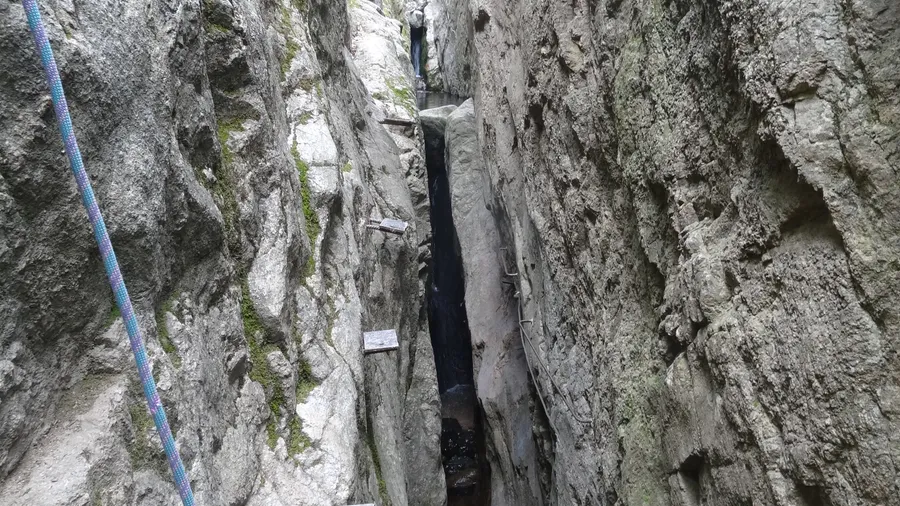
Rock climbing on Montserrat has a documented history going back to the 1920s, when early Catalan climbers began exploring the conglomerate spires. The massif now has over 4,000 routes spread across sectors including Serrat de les Dòlies, Els Diables, l'Aiguller and the landmark Cavall Bernat. The rock is compact and the climbing style demands friction technique and small-hold reading; quality varies by sector, from fairly friable in some areas to excellent in others. The range of grades — from III to IX — makes Montserrat one of the largest climbing areas on the Iberian Peninsula, with the added advantage of being within an hour of Barcelona.
Over 100 kilometres of marked trails connect the medieval hermitages scattered across the mountain: Sant Joan, Santa Cecília, Sant Benet, the Santa Cova. The hermitage circuit is a historical route used continuously since the Middle Ages. Montserrat's vegetation, shaped by the porous rock and the contrast between sun-exposed and shaded slopes, includes Mediterranean holm oak woodland, rosemary and heather scrub on exposed ridges and small stands of Scots pine in the cooler, shaded gullies. In rock crevices grow rupiculous plants like Ramonda myconi, a Tertiary relict that survives only in cool, shaded spots on Iberian mountains.