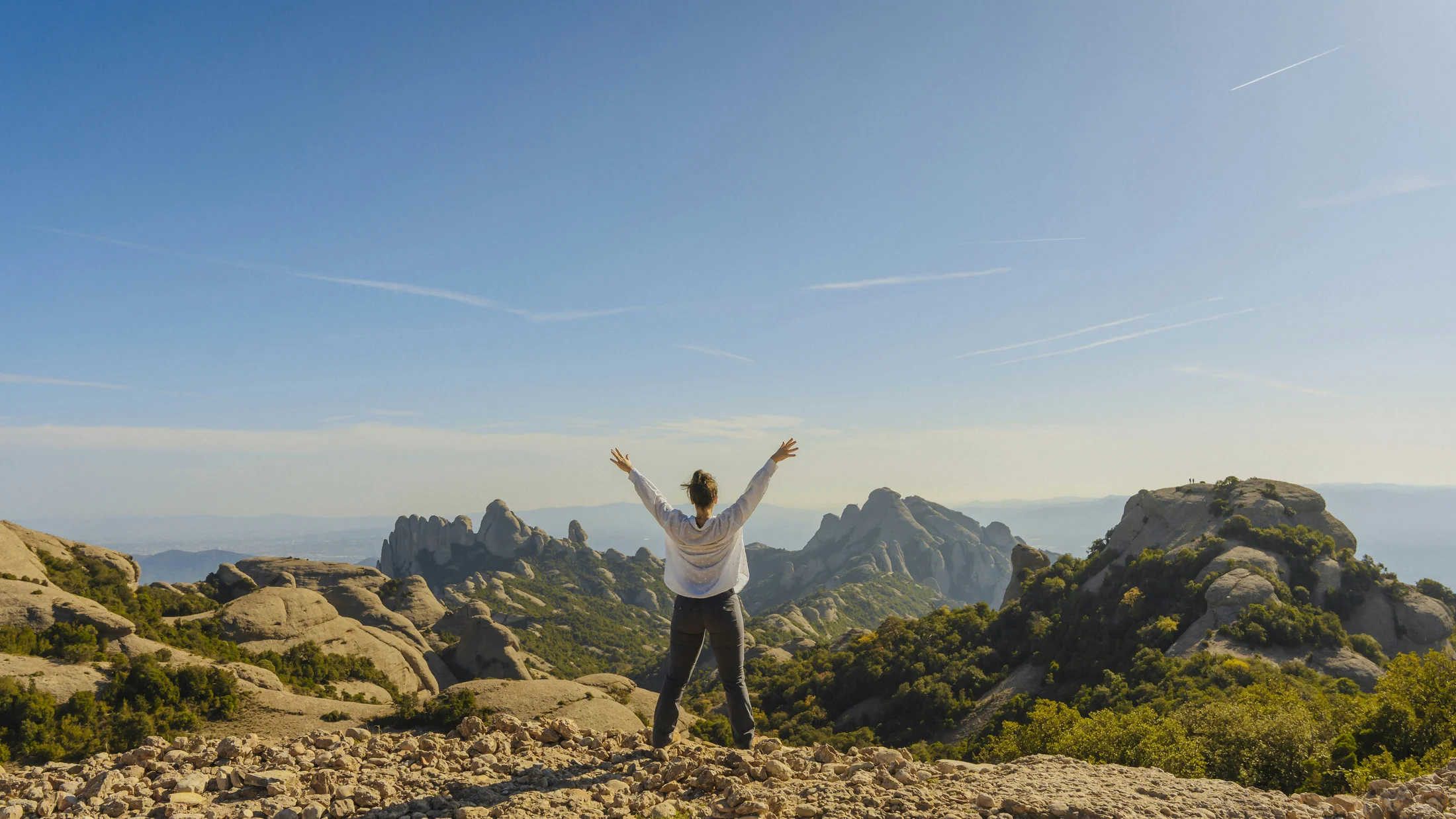
Spain offers an extraordinary diversity of landscapes for hiking: from the snow-capped Pirineos to the volcanic coasts of the Canarias. We've selected 12 of the best hiking routes in Spain, organized with practical information so you can find your next adventure.
For each route we include:
- Key facts: duration, elevation gain and best season
- Difficulty level: clear classification based on fitness requirements
- Logistics: how to get there and starting points
- Sustainability: tips to minimize your impact
1. GR11 — Senda Pirinática
The GR11 crosses the entire Pirineos mountain range, connecting the Cantábrico Sea with the Mediterranean over roughly 800 km. It is the ultimate challenge for active tourism in Spain.
This is not for beginners: it demands excellent physical fitness, high-mountain experience and rigorous planning. The reward is breathtaking alpine scenery, crystal-clear glacial lakes and exceptional biodiversity.
It is divided into about 45 stages (40–50 days to complete), but its modular design lets you tackle weekend or week-long sections.
Practical tips
- Best season: late June to mid-September
- Mountain huts: book well in advance, especially July–August
- Standout sections: Parque Nacional de Ordesa y Monte Perdido or Parque Natural de Posets-Maladeta. For a more concentrated experience, check our circular trekking route in the Pirineos
- Gear: topographic maps or a reliable GPS, layered technical clothing and high-mountain footwear
Picuco te puede ayudar
Does something here catch your eye?
Tell us.
Write to us on WhatsApp or email: we answer questions, find the best options and help you sort out the booking.
2. Ruta del Cares — Picos de Europa
Known as the "Divine Gorge," this route covers 12 km (one way) between Poncebos (Asturias) and Caín de Valdeón (León), along a path carved into the rock walls of the Río Cares gorge.
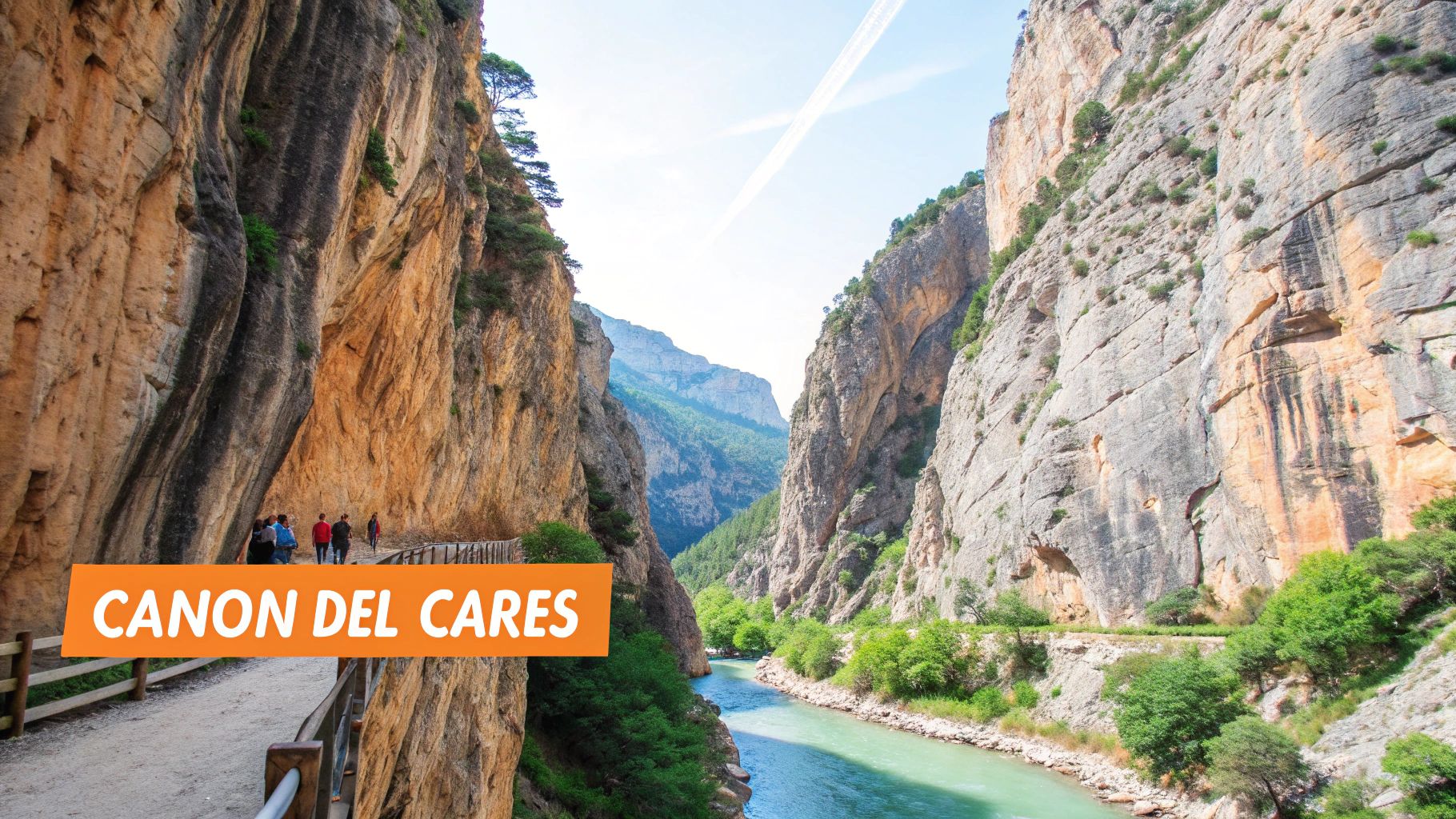
Despite its dramatic appearance, the trail is mostly flat and wide, accessible to anyone with moderate fitness. It attracts over 200,000 hikers per year. You can return the same way (24 km total) or take a taxi/bus back.
Practical tips
- Best season: May–June or September–October (avoid summer for a quieter experience)
- Start early: begin at first light to beat the crowds and the heat
- Combine it: visit local Cabrales cheese producers and the villages in the area. Discover everything the Parque Nacional de los Picos de Europa has to offer
- Gear: footwear with good grip, plenty of water, sunscreen and food
3. Camino de Santiago — French Route
The Camino Francés is the world's most famous pilgrimage route and a UNESCO World Heritage Site. It stretches nearly 800 km from Roncesvalles to Santiago de Compostela, crossing the mountains of Navarra, the vineyards of La Rioja, the Castilian Meseta and the forests of Galicia.
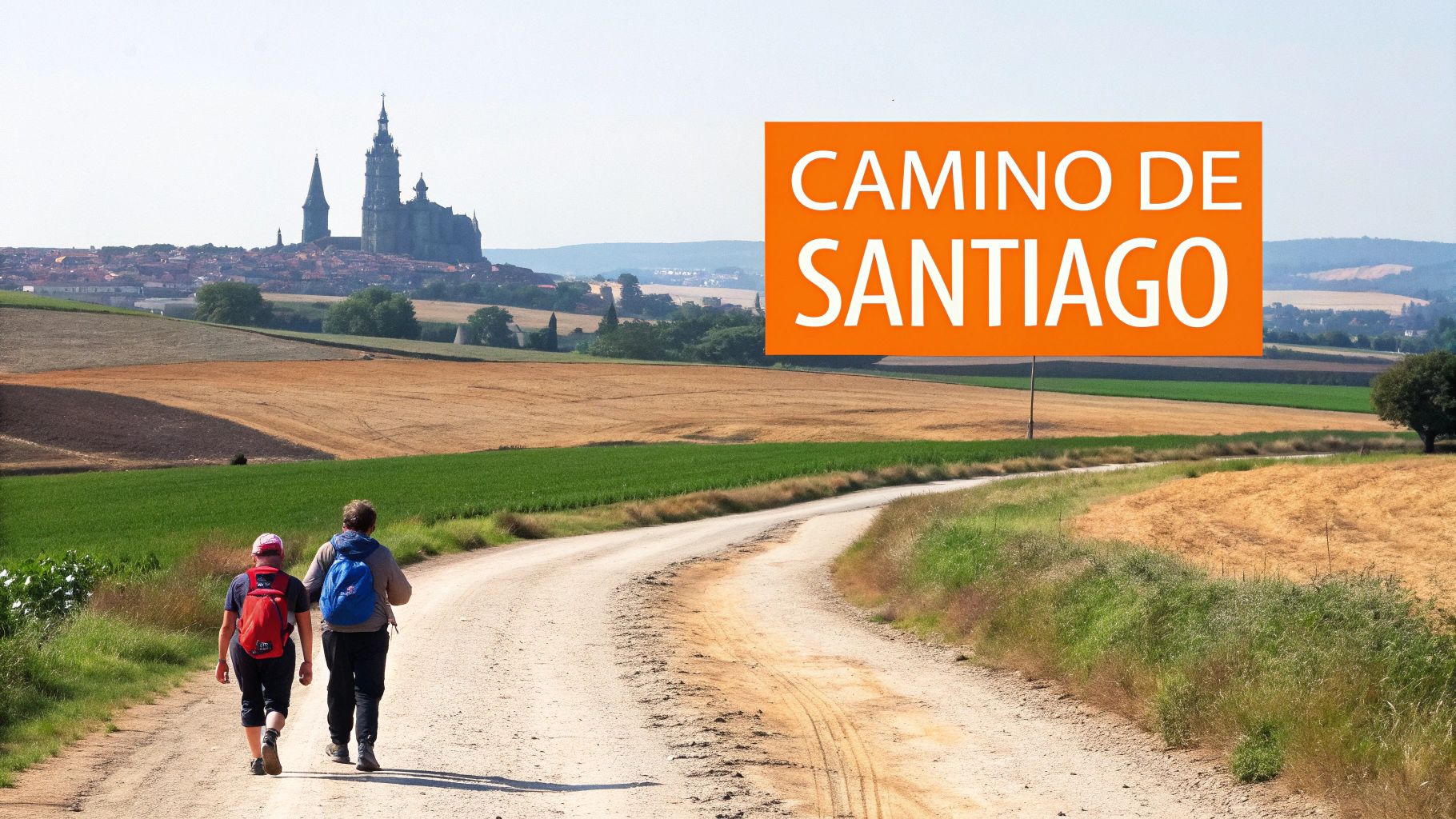
Perfectly waymarked with yellow arrows and scallop shells, it boasts an unrivalled network of pilgrim hostels. You can complete it in 30–35 days or tackle shorter sections.
Practical tips
- Best season: April–May or September–October
- Minimum section: the last 100 km from Sarria is enough to earn the Compostela certificate
- Pilgrim credential: get your "passport" before you start and stamp it at each stage to access public hostels
- Try it first: a 1–2 week section will give you a solid taste of the experience
4. Mulhacén Ascent and Alpujarras Circuit
Mulhacén (3,479 m) is the highest peak on the Iberian Peninsula. On clear days, the views stretch to the Mediterranean and the African coast. Combining it with a tour of the white villages of the Alpujarras — Pampaneira, Bubión, Trevélez — creates an experience that blends high mountain with culture.
The route from the Hoya del Portillo is physically demanding due to elevation gain and altitude, but no technical climbing is required. It is an ideal introduction to altitude mountaineering, close to Granada.
Practical tips
- Acclimatization: spend 1–2 days in Granada or the Alpujarras before ascending
- Start early: setting off before dawn lets you enjoy the sunrise from the summit
- Sun protection: UV radiation at altitude is intense, even in cold weather
- Explore the region: dedicate 2–3 extra days to the trails and villages of the Alpujarras Granadinas
5. Vía Ferrata de Montserrat
For those seeking an extra shot of adrenaline, the Vía Ferrata de Montserrat combines hiking with climbing on the iconic rock massif near Barcelona. Metal rungs, cables and hanging bridges let you progress up vertical walls safely.
There are sections of varying difficulty: the "Canal de les Dames" (K3) is ideal for getting started. The combination of intense exercise and Montserrat's unique rock formations makes this an unforgettable experience.
Practical tips
- Mandatory gear: harness, helmet and energy absorber (rental available)
- Beginners: start with K2–K3 routes and consider hiring a professional guide
- Avoid crowds: plan your visit on a weekday
- Combine your visit: the Monasterio de Montserrat and the Parque Natural de Montserrat are worth extra time
6. Lago de la Ercina and Cañón de los Horridos Circular Route — Picos de Europa
This ~14 km circular route (4–5 hours) links the Lago de la Ercina with the Cañón de los Horridos, in the heart of the Picos de Europa. Glacial lakes, high-mountain meadows and karst formations, with good chances of spotting chamois, deer and golden eagles.
It is one of the park's less crowded gems: top-tier alpine scenery without the masses found on other trails.
Practical tips
- Best season: June to September (weather in the Picos changes fast)
- Wildlife: get an early start and bring binoculars
- Restricted access: in peak season, private vehicles cannot drive up to the Lagos de Covadonga. Use the shuttle buses from Cangas de Onís
- Gear: layers of technical clothing, a waterproof jacket and mountain boots with good grip
Find hiking activities on Picuco
Looking for guided active tourism experiences in these areas? On Picuco you can find guided routes, organized treks and outdoor activities in Spain's best nature destinations.
7. Ordesa Trails — The "Spanish Fitz Roy"
The Valle de Ordesa, nicknamed the "Spanish Fitz Roy" for its Patagonian resemblance, offers one of Spain's most spectacular day hikes. The route follows the floor of the Río Arazas canyon through beech and fir forests, past waterfalls like the Grada de Soaso and the Cola de Caballo at the end, in the Circo de Soaso.
The main route is linear and relatively flat, ideal for families and photographers.
Practical tips
- Best season: May to October. In autumn, the beech trees put on a stunning colour display
- Restricted access: in summer and Easter, the only way in is by bus from Torla-Ordesa
- Start early: a picnic at the Circo de Soaso is highly recommended
- Photography: don't miss the Gradas de Soaso, the Cascadas del Estrecho and the final panoramic view of Monte Perdido
8. Caminito del Rey — Málaga
The Caminito del Rey is a wooden walkway anchored to the vertical walls of the Desfiladero de los Gaitanes, suspended more than 100 metres above the Río Guadalhorce. Restored and reopened in 2015, it has become one of Andalucía's most important tourist attractions.
The route is linear (~8 km total, ~3 km of walkways), mostly downhill. It doesn't require great physical fitness, but you should be comfortable with heights.
Practical tips
- Booking essential: tickets sell out weeks or months in advance. Buy online on the official website
- Start early: first thing in the morning to avoid heat and crowds
- Logistics: a linear trail — you'll need the shuttle bus between El Chorro and Ardales. Allow 3–4 hours in total
- Gear: a helmet is mandatory (provided), wear closed-toe non-slip shoes, bring water and sun protection
9. Pico Peñalara — Sierra de Guadarrama
Pico Peñalara (2,428 m) is the roof of the Sierra de Guadarrama and the highest summit in the Comunidad de Madrid. Just one hour from the capital, it offers an accessible alpine experience with glacial cirques and lagoons.
The classic circular route from the Puerto de Cotos is well waymarked. It demands good fitness due to elevation gain and rocky terrain, but it is ideal for a first taste of high-mountain hiking.
Practical tips
- Best season: late May to October. In winter it requires mountaineering equipment
- Puerto de Cotos: the car park fills up fast on weekends — arrive early or use public transport
- Weekdays: a much quieter experience
- Gear: this is high mountain even though it's close to Madrid. Layered clothing, trekking boots, water and a windbreaker
10. Teide Ascent — Tenerife
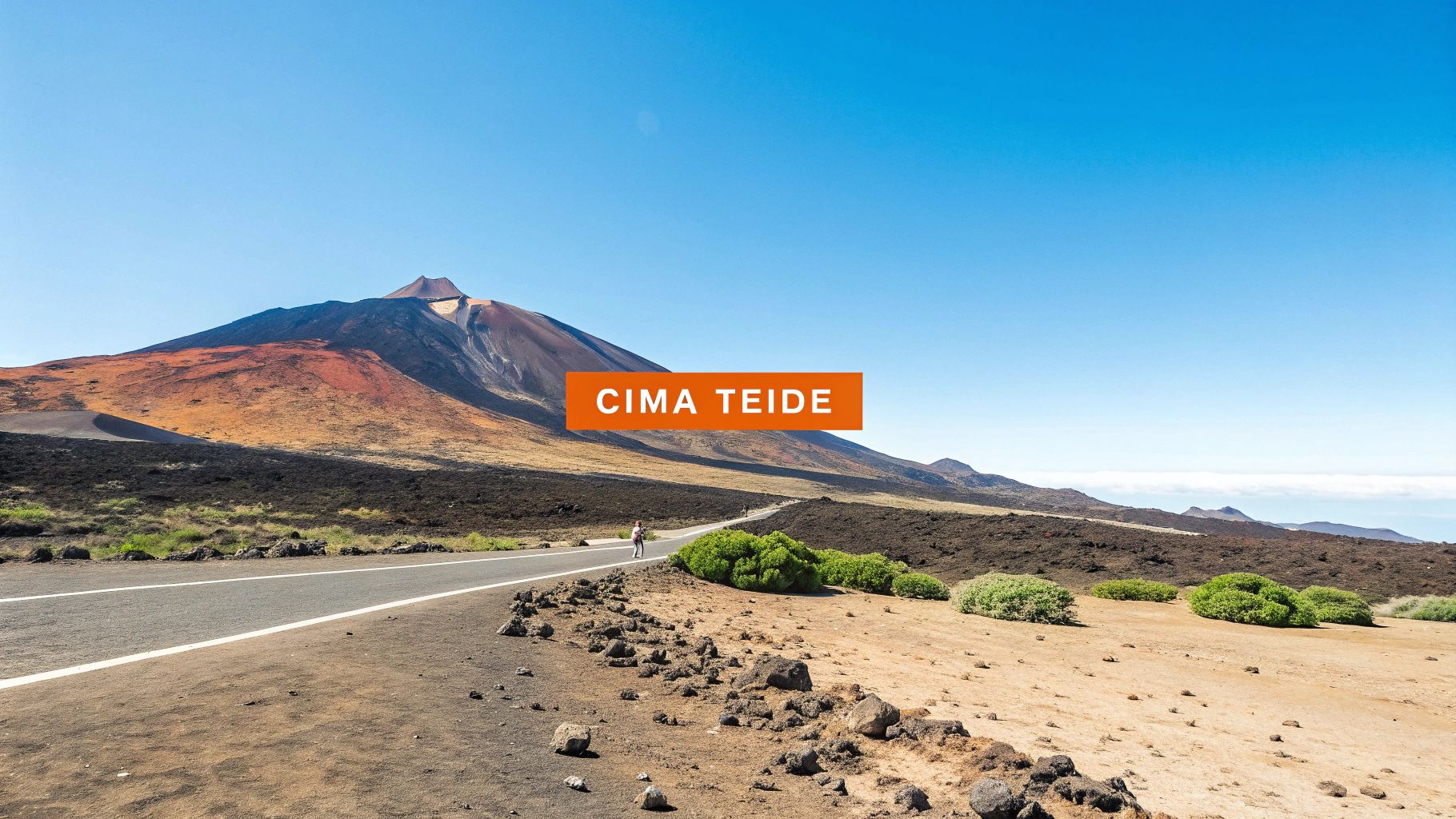
Climbing El Teide (3,718 m), Spain's highest peak, means walking through an otherworldly volcanic landscape. Views of the crater, the Canary Islands archipelago and the sea of clouds. It is Spain's most visited National Park.
The ascent is not technically complex, but the altitude demands good physical fitness. You can choose the full climb from the base or take the cable car for the final stretch.
Practical tips
- Permit required: to reach the summit from the cable-car station, apply for the free online permit months in advance
- Acclimatization: spend some time in the park at lower altitude before climbing
- Cable car: book tickets in advance
- Protection: plenty of water, high-factor sunscreen, sunglasses, a hat and warm layers (summit temperatures are very low even in summer)
11. Ruta de los Espejos — Picos de Europa
A little-known treasure: a circular route past glacial lakes with crystal-clear waters that, on calm days, mirror the peaks like glass. It is the perfect option for experienced hikers seeking solitude and picture-postcard alpine landscapes in the Picos de Europa.
It requires good physical condition and mountain experience due to the elevation gain and route-finding in alpine terrain. It is a demanding day out, but one with a constant succession of stunning scenery.
Practical tips
- Best season: June to September (outside these months, snow and ice make it dangerous)
- Navigation: carry a detailed map and GPS; some sections are poorly waymarked
- Start early: a long route that requires a full day
- Weekdays: more solitude and better chances of spotting wildlife
12. Sendero Subterráneo del Soplao — Cantabria
A completely different perspective: hiking underground. El Soplao is an active karst cave with eccentric formations considered a geological wonder of the world.
The caving route (~2.5 hours, guided) equips you with a helmet and headlamp to explore pristine galleries. Expect to walk on uneven ground, scramble up ramps and squeeze through narrow passages. Normal fitness is sufficient.
Practical tips
- Year-round: the interior temperature is constant (~12–14 °C). A perfect plan for rainy days
- Bookings: caving tour spots are very limited — book online weeks in advance
- Options: a more accessible tourist visit through illuminated galleries is also available
- Gear: helmet, headlamp and overalls are provided. Bring mountain boots and comfortable clothes (you will get muddy)
Quick comparison
| Route | Difficulty | Duration | Ideal for |
|---|---|---|---|
| GR11 — Senda Pirinática | Very high | 40–50 days (or sections) | Experienced mountaineers |
| Ruta del Cares | Moderate | 1 day | Hikers of any level |
| Camino de Santiago (Francés) | Moderate | 30–35 days (or sections) | Pilgrimage, cultural immersion |
| Mulhacén + Alpujarras | Difficult | 1 day + 2–3 days in the area | Introduction to high-altitude mountaineering |
| Vía Ferrata Montserrat | Difficult–Very difficult | Half day | Adventurers with technical gear |
| Lago Ercina + Cañón Horridos | Moderate–Difficult | 1 day (4–5 h) | Photographers and nature lovers |
| Ordesa Trails | Moderate | 1 day | Families and photographers |
| Caminito del Rey | Easy–Moderate | 3–4 h | Tourists and families |
| Pico Peñalara | Moderate | 1 day | Day trip from Madrid |
| Teide | Easy–Moderate | 1 day | Tourists and photographers |
| Ruta de los Espejos | Difficult | Full day | Experienced hikers |
| Soplao Underground | Moderate | 2.5 h | Families, rainy days |
Your next adventure starts here
Spain is a hiking paradise, with routes for every level: from the dizzying gorges of the Cares to the volcanic landscapes of El Teide, by way of the thousand-year heritage of the Camino de Santiago.
Planning essentials
- Do your research: every route has its own character. Check duration, elevation gain, optimal season and current conditions
- Proper gear: good footwear, layered clothing and enough water. Your safety comes first
- Leave no trace: respect wildlife, vegetation and rural communities
- Stay flexible: mountain weather is unpredictable. Always have a plan B
The true reward of hiking isn't just reaching the summit — it's every step, every breath of fresh air and every moment of connection with nature.
Ready to start planning? Find active tourism activities and experiences in Spain's best nature destinations on Picuco.