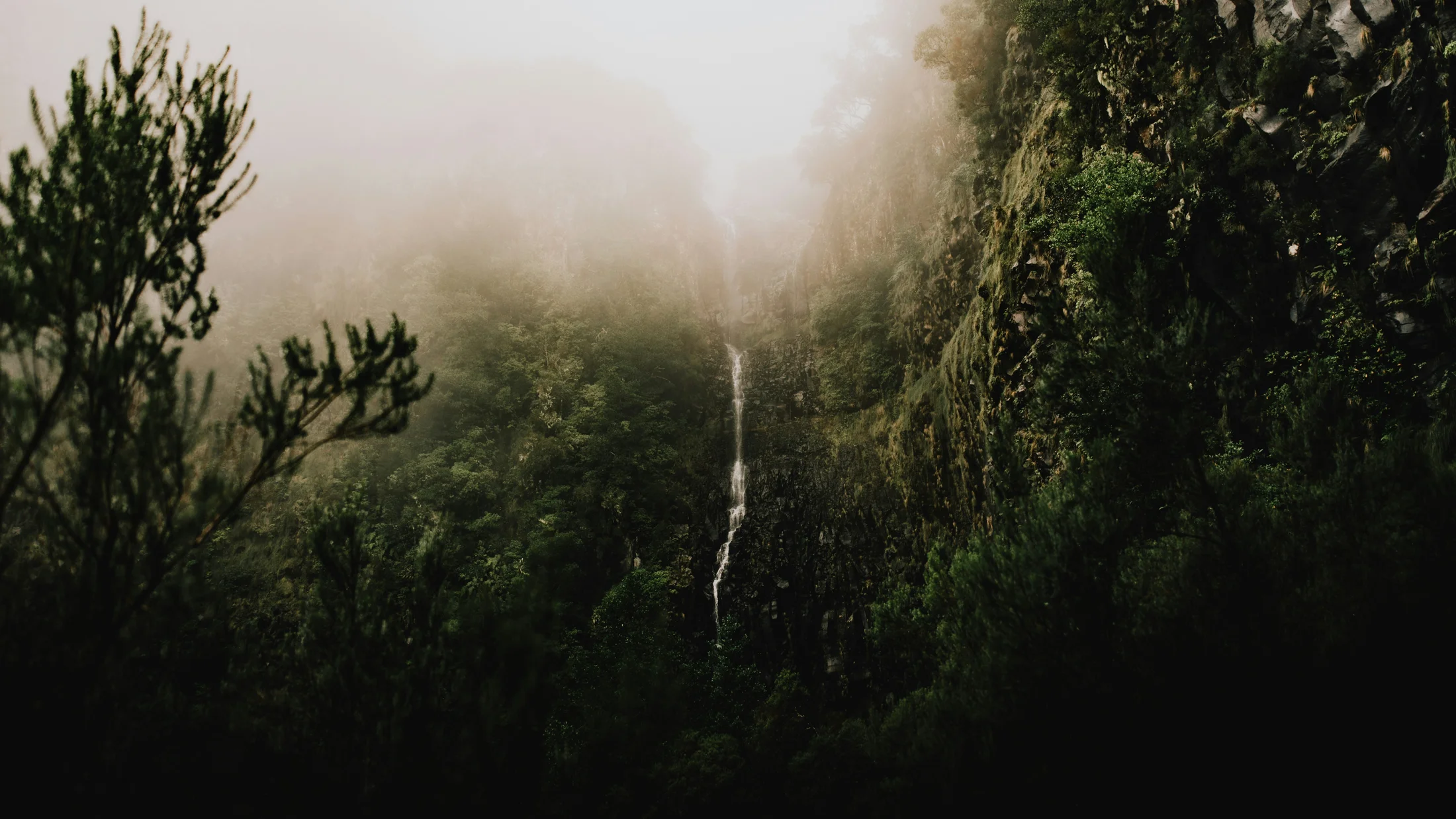
When the water falls, nature awakens in a different way
With the rain, the forest smells more, the rivers flow with more volume, and the colours gain depth. The humidity releases compounds such as geosmin, which explains the smell of wet earth, and the clouds act as a diffuser that softens the light.
With drizzle, amphibians appear, birds seek shelter, and the wind cleans the dust from the air. You will also see reflections in puddles, mist in the valleys, and waterfalls with more volume.
Spending time in green reduces stress and improves your mood, and the rain adds a constant acoustic stimulus that facilitates mindfulness. To make the most of it, prepare equipment that keeps you warm, short alternative routes, and a basic reading of the weather report.
The key lies in adapting to the rain with prudence: simple journeys, with easy escape routes and nearby shelter. Here you have concrete ideas, safety, and practical logistics: which ecosystems work best with water, when to go, how to interpret warnings, and ten activities that improve with rain.
Picuco te puede ayudar
Does something here catch your eye?
Tell us.
Write to us on WhatsApp or email: we answer questions, find the best options and help you sort out the booking.
Where and when to get wet: places, seasons and how to get there without complications
When it rains, some landscapes shine and others become complicated, so choose your terrain wisely. Atlantic forests (Galicia, Asturias, Cantabria, Basque Country) look intensely green all year round and appreciate gentle showers. In laurisilva forests like Anaga (Tenerife), light mist magnifies mosses and ferns; in beech forests like those in Navarra or the Sierra de Ayllón, the cushioned ground softens footsteps and puddles. Imagine droplets pearling the moss like tiny lenses.
In Mediterranean Spain, autumn and spring concentrate rainfall; the Sierra de Grazalema (Cádiz) is one of the rainiest in the Peninsula (often exceeding 2,000 mm/year, a well-known fact in Spanish climatology). Mountains and foothills respond differently: in the Pyrenees or Picos de Europa, summer storms are frequent in the afternoon; plan for mornings and avoid ravines. The banks of large rivers (Ebro, Tajo, Miño) offer flat paths with birds and reflections, but watch out for rising water levels.
Microclimates matter:
- Windward zones (the side exposed to moist wind) receive more water; on the leeward side, you will often find drizzle or clearings.
- Enclosed valleys concentrate mist and runoff; if you seek safety, prefer gentle hills and wide tracks.
- Cliffs along the coast offer a spectacle with heavy swells, but keep a large distance from the edge and avoid slippery rocks.
When to go? Avoid orange or red warnings for rain or storms from AEMET (the official colour-coded alert system). With a yellow level and good preparation, you can enjoy moderate activities on safe terrain. Interpret the report like this:
- Probability of Precipitation (PoP): above 70% means it is very likely you will get wet; adjust your duration and circular routes.
- Intensity: 1-5 mm/h is drizzle or light rain; >10 mm/h complicates visibility and drainage.
- Wind: gusts >50 km/h multiply the sensation of cold and pull at branches; avoid dense forest during a gale.
Accessibility by environment:
- Forests and Greenways: ideal with rain due to their stable surface; many have walkways and handrails.
- Mid-altitude mountains: choose well-maintained forest tracks and
PR-paths, avoiding scree slopes and ridges. - Riverbanks: walk on high paths, never through riverbeds or dry riverbeds; streams grow quickly during a DANA (Isolated Depression in High Levels, an episode of intense rain).
- Coast: seaside promenades and inland viewpoints; pebble beaches drain better than fine sand beaches.
How to get there on rainy days:
- Trains and buses gain reliability compared to waterlogged secondary roads; consider parking in a village and walking.
- By car, avoid clay dirt tracks (soap-like mud), fords without walkways, and dry riverbeds; park in elevated areas with good drainage.
- Carry chains only if the snow line is low; for rain, tyres in good condition and smooth driving are enough to prevent aquaplaning.
- Always have a simple "return route" and a point of refuge: a visitor centre, a village bar, or a hostel porch.
By region, think of nature-rain plans with room for manoeuvre: a beech forest in the Sierra Norte de Madrid, a river path in La Rioja, an oak grove in Ourense, or a coastal path in Bizkaia with escapes to nearby towns. Connect landscape and community: local markets and ethnographic museums complete the day when the weather turns.
Where to sleep and how to take shelter: accommodation that shines in the rain
A good roof turns a rainy day into pleasure. Rural houses with a fireplace, cabins with a porch, hostels with a dry room, and well-managed mountain refuges are your allies for a damp day.
If you can, choose accommodation near the start of your routes to reduce travel. When booking, check the insulation and heating: double glazing, a stove or radiators, and reliable hot water. Also ask about access after the rain, whether the road is paved or a draining track, and if the last few metres get muddy.
Look for an area for wet equipment: a covered porch, a boot room, coat hangers, and a dehumidifier. Value a kitchen equipped with utensils for soups or infusions; a thermos and a kettle make all the difference.
The type of accommodation changes depending on your plan. A rural house works for long stays with family: check for a safe fireplace, dry firewood, and a drying room. A cabin or bungalow is suitable for couples and small groups, with a deep porch and efficient heating. A rural hostel is good for a tight budget and a social atmosphere, with a large common room and a laundry area. A mountain refuge is useful if there are GR- or PR- routes nearby: check the wardens, weather reports, and access.
On a route, wide and safe rocky overhangs and dense forests without the risk of dead branches serve as natural shelter. Never take shelter under isolated trees during an electrical storm. For short breaks, a well-tensioned tarp, a hiking umbrella, and a bivvy bag solve the moment. The public porches of hermitages, interpretation centres, stations, or shelters also serve as refuge, always respecting the space and the local community.
Bring waterproof bags to separate wet clothes, newspaper to speed up the drying of boots, and a thin rope to improvise a clothesline. A hot cup upon your return lowers your heart rate and lifts your spirits on damp days.
Activities that improve with rain: 10 ideas to go out with enthusiasm
1. Hiking in the rain: sensory walks
Walking in the rain sharpens your hearing and smell: every step sounds different and the forest smells more alive. Droplets hang from the ferns like a transparent necklace.
It works best on short routes with stable ground: forest tracks, well-marked PR- paths, laurel forests, and beech forests with soft ground. Choose loops of 3-8 km with escapes and avoid ridges, scree slopes, and active ravines. In areas with GR-11 or GR-10, take the signalled low variants.
Equipment makes the difference. You need boots with non-slip soles, gaiters, and poles for the mud, as well as a hardshell waterproof jacket, thermal layers, and a backpack cover. Carry the tracks downloaded and the map in a zip bag, with a full battery.
Plan by alternating wooded sections with tracks so you can shorten the route if the rain intensifies. Do not cross streams without a bridge: the water rises quickly. With children, turn the outing into a game: a sound bingo (dripping, bird, wind) and counting mushrooms without collecting them.
2. Birdwatching on rainy days: silent activity
With showers, many birds reduce their flight and perch in reeds, hedges and highly visible perches. The rain changes their routines, and that leaves you with still birds in plain sight.
In lagoons and riverbanks, waterfowl and waders maintain their activity, while raptors wait for clearings to soar. The hides and roofed observatories in the wetlands are the best points for observing in the rain. Forest edges and grasslands provide refuge and visibility to the birds.
When it stops raining, they come out to forage intensely. Take the opportunity to walk slowly along shores and temporary ponds. Make long, timed pauses: stillness multiplies observations. Note down different vocalisations, because many species modify their song due to the background noise.
Bring 8x42 or 10x42 binoculars with waterproof treatment, a binocular cover and a small microfibre towel. Maintain your distance, do not play songs during sensitive seasons and avoid stepping on waterlogged vegetation. For this plan, you need patience, a thermos and a good hood.
3. Jumping in puddles and children's exploration: simple fun
A puddle and some wellies are enough to keep children entertained on a rainy afternoon. Jumping in puddles combines coordination, observation and play: the village street or a safe path becomes a small physics and biology laboratory.
The game organises itself. You can make a puddle map, mark them, measure them with sticks and classify them by depth. A race with leaf boats in controlled streams is also worthwhile, as is painting with mud on flat stones (which cleans up with water) or looking for tracks in the mud: wheels, hooves and soles.
To go out, each child needs wellies, waterproof trousers, thin gloves and a full change of clothes in a dry bag. Choose an area without traffic and without ditches, and avoid deep roadside puddles. Take short breaks and have a hot drink to stay warm.
If you want to give it an educational twist, count drops in 30 seconds, compare splashes from different altitudes or draw the water cycle in a waterproof notebook. With an hour or two outdoors, you have your plan sorted, and there is no need to book anything.
4. Mushroom hunting and foraging: making the most of the humidity
When the rain gives way to mild temperatures, the mountain fills with saffron milk caps, porcini, chanterelles and more, depending on the area and the season. The humidity activates the mycelium and the smell of the undergrowth becomes thick, like an aromatic broth rising from the earth.
Before filling your basket, make sure you identify well what you are picking: use reliable guides and, if in doubt, do not consume the mushroom. Bring a wicker basket, which ventilates and disperses spores, as well as a pocketknife and a brush. Respect minimum sizes and do not disturb the soil excessively.
In some regions, collection permits are required and there are quotas: inform yourself at town halls or forestry offices. Avoid protected areas with restrictions and do not collect threatened species. Transport the damp mushrooms separated by paper and, at home, spread them out to dry.
You can integrate the activity into your getaway: walk a PR- through pine forests or oak groves, collect moderately and complete the day with a local stew in the village. If you do not collect, do "photographic mushroom hunting": the same excitement, zero impact.
5. Rain and macro photography: droplets and textures that tell stories
Rain leaves an outdoor soft light studio: colours become saturated, shadows blur, and every puddle returns reflections. A droplet suspended on a leaf can contain the inverted landscape.
Before heading out, protect your equipment with a camera cover, lens hood, cloths and zip bags. If you can, attach an umbrella to the tripod.
If you are looking for a silk effect on waterfalls, drop to 1/4–2 s with a tripod and ND filter.
In macro, focus manually, close the aperture to f/8–f/11 and track textures in bark and moss. To compose, try reflections in puddles with a low horizon and vanishing lines, soft backlighting in clearings, silhouettes under umbrellas and minimal details such as a leaf, a footprint or a droplet.
With light rain, shoot at ground level and place a waterproof bag underneath. With a downpour, take shelter in porches or under leafy trees without the risk of branches.
6. Rivers and waterfalls in flood: intense views and sounds
With rain, waterfalls gain volume and rivers flow with more force. The air fills with spray and the plan is to see and hear the water in full flood.
Look for official viewpoints, walkways with railings and high paths away from the edge of the riverbed. Reservoirs with active spillways are viewed from authorised areas.
Avoid pools, riverbeds and unstable banks: a flood can double the flow in minutes. If you see murky water with logs, the level is rising fast or the bank is giving way, move away. With active warnings from Protección Civil and AEMET, turn back.
To photograph, arrive after the peak of the rain and look for uniform light. To listen, turn off your mobile and stay for five minutes. Maintain your distance from the water and plan a clear return before approaching.
7. Kayak and water activities in high waters: more action
Rain can activate a river or make it impracticable. In high waters, go out with a level of experience that is appropriate and, preferably, with specialised and certified companies.
Before heading out, check the river level with the Confederaciones Hidrográficas and on local scales, and avoid rapid floods. The necessary equipment is an approved life jacket, helmet and paddle; with cold, add a dry suit or wetsuit.
If you are a novice, look for calm waters such as reservoirs or sheltered estuaries. For intermediate levels, aim for class II–III with a guide. You can also go paddle boarding in sheltered marshes with moderate wind or rafting with operators during the season and with controlled flows.
Book with margin and confirm on the same day: if the flow rises, the plan changes. At Picuco you will find departures regulated by zone and season, with information to adjust your getaway.
8. Orientation games and geocaching in the rain: challenge and learning
With rain, navigating with a map and compass gains a tactical plus: leaves get wet, paths shine, and markers are less visible. Sharpen your references and look more at the terrain, because water also masks noises.
Set up a micro-beacon circuit in a nearby park or pine forest, with safe and accessible points. If you prefer geocaching, use waterproof containers with zip bags and download the coordinates in advance. For the little ones, a map with large symbols and rhyming clues works well.
Carry laminated maps or maps in a case, a reliable compass and an offline app; the mobile phone, in a waterproof bag. Limit the distance and design cloverleaf routes so you can shorten them. Avoid embankments, watercourses and clay soils with a steep slope.
Take the opportunity to learn: count steps and estimate distances, practise simple bearings and check them at every crossing.
9. Forest bathing and meditation in the rain: wellbeing that soaks in
The constant pitter-patter of the rain helps you concentrate during a forest bath. Shinrin-yoku consists of walking without haste, breathing deeply and opening your senses, and the rain sets the rhythm.
Dedicate between 60 and 90 minutes to a safe forest, with flat terrain and a clear path. Make "mindful listening" stops: close your eyes, count three sounds and describe the textures by touch. To release tension, try 4-6 breathing: inhale 4, exhale 6.
Avoid getting cold with a thermal layer, a hat and a hot drink. If your body shivers or you notice clumsiness, start the return: it could be mild hypothermia. And do not take shelter under tall trees if there is a thunderstorm.
Integrate the practice at the end of a short walk and finish with a hot soup at your accommodation.
10. Improvised picnics under shelter and outdoor cooking: warmth and a smile
A porch, a safe rocky shelter or a tarp between sturdy trees is enough to set up an intimate table with the sound of the rain in the background. Choose your shelter well and the picnic will work even if it rains all day.
Food warms up the plan: thermoses with vegetable cream or broths, warm sandwiches wrapped in paper, dried fruits and chocolate. Bring waterproof blankets and insulating seats so you don't get cold while eating.
The camping stove, only in permitted areas and without risk, and it is better not to light it with wet wood. With children, propose a round of rain stories, a notebook for drawing raindrops and the "guess that sound" game. As a couple, a spiced infusion and a local dessert with a shared book while it stops raining.
For logistics, place the tarp at an angle so that it drains the water, secure the guy lines well and leave everything clean when you leave.
Family plans: creative and safe games with rain
Rain awakens children's curiosity and multiplies play opportunities. With minimal preparation, a short stroll turns into an expedition.
Games change with age. From 2 to 4 years old, jump in puddles in a safe area, look for bright colours on wet leaves, touch bark and listen to the "tick-tick" on the umbrella. From 5 to 8 years old, propose a puddle map, a leaf boat race, a sound bingo and a collection of fallen leaves from common species for a herbarium. From 9 to 12 years old, try basic orientation, a field notebook with a record of drops per minute and macro photography with a mobile phone under a case.
Adapt your usual outings. For hiking in the rain, shorten the route to 2–4 km, with a simple return and an intermediate shelter. For birdwatching, choose covered hides and short turns with lightweight binoculars. When searching for mushrooms, identify without consuming and distribute roles: photographer, note-taker and seeker. If a picnic is involved, bring flasks, a waterproof blanket and a full change of clothes at hand.
Safety is prepared before leaving. Use bright-coloured clothing and, if there is little light, reflective bands. To thermoregulate, put on a thermal layer, a hat and thin gloves, with a break and a hot drink every 30–45 minutes. Walk with secure steps: short poles, lugged soles and hands free. Carry wipes, gel and a bag for wet clothes, and a lukewarm shower upon return. And agree on a "keyword" to ask for a break or a return without argument.
Equipment, safety and respect: getting wet sensibly
With rain, the right clothing decides if the outing ends well. Dress in layers: a thermal merino or synthetic base, an insulating middle layer and a waterproof and breathable outer layer (hardshell). You need waterproof jacket and trousers with a water column of 10,000–20,000 mm, as well as a hat and gloves. For mud, boots with good tread and gaiters.
The backpack carries a cover and waterproof bags inside; the mobile phone and documentation in a zip-lock bag. Add a headlamp with batteries, a thermal blanket, a lighter and a pocket knife, and a basic first aid kit with bandages, medical tape, gauze, painkiller and salt sachets.
Before leaving, check the AEMET report on the same day and avoid orange or red warnings and strong winds. Prepare a plan B with a shorter route or an alternative indoor activity, and notify a contact of the expected return time and the route. Download tracks for offline use and carry physical maps if you depend on GPS.
On the move, take short steps, use poles and avoid smooth slabs, roots and wet paint. Do not cross streams without a walkway: if the water covers half your calf and pushes, turn back. During a thunderstorm, move to open and lower ground, separate the group and avoid shelters under tall trees or rocks with leaks.
The terrain also notices your steps. Stay on the path, because rain softens the ground and footsteps off-track cause erosion. Skirt around puddles containing amphibian eggs or larvae through already trodden areas, without crossing them. Do not collect more than permitted and clean boots and poles when finished so as not to disperse invasive seeds.
112 is the emergency number in Spain. Carry identification and, if you go out alone, share your real-time location with someone you trust.
Look and photograph better with rain: ideas that work
With rain, the light becomes diffuse and contrast drops, which reveals details that harsh sun erases. Reflections duplicate scenes and fog adds layers to the landscape.
For reflections, crouch down and place the horizon high in the puddle: this way you frame the scene within the water. Look for wet bark and mossy stones and take advantage of that soft light for textures. If you are going for droplets, use a short telephoto or macro, with a dark background and manual focus.
Movement can also be photographed: capture leaves moved by large droplets with speeds between 1/30–1/60. With low light, increase the ISO with moderation and stabilise with a lightweight tripod. Adjust the white balance to “cloudy” for warm tones and shoot in RAW to have editing leeway. Carry a lens hood and cloths to keep the lens clean.
Bird or plant identification apps help to record findings: download the offline packages before heading out. Add a waterproof field notebook and a grease pencil to note sounds, behaviours and times.
Post-rain moments with a still leaden sky give shine to the ground and, sometimes, rainbows with low sun. Reserve that hour to go out with your camera and notebook.
Frequently asked questions
Is it safe to do nature activities when it rains?
Yes, with clear criteria and room to rectify. Check the AEMET report and avoid orange or red warnings for rain or storms; with a yellow warning and good equipment, opt for simple terrain.
Look at the intensity of the rain (mm/h), the wind and the orography: narrow valleys and riverbeds become dangerous. If you see turbid water with debris, the water level rising quickly or branches fallen due to the wind, turn back.
For hiking in the rain, choose well-maintained PR- trails, tracks and high riverbanks. Carry an offline map and an escape plan.
In the event of a sudden worsening, bundle up, drink something hot, seek safe shelter (a porch, a public building), communicate your situation and return via the easiest route. Nature plans with rain are safe if you adjust the duration, avoid water crossings and renounce summits and ravines.
What age is recommended for activities such as jumping in puddles or hiking in the rain?
From 2–3 years old, with close supervision, children can jump in puddles in safe areas without traffic or ditches. Between 5–8 years, short routes of 2–4 km with breaks and hot drinks work well. At 9–12 years, basic orientation and simple photography can be added.
With babies, choose ergonomic baby carrying with a rain cover and very short walks near the car or the accommodation. Adapt the activity to the temperature and the wind: warm hands and feet are the priority.
Avoid slippery riverbanks, stream crossings and forests with unstable branches. Carry a full change of clothes and finish with a lukewarm wash. Better brief and joyful experiences than long walks in the cold.
What clothing and equipment are essential?
With rain, clothing is chosen in layers and equipment is kept dry. Wear a merino or synthetic thermal base, a fleece mid-layer, and a waterproof-breathable outer layer. This way, you regulate heat while walking and stay warm when you stop.
On your feet, boots with good tread and gaiters for the mud. Add a hat and gloves, and carry a rucksack with a cover and dry bags inside. Your mobile phone and documentation go in a zip bag.
Store electronics and food in dry bags and airtight containers. Carry a headtorch with batteries, a thermal blanket, and a flask with a hot drink. If you are going to observe wildlife, use binoculars with waterproof treatment; if you are photographing, carry a camera cover.
Complete your equipment with a basic first aid kit and a whistle. With wind, add a windbreaker or an adjustable hood; with sustained cold, consider a lightweight thermal vest.
What do I do if the weather worsens during the activity?
When the weather changes halfway through the route, the first thing is to stop and activate the contingency plan: stop, put on dry layers, and drink something hot. Afterwards, look for safe shelter, such as a porch, a building, or a wide and stable ledge, far from watercourses, isolated tall trees, and ridges.
Notify your contact of where you are and, if there is signal, share your location. To return, replan the return via the shortest and best-known route, even if it is not the one you had planned.
If tremors and clumsiness appear, signs of mild hypothermia, walk gently and add glucose and warmth; if it does not improve, ask 112 for help. Do not cross swollen streams: wait for the level to drop or go back.
If you book with an operator, check the activity insurance to know the options for changing or postponing without cost on adverse days.
Book your experience — discover active tourism activities in Spain with providers verified by Picuco.
Conclusion: your next escape under the rain
Rain does not cancel the plan: it reinvents it. Sensory hiking, birdwatching, jumping in puddles, droplet photography, mushrooms, rising rivers, kayaking in suitable waters, orienteering, forest bathing, and cosy picnics gain with water.
Three key ideas remain for your next outing: choose terrain that drains best, dress in layers, and carry a plan B. Interpret the forecast, listen to the landscape, and decide calmly. If in doubt, switch to a safe indoor activity and save the route for another occasion.
At Picuco, nature experiences are gathered with local providers to filter by difficulty and climate, with inspiration by region and season. Try two of these rain plans on your next escape and share photos and learnings on social media or the forum.