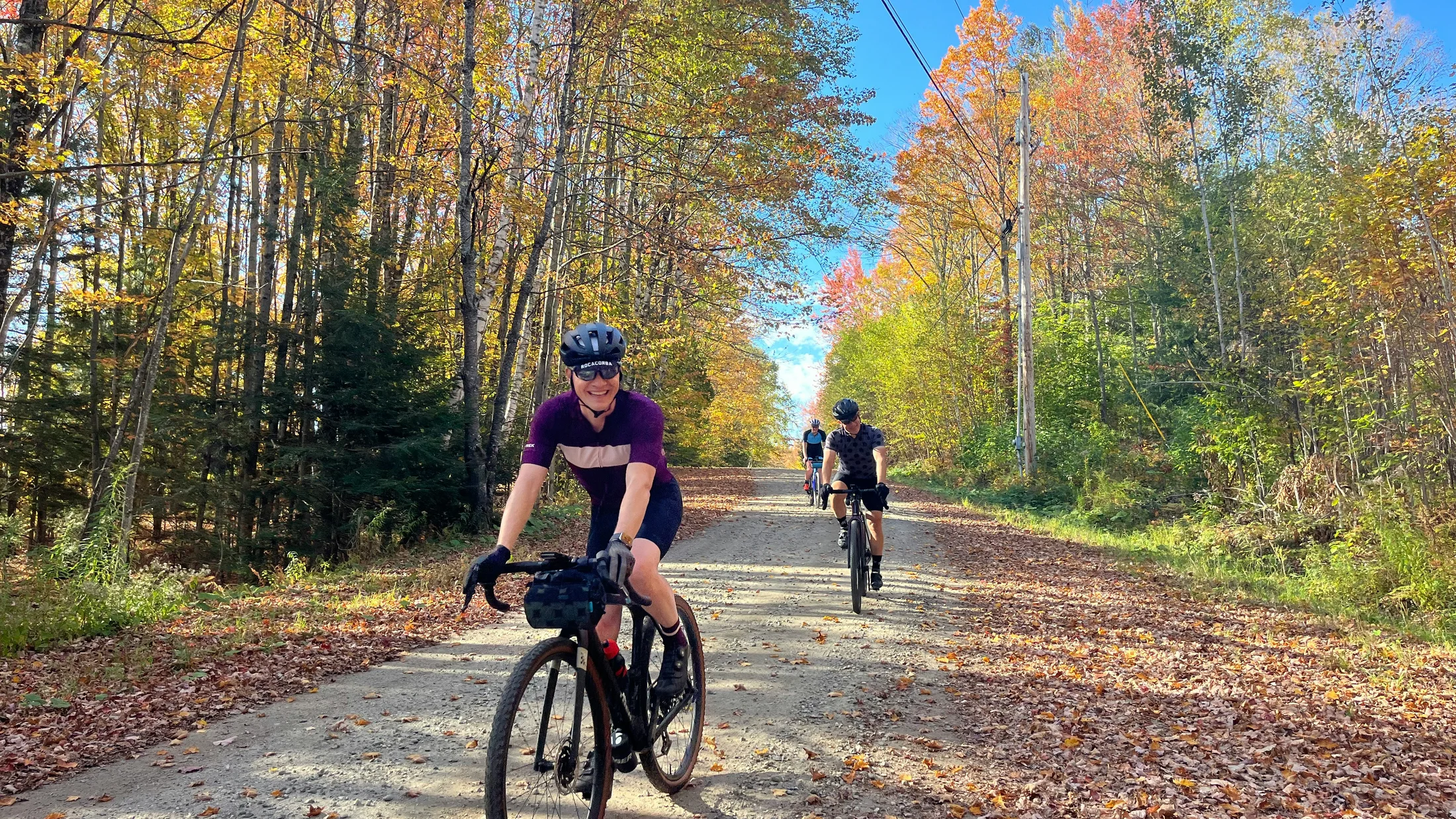
Why greenways are so captivating
More than 3,300 km of former railway lines run through Spain, converted into car-free paths. These are the greenways: cycling and pedestrian itineraries with gentle slopes, normally below 3%, and a continuous surface.
The "vía verde" brand is reserved for itineraries on former railway infrastructures that are safe, easy, accessible, and without motorised traffic. In Spain, there are more than 130 active itineraries, with variety for all levels.
Their appeal is twofold. On one hand, the railway heritage: restored stations with new tourist uses, signalman huts, tunnels, and viaducts adapted with railings and lighting. On the other, the landscape, from Cantabrian mountains and Atlantic forests to olive groves, karst mountains, and Mediterranean coasts.
By being segregated from traffic and having constant slopes, they are a safe and accessible option for families, hikers, and cycle tourists: you can start out and progress at your own pace. Many have bike rentals, rest areas, and approved signage, so a day trip or several consecutive days are easy to organise.
This guide brings together the 10 most beautiful greenways in Spain based on landscape, length, and good logistics. For each one, you will see the predominant landscape, the total distance, the difficulty, and the recommended sections for cycling or walking. At the end, you will find planning tips: the best time to visit, how to get there, equipment, safety, and accessibility.
Picuco te puede ayudar
Does something here catch your eye?
Tell us.
Write to us on WhatsApp or email: we answer questions, find the best options and help you sort out the booking.
Where they are and how to choose your ideal greenway
Spain distributes its greenways across five large regions: North, Centre, South, Levante, and Ebro/Delta. Each has its own climate, landscape, and best season, and that changes the route that suits you significantly.
The North (Asturias, Navarra, Gipuzkoa, Burgos) combines forests, mountains, and a mild climate, with spring and summer being the best months. The Centre (Madrid, Teruel) holds great treks like Ojos Negros, better in spring and autumn. In the South (Cádiz, Sevilla, Córdoba, Jaén) there are mountain ranges and olive groves: avoid the central hours in summer. Levante (Valencia and Girona) has very well-served routes that can be combined with the coast, and shines in autumn and spring. The Ebro Delta is wetlands and birds, with spring and autumn being the ornithological peak.
To compare at a glance, these are the ten proposals:
- Ojos Negros (I+II), Teruel–Valencia (Aragón/Com. Valenciana): 167,5 km, medium difficulty due to length, better in spring and autumn.
- Vía Verde de la Sierra, Cádiz–Sevilla (Andalucía): 36 km, low difficulty, better from autumn to spring.
- Plazaola, Navarra–Gipuzkoa: approx. 43 continuous km (sections), with 53 tunnels, several bridges and viaducts, and suitable for people with reduced mobility.
- Vía Verde del Aceite, Jaén–Córdoba (Andalucía): 128 km, low-medium difficulty, better from autumn to spring.
- Carrilet Girona–Olot, Girona (Cataluña): 57 km, medium difficulty.
- Tren de la Fresa (Aranjuez), Madrid: Madrid–Aranjuez route of approx. 44 km, on spring and autumn weekends.
- Senda del Oso, Asturias: low difficulty, better in spring and autumn.
- Vía Verde de la Subbética, Córdoba (Andalucía): better from autumn to spring.
- Sierra de la Demanda, Burgos (Castilla y León): 54 km, medium difficulty; follows the route of an old mining railway from the end of the 19th century and ends in Monterrubio de la Demanda, a village with transhumance traditions. It starts from Arlanzón, near the old train station and 12 km from the Atapuerca sites.
- Vía Verde del Ebro (Baix Ebre), Tarragona (Cataluña): low difficulty; in Tortosa there is a cathedral, a modernist municipal market, and a castle of Arabic origin.
With small children, the Senda del Oso, Aranjuez and the Vía Verde de la Sierra are the simplest. If you are looking for a trek of several days, aim for Ojos Negros or the Vía Verde del Aceite. For photos and birds, the Ebro Delta and Plazaola in autumn. The golden light of sunset paints the viaducts in copper and is the best hour for the camera.
Before leaving, check for temporary closures or works and book in advance.
The 10 most beautiful greenways in Spain
1. Ojos Negros: the longest between mountain ranges and plains
The Ojos Negros greenway is the longest in Spain by distance. It runs from Ojos Negros (Teruel) to Albalat de Taronchers (Valencia).
The surface is compacted gravel, with some asphalted sections, and the route includes 15 tunnels and 8 bridges, as well as viaducts, railway huts and old stations. The difficulty is medium due to the length and low in technicality, with a typical gradient of less than 3%.
If you want a gentle section with regular services, choose Barracas–Segorbe, which is 45 km. The 67,7 km section runs between Barracas (Castellón) and Algimia de Alfara (Valencia). The scent of pine and thyme accompanies the infinite straight stretches.
In the intermediate villages, there are rural accommodations, rest areas and occasional fountains. Spring and autumn avoid the intense heat of the plateau and the plain. You can arrive by train using medium-distance line 49 between Valencia and Teruel, although it is advisable to check the schedules. If you only have one day, do Barracas–Segorbe in the descending direction.
2. Vía Verde de la Sierra: tunnels, viaducts and the Guadalete river
The Vía Verde de la Sierra connects Puerto Serrano and Olvera along 36 km following the route of an old railway. The path crosses canyons, riverbanks and dehesas, and passes by the Guadalete and Guadalporcún rivers.
The route passes through 30 tunnels and several viaducts. Upon exiting a tunnel, the coolness from inside is left behind and the light of the mountain range returns.
The track has railings and a good surface, and the main tunnels have lighting. Even so, bring your own light for safety. The difficulty is low, with a compacted surface and clear signage, so it works well for families and beginners.
The greenway covers a little more than 36 km of mountain landscapes from Puerto Serrano to Olvera, with 5 old stations converted into interpretation centres, accommodations or rest areas. At the Peñón de Zaframagón, there are bird observatories next to one of the largest griffon vulture colonies in Europe.
Five old stations have been converted into interpretation centres, accommodations or rest areas. In Coripe, you will find the Chaparro de la Vega Natural Monument. There is accommodation and food in Olvera, Coripe and Puerto Serrano, and bike rentals in the area.
The best time is from autumn to spring; in summer, it is advisable to set off early. If you want to see more tunnels and birds, do a round trip between Coripe and Zaframagón.
3. Plazaola: Atlantic forest between Navarra and Gipuzkoa
The Plazaola Greenway follows the route of the old railway that connected Pamplona and San Sebastián. Today it has cycleable sections between Lekunberri (Navarra) and Andoain (Gipuzkoa), between Atlantic forest and river valleys.
The route totals 77,2 km: 55,6 km in Navarra and 21,6 km in Gipuzkoa. The Uitzi tunnel is the longest of the greenways in Europe, at 2,7 km, and the Navarra section features 19 tunnels. Bring lighting and warm clothing.
In Gipuzkoa, the Plazaola Greenway has cycleable sections between Andoain and Lekunberri.
The difficulty is low–medium due to the damp surface and some long tunnels. The surface is compacted, with asphalted sections at the access points, and the route is suitable for families with children who already pedal; strollers are possible in the sections near Andoain.
The best time is summer and autumn; in spring the weather is variable due to rain.
For a one-day plan, do Andoain–Plazaola (Leitza) and return via part of the route, prioritising the sections along the Leitzaran river. The murmur of the water accompanies every pedal stroke like a metronome.
4. Vía Verde del Aceite: infinite olive groves between Jaén and Córdoba
The Vía Verde del Aceite covers 128 km along the old Jaén–Puente Genil line, between olive groves and towns with heritage such as Torredonjimeno, Martos, Doña Mencía, Zuheros, Cabra and Lucena. Its length, its good surface and the services along the path make it suitable for 2–4 day journeys.
The Jaén–Martos section totals 20–25 km of very gentle profile and views of the countryside. Between Doña Mencía, Zuheros and Cabra, gorges and landscapes of the Subbética appear, which are very photogenic. The Lucena–Puente Genil section is a transition area and has more services.
The difficulty is low–medium: low technicality, effort due to the kilometres and heat in summer. The surface is mostly compacted, with asphalted sections. The route crosses the Sierras Subbéticas Natural Park, declared a UNESCO Global Geopark, and includes numerous tunnels and metal bridges. During harvest season, the scents of the oil mill float in the air.
Go from autumn to spring. In summer, avoid the central hours and plan your water: the heat multiplies the demand, so calculate 30–50 km/day depending on your fitness. There are rest areas, rehabilitated stations with hospitality services and rural accommodation in the towns. The start is in Jaén, in the vicinity of the Las Fuentezuelas sports centre.
5. Carrilet Girona–Olot: from the volcano to the cultural Mediterranean
Carrilet I covers 57 km between Girona and Olot through valleys, bridges and old train tunnels. It is part of the Vies Verdes Girona network and connects with Carrilet II towards Sant Feliu de Guíxols.
Until the sixties, this line was the main communication artery of Garrotxa, La Selva and Gironès. Upon entering Garrotxa, you notice the freshness of the beech forest.
The route has a continuous, well-maintained surface with clear signage, and that is why it is so popular. The difficulty is medium, so it serves families and cycle tourists who already pedal with ease. The surface is asphalted or high-quality compacted, with protected level crossings.
If you want a short section, do the one from Sant Feliu de Pallerols to Amer: 13,5 km.
Avoid days of extreme heat and keep in mind that autumn is especially beautiful. If you travel by motorhome, there are areas in Girona, Quart, Platja d'Aro and Sant Feliu de Guíxols.
6. Aranjuez and the “Strawberry Train”: heritage and easy stroll
In Aranjuez, you cycle on flat ground and without haste, between orchards, palaces and the banks of the Tajo. The cycling itineraries are short and combine cycle lanes, riverside paths and sections of the Camino Natural del Tajo, with cultural stops for the whole family.
The Tren de la Fresa is a historic tourist train that travels the Madrid to Aranjuez line in wooden carriages with small balconies, unique in Spain. It departs from the old Madrid-Delicias station, in the Museo del Ferrocarril de Madrid, and runs on weekends during spring and autumn. Upon return, it includes a tasting of Aranjuez strawberries.
Prices are 60 € for adults and 48 € for children from 1 to 1.40 m; those under 1 m travel for free if they do not occupy a seat.
A circular itinerary departs from the Aranjuez station and follows through the Jardines del Príncipe, the Sotos Históricos and the banks of the Tajo, returning via the same path. If you want to extend it, there is a variant towards Ontígola or Colmenar de Oreja via marked agricultural paths.
The difficulty is very low: paved surface or compact earth and almost zero gradient. It is suitable for baby seats, child trailers and handbikes. The Tajo sheet reflects the plane trees like a green mirror.
Complete the day with the palace and its gardens, the historical orchards and a strawberry tasting in season. Book the Tren de la Fresa in advance for the spring and autumn dates.
7. Senda del Oso: nature and families in Asturias
The Senda del Oso runs through the valleys of Trubia, Quirós and Teverga. It has about 35 km of main routes and several branches, and is one of the most accessible itineraries in the north.
The tunnels and waterfalls make the route very manageable for families. The scent of moss and damp rock accompanies the gorges.
From there, the branch to Quirós, up to Barzana, and the branch to Teverga, up to Entrago, depart, which connect mountain villages.
Along the way, there are limestone deposits, walkways and recreational areas. The bear enclosure, managed by the Fundación Oso de Asturias, is an educational resource and not a wild sighting.
The difficulty is low, with a compacted surface and generous width. The main sections are accessible for strollers and PRM (people with reduced mobility), although it is advisable to check widths and walkways.
Spring and summer are the best time, and autumn brings the colours. Avoid heavy rainstorms.
A good family plan is the Tuñón–Proaza round trip with a picnic. Buses run from Oviedo to Trubia and Proaza, and there is bike hire in the area. By car, it is about 30 minutes from the centre of Oviedo; by commuter train to Trubia, an additional 4-5 km are added before reaching the start in Tuñón.
8. Vía Verde de la Subbética: karst mountains and white villages
Limestone shapes spectacular caves, gorges and viewpoints. The air brings notes of thyme and olive oil mills. The white villages offer heritage, gastronomy and a hospitality that is appreciated after the stage.
Recommended routes:
Difficulty and activities:
- Low–medium difficulty: low technique; heat conditions the effort.
- Good quality compacted surface; homogeneous signage.
- Best time: autumn–spring.
Tip: book a night in Zuheros to see the sunset over the gorge of the Bailón river. Swallows cross the sky like black arrows as evening falls.
9. Sierra de la Demanda: mountain, reservoirs and great views
It is more mountainous than others: the gradients are gentle but sustained, and the weather changes, so it demands an extra level of effort from those on a bike.
The route preserves old stations and masonry works from the unfinished railway. It starts in Arlanzón, next to a garden with slides and swings beside the covered fronton.
Pineda de la Sierra is a Bien de Interés Cultural and is located halfway through the route, and Barbadillo de Herreros preserves numerous vestiges of its mining past.
The difficulty is medium: the technique is low, but the altitude and the weather matter. The surface is compacted, with rougher sections, and 35–45 mm tyres are recommended. In summer, the air smells of resin and dry grass, and the silence is only broken by cowbells and an occasional restless thrush.
Go in summer or early autumn: spring can be cold and damp. Services are less abundant, so plan your water and food before setting off.
10. Vía Verde del Ebro (Baix Ebre): wetlands, riverbanks and birds
An old railway track connects Tortosa and l'Aldea–Amposta in about 26 km of peaceful cycling. The Vía Verde del Baix Ebre follows that path and links with routes through the Delta, amidst fluvial nature and birds.
The route passes through riverbank landscapes and reed beds, with rice fields nearby during the season. Herons, moorhens and flamingos appear in the delta, and the interpretation centres point out the key spots to observe them.
The difficulty is low, with asphalted or regularly compacted surfaces. Motor vehicles are not allowed. There are seasonal beach bars and rest areas along the way.
Spring and autumn are the best times due to migratory patterns; avoid days with strong winds. If you bring a camera, the last hour of the afternoon in the rice fields leaves reflections when the air is still.
Essential information and what to do on greenways
Greenways are signposted with beacons featuring the greenway logo, directional arrows and information panels along different sections. You will also find low walls, old milestone markers and warning signs at crossings.
When riding, follow the arrows and respect priorities at crossings. If a tunnel indicates "lights mandatory", turn on your front and rear lights.
The best time depends on the area. In the north and the Ebro, spring, summer and autumn; winters are damp but rideable with technical clothing. In the centre and Levante, spring and autumn, and in summer only during the first or last hour of the day. In the south, the olive groves and the Andalusian mountain ranges, from autumn to spring, because in summer there is intense heat at midday. The thermal sensation changes in tunnels and shaded areas.
How to get there and where to sleep
By train, many lines connect with Cercanías or Media Distancia: the C-6 reaches Sagunt, the C-3 reaches Aranjuez (56 km between Chamartín-Clara Campoamor and Aranjuez) and the R16 reaches Tortosa. Confirm bicycle transport before leaving.
The bus is useful for starts and returns in rural areas; check the bike policy, as sometimes a cover is required. By car, look for signposted parking at the old stations and plan a shuttle or your return.
To sleep, there are rural houses, village hotels and campsites, and some stations have been converted into accommodation. Night temperatures can be cool in the mountains, so bring an extra blanket in spring.
Rules and coexistence
Permits are usually not required for travelling, but they are for complementary activities such as caving or visits to observatories. Keep pets on a lead, pick up your waste and respect the fauna, especially in wetlands.
In tunnels, use lights; on viaducts and embankments, do not invade fenced areas. In urban sections, give way to pedestrians and moderate your speed at crossings and when passing walkers.
What to do
Cycling is the most common activity: trekking, gravel or light MTB bikes work very well, and cycling on the road is possible on paved sections and fine surfaces. For hiking, stages of 8–18 km are comfortable for families.
The Delta del Ebro and the riverbank sections are good spots for birdwatching; bring binoculars and a species guide. Photography: look for the golden hours at viaducts and rice fields, and tunnels with backlight for unique shots.
To interpret the heritage, look out for stations, bridges and local museums, and ask about railway or nature interpretation centres. With small children, choose routes like the Senda del Oso, Aranjuez or the Vía de la Sierra. If you run, compacted surfaces with gentle slopes work well; avoid peak hours.
Curiosities and sources
The Vía Verde del Aceite owes its name to the "oil train", which transported "green gold", and it crosses protected areas such as Laguna Honda, Laguna del Conde or the Parque Natural de las Sierras Subbéticas.
For maps and notices, consult the Fundación de los Ferrocarriles Españoles (Programa Vías Verdes); for weather and alerts, AEMET; and for works and services, the local town halls and managing associations.
How to plan your route: stages, equipment and safety
A greenway is enjoyed more when the stages are thought out before leaving. Calculate the duration according to your profile and the daily distance that feels comfortable for you: for families, 15–25 km/day works well; for cycle tourists, 40–70 km/day; if you are carrying heavy panniers or if it is hot, reduce by 20%.
Divide the route into stages that end near towns with accommodation and food. This way, the day ends with dinner and a bed, rather than a rush to arrive.
Four steps to set up the plan
Step 1: choose the way and direction, prioritising gentle descents (for example, Barracas→Segorbe in Ojos Negros). Step 2: fix the stages by services, locating stations with a bar, water or a hostel and ending there.
Step 3: resolve the return by train or bus, local taxi with a bike carrier or a shuttle car. Step 4: book accommodation and, if you rent a bike, confirm sizes and schedules.
Park at rehabilitated stations or signalled car parks at the start. On linear routes, use public transport for the return or hire a local transfer for people and bikes, and ask at tourist offices. On short circular routes, such as Aranjuez, the return is immediate.
The bicycle
Choose according to the terrain: trekking (multipurpose), MTB (comfort and traction), gravel (efficiency on fine surfaces) and e-bikes (ideal for mixed families). Book the bike 48–72 h in advance on weekends and holidays, and ask if it includes a helmet, lock, lights and repair kit. Check the insurance coverage for breakdown or theft and the deposit policies; in some cases, personal accident insurance is advisable.
What to bring
- Checked bicycle, approved helmet and front and rear lights.
- 2 bidons or hydration bag and salty and sweet snacks.
- Puncture kit, multi-tool, pump and spare inner tube.
- Map or GPX with an external battery, and a raincoat or windbreaker.
- Sun protection, sunglasses, gloves and a basic first aid kit (plasters, gauze, disinfectant, painkiller).
- For children: approved child seat or trailer, extra sun protection and light warm clothing.
Safety while riding
Ride at a moderate speed and signal when overtaking; in tunnels, keep lights on, and never enter closed areas. Hydrate and eat every 45–60 min; at the first symptom of hitting the wall, stop and replenish. In case of a fall, assess, clean wounds, immobilise if there is severe pain and call 112 for help if necessary. In case of extreme heat or a thunderstorm, reschedule your departure and seek shelter in stations or villages.
With strollers, children or in a group
With strollers and handbikes, check the width of walkways, the surface and ramps; many routes have fully accessible sections. With children, alternate between play and cycling, set short goals in recreational areas and offer small rewards like an ice cream at the end. In a group, define a "sweep" (the last member), stops every 60–90 min and roles for guide, mechanic and first aid.
Frequently asked questions
Are greenways safe to go with children?
Yes. Greenways run segregated from traffic, with gentle slopes and railings on viaducts, so the risk of a serious scare is much lower.
Even so, it is advisable to use a helmet, watch crossings and carry lights for the tunnels. The shade from the trees helps to manage the effort of children on long sections.
Can I go with a road bike?
It depends on the surface.
On compacted gravel, it is advisable to use 28–32 mm tyres.
Do I need to book accommodation in advance?
On weekends and holidays, it is advisable to book accommodation, especially on long routes like the Vía Verde del Aceite and the Vía Verde de los Ojos Negros, and in small villages. During the week, you have more leeway to find accommodation without a prior reservation.
In autumn, the smell of wood in the chimneys of rural houses announces the high season. If you plan your route during those dates, secure your bed before setting off.
Are dogs allowed?
In general, dogs are allowed, on a lead and with respect for pedestrians and wildlife. In wetlands and protected areas, it is advisable to check local regulations and avoid disturbing birds.
Bring water and bags for the dog. With them, stops are more frequent: their happy panting sets the pace of the walk.
How do I solve the return transport?
The return to the starting point is planned before you set off. You have three options: train or bus, local taxi with a bike rack or leaving a second car at the end of the route.
If you go by train or bus, confirm beforehand that they allow bikes. On short routes, another option is to do a partial round trip and return by pedalling back along the same path.
When is the best time?
Spring and autumn are the safest seasons to travel the greenways. The weather is more stable and the temperatures are pleasant throughout the day.
In summer, it is advisable to choose the north and the mountains, and to do the route early. Adjust your schedule to the heat and the daylight hours of the season. In winter, areas with mild climates work well, as long as it does not rain.
The tunnels hold the cold in winter: bring an extra layer even if it is a nice day outside.
Book your experience — discover active tourism activities in Spain with providers verified by Picuco.
Conclusion
These greenways combine safety, railway heritage, and landscapes that change every few kilometres: humid forests and river plains in the north, olive groves and mountain ranges in the south, and well-maintained surfaces in Levante. Their clear figures regarding kilometres, gentle slopes, and services help you adjust the difficulty and the timing of the route.
Choose according to your plan. For a family weekend, the Senda del Oso or the Vía de la Sierra. For a multi-day adventure, Ojos Negros. For a photographic and nature getaway, Plazaola in autumn.
Before setting off, check the weather forecast and the train or bus schedules for your return. Bring lights for the tunnels and enough water, and respect farmers, livestock breeders, and maintenance crews.