The essentials of Valle de Tena

  • • Ibón de Respomuso at 2,200 m: glacial lake reachable from Sallent de Gállego in 3 hours
  • • Formigal: 137 km of alpine ski runs across four sectors
  • • Piedrafita cirque with its lake at 2,160 m and views of Anayet peak
  • • Gállego River accessible for kayaking in stretches between Biescas and Sabiñánigo
  • • Pyrenean chamois and bearded vulture sightings on slopes above the tree line

Description

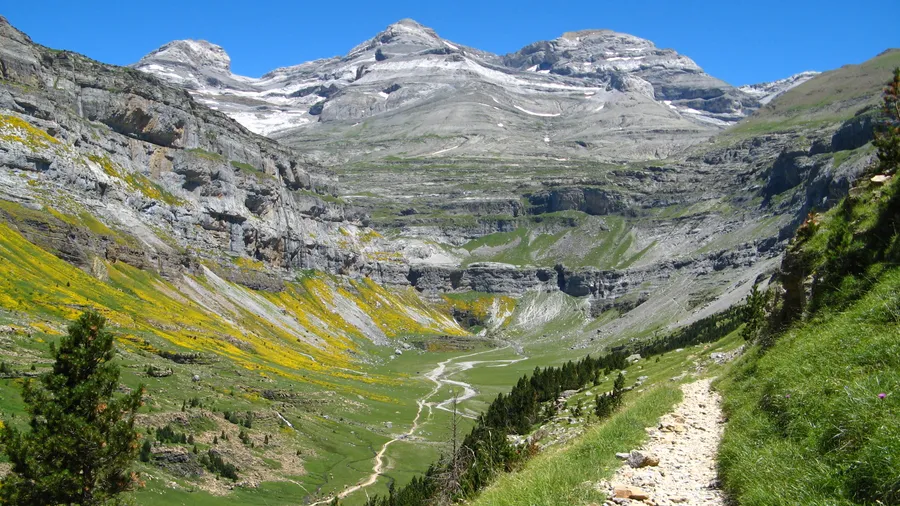
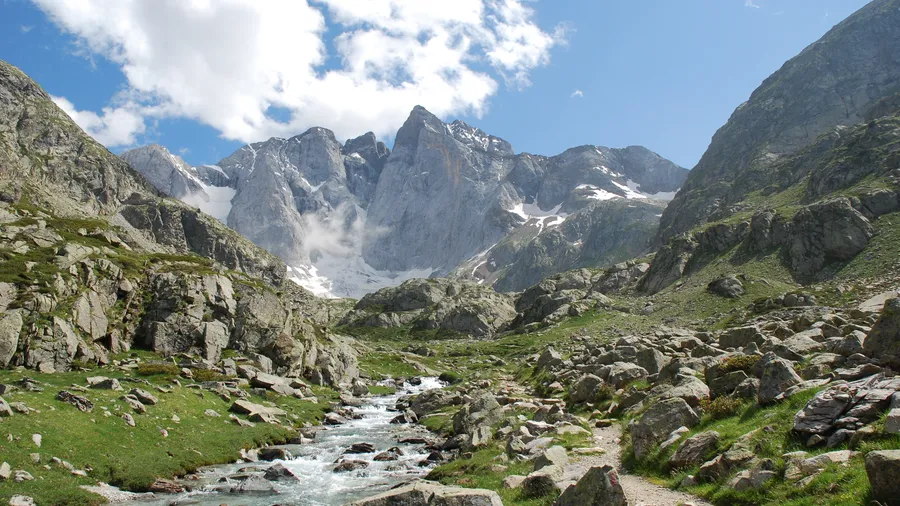
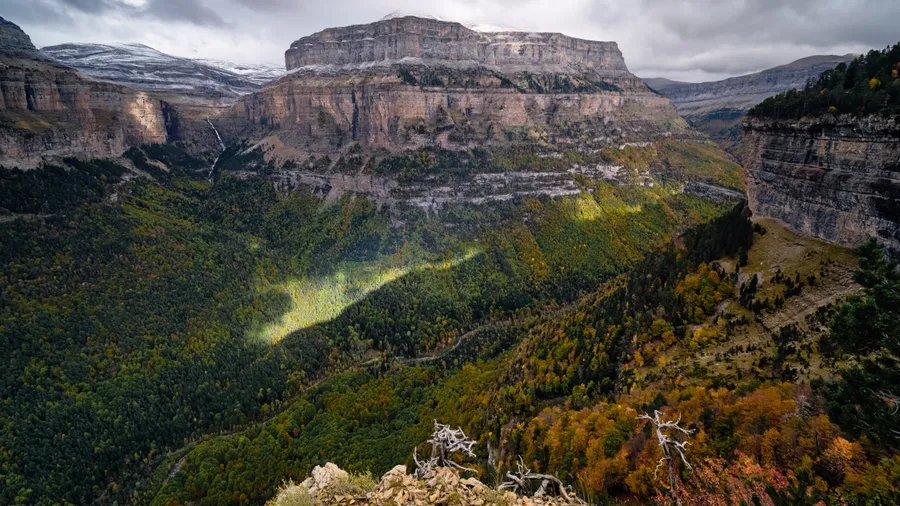
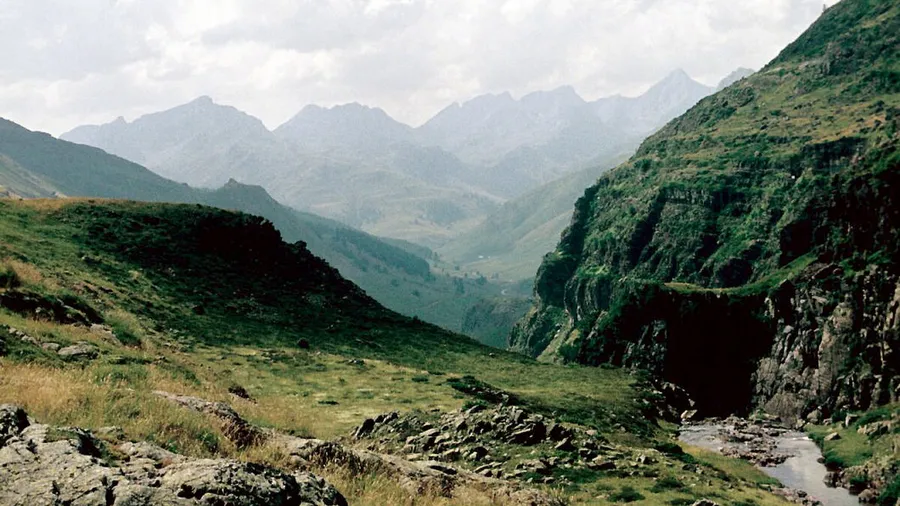
Valle de Tena opens between the summits of the Aragonese Pyrenees with unusual clarity: the main valley runs south to north following the Gállego River, flanked by slopes reaching 2,700 metres on peaks such as Peña Foratata and the Anayet massif at 2,545 metres. The landscape shifts with altitude and season — in winter snow covers the meadows of Sallent de Gállego and turns the slopes of Formigal into ski runs; in summer those same flanks become ascent trails to high-mountain lakes like Ibón de Respomuso at 2,200 metres and Ibón de Anayet, two glacial water bodies surrounded by bare rock and alpine grasslands.

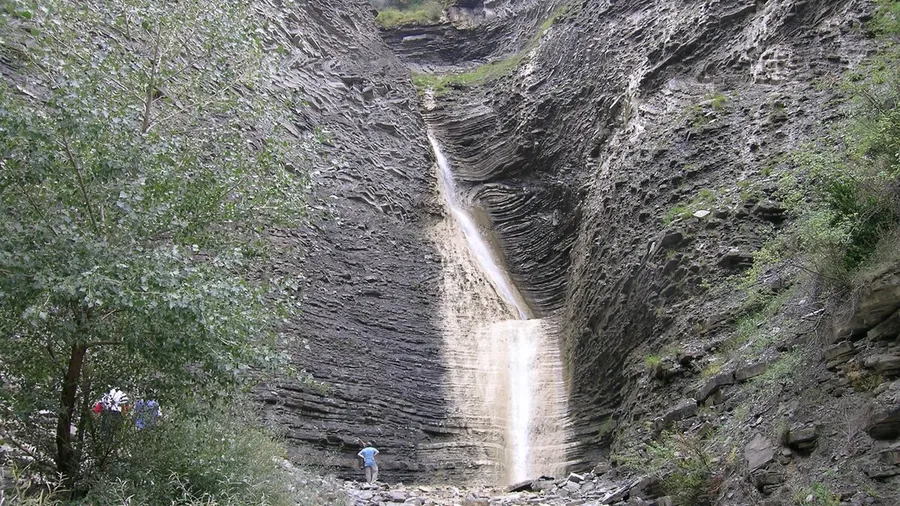
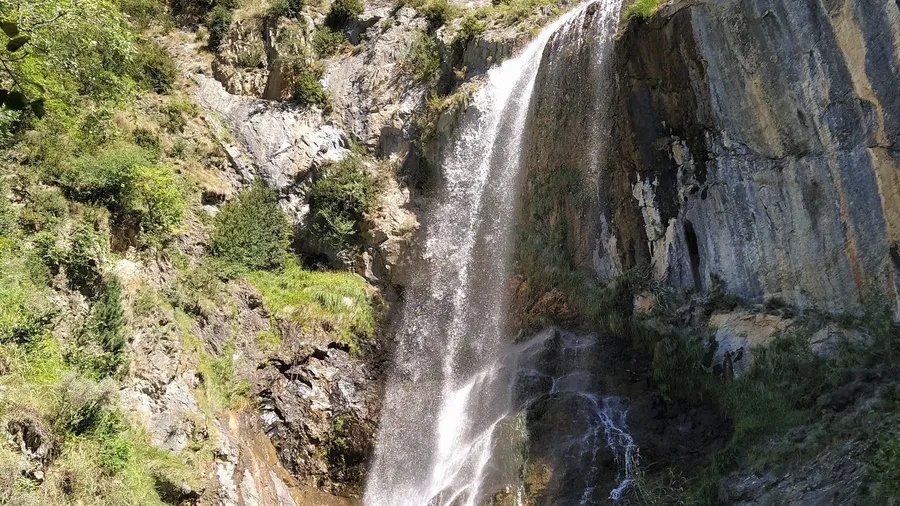
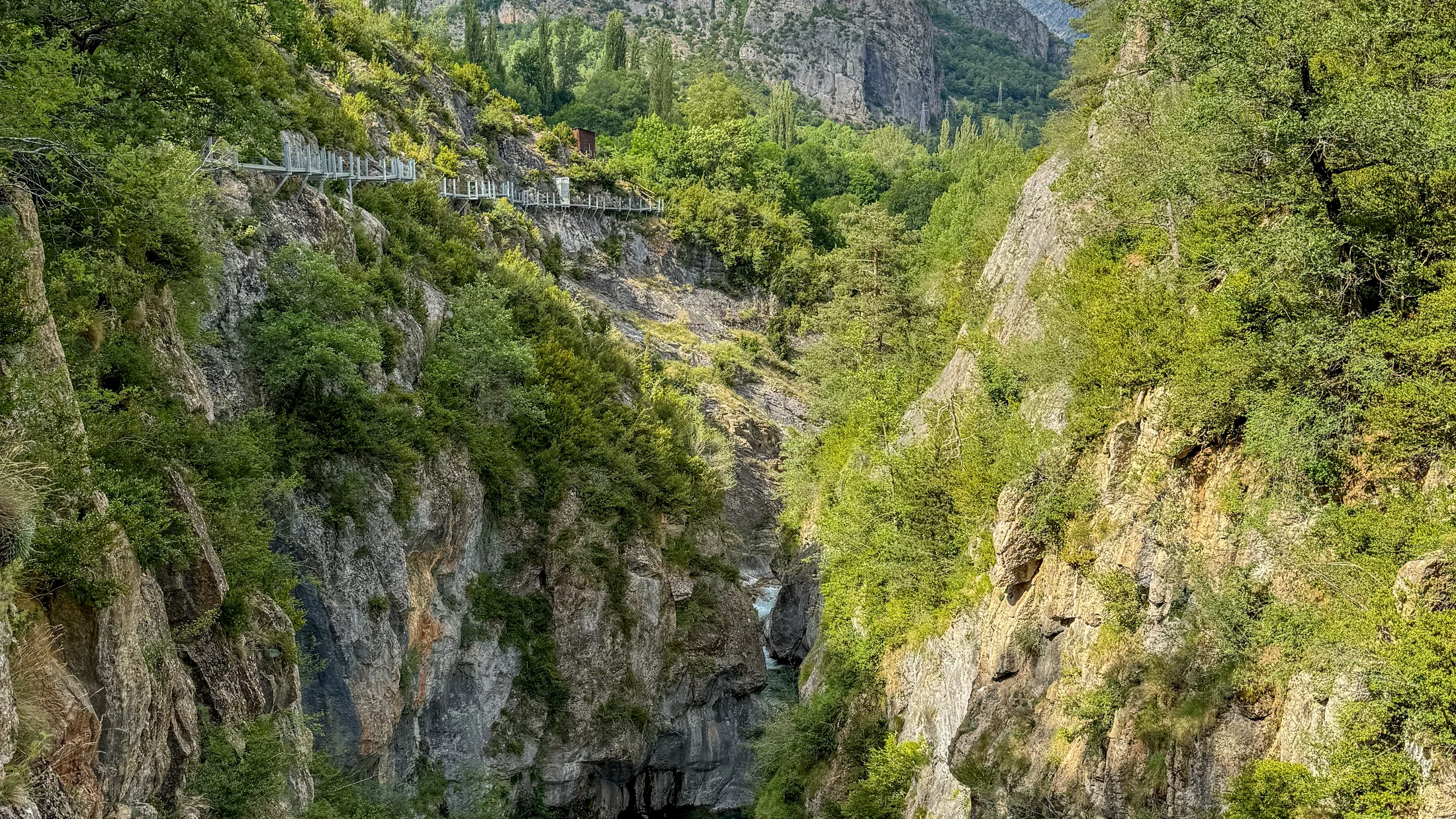
The Gállego River runs north to south, first channelled through the gorges of Escarra and Escarrilla before widening into the Búbal reservoir, built in the 1950s to supply water for irrigation in the middle Ebro basin. Lateral tributaries add depth to the hydrological system: the Aguas Limpias ravine in the northern headwaters gives its name to one of the most-used access routes to the glacial cirque around Garmo Negro peak. In spring, when snowmelt is rapid, these streams swell noticeably and the sound of water becomes a constant companion in the valley.

Sallent de Gállego, at 1,305 metres, is the main village at the head of the valley. From here routes lead to the Piedrafita cirque with its lake at 2,160 metres and to the Portalet pass on the French border. Formigal hosts the largest alpine ski resort in the Aragonese Pyrenees, with 137 kilometres of pistes across four sectors. In summer the resort adapts its infrastructure for mountain biking and high-altitude hiking. Biescas, further south, serves as the valley gateway and provides access to Ordesa and Monte Perdido National Park about 40 kilometres to the east.

Wildlife in the valley includes well-established Pyrenean species. The Pyrenean chamois appears regularly on rocky slopes above the tree line; in summer groups can be spotted near Ibón de Respomuso. The bearded vulture, with a wingspan up to 2.8 metres, uses the valley's thermal currents for daily movements between feeding areas. The forests of silver fir, mountain pine and beech at mid-altitude shelter roe deer, wild boar and pine marten, while high-altitude zones support rock ptarmigan. Alpine flora includes edelweiss, yellow gentian and multiple saxifrage species adapted to the rocky crevices of glacial cirques.

Beyond its natural assets, the valley sustains a network of small communities whose economy has shifted progressively towards tourism without abandoning its pastoral roots. Transhumance still takes place each autumn when flocks descend from the high summer pastures through the valley floor towards lower wintering grounds. The stone architecture of Biescas and Sallent de Gállego reflects the vernacular building tradition of the Aragonese Pyrenees, with broad eaves designed to shed snow from pitched roofs. Visitors who arrive outside the ski season — particularly in June and September, before the busiest weeks — find the trail network largely to themselves, with hut-to-hut options including the classic section of the GR-11 traverse that crosses the valley from east to west connecting Bachimaña to Panticosa.
Practical information

Everything you need to know for your visit to Valle de Tena

How to get there
From Zaragoza take the A-23 to Sabiñánigo, then the N-260 towards Biescas and the valley. Distance: 134 km, approximately 1 h 40 min. From Huesca via the A-23 and N-330: 85 km, around 1 h 10 min. In summer Alosa bus service runs between Zaragoza and Sallent de Gállego with a stop in Biescas.
Area Information
Valle de Tena belongs to the Alto Gállego comarca in the province of Huesca. Main villages are Biescas, Sallent de Gállego, Formigal and Escarrilla. The area serves as a northern access point to Ordesa and Monte Perdido National Park.
Geography
North-south glacial valley carved by the Gállego River. Lateral walls reach 2,700 m near the Anayet massif. The Búbal reservoir divides the lower and upper valley. Multiple glacial cirques and lakes in the headwaters area.
Flora & Fauna
Forests of mountain pine, silver fir and beech from 1,200 to 1,800 m. At higher elevations: edelweiss, yellow gentian and saxifrages. Wildlife includes Pyrenean chamois, bearded vulture, roe deer, pine marten, rock ptarmigan and numerous raptors.

Things to do

Find the best plans and things to do in Valle de Tena

20

Accommodations

Best accommodation options in Valle de Tena

Loading accommodation options...

Frequently Asked Questions

Get answers about Valle de Tena

The route from Sallent de Gállego via the Aguas Limpias ravine involves about 700 m of elevation gain and roughly 3 hours of ascent. It is a moderate-difficulty route: no technical equipment required, but comfortable walking on uneven terrain is essential. Recommended for children aged 10-12 and above who are in reasonable physical shape.
Yes. Biescas and the area around the Búbal reservoir offer flat, accessible walking paths. In summer at Formigal there are zip-line activities and mountain bike circuits adapted for children. Sallent de Gállego village has full services: supermarkets, restaurants and mountain equipment rental.
Formigal typically opens in December depending on snowfall and closes in April. Peak season coincides with Christmas, Easter and the February-March period. Outside ski season the resort operates in summer mode with mountain activities from approximately June to September.
Yes. The Portalet pass at 1,792 m connects the valley with the French village of Laruns in Béarn. The N-260 road crosses the pass and is accessible in summer and in winter when conditions allow; chains or winter tyres are commonly required in the cold months.
In summer the Pyrenean chamois descends to alpine meadows and is easily spotted near Ibón de Respomuso and in the Piedrafita cirque. The bearded vulture regularly soars over the valley during midday hours. With patience you may also observe rock ptarmigan on high rocky ground and Alpine marmot, introduced to the Pyrenees in the 1970s.