The essentials of Parque Natural de la Sierra de Marina

  • • 85 nesting bird species and 53 day butterflies catalogued across just 3,032 hectares
  • • Turó de Galzeran viewpoint at 485 m with views to the Mediterranean and the Pyrenees on clear days
  • • Over 48 marked itineraries from one-hour strolls to full ridge traverses
  • • Train access from Barcelona: Montgat and Badalona stations at the trailhead
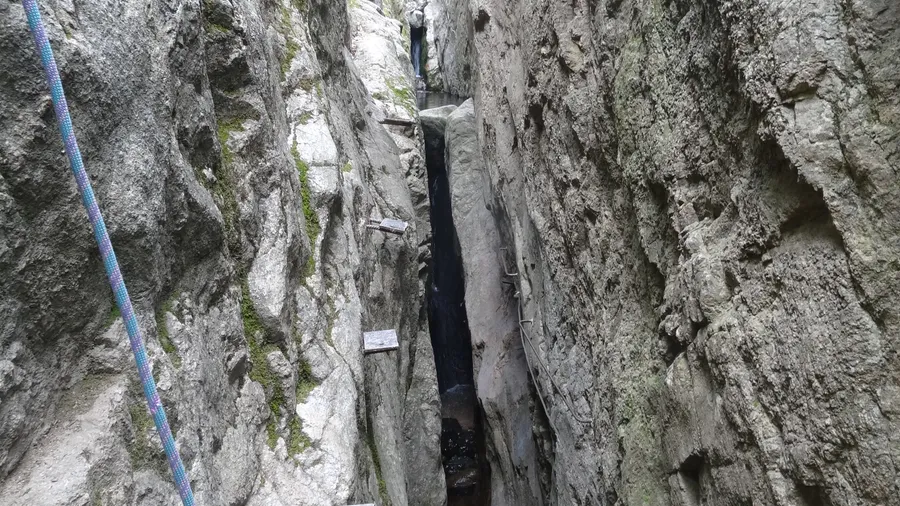
  • • Mature holm oak forests, riparian woodland and Mediterranean scrub within the metropolitan area

Description

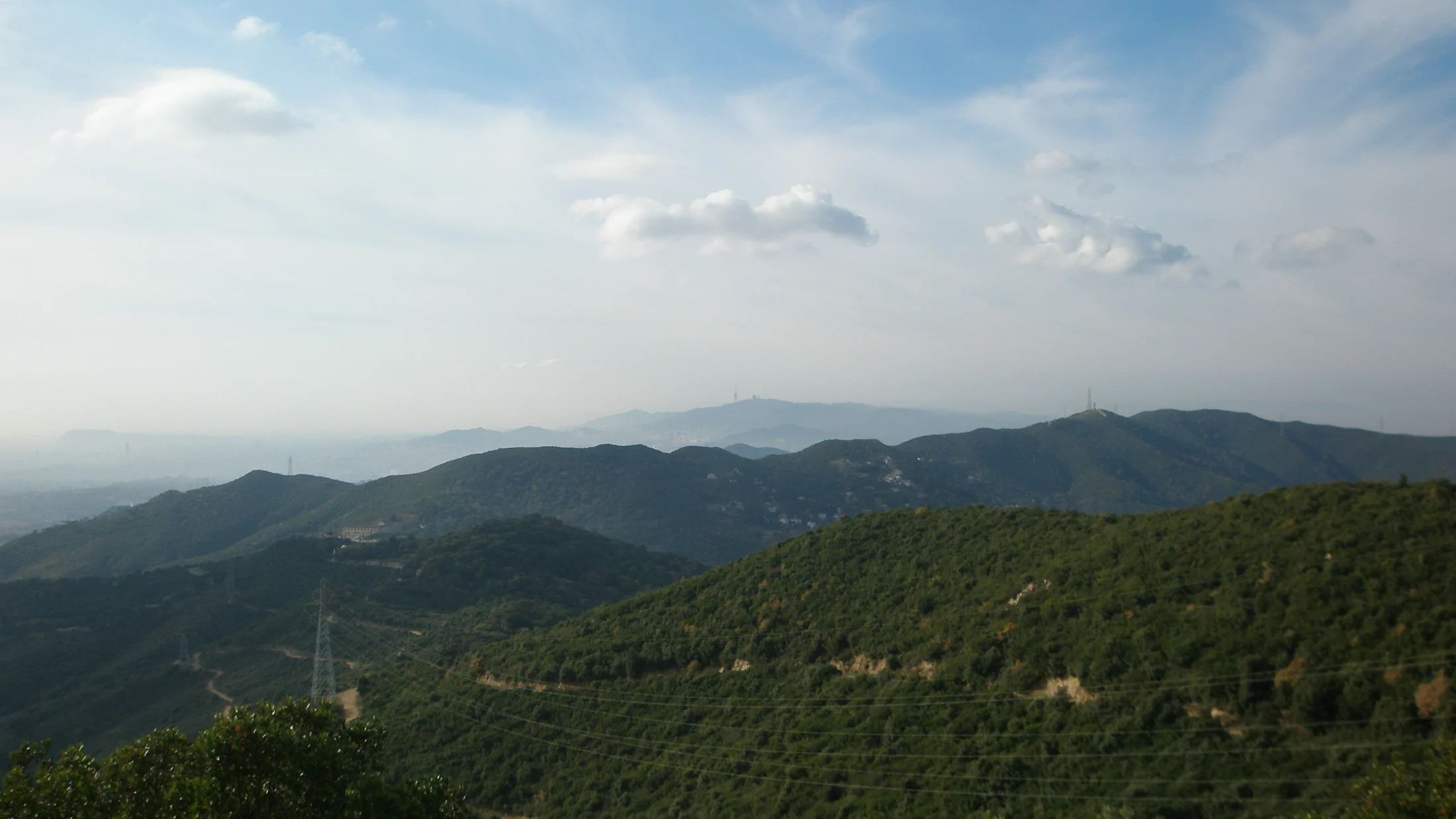
The Serralada de Marina Park covers 3,032 hectares across the municipalities of Badalona, Tiana, Santa Coloma de Gramenet, Montgat, Montcada i Reixac and Sant Fost de Campsentelles, less than 30 minutes from central Barcelona. Its highest point, Turó de Galzeran, reaches 485 metres — a modest altitude that nonetheless provides open views over the Maresme coast, the Vallès plain and, on clear days, the Pyrenees to the north and the Mediterranean shoreline to the east. The range serves as an ecological corridor between Collserola and the Montnegre-Corredor massif, a green strip connecting coastal and inland ecosystems within the metropolitan area.

Biodiversity surveys yield figures that challenge the urban perception of this landscape: 85 nesting bird species, 29 mammals, 10 reptiles and 6 amphibians among vertebrates; among invertebrates, 53 day-butterfly species, 13 dragonflies and 35 mollusc taxa. Shaded slopes retain mature holm oak and oak woodlands; sunlit faces host Aleppo pine forests and Mediterranean scrub. In lower areas, seasonal streams support riparian woodland of alders and poplars that function as corridors for small mammals and amphibians. The seasonal presence of trans-Saharan migrants such as the black-eared wheatear and the red-backed shrike makes the range a notable birdwatching site during spring and autumn passage.

The marked trail network includes over 48 itineraries of varying difficulty, from one-hour circular walks to full traverses across the range. The Turó d'en Galzeran route, the most popular, combines dense forest with open sections and a natural viewpoint at the summit. The GR-92, the Mediterranean coastal long-distance path, crosses the eastern sector of the park and allows hikers to combine coast and mountain in a single day. Mountain bikers find forest tracks with moderate gradients and solid ground conditions for most of the year. Since autumn 2025, the Barcelona Provincial Council has reinforced trail signage from the Montgat and Badalona train stations, improving car-free access.

The park runs an annual programme of guided activities including botanical walks, bird-ringing sessions, nature photography competitions and school workshops. The park information centre, managed by the Barcelona Provincial Council's Natural Parks Network, provides maps, guides and route advice. The resinous scent of pines in the mid-morning sun and the crunch of holm oak leaves underfoot set the pace for each outing, barely half an hour from the bustle of Barcelona's Gran Vía.

Practical information

Everything you need to know for your visit to Parque Natural de la Sierra de Marina

How to get there
From Barcelona, the R1 commuter rail reaches Montgat in 20 minutes; from the station, a marked path climbs into the park in a 15-minute walk. By car, the C-32 motorway connects via the Montgat and Tiana exits. Free parking is available at Can Butinyà (Badalona) and near the Sant Mateu chapel (Tiana).
Area Information
Park information centre at Can Butinyà (Badalona), managed by the Barcelona Provincial Council's Natural Parks Network. Picnic areas at Font de la Riera and near the Sant Mateu chapel. Annual programme of guided activities and school workshops.
Geography
NE-SW coastal range stretching between the Barcelonès and Maresme regions. Maximum altitude of 485 m at Turó de Galzeran. Slopes descend towards the sea at moderate gradients, cut by seasonal streams forming small humid valleys.
Flora & Fauna
Holm oak and oak woodland on shaded slopes, Aleppo pine forest and garrigue on sunny faces, riparian forest with alders and poplars. Fauna: 85 nesting birds (honey buzzard, Eleonora's falcon), 29 mammals (wild boar, fox), 53 day butterflies, 13 dragonflies and 6 amphibians.

Things to do

Find the best plans and things to do in Parque Natural de la Sierra de Marina

20

Accommodations

Best accommodation options in Parque Natural de la Sierra de Marina

Loading accommodation options...

Frequently Asked Questions

Get answers about Parque Natural de la Sierra de Marina

Yes. The Renfe R1 commuter line stops at Montgat, 20 minutes from Barcelona. From the station, a marked trail connects to the park's route network in about 15 minutes on foot. Access is also possible from Badalona station on the same line, with a slightly longer approach walk.
The park has over 48 marked itineraries of varying difficulty, from short circular walks under an hour to full ridge traverses. The Turó de Galzeran route is the most popular, finishing at a panoramic viewpoint at the range's highest point of 485 metres.
Yes. Park surveys record 85 nesting bird species, including raptors such as the honey buzzard and Eleonora's falcon. In spring and autumn, the range acts as a migration corridor for trans-Saharan species like the black-eared wheatear and red-backed shrike. Streams and wetland areas are the best observation points.
Yes, but only on authorised forest tracks and paths, not on pedestrian-only trails. The tracks offer moderate elevation changes and solid ground conditions for most of the year. The most technical sections are the northern descents between Turó de Galzeran and Sant Fost de Campsentelles.
Yes. Between June and September, forest fire risk levels may trigger partial or full access restrictions. The CECAT (Catalonia's Operational Coordination Centre) publishes daily updates. Check the Barcelona Provincial Council website or contact the park information centre before planning a summer visit.