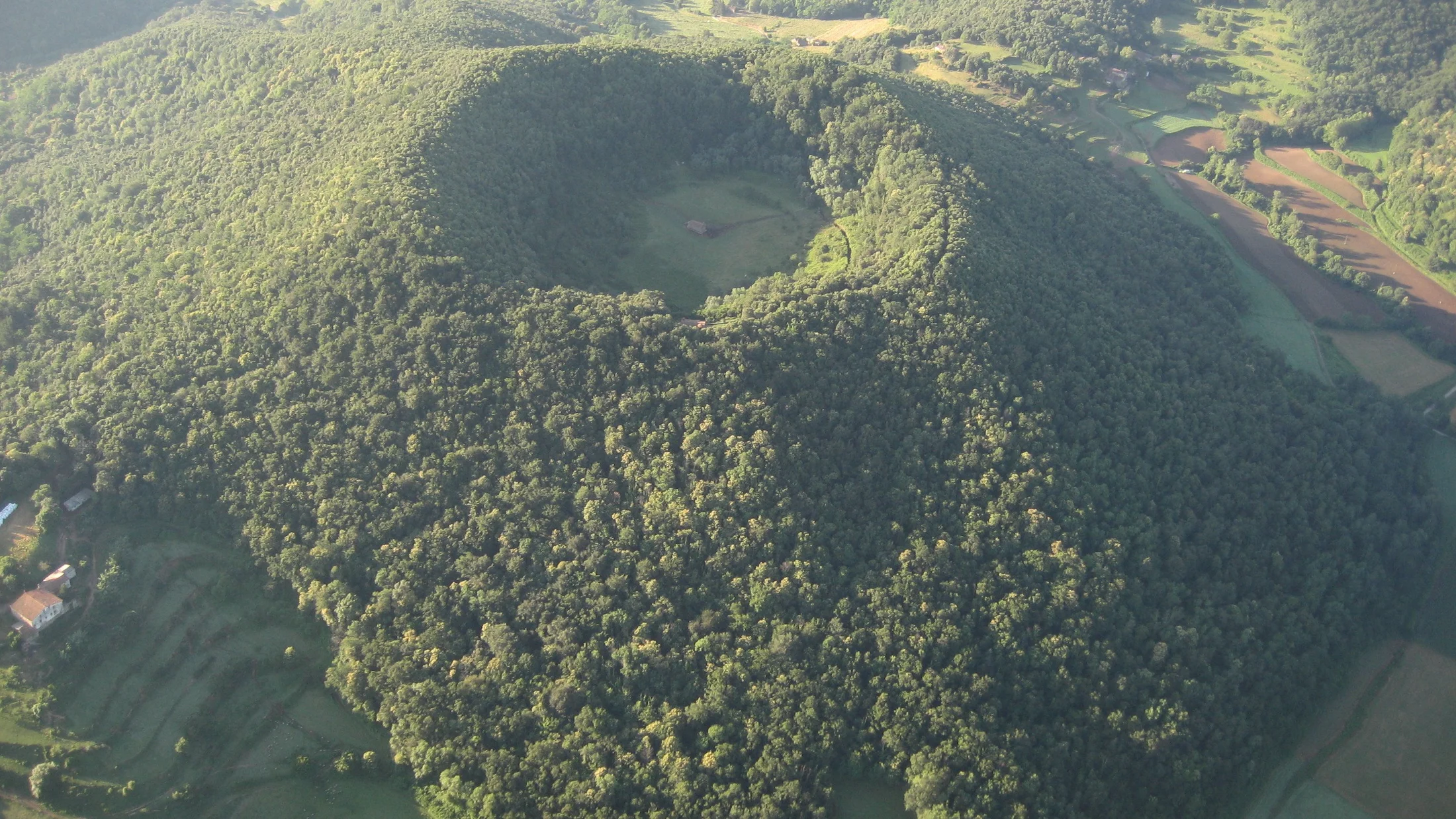
The Zona Volcànica de la Garrotxa is the best-preserved volcanic field on the Iberian Peninsula. The natural park, declared in 1982, protects 15,000 hectares in the comarca of La Garrotxa (Girona province) containing 40 volcanic cones and more than 20 lava flows. The last eruption occurred around 11,500 years ago, making this a geologically recent field. The Santa Margarida volcano, with its perfectly circular 500-metre crater and a Romanesque chapel at the bottom, is the most photographed; the Croscat volcano, the largest on the Peninsula at 160 metres from base to rim, has an exposed section of cone left by a quarrying operation halted in 1994, revealing layers of reddish and black pyroclasts that document the eruptive sequence.
The basalt cover and accumulated organic matter have produced exceptionally fertile soils supporting a deciduous forest of beech, oak, alder and chestnut that is unusual at these Mediterranean latitudes. Atlantic moisture channelled along the Fluvià valley keeps the forest in conditions more reminiscent of the Pyrenees than the Costa Brava. In autumn, the leaf cover over cones and lava flows turns warm amber and gold, making the park one of the most visited destinations in Catalonia that season. In spring, ground-level flowering — anemones, wild hyacinths and hellebores — covers the forest floor before the canopy closes.
Olot is the comarca's capital and the main gateway to the park. The town was destroyed several times by historical eruptions and earthquakes — the most recent in 1427 and 1428 — and rebuilt on volcanic materials, which explains the irregular topography of its urban layout. Olot has a strong pictorial tradition linked to the 19th-century Escola d'Olot, which reinterpreted the volcanic landscape through a naturalist lens. The town's museums and the Park Information Centre, located beside the Montsacopa cone within Olot itself, provide geological and historical context.
Walking is the main way to visit the park. The volcano route — circling the Santa Margarida and Croscat cones over roughly 10 km — is accessible for low-level walkers and can be completed in three hours. The Fageda d'en Jordà, a beech grove growing on a lava flow with an irregular floor of basalt blocks, is the park's most famous space, partly thanks to a poem by Joan Maragall from the early 20th century. The interior path is short — under 2 km — but the density of the canopy and the quiet of the place create an immersive experience hard to match in more heavily visited sites.
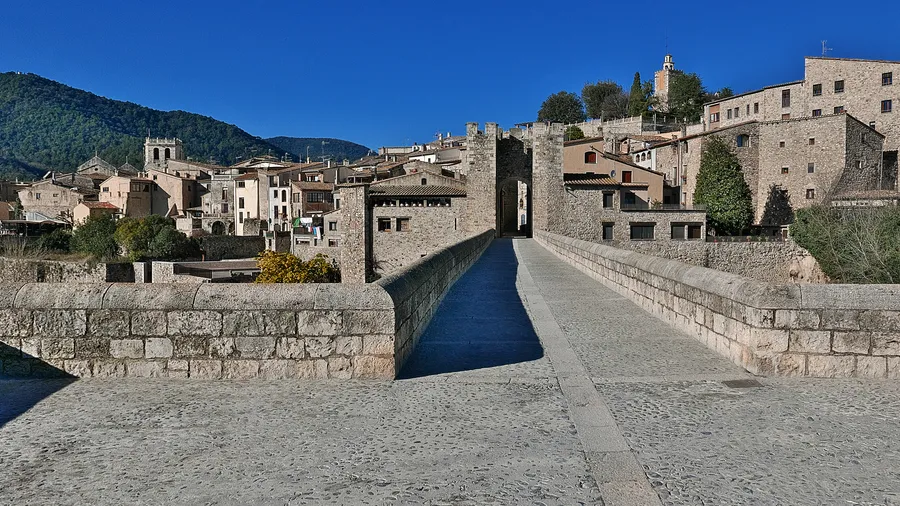
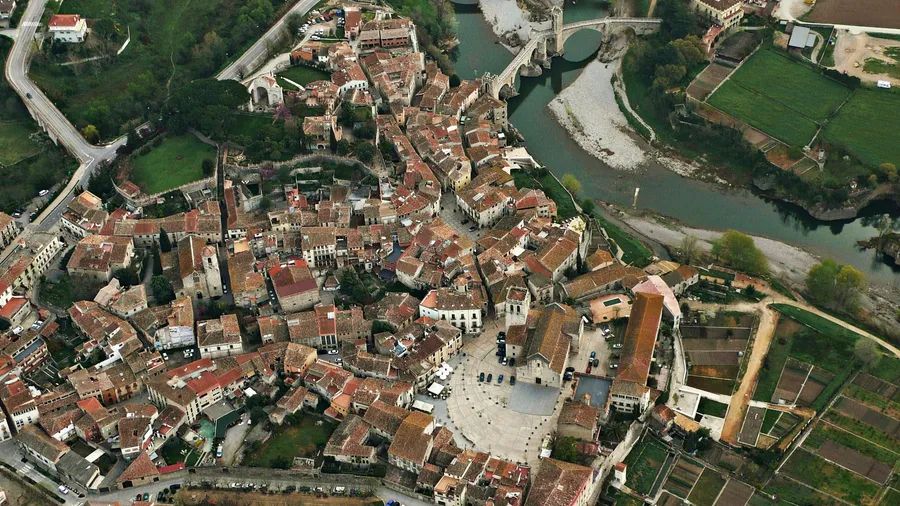
Outside the park but in the same comarca, the medieval village of Besalú — 12 km from Olot on the N-260 — preserves one of Catalonia's best-kept medieval bridges, complete with its control tower and 12th-century mikvot (Jewish ritual baths) cut into the rock beneath the bridge. The combination of volcanic geology, Atlantic woodland, medieval architecture and well-organised nature activities makes La Garrotxa one of the most information-dense territories per square kilometre in north-eastern Spain.