Highlights

  • • 12th-century Romanesque bridge with seven arches
  • • Central toll tower for medieval control
  • • Located over the Fluvià River in Besalú
  • • Example of Catalan medieval architecture
  • • Free access with no reservation needed
  • • Panoramic views of historic center and river

Description

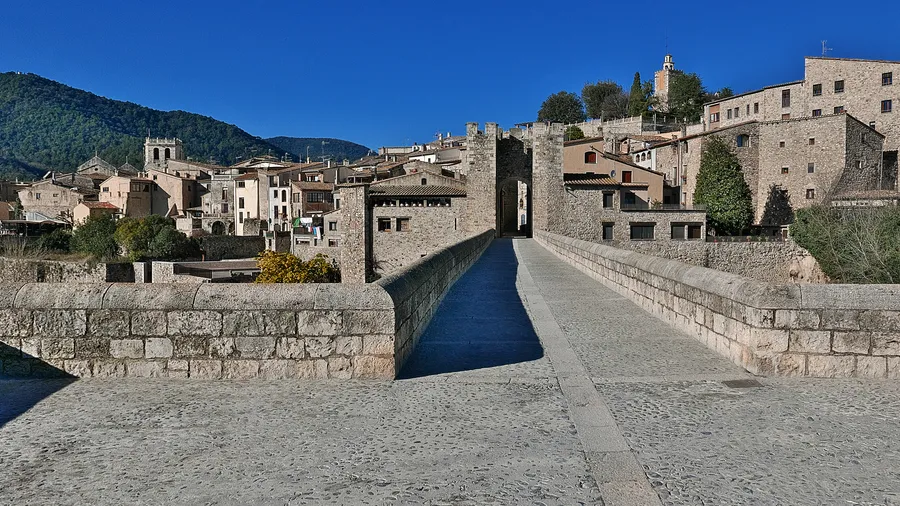
The Besalú Bridge is a fortified Romanesque bridge dating back to the 12th century, located over the Fluvià River in the town of Besalú, Girona province. This structure connects the historic center with the rest of the town and stands as a prominent example of Catalan medieval architecture. Originally, it served defensive purposes and controlled access to the town, reflecting Besalú's strategic importance during the Middle Ages.

As you walk across the bridge, you can admire its seven stone arches and the toll tower positioned at the center, which was used to regulate passage and collect taxes. Built from limestone, the bridge features characteristic Romanesque details with a robust and functional design. From the bridge, visitors can enjoy views of the Fluvià River and the surrounding natural landscape, blending water, vegetation, and historic architecture.

Besalú was a significant medieval center with its own county during the Middle Ages. The bridge was part of the town's defenses and facilitated trade and communication. Its preservation helps us understand urban organization and infrastructure of the era, as well as the relationship between human settlement and the river. The town maintains a well-preserved historic-artistic ensemble, including the Jewish quarter and the church of Sant Pere.

Visiting the Besalú Bridge requires no entrance fee and access is free. It is recommended to spend at least one to two hours exploring the bridge and the old town. The bridge is accessible to most visitors, although the uneven pavement may pose challenges for people with reduced mobility. No reservation is needed to visit. The area offers tourist services and parking nearby.

Key Information

Visit Duration

1-2 hours

Recommended Seasons

Spring, Autumn

Pricing

Free

Accessibility

Medium

Kid-Friendly Pet-Friendly No Booking Required

Related Destinations

Guide

Essential information for visiting Besalú Bridge

Location

In this area

Practical Information
Pricing
Free
Visit Duration
1-2 hours
Features & Services
  • Accessibility:Medium
  • Kid-Friendly:Yes
  • Pet-Friendly:Yes
  • Booking:No Booking Required
Planning Information

Recommended Seasons

Spring · Autumn

Best Time to Visit

Spring and autumn are the best seasons to visit the bridge, offering pleasant temperatures and fewer tourists. Avoid summer if you prefer to escape the heat and crowds.

Visitor Tips

Wear comfortable shoes for walking on the uneven stone pavement of the bridge. Take the opportunity to explore Besalú's historic center, which is very close by. If visiting during peak season, try to arrive early to avoid crowds and enjoy the views peacefully. Don’t forget your camera to capture the river and medieval architecture.

Historical Facts

The Besalú Bridge was built in the 12th century as part of the medieval town's defenses. Its central tower functioned as a toll point to control access and collect taxes. Besalú was an independent county in the Middle Ages, and the bridge facilitated trade and communication with other regions.

Frequently Asked Questions

Get answers about Besalú Bridge

Yes, the bridge is open to pedestrians and serves as one of the entrances to the historic center.
No, access to the bridge is free of charge.
The pavement is uneven and may present difficulties for visitors with reduced mobility.
The bridge is open 24 hours, but visiting during daylight hours is recommended for safety.
No, no reservation is necessary to visit the bridge.