A sunset that stays with you
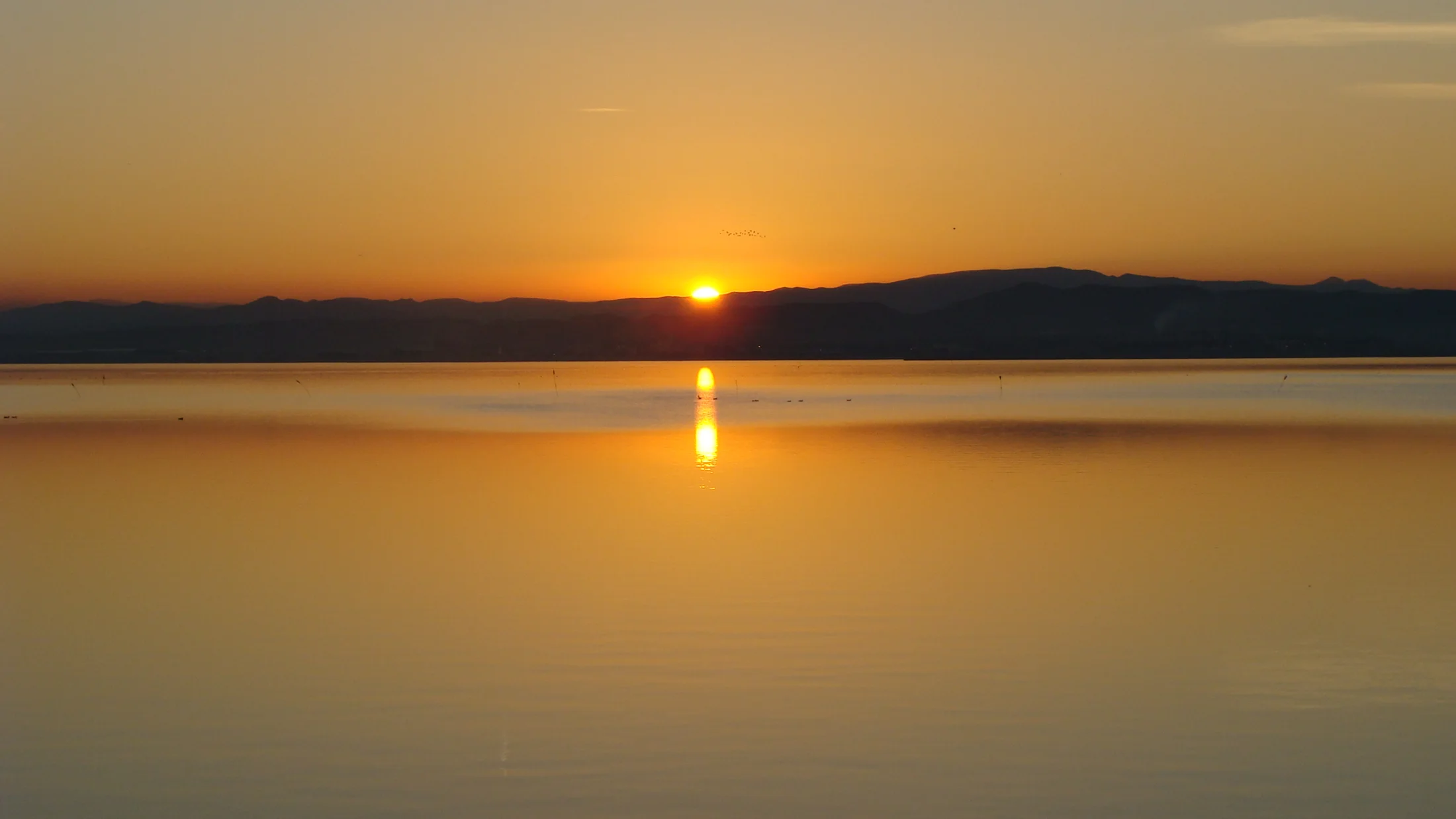
10 km south of Valencia, the sun falls over the Albufera lake and the boats are silhouetted like shadows. The Albufera Natural Park covers 21,120 hectares and, at the end of the day, the silence and the golden reflections do the rest.
The guide suggests going without rushing: a boat trip, rice fields, El Palmar and a calm end to the day. Inside you will find when to go, how to get there and how to move from Valencia by car, bus, bike or transfer.
It also breaks down the sunset boat trips, how to book and how long they last, and explores the rice fields with keys to fauna and photography. The end is in El Palmar, where the paella tastes of tradition and the work of the families who care for this landscape.
Why the sunset in l’albufera is moving
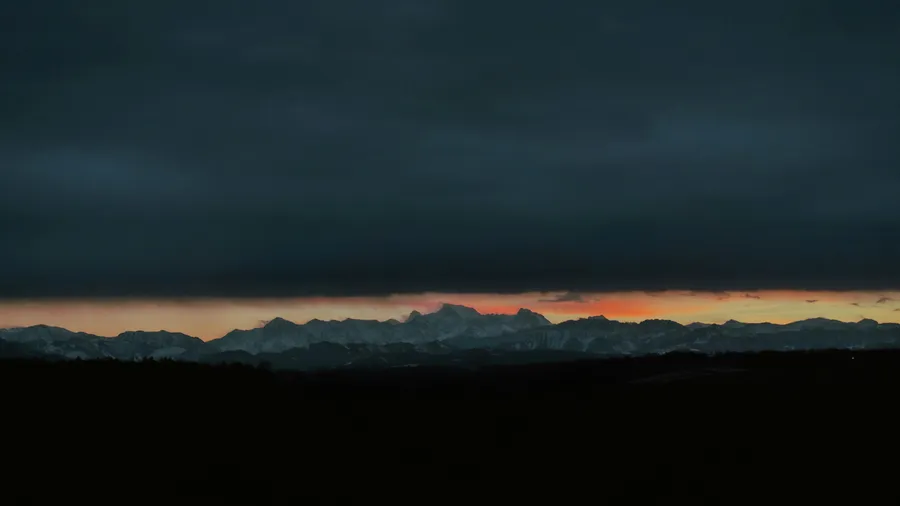
In the Albufera of Valencia, the sunset tints the lake copper and violet in a matter of minutes. Sit on a jetty and you will see how the sky is reflected in the water with a calmness that invites you to slow down.
The sound of the soft splashing of a perch and the friction of an oar against wood accompany the wait. Boat trips are the common thread of this experience.
The wetland is one of the most important in Spain due to its biodiversity and its agricultural heritage. The local community has shaped the landscape through rice, a visible mark in every irrigation ditch, every field and every dish.
It is worth coming with time and without a watch: the sunset is best enjoyed without rushing.
What you are going to learn and how to make the most of it
The sunset in the Albufera is prepared before leaving Valencia: the light, the boat and the table change depending on the time you arrive. This section gathers everything necessary to set up the plan with wisdom.
You will find arrival routes, light schedules by season and viewpoints such as the Gola del Pujol to watch the sun set over the lake. Also types of boat trips, approximate prices and tips for booking the time slot well.
You will learn to read the landscape of the rice fields, to recognise common birds and to photograph the twilight with simple settings. And you will see where to eat paella in El Palmar and how to combine everything into a plan from Valencia.
The approach is practical and local, designed for those departing from the city who want a sunset that respects the park.
Picuco can help you
Does something here catch your eye?
Tell us.
Write to us on WhatsApp or email: we answer questions, find the best options and help you sort out the booking.
Write to us
We guide you based on the type of plan you have in mind and reply by WhatsApp or email.
The essentials and how to get there without complications
L'Albufera encompasses the lake, the rice fields and the dune bar between El Saler and El Perellonet. It is a large park, so it is advisable to know which part you want to see before setting off.
Crossing the Devesa towards the lake, you can perceive the scent of pine and the sea.
To see the last light, make sure you know before leaving when the sun sets, how to get to the jetties and where to sleep if the getaway is extended.
Where it is, when to go and what time the sun sets
L'Albufera extends south of Valencia capital and is mainly reached via the CV-500. It is the largest lake in the Iberian Peninsula, with 2,800 hectares of water surrounded by 21,000 hectares of rice fields and wetlands. Three channels, the golas, connect the lagoon with the sea and regulate its level.
Entering the park is free. The boat trip is paid separately: between 5 and 8 € per person, for 30 to 45 minutes, from the El Palmar pier. You can go by EMT bus, lines 24 or 25, from Plaça de la Porta de la Mar to El Palmar. The pier has free parking and a shaded waiting area; in summer, the El Palmar car park is limited, so it is advisable to arrive before 11:00 or after 18:00.
Spring (March-May) and late summer and autumn (September-October) offer the most intense colours and a pleasant climate. In spring, you will find clear skies, gentle breezes and fields in tender green; in September and October, high clouds, warm tones, golden rice fields and harvest.
The sunset occurs around 19:30–21:00 in spring, 21:10–21:40 in summer and 18:45–20:30 in autumn; check AEMET for the exact day. Arrive at the pier 45–60 min before sunset and book a trip that ends 10–15 min after sunset, when the blue hour leaves colours and reflections.
With an easterly wind, the lake ripples and the reflection loses clarity; with dead calm, the water looks like liquid glass.
From Valencia: car, bus, bike or transfer
Getting to L'Albufera from Valencia is easy: 10 km separate the centre from El Saler and about 18 from El Palmar. Choose your means of transport depending on what you want to do upon arrival and what time you plan to return.
By car, the main route is the CV-500 towards El Saler/El Palmar. In El Palmar, you can park for free in the marked areas at the entrance to the village, although they fill up quickly on weekends: arrive in advance. Next to the viewpoint of the Gola del Pujol, there is a parking area. Do not park on the edges of rice fields or on access points to irrigation ditches.
The EMT bus is the direct option for the boat trip: line 25 goes towards El Palmar/El Perellonet. Line 24 connects Porta de la Mar with Pinedo, El Saler, El Perellonet and El Perelló. The ticket costs 1.50 € and frequencies vary (approx. 20–40 min): check updated schedules at EMT Valencia and plan your return after sunset.
By bike, from the centre to El Saler there are 10–14 km via cycle lanes and roads parallel to the CV-500; to El Palmar, 18–20 km. Bring lights and a vest for the return journey; at night the humidity drops and a windbreaker is appreciated.
A taxi or transfer will work for you if you coordinate precise times for the boat trip. Request your pickup about 15 min after your estimated disembarkation time.
Where to sleep near the lake and how much you can spend
Sleeping by the lake lets you have dinner without watching the clock and head out early to birdwatch. Sunrise smells of damp earth and wet reeds.
In El Palmar and in the inner areas of the park, you sleep steps away from the jetties and the rice fields of the Albufera. This is the option if you plan a double session: sunset by boat and sunrise wildlife watching.
La Devesa and El Saler occupy a strip of dunes between the lake and the sea, with sea breezes, pine forests, quick access to viewpoints and nocturnal peace. It extends over about 800 hectares and begins in the hamlet of El Saler, about 10 km south of Valencia. In El Saler and El Perellonet, you have accommodation 10 minutes walking from El Saler beach and 12 km from the centre of Valencia.
For boat trips in the Albufera, prioritise sleeping near the jetties of El Palmar or La Gola. On spring and autumn weekends, book 1–2 weeks in advance. Ask about parking and breakfast times if you are heading out early to birdwatch.
To get around from Valencia, the EMT line 24 connects Porta de la Mar with Pinedo, El Saler, El Perellonet and El Perelló with frequencies between 30 and 35 minutes on working days.
Sleeping a step away from the water changes the rhythm: the night sounds like a distant chorus of frogs and the throat-clearing of a cormorant.
The lake in motion: boats, routes and the golden hour
The boat trip begins when the boat leaves the jetty and the bow cuts through the reflection on the water. During the tour, you see the spoonbills and the trail of reeds that draws lines across the water.
There are different types of trips, so choose the format depending on who you are going with: as a couple, with children or with friends. The pace adapts to each group, with shorter journeys with children and longer private ones with friends.
When booking, you can choose the trip for the last light of the day, when the lake changes colour.
What types of trips exist and what they offer
Not all trips are the same: it is worth choosing according to each traveller's style. The wood of the boats gives off a warm scent that mixes resin and old water.
The traditional shared trip is operated by local boatmen with classic flat-bottomed vessels. It is a simple and authentic experience, with basic commentary from the boatman about fauna and rice fields, and includes an explanation about the formation and customs of the Natural Park. It fits well for a first introduction and for tight budgets.
The interpretive guided trip is led by companies or guides with a naturalist or cultural focus. It includes explanations about birds and the rice cycle, and is more educational: perfect if you are interested in wildlife watching or if you are travelling with curious little ones. Spring and autumn are the best seasons, when bird activity is visible.
The private sunset trip is operated by local boatmen or companies and is scheduled to coincide with the sunset. It offers silence, freedom to move around the boat and take photos, sometimes with a non-alcoholic glass or special details. It works well for couples and groups looking for intimacy; it is worth coordinating it with a subsequent dinner in El Palmar.
In the boat trips in El Palmar, there are departures every day of the week, at 11:00, 12:00, 13:00, 15:00, 16:00, 17:00, 18:00 and 19:00 in spring, summer and autumn; the first departure is at 11:00h. The last afternoon trips are adjusted to the sunset: between 29/10 and 01/01 the departure is at 17:00h, between 02/03 and 15/03 at 18:00h and between 16/07 and 01/08 at 20:15h.
Bookings, prices and how to time the perfect hour
The Albufera is 15 km south of Valencia, and the boat trip is organised from El Palmar. Traditional boats are flat-bottomed and are more than two thousand years old; in the surrounding rice fields, varieties such as Sénia, Bomba and Albufera are cultivated.
The classic shared trip from El Palmar costs 5–8 € per person and lasts 40–45 min. You can book online with local operators or buy on-site in the afternoon if you are looking for a shared trip. In low season there is usually availability on the same day, but it is worth calling or checking before travelling.
Timing is everything. Check the exact time of the sunset in the Albufera on the day of your visit and choose a departure that starts 45–60 min before dusk: you will see the full transition and finish during the blue hour. If you are torn between two times, prioritise the one that finishes a few minutes after dusk, when the lake matures in colour. Book in advance to secure the slot you want.
Small tips that make the difference
In the boat, the seat you choose changes the trip. At the bow, there is more wind and a clear view for photos, useful if you like an open frame. At the stern, there is more stability and less pitching, which is ideal with children or if you are filming video. When the sun sets, the west side is best for capturing silhouettes.
Bring light clothing with a windbreaker layer, water, insect repellent and a torch or headlamp for the return journey. A cover or a cloth will protect your camera and mobile from splashes. Follow the boatman's instructions and do not change seats without warning. Do not feed the wildlife or put your hands in the water near the reed beds. Life jackets are available on request: ask if you are travelling with little ones.
You can combine the sunset trip with a paella dinner in El Palmar, booking a table 60–90 min after the boat departure. In winter, the plan changes: a short trip and a gentle walk through the rice fields in the first hour of the afternoon. The silence in the middle of the lake is part of the experience, so lower your volume and let the surroundings speak to you.
Living rice fields, birds in transit and cameras ready
The wooden boardwalks create a mosaic of water and land that changes with the seasons. The birds take advantage of this pulse to feed and breed, so every visit to the Albufera has its own wildlife.
Look at the rice fields as a calendar: the landscape changes depending on the time of year. As the sun sets, the tones of the field intensify and you can hear the sound of the great herons.
To photograph, look for wildlife in the discreet margins and set your camera with simple settings to make the most of the light. Spend some time walking the paths between the fields before the boat trip and wear comfortable footwear.
Rice fields and the heritage that shapes the landscape
Rice has been shaping the Albufera for centuries: it marks what you see and what you eat in the area. Each season changes the landscape and it is worth choosing yours before coming.
In winter, the perellonà leaves the fields flooded and forms a mirror for reflections, very useful for minimalist photography. In spring, the mudding, sowing and the first leaves arrive: tender green and crop lines that guide the eye. In summer, there are tall plants, a textured horizon and clear channels, with strong contrast in the mid-afternoon. In autumn, the harvest brings intense golds, visible agricultural activity and straw dust in the air.
This landscape is agricultural heritage: traditional techniques coexist with modern machinery and everything is the fruit of the community. Water management creates temporary habitats for waders and swans.
To take in the view, use the marked agricultural paths and the edges of irrigation ditches with enough width to walk without stepping on crops. The viewpoints and discreet high points of the Devesa allow you to see the complete mosaic of rice fields and channels. As the sun sets, the golden ears of grain seem to burn and the channels turn into ribbons of light.
Fauna you can observe and best times
L'Albufera is a key refuge on migratory routes and home to resident species. At dusk, the air fills with brief calls as the birds change roosts.
The last hour of the afternoon is the time for movements towards the roosts. You will hear the sudden flapping of a flock of cormorants, like leaves vibrating before the silence.
If you stay overnight near the park, make the most of the sunrise: there is active feeding and the light is soft. Keep your distance, use 8x to 10x binoculars or a 300 mm or greater telephoto lens, walk silently and avoid flashes or direct lights towards the reed beds.
Sunset photography: simple technique for great results
Arriving early is half the photo: the air cools and the colours turn to deep blue in minutes. You don't need huge equipment to capture the Albufera sunset.
To compose, use the lines of the irrigation channels, the silhouettes of the boats and low horizons that let the sky take centre stage. Include a human figure or a mooring post to provide scale.
With the tranquil sunset, shoot at f/5.6–f/8, ISO 100–400 and 1/60–1/250 s; a tripod helps you achieve perfect reflections. If you are looking for birds in flight with low light, prioritise speed: 1/1000 s, ISO auto limited to 1600–3200, AF-C and medium burst.
During the blue hour, set the white balance to 6000–7000 K to maintain warmth and try exposures of 1–5 s with a tripod and remote shutter. A soft graduated filter balances sky and water, and from the boat, increase the speed to 1/250–1/500 s to compensate for movement. Deactivate the stabiliser when using a tripod to gain sharpness.
When everything falls to cobalt, the first star over the lake calls for one last photo.
El Palmar without rushing: shared table and living memory
El Palmar lives to the rhythm of rice and traditional fishing. It is a village in L'Albufera where the cuisine revolves around rice and paella is taken as a serious matter.
Stroll through its traditional huts and its crafts before sitting down for dinner. After the stroll across the lake, that shared table completes the experience.
At dusk, the streets fill with conversation and hospitality is everyday. Arrive with time to park and book a table if you go on a weekend.
Where to get it right with paella and other delicacies
In El Palmar, you eat the essence of the territory: the paella arrives with notes of rosemary and paprika before the first bite. Order the Valencian, with chicken, European rabbit, green beans and garrofó beans, a classic and dry recipe where the socarrat is closely monitored. The socarrat is a controlled final toast, not burnt rice.
The rice needs 5 minutes of resting time before serving. If it stays too long, it loses texture and becomes a soft mass, so it is better to fall short and add 2–3 min more if needed.
The lakeside table has more names. The all i pebre with European eel is the emblematic stew of the area, powerful and silky. For those arriving with a craving for the coast, the arroz a banda or "del senyoret" leans more towards the sea. Seasonally, Mediterranean mussels are available from May to August, and truncate donax and common cuttlefish complete the table.
Book 2–7 days in advance if you are going on a weekend or looking for a spring or autumn sunset, and ask for a table on the terrace if the weather is good. Indicate the estimated arrival time according to your boat trip: add 60–90 min to the vessel's departure time. If you are travelling in a group, confirm portions and cooking times when booking.
The perfect combination is a boat trip at sunset and a late paella, sharing cold starters upon arrival. If you get up early another day, switch to arroz del senyoret and finish with a cremaet.
Barracas, memory and daily life
The barracas tell the story of the rice fields with walls of reed and mud.
Their design makes them cool in summer and warm in winter, using local materials. To see them, look for local signage or interpretation centres that offer routes. Check the park's interpretation centre opening hours for cultural proposals and nearby viewpoints.
If it is a private home, take photos from the outside and do not approach the thatched roofs. Value the craftsmanship and local products in the small shops, part of the fabric that keeps the place alive.
The surroundings bring together the lake, rice fields, canals, barracas, birds, wild beaches and sunsets. The nearby Mediterranean forest strip has dunes, pine forests, hedgerows and paths for walking or cycling.
Local activities to stretch out the time
In El Palmar, the slow pace is contagious: bikes roll smoothly alongside the irrigation ditches and in spring the air carries the scent of orange blossom. Here the plan is not to rush, but to let the day stretch out between rice fields and water.
Cycle through the rice fields at sunrise or early sunset, along flat lanes and agricultural paths. You can also walk from the village along marked banks and boardwalks, a comfortable plan if you are travelling with children. On specific dates, there are cooking or local craft workshops. In autumn, the surrounding villages celebrate traditional harvesting demonstrations and rice festivals.
To fit everything in, dedicate the afternoon to a short walk, a boat trip at sunset and a quiet dinner. The next morning, get up early to see birds, have a local breakfast and return to Valencia on the EMT 25 bus.
Final checklist: equipment, safety and accessibility
The humidity is noticeable as evening falls and mosquitoes appear with the stillness of the water. Bring simple waterproof gear and respect the environment.
From spring to summer, choose lightweight breathable clothing, a cap, sunglasses and sunscreen. Add mosquito repellent, applied 30–45 min before sunset, and bring water (min. 1 l p.p.) and a salty snack.
In autumn and winter, dress in layers with a lightweight thermal shirt, fleece and waterproof windbreaker. Add a buff or scarf for the lake breeze and a headtorch for the return. If you are walking on damp paths, use non-slip closed-toe footwear.
In a boat, follow the boatman's instructions and keep your body and equipment inside the vessel. Distribute the weight and avoid moving all at once. On agricultural paths, walk on wide edges, respect the signs and yield to farming vehicles; do not enter plots or cross irrigation channels via non-designated crossings.
Access to the boats is usually via a step from the pier. Some offer assistance or wide planks, but full accessibility is limited: check in advance if you are travelling with a wheelchair or pram.
La Gola del Pujol features a 700-metre wooden walkway on the historical route and a viewpoint at the seventh stop with views from the sluice gates to the sea. La Devesa is a strip of forest about 10 km between the Albufera and the sea, with Aleppo pine groves and malladas (wet depressions between dunes); its paths are flat and accessible. Access to La Devesa is via the CV-500 road and with bus line 25, which connects Valencia with El Palmar and El Perellonet passing through Devesa del Saler. There, it is forbidden to invade the vegetation and you must respect the dunes as they are protected ecosystems.
With children, bring a jacket, water, some warm clothing for the return and a quiet activity for the wait before boarding. Leave no trace: take your rubbish with you, including paper and cigarette butts; do not feed the wildlife or pick plants and respect nesting in reed beds. Keep the volume low and avoid speakers. Drones are subject to strict regulations in protected areas: request permits if necessary and, if not, leave it at home.
Check wind and cloud cover on the same day, because rapid changes affect navigation and visibility. If you are in a group, set a clear meeting point at the pier and a return time. The best insurance is common sense: walk slowly, allow a margin in the timings and listen to the environment.
Common doubts before going and a final push
Resolving practical doubts before going leaves your head clear to enjoy the trip. With the boat schedule, the departure point and the booking already clear, all that remains is to arrive and look at the sky.
Upon arriving at the Albufera, the smell of pine and fresh water accompanies the wait for the last sun. Have your booking ready and some warm clothing for the return, when the light fades over the rice field.
What is the best time to see the sunset in l’albufera?
Arrive at the pier 45–60 minutes before the exact time of sunset. This way you see the complete transition of light, from the high sun to the last reflection.
The final stretch and the blue hour provide soft colours and clean reflections, especially in spring and autumn. If there are high clouds, the tones linger for a few minutes after sunset.
Check the sunset time on the day of your trip and adjust your arrival for the boat with that margin.
Do I need to book the boat trip in advance?
During the week or in winter, there are often spaces available on the same day. Even so, it is worth calling or checking availability in the morning. If you want a private trip, always book with a few days' margin.
The boats depart from El Palmar and the route takes place among rice fields, reeds and native birds in a protected area.
How much does the sunset trip cost and how long does it last?
Prices and departure times change depending on the operator, so confirm them before going. The duration also depends on the company you choose.
Book in advance: sunset is the most requested time slot and the boats fill up. Do it by phone or on the operator's website and ask for the exact departure time.
Where to eat paella in El Palmar without rushing?
El Palmar brings together traditional rice restaurants that work with local produce and adjusted cooking times. If you take a boat trip at sunset, book in advance and ask for a table 60–90 minutes after the boat's departure.
For a taste of the lagoon, ask for Valencian paella or all i pebre de European eel.
Is it suitable for children and people with reduced mobility?
With children, choose 30–45 minute trips and bring warm clothing for the return, because it gets cooler on the water sooner than it seems. Short trips leave margin for attention spans to hold and for returning without rushing.
For reduced mobility, check the pier beforehand: look for one with wide access and boarding assistance. Total accessibility is not always possible on traditional boats, so it is worth confirming when booking.
If boarding is not suitable, viewpoints such as the Gola del Pujol have accessible walkways and nearby parking. Ask about the day's conditions when booking and adjust the departure to sunset time.
What do I do if it is windy or the sky is overcast?
With strong wind, some boat trips may be cancelled for safety. Have a plan B on land: a walk through the Devesa, viewpoints and an early dinner.
With an overcast sky, the light is softer and photos gain texture. The experience remains special; only the palette changes.
Book your experience — discover active tourism activities in Spain with local providers.
Conclusion: a serene plan you will want to repeat
L'Albufera rewards those who arrive with time and respect. Check the sunset time, book the boat trip with margin and choose where to have dinner in El Palmar.
Prepare a light layer and your camera for the sunset. The community that cultivates and navigates the wetland shares it with you: respect it in silence and without leaving a trace.
The return via the CV-500 closes the plan: the smell of rice and salt spray on your clothes.