Spain brings together wetlands, mountain ranges and deltas where wildlife reveals itself with patience and a good lens. In Doñana National Park, in Andalusia, the marshes concentrate waterfowl and the Spanish imperial eagle finds habitat. We traverse six natural spaces to photograph fauna and landscape, with the species that inhabit them and the season that marks each visit.
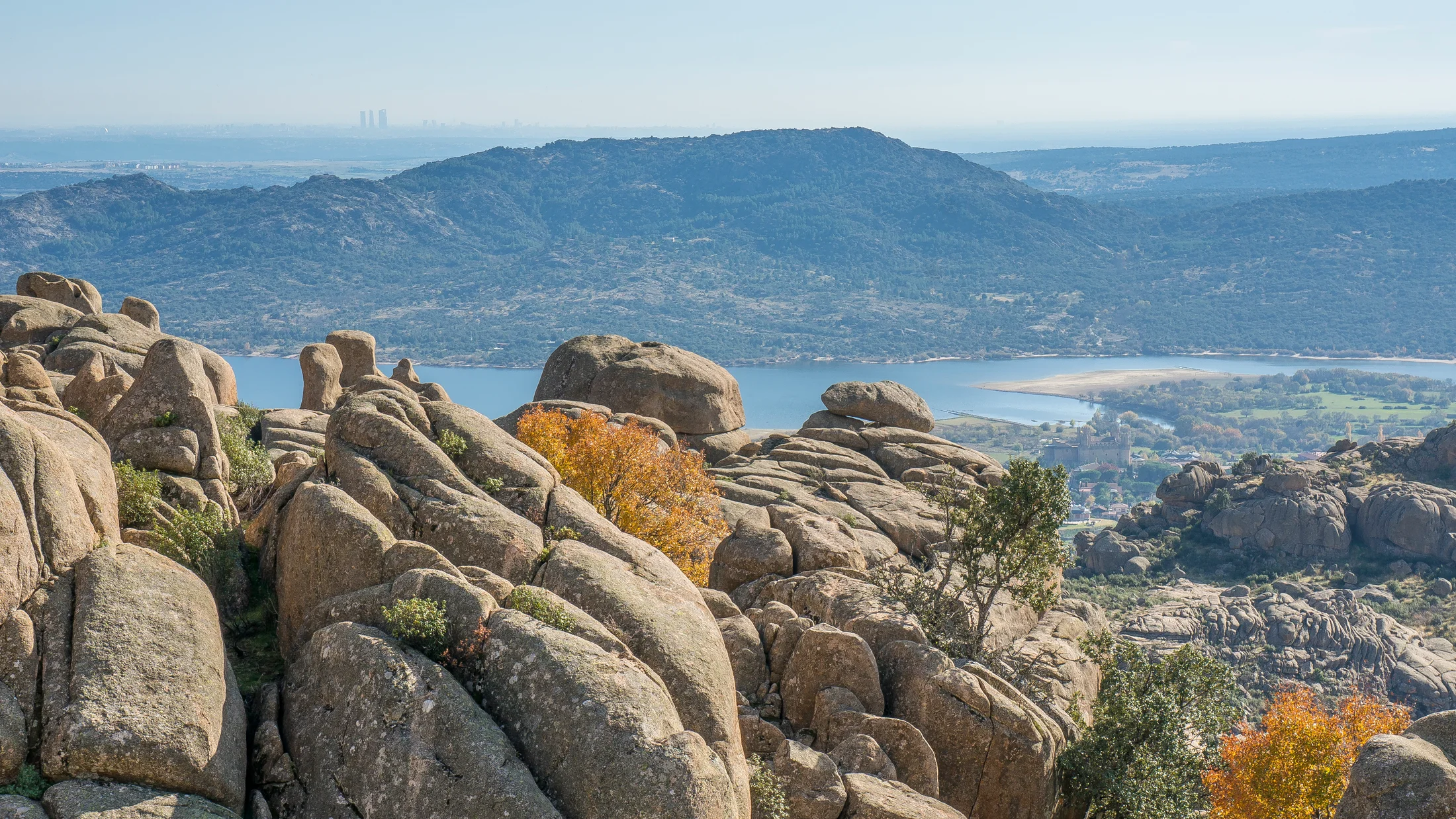
La Pedriza, a granitic formation in the Sierra de Guadarrama
La Pedriza is a granitic formation in the Sierra de Guadarrama that extends over 32 km² within Manzanares el Real, in the northwest of the Comunidad de Madrid. It is an area of great geological, landscape and sporting interest, and therefore works well for combining landscape and detail photography of the rock. Access by public transport is simple: there is a stop for bus 724 nearby. Picuco organises Hiking and nature photography in La Pedriza, Madrid to traverse it calmly and make the most of the light on the granite.
Picuco te puede ayudar
Does something here catch your eye?
Tell us.
Write to us on WhatsApp or email: we answer questions, find the best options and help you sort out the booking.
Laguna de Gallocanta, a natural reserve to photograph the common crane
La Laguna de Gallocanta is a Managed Natural Reserve and its most emblematic species is the common crane (Grus grus). It is spread between Bello, Berrueco, Las Cuerlas, Gallocanta, Santed and Tornos, in the regions of Campo de Daroca and Jiloca, between the provinces of Zaragoza and Teruel, and is situated between 995 and 1,085 metres of altitude. If you want to photograph cranes, keep in mind that the hides reservations for the 2026-2027 season have been open since 1 September 2026. In the reserve, you must not collect or handle dead bird or mammal specimens or those showing signs of illness, nor remains such as feathers or rings.
Doñana National Park, waterfowl and Spanish imperial eagle
In the marshes of Doñana, flamingos, grey herons, little egrets, spoonbills, black-headed ibises, ducks and teals stand out. The Spanish imperial eagle, another endangered species, also inhabits the park. Access to the interior is restricted and only possible through authorised guided visits; you cannot enter freely with a private vehicle. Picuco organises the Guided nature route in Doñana National Park to photograph waterfowl with authorised access.
Sierra de Andújar, a natural park to photograph the Iberian lynx
La Sierra de Andújar is a natural park in Jaén that is home to the Iberian lynx (Lynx pardinus), one of the most threatened species on the planet. Its 74,732 hectares are spread between Andújar, Baños de la Encina, Marmolejo and Villanueva de la Reina, in the northwest of the province. It also hosts endemic species of the Iberian Peninsula such as the Spanish imperial eagle, the Iberian green woodpecker or the Iberian scrub jay. Picuco organises the Iberian lynx spotting in Sierra de Andújar to attempt to observe it with a guide.
Monfragüe National Park, more than 200 bird species
Monfragüe is the first protected space in Extremadura and preserves one of the best-preserved Mediterranean forests and scrublands in the south of the Iberian Peninsula. Its 18,396 hectares bring together more than 200 bird species, including the Spanish imperial eagle, the black vulture, the Egyptian vulture and the black stork. Picuco organises the Crane and bird spotting in Monfragüe and Torrejón el Rubio to photograph flights over the park.
Ebro Delta, bird migration and rice landscapes
The Ebro Delta is the delta of the Ebro river in Catalonia, in the province of Tarragona, between Montsiá and Baix Ebre. In spring, from March to May, bird migration arrives and the wetlands fill with flamingos, herons and avocets. In autumn, the rice harvest tints the landscape with golds and yellows and the autumn migration can be observed; in winter, overwintering birds such as the moorhen and the northern shoveler appear. Picuco organises the Guided walk for birdwatching in the Delta del Ebro Natural Park to explore the wetlands in each season.
Frequently asked questions
Where to photograph wildlife in Spain?
In Doñana, waterfowl such as flamingos, grey herons, little egrets, spoonbills, black-winged stilts, ducks and teals stand out. The Sierra de Andújar is home to the Iberian lynx (Lynx pardinus), one of the most threatened species on the planet. Monfragüe brings together more than 200 bird species, including the Spanish imperial eagle, the black vulture, the Egyptian vulture and the black stork. In the Ebro Delta, spring (March to May) is migration season, with flamingos, herons and avocets.
Where to see the Iberian lynx?
The Sierra de Andújar, in Jaén, is home to the Iberian lynx (Lynx pardinus), one of the most threatened species on the planet. Picuco organises the Iberian lynx sighting in Sierra de Andújar to try and observe it with a guide.
Best places to photograph birds in Spain?
In Doñana, waterfowl such as flamingos, grey herons, little egrets, spoonbills, black-winged stilts, ducks and teals stand out. Monfragüe brings together more than 200 species, including the Spanish imperial eagle, the black vulture, the Egyptian vulture and the black stork. In the Ebro Delta, spring (March to May) brings the migration, with flamingos, herons and avocets. In the Laguna de Gallocanta, the most emblematic species is the common crane (Grus grus).
Nature photography with a guide?
Picuco organises the Guided nature route in Doñana National Park, the Iberian lynx sighting in Sierra de Andújar, the Crane and bird sighting in Monfragüe and Torrejón el Rubio, the Guided walk for birdwatching in the Delta del Ebro Natural Park and Hiking and nature photography in La Pedriza, Madrid.