An Atlantic forest to be discovered by paddle stroke and steady footstep
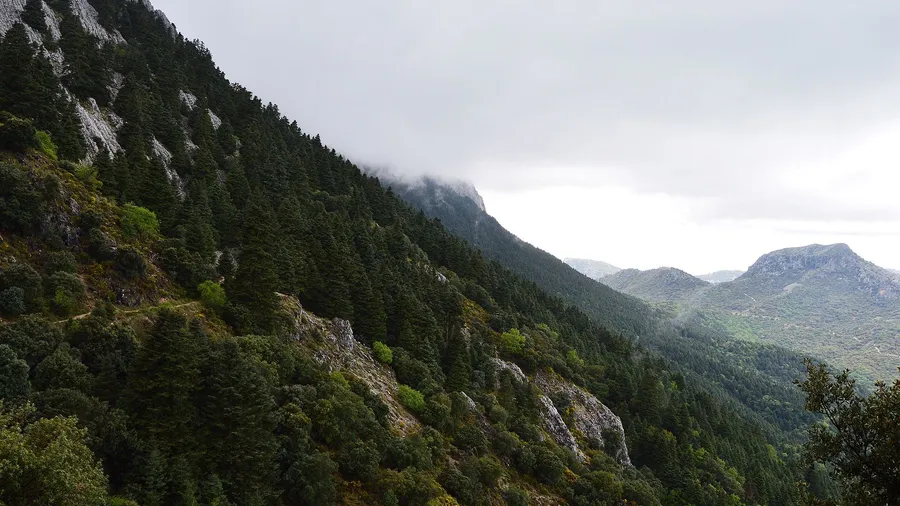
In A Coruña, the Fragas del Eume preserve one of the best examples of Atlantic forest in Galicia. It is a deep valley of oaks, birches and black alders that embrace the course of the Eume River for kilometres.
You can traverse it in silence through shaded paths or in a kayak over green waters, with the slopes covered in ferns. At dawn, amidst cold vapours, you can hear the hollow rhythm of the water against the hull.
The Xunta de Galicia declared them a Natural Park in 1997 and they form part of the Natura 2000 Network. The complex totals about 9,126 hectares of well-preserved ravines, forests and riverbanks, and the Caaveiro Monastery, with a thousand years of history, peeks out from among the trees above the canyon.
This guide gathers the essentials to plan your visit: why to come, when and how to get there, where to stay, walking and kayak routes, basic rules, safety and frequently asked questions.
Picuco can help you
Does something here catch your eye?
Tell us.
Write to us on WhatsApp or email: we answer questions, find the best options and help you sort out the booking.
Write to us
We guide you based on the type of plan you have in mind and reply by WhatsApp or email.
Reasons to choose This Atlantic forest
The Fragas del Eume preserve an almost continuous Atlantic forest, one of the best examples of thermophilous Atlantic forest in Europe. Oak groves, sweet chestnut thickets, black alder groves, scattered yews and humid slopes with mosses and lichens that indicate clean air form the complex.
The park was declared in 1997 and protects an almost continuous fluvial corridor with native forest cover, which is scarce on the peninsula. It is part of the Natura 2000 Network as a Special Area of Conservation.
In spring, the undergrowth is covered with anemones and violets; in autumn, copper tones and old greens dominate. Look for the Eurasian otter (Lutra lutra) in the calm waters, the common kingfisher in the clear stretches and salamanders in the shaded streams.
The valley is anchored by the Caaveiro Monastery, with origins in the 10th century, perched on the edge of the canyon. Walking to its portico with the river in the background is one of the highlights of the visit.
Kayaking on the Eume River offers another way to read the forest: you move at water level and combine walking routes with a stretch of paddling. The gradients are moderate at the bottom of the valley and the water usually offers calm stretches during stable periods.
In the 2012 fire, 350 hectares of the park burned. The subsequent recovery was partial and slow, so it is advisable to respect the rules of conduct and prevention.
For families, the humid undergrowth and well-marked paths provide safety. As a couple, the high viewpoints offer mild sunsets; in a group, half-day combined routes and double kayaks make the day easier.
The essentials before planning: location, seasons and rules
The Fragas del Eume form a fluvial canyon covered in Atlantic forest. Before planning your visit, resolve three issues: where they are, when to go and what permits or rules govern the valley.
The Atlantic climate conditions the visit. The season you choose influences the itinerary and the equipment you need.
As it is a fluvial canyon, access and navigation are regulated to protect the complex. Find out about permits and rules before arriving.
Bring the right equipment and do not leave the arrangements until the last moment: that way you won't waste time at your destination.
Location and map: where to find them
Fragas del Eume spans several municipalities in the province of A Coruña, including Pontedeume, Cabanas, A Capela, Monfero and As Pontes de García Rodríguez. The park follows the course of the Eume river, from the upper area of Monfero to the surroundings of Pontedeume, where the river opens into the estuary. The approximate coordinates for the centre of the park are 43.43°N, 8.05°W.
Getting there is easy. From A Coruña, it takes you about 30–40 minutes to Pontedeume via the AP-9, using the Pontedeume/Cabanas exits and local roads. From Ferrol, allow 25–35 minutes via the AC-116/AC-566 to Cabanas and Pontedeume.
You have two ways to enter. Through the valley floor, in A Capela and Pontedeume, you walk alongside the river. Via the high tracks of Monfero, you see the open Atlantic forest and find less crowded paths. Take a topographic map with contour lines and mark the signposted car parks and authorised embarkation points.
To sleep, Cabanas has hotels with sea views, rural houses among sweet chestnuts and a campsite by the beach. In high season, book wooden cabins and tourist apartments in advance. Accommodations in the area usually include free wifi and parking.
Best time and climate: when to go
The climate of Fragas del Eume is Atlantic, with rain distributed throughout the year. In winter, maximum temperatures stay at 10–13 °C; in summer, the valley floor is around 22–26 °C.
Spring (April–June) shows the forest in its splendour, with still-fresh water flows and pleasant temperatures for walking. Autumn (October–November) brings colours and calm to the paths. In summer, get up early to avoid the heat and crowds; at midday, the light outlines the banks like mirrors.
In winter, navigation can be demanding due to rain and cold, so it is advisable to have experience and technical equipment. A bank of fog sometimes rises from the river early on and dissolves when the sun reaches the canopy of the oaks.
Equipment changes with the season. In spring and autumn, wear a light waterproof layer, boots with good grip and thin thermal layers. In summer, a cap, sunscreen, plenty of water and closed sandals for kayaking. In winter, a three-layer waterproof jacket, thin gloves and neoprene or thermal garments for paddling.
Permits, schedules and basic regulations
Traffic in the valley floor is limited on specific dates, especially during Holy Week and in summer.
When kayaking, navigation may require authorisation or must be done with authorised operators in certain stretches. Before setting off, check the conditions, embarkation points and water flows. Non-motorised vessels are only permitted in the Eume reservoir, with entry and exit at the Eiras pier.
It is advisable to be clear on the rules before arriving:
-
Swimming is prohibited outside of the designated areas and also at the Eiras pier.
-
Fire is prohibited, except for the burning of agricultural waste with prior communication and exceptional authorisation due to phytosanitary or conservation issues.
-
Walk on the marked paths and respect temporary closures for conservation.
The visiting hours for the Monasterio de Caaveiro change according to the season, so check them before going.
How to get there and where to sleep near the valley
The AC-564 road connects Pontedeume with As Pontes and is the main entrance to the valley. The most convenient car park is at the A Capela Recreational Area, next to the information office. You can also enter from the Eume reservoir or from the Monfero Monastery.
By car, you reach the signposted car parks. For the final stretch, it is advisable to rely on a transfer, a taxi, or a kayak operator.
To sleep, you have rural houses between Monfero and A Capela, and hotels, hostels, and campsites in Pontedeume and Cabanas. The heart of the valley is native and humid forest, although the smell of gum appears on stretches of the local road.
1. Car options: itineraries and parking
For access from A Capela, continue along signposted local roads that descend to the bottom of the river.
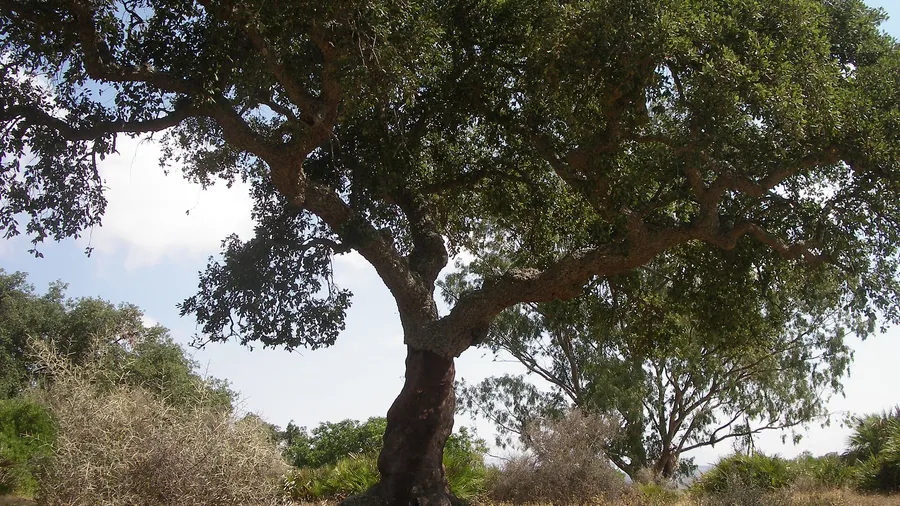
From Pontedeume, it is about 10 minutes (6 km) to the inner car parks, with narrow surfaces and curves: drive slowly and yield at speed bumps and bridges. The Eume river has formed a deep canyon in its middle and final course, with slopes with elevation differences of up to 300 metres, and on the south-facing slopes lies the northern limit of cork oaks in Galicia.
At the bottom of the valley, in A Capela, there are signposted car parks next to the river. In summer, access with private vehicles is restricted, but there is collective transport as far as near the monastery.
Entry to the monastery is free with a guided visit, in 45 min shifts.
Pontedeume and Ombre provide access to the lower stretch of the valley, ideal for riverside walks and for organising linear routes. The kayak rental points are in Pontedeume and Monfero.
In July-August and during bank holidays, arrive early to secure a spot and avoid waiting. The twilight of the first hour offers a freshness that both body and forest appreciate.
2. Train and public transport: possibilities and recommendations
Several intercity bus lines link A Coruña, Ferrol, and Pontedeume/Cabanas with frequencies throughout the day.
Line XG817SD operates every day with a regular departure at 11:30. By bus, the Cabanas (F/ Café Las Vegas) stop is 4 min on foot from the Cabanas stop and the Pontedeume stop is 5 min away.
The murmur of the station next to the estuary and the salty breeze from the estuary welcome you before you enter the shade of the valley.
Before leaving, check updated schedules on Renfe (Media Distancia) and on the official public transport portals of Galicia. Plan circular routes that start and end near Pontedeume or Cabanas to make taxis easier. If you go kayaking, coordinate the pick-up with the operator to match the train or bus with the boarding time.
3. Local transport and services: transfers, taxis and park & ride
Buses operate from 23 June to the first week of September and during Holy Week, with departures approximately every hour from the Interpretation Centre.
During the holiday season, there are buses every day from the Pontedeume Interpretation Centre. The service during Holy Week is subject to confirmation.
From Pontedeume, you can hire a taxi to go to and from the Fragas do Eume: there is no bus for that specific journey. The narrow asphalt overlooks the forest and the scent of the river guides you towards the piers.
Book in advance in summer, Holy Week and at weekends. Bring cash and save the exact location of the pick-up point on your mobile. If you leave your car at one end and paddle or trek towards the other, confirm the closing times of the car parks.
4. Recommended accommodation: rural houses and campsites
Sleeping on the riverbank or on the plateau changes the day. The riverbank allows you to combine walks along the estuary with early outings to the valley; the plateau, on the other hand, is territory of rural houses with nocturnal silence and less travelled tracks.
Miño Dos Playas campsite has a viewpoint over the estuary, a pier, direct access to two beaches and a fishing area.
Before booking, look at three things: the proximity to the Eume river if you are going to go kayaking early and want to minimise transfers; the early breakfast, the space to store equipment and the picnic option; and the efficient heating, recycling and responsible water consumption. As a reference, it is 15–25 minutes from Pontedeume to the valley access.
Waking up to a rooster in the background and the smell of firewood changes the tone of the day.
Kayak routes: itineraries, levels and operators
Paddling the Eume brings the Atlantic forest to eye level: moss-covered walls, roots over the rock and scree slopes where light plays with the water. The gentle stroke of the paddle and the echo of the valley accompany every stroke.
Kayaking in the Fragas do Eume is only practised in authorised sections and with suitable water flows, so you need to plan your outing before getting in the car. Choose the route according to your level. If it is your first time, it is recommended to do the activity with authorised local operators.
Recommended kayak itineraries on the Eume river
In the early hours, the river surface looks like polished slate and the forest is reflected like a green negative. The Eume is paddled by kayak through sections of Atlantic forest, and the following proposals are indicative: confirm the water flow, the permitted section and logistics with the park or with an authorised operator.
The long crossing is the full day with a canyon perspective. It links two signalled access points, with the support of a transfer from a company, and ask for a slow pace: stops to eat and to observe fauna, moderate-sustained effort and logistical coordination. It works well for groups with some previous experience.
- Indicative price: between 15 and 30 euros per person.
- Schedule: from 10:00 to 20:00 in high season (June to September) and from 10:00 to 18:00 in low season (October to May).
- Book in advance, especially in summer.
Levels, safety and equipment needed for kayaking
In summer, the authorised sections of the Eume are calm class I waters, with a gentle current. The real difficulty depends on five factors: the recent flow due to rainfall, obstacles such as logs and low branches, the total length, the group's experience and the water and air temperature.
With normal flow, the route remains class I, with some class I–II passages if the river is running with more water. In winter or after storms, the demand increases, so adjust the plan to your level.
The basic equipment is a stable kayak, self-draining for beginners or closed if you have the technique, and a paddle suitable for your size. Wear an approved buoyancy aid, adjusted above the iliac crest.
Regarding temperature, in summer lycra and a windbreaker are enough; in shoulder seasons, thin neoprene; in winter, neoprene or technical layers. Add closed footwear that grips on wet rock and a waterproof bag for your mobile, documents and a snack. In groups, add a basic first aid kit, a whistle and a tow line.
Navigate in a group of at least 2–3 boats and, if it is your first time, it is better with a guide. Check the weather forecast and the water flows, and avoid going out with strong wind or a storm. Maintain distance from the edges of hanging vegetation and do not pass under trees with low branches.
The cold water on your hand reminds you that the Atlantic is close even when the sun is high and warm. Leave no trace: all waste comes back with you, and respect nesting areas and restricted sections.
Operators and rentals: how to choose well
Hiring a company to go kayaking on the Eume river, in the protected section, saves you paperwork and gives you support if something changes in the water. With licences, insurance and qualified guides, the plan works just as well for a family morning as it does for an experienced group.
Before booking, check that the company has a licence to operate in protected areas, valid insurance and qualified guides. Also ask about the departure briefing, the condition of the equipment and the protocol for changing water flows.
Logistics make the difference: transfer between departure and arrival, management of authorisations and the option of a bilingual guide. Value recent reviews and a reasonable guide/participant ratio; small groups are better.
Book in advance on weekends and in summer, and confirm 24–48 h before in case the flows change after the rain.
The smile of the person receiving you at the pier and the smell of drying neoprene announce that the plan is underway.
Trails and key points you must not miss
Walking through the Fragas del Eume is to traverse a valley shaped by the river, with wooded slopes and hermitages, bridges and mills scattered across the map. The slight crunch of leaf litter under your boots accompanies every bend.
There are short routes for families, half-day trips to combine with kayaking and long treks through the Monfero ridge with wide views. Choose according to the time you have and what you want to add to your walk.
Caaveiro Monastery: history and visit
One thousand years of human presence in the Eume valley are contained within the Caaveiro Monastery. It was founded around the 10th century as a hermitage and was expanded in later centuries.
Its Romanesque and Gothic structure, restored in recent decades, rises upon a dominant rocky spur, with the Eume river winding below. The complex received the European Prize for Intervention in Architectural Heritage in the outdoor spaces category.
The monastery opens with varying schedules depending on the season and offers free visits, so check the schedules at the Deputación da Coruña or Turismo de Galicia before going.
Go in the early morning hours or late in the afternoon: you avoid the heat and see side lighting on the stone. From the portico, the wind brings the scent of wet wood and leaves drying in the sun, while the river sounds below like an organ.
Combine the visit with a short stretch of riverside path and a picnic in the authorised areas. Respect the silence of the enclave and do not leave the marked paths: the hillside is fragile and damp.
Viewpoints and panoramas of the canyon
Each viewpoint offers a different altitude over the river and the forest, so it is worth choosing according to the time you have.
The Caaveiro Monastery viewpoint consists of natural balconies next to the monastic complex. The light is better late in the afternoon.
From the Monfero ridge viewpoints, you can also see the Eume river, the reservoir, the Fragas, and As Pontes. At altitude, the wind smells of resin and the valley looks like a fixed wave of leaves and hillsides.
To reach the Monfero ridge viewpoints, you can go by car via a path of loose stones or on foot. The last 2 km are via dirt track and stones, difficult for vehicles with road wheels. Leave your car outside the dirt track to preserve the environment.
If you are going to take photographs, use medium focal lengths (35–70 mm) to balance the monastery and the valley, and wide angle to capture the mosaic of the forest. Carry a polarising filter to cut reflections from the river and highlight the greens.
Visits to the Caaveiro Monastery are free, independent, or guided. Plan a morning to combine the viewpoint and the monastery, and book the guided visit if you want to enter with explanations.
Recommended paths: distances and combinations
At the bottom of the Eume valley, there is a flat path that follows the river between occasional bridges and walkways. It is the option for families: low difficulty and comfortable terrain to introduce little ones to the Atlantic forest.
If you want a half-day trip, do the circuit that alternates between the riverbank and the hillside, linking viewpoints with the Caaveiro Monastery. The difficulty is moderate and fits well with a short canoeing stretch another day.
When crossing a lateral stream, the water runs clear and cold between moss-covered stones.
To prepare for the route, keep this in mind:
- Wear footwear with an adhesive sole; walking poles are optional for descents.
- Always put a raincoat in your backpack, along with water and a salty snack even if the route is short.
- Download a GPS track if you do not know the area: there is signage, but fog can complicate orientation at altitude.
Practical advice and safety: equipment, weather and conservation
In the Fragas do Eume, a lightweight backpack makes all the difference: 15–25 l, a raincoat and a light thermal layer in any season. Wear shoes with grippy soles and leave flat-soled trainers at home. Carry 1–1.5 l of water per person and simple food, and add a headlamp, a mini first-aid kit, a thermal blanket and a phone with battery.
If you go kayaking, a certified and well-fitted buoyancy aid is the first priority. You need a stable kayak suited to your level, an appropriate paddle and a tow rope if you paddle in a group. Wear technical clothing according to the season (neoprene in winter) and closed footwear. Keep your mobile in a case inside a waterproof bag, along with your documentation, and add a whistle and an energy bar.
The weather changes quickly: check the forecast the day before and the same morning, and postpone your outing if there is a storm. Leaves, roots and wet rock are slippery, so poles and short steps will help you. With fog at altitude, reduce exposure on ridges if you are not proficient in navigation.
Stay on the marked paths and avoid shortcuts that cause erosion. Do not pluck plants or collect wood: it is wildlife habitat. All waste must come back with you and avoid using soaps in the rivers. Pets must be kept on a lead, respecting sensitive areas and breeding seasons. With wildlife, maintain silence and distance: observe and move on.
With children, set short goals and stop at playful spots to look at leaves, tracks and sounds. In summer, get up early or choose the afternoon to avoid the midday hours. On weekends and bank holidays, book accommodation and activities in advance. A lightweight towel, a tea thermos and a bag for waste always fit and weigh very little.
Frequently asked questions about the Fragas do Eume
Do I need permission to enter or to navigate the river?
Yes, kayaking within the Fragas do Eume Natural Park may require authorisation. That company manages the activity and the embarkation points.
If you come with your own craft, contact the park administration in advance. They will tell you which sections are permitted, with which flow rates, during which sensitive periods and what authorisation requirements apply.
If you book with a company, confirm that they operate legally within the park. They usually process the permits and define schedules and departure points.
When booking, indicate that you are looking for kayaking in the Fragas do Eume in authorised sections. This way, they will propose options suited to your level and current regulations.
It is advisable to obtain written confirmation from the park or the operator before heading onto the water. And remember that lighting fires, camping or staying overnight outside of authorised accommodation is not permitted.
What is the best way to combine kayaking and hiking in a single visit?
Divide the visit into half-day blocks: paddle in the morning and walk in the afternoon. This way you avoid the heat and the wind over the water and arrive at trails and viewpoints with soft light. If there is morning mist, reverse the order: walk until it clears and paddle at the end, with stable light.
A two-day plan works well. On day 2, a half-day route of 10–12 km and 350–450 m+.
Book an operator with a transfer for the kayaking and leave the car at the arrival point, or coordinate a taxi. Bring dry clothes to change into after paddling and suitable footwear for the trail. Check the access times and possible shuttles at the bottom of the valley.
The main access is via the AC-564 road, which connects Pontedeume with As Pontes. In the park, it is forbidden to bring pets, camp freely or stay overnight with caravans, swim outside of the designated areas and light fires. If you doubt your energy levels, reduce kilometres rather than cutting out stops.
Is it safe to visit the Fragas del Eume with children or pets?
With children, the valley floor has low-difficulty, firm and shaded trails, and rest areas. Kayaking works with children who know how to swim and can endure 2–3 hours in a boat, always with a life jacket and under adult supervision. Avoid banks with low branches, lateral currents and improvised landings.
With pets, keep them on a lead at all times: it protects the fauna and avoids incidents on slopes and walkways. Carry extra water for your dog, avoid the heat hours and check their pads on damp or stony ground.
On linear routes, mark clear turnaround points so as not to force the journey. Make short and frequent stops, with snacks and layers at hand. On the walkways, cross one by one and calmly.
What essential equipment should I bring for each activity?
In the Fragas del Eume, rain and humidity rule, so the equipment changes little between winter and summer. Prepare your backpack according to the activity and leave at home what you are not going to use.
For hiking, a 15–25 l backpack, a waterproof jacket and a light thermal layer even in summer. Use mountain or trail footwear with an adhesive sole; poles are optional. Bring water (1–1.5 l per person), simple food, a headtorch and a mini first-aid kit.
For kayaking, a certified and well-fitted buoyancy aid is the first priority. Add a paddle and helmet if there are technical sections or high water flows, and a tow rope for groups. Technical clothing depends on the season: neoprene in winter, lycra + windbreaker in summer, and closed footwear.
Put your mobile in a case, your documentation, a whistle and an energy snack in the dry bag. To preserve the environment, bring a waste bag, reusable tissues and a filter or water purification tablets if you plan to refill. Avoid overloading: prioritise safety, dry warmth and communication; what you do not use, gets in the way.
Where can I find reliable operators and what should I ask before booking?
Look for operators on specialised platforms and in active tourism directories using filters for safety and licences. Check that they operate within the Natural Park and review recent opinions. Ask for a copy of the insurance and confirm that the guides are qualified.
Book your experience — discover active tourism activities in Spain with local providers.
For kayaking on the Eume River, ask if the section of the activity is authorised by the park and how they manage changing water flows after rain. When booking, clarify what the price includes: equipment, transfer, permits and a bilingual guide. Also ask about the guide/participant ratio, because small groups provide more safety and attention.
Before paying, ask about the cancellation policy due to weather or high water levels and if the equipment is adapted to your size and level: life jackets, paddles and stable kayaks. A clear briefing, equipment in good condition and a responsible plan B if conditions change are signs of trust.
Book in advance during high season and ask for a confirmation email with everything in writing. This way you avoid misunderstandings on the day of the activity.
Conclusion: a valley to return to in another season
Las Fragas do Eume hold a unique Atlantic canyon in Spain: 9,126 hectares of oak, black alder and humid slopes. You have two complementary ways to explore it. On foot, via shaded paths that lead to viewpoints and the Caaveiro Monastery. By kayak, through waters that reflect the pulse of the valley.
On a first visit, combine a 2–3 hour kayak trip with a riverside route and a visit to Caaveiro. If you repeat, try a full-day crossing on the water.
Each season tells another story: spring of buds, summer of cool shade, autumn of copper, winter of water and mist. Before going, check permits, schedules and weather, bring simple equipment and respect the silence of the forest. Share the guide with whoever you want to add to the plan and tell us afterwards which route you took and what you learned from the river.