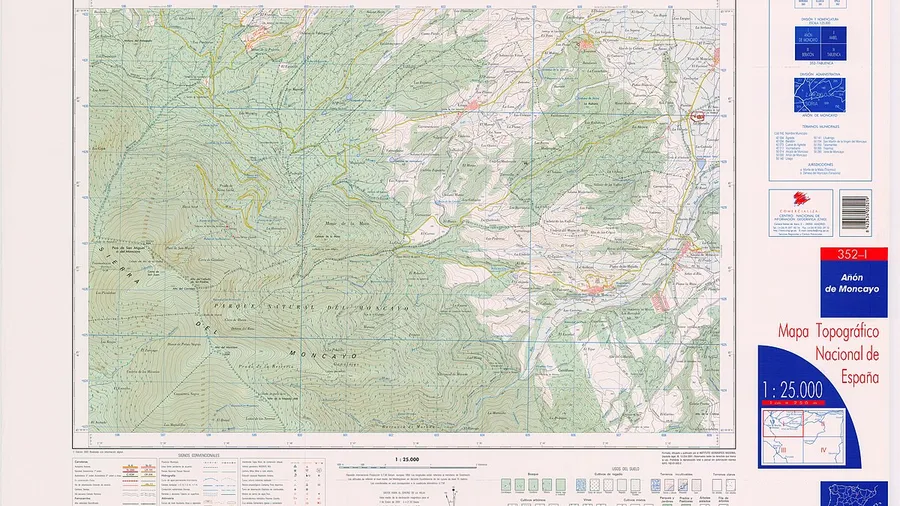
Zaragoza is Aragon's largest province and organises three radically different landscapes within a 150 km radius: Moncayo to the northwest (2,316 m, beech forests and seasonal snow), the Ebro valley in the centre with its network of historic canals, and the Maestrazgo to the southeast with villages perched on rock escarpments. Moncayo, the highest peak of the Iberian System, concentrates Atlantic mountain flora on its northern slopes and a trail network that runs from the Moncayo sanctuary to the...
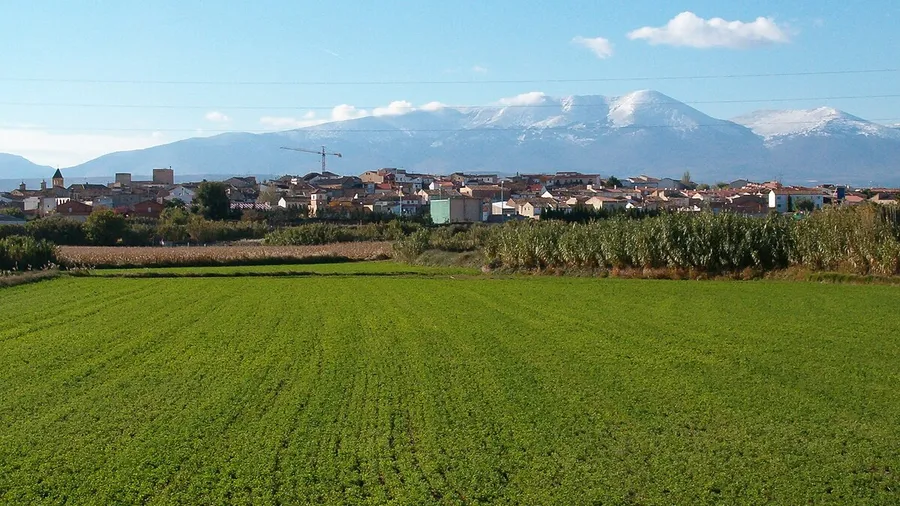
Zaragoza is Aragon's largest province and organises three radically different landscapes within a 150 km radius: Moncayo to the northwest (2,316 m, beech forests and seasonal snow), the Ebro valley in the centre with its network of historic canals, and the Maestrazgo to the southeast with villages perched on rock escarpments. Moncayo, the highest peak of the Iberian System, concentrates Atlantic mountain flora on its northern slopes and a trail network that runs from the Moncayo sanctuary to the Morca refuge and the summit itself, with a moderate ascent profile of around 5 hours return. In spring beeches burst into deep green on the shaded face; in November snow usually covers elevations above 1,800 m.
The Via Verde de la Tarazonica follows the route of the old Tudela-Tarazona railway through cereal fields and olive groves on the edge of the Cinco Villas, with 23 km of flat, traffic-free terrain suitable for family cycling. The Ebro canal system—the Imperial, Tauste and Lodosa canals—allows bike routes linking historic towns in the valley. Calatayud and its surroundings have via ferratas and limestone walls above the Jalón river with routes of several grades, frequented by climbers from Madrid and Valencia seeking quality limestone without long drives.
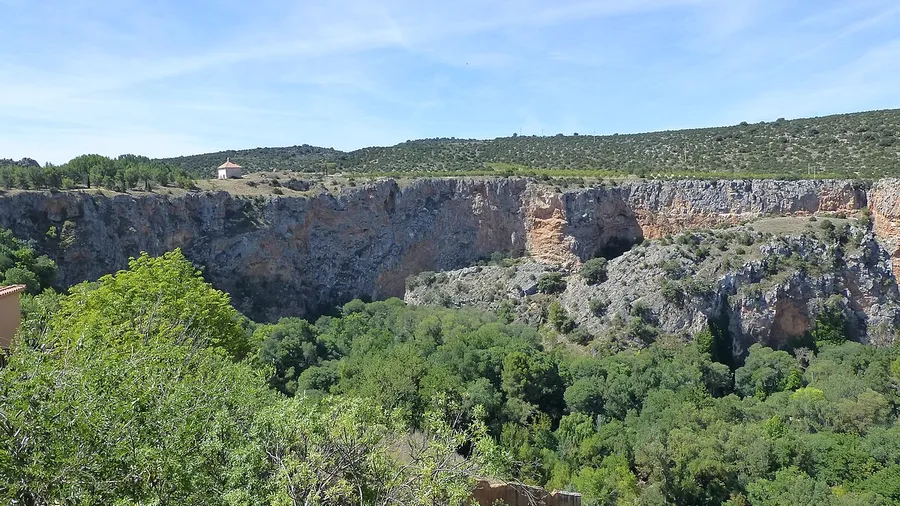
Monasterio de Piedra, set in a canyon of the Piedra river, has a 3 km on-foot route between waterfalls and natural pools that takes around 2 hours. The Camino del Cid and Iberian paths that cross the province connect archaeological sites in a multi-day cultural hiking axis.
Highlights
• Moncayo (2,316 m): highest peak of the Iberian System with Atlantic beech forest
• Calatayud via ferrata: limestone above the Jalón, 2 hours from Madrid
• Via Verde de la Tarazonica: 23 km flat between Tudela and Tarazona
• Monasterio de Piedra: 3 km route through waterfalls and natural pools
• Canal Imperial del Ebro: cycling along an 18th-century heritage waterway
Best time to visit
Moncayo: June to October. Ferratas at Calatayud: year-round (avoid midday in August). Greenways and canal: spring and autumn are best, avoid the Ebro valley heat in July-August. Monasterio de Piedra: year-round.
Practical tips
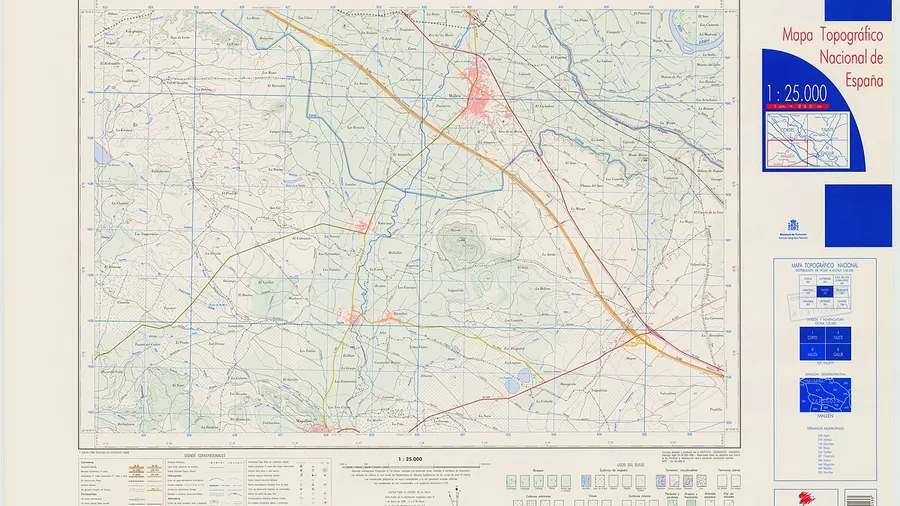
At Moncayo, the sanctuary car park is saturated on weekends from May to September—arrive before 8 am or use the shuttle service from Agramonte. The Calatayud limestone is particularly good in autumn: no extreme heat and the wild fig trees still in leaf. For the Via Verde de la Tarazonica, the central stretch between Mallén and Tarazona has limited drinking water available—carry at least 1.5 litres per person.
The classic route from the Moncayo Sanctuary involves 900 m of positive elevation over around 8 km. It is demanding but not technical: no climbing gear is needed in summer. In winter, the upper section may require light crampons and poles.
Are the Calatayud via ferratas suitable for beginners?
There are ferratas of several grades. The most accessible are rated K2-K3 and are suitable for people with no previous experience when accompanied by a guide. Harness and ferrata kit can be rented from local companies, which also offer the harder routes (K4-K5) for advanced climbers.
Does the Via Verde de la Tarazonica need a specific bike?
No. The surface is well-maintained compacted gravel. A leisure, hybrid or urban bike is sufficient for the 23 km. Rental points are available in Tarazona and Tudela.
Does a visit to Monasterio de Piedra require advance booking?
Yes. The natural park-museum charges admission and online booking is advisable in high season (July-August). The waterfall route is well signposted and can be walked without a guide. Light is best before 11 am or after 5 pm.




 0
0 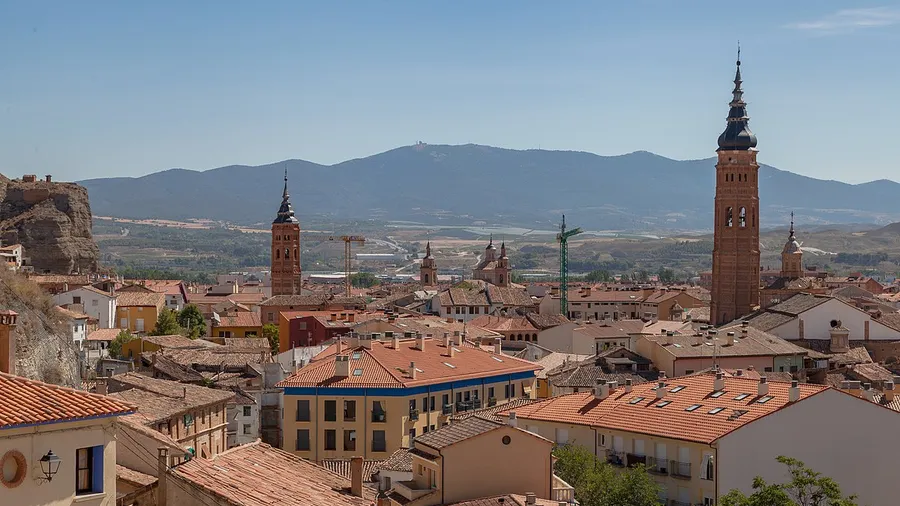 0
0  0
0  0
0  0
0  0
0  0
0  0
0