Highlights

  • • Original 11th-century taifa-style construction
  • • Courtyards with horseshoe arches and geometric decoration
  • • Current seat of the Cortes de Aragón
  • • Renaissance elements added after the reconquest
  • • Accessible for people with reduced mobility
  • • Located in Zaragoza, Aragón

Description

What is the Palacio de la Aljafería

The Palacio de la Aljafería is a fortified monumental complex dating back to the 11th century, built during the taifa period in Al-Ándalus. Located in Zaragoza, in the autonomous community of Aragón, it is one of the best-preserved examples of Islamic architecture from that era in Spain. Today, the palace houses the Cortes de Aragón, blending its historical function with a modern institutional use.

What you will see

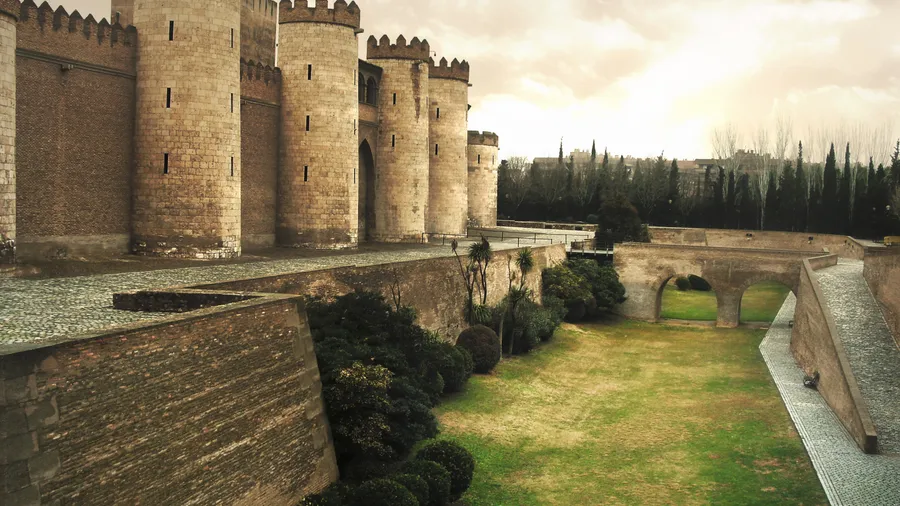
As you explore the Aljafería, you will admire its robust walls and defensive towers, reflecting its origin as a fortress. Inside, the courtyards with horseshoe arches, geometric and epigraphic decorations, and ornamental elements showcase Islamic influence. You can also visit rooms added in later periods, such as the Christian Renaissance palace, adding another historical layer. The light entering through the windows creates a play of shadows that highlights architectural details.

Historical context

The palace was built during a time of political fragmentation after the fall of the Caliphate of Córdoba, when taifa kingdoms emerged as independent entities. The Aljafería was the residence of the kings of the taifa of Zaragoza. After the Christian reconquest, the building was adapted for military and administrative uses, undergoing modifications that reflect the political and cultural changes in the region. Its preservation helps understand the coexistence and transition between Islamic and Christian cultures in Aragón.

Practical information

The Palacio de la Aljafería is open year-round, with a recommended visit time of 1 to 2 hours to explore its main spaces. Admission is free. Advance booking is recommended for groups or guided tours. The monument is accessible for people with reduced mobility. It is located in Zaragoza, with easy access by public transport and nearby parking. It is ideal for visitors interested in history, architecture, and Aragonese culture.

Key Information

Visit Duration

1-2 hours

Recommended Seasons

Spring, Autumn

Pricing

Free

Accessibility

High

Kid-Friendly Pet-Friendly Booking Required

Guide

Essential information for visiting Aljafería Palace

Location

In this area

Practical Information
Pricing
Free
Visit Duration
1-2 hours
Features & Services
  • Accessibility:High
  • Kid-Friendly:Yes
  • Pet-Friendly:No
  • Booking:Booking Required
Planning Information

Recommended Seasons

Spring · Autumn

Best Time to Visit

The best time to visit the Aljafería is in spring and autumn, when the weather is mild and allows comfortable exploration of the route and outdoor courtyards.

Visitor Tips

To make the most of your visit, wear comfortable shoes and bring a camera to capture architectural details. Check guided tour schedules to better understand the history and artistic elements. Avoid official event days as some areas may be closed. The palace surroundings offer green spaces to rest after your visit.

Historical Facts

Built in the 11th century during the taifa period, the Aljafería was the residence of the kings of Zaragoza. After the Christian reconquest, it was adapted for military and administrative functions, reflecting Aragón's historical evolution.

Frequently Asked Questions

Get answers about Aljafería Palace

Yes, the palace is open to the public and you can explore its courtyards, halls, and towers.
Booking is recommended for groups or guided tours, although general admission is free.
Yes, the palace has adapted access for people with reduced mobility.
Admission is free.
Pets are not allowed inside, except guide dogs.